Understanding Maintenance & Service Beyond the Basics
Maintenance & Service excellence is often misunderstood as simply "fixing things when they break." For plant managers, this outdated approach translates directly to production loss, safety incidents, and inflated capital expenditure. Over 35 years as a global industrial equipment distributor, 3G Electric has observed a critical pattern: plants that treat Maintenance & Service as a strategic investment—rather than a necessary expense—achieve measurable improvements in reliability, safety, and profitability.
The distinction matters because Maintenance & Service encompasses three interconnected dimensions: preventive actions that stop failures before they occur, diagnostic capabilities that identify emerging issues, and strategic component selection that builds reliability into your system from the start. Plant managers who master these dimensions report 30-40% reductions in unplanned downtime and significantly lower total cost of ownership.
Your Maintenance & Service strategy should begin with a simple audit: What equipment failures have cost you the most time and money in the past 18 months? Which components fail without warning? Which failures compromise safety? These questions reveal where your Maintenance & Service investments will generate the highest returns.
Building a Maintenance & Service Culture Around Critical Components
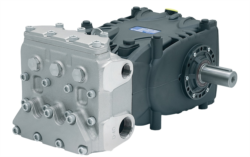
Industrial equipment failure rarely occurs in isolation. When a Pratissoli KF30 pump fails, the impact cascades: production stops, maintenance teams are diverted, customer commitments slip, and emergency replacement costs skyrocket. Yet many plants continue purchasing generic components and hoping for reliability. Strategic Maintenance & Service requires understanding your critical components intimately.
Start by categorizing your equipment into three tiers:
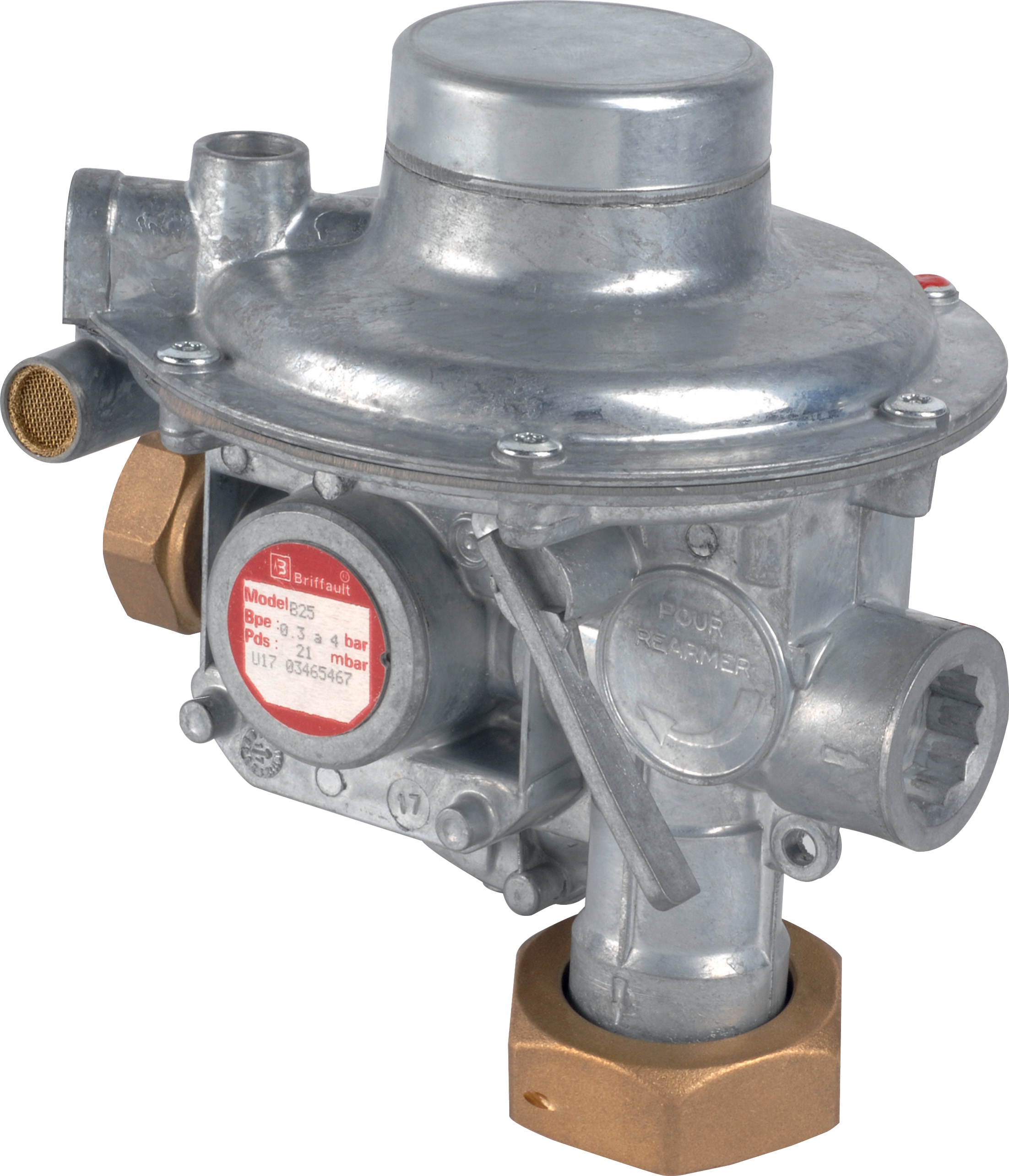
- Tier 1 (Critical): Equipment whose failure stops production or endangers personnel. For high-pressure systems, this includes Pratissoli MW40 pumps and Francel pressure regulators with integrated safety features like the B25/37mb.
- Tier 2 (Important): Components that degrade performance or increase costs if they fail. Industrial nozzles and distribution components fit here—Euspray flat jet nozzles that clog or degrade directly impact spray pattern consistency and application quality.
- Tier 3 (Standard): Components with redundancy or minimal impact if they fail.
Your Maintenance & Service schedule should reflect this hierarchy. Tier 1 equipment demands rigorous preventive protocols, detailed documentation, and access to verified spare parts. Tier 2 equipment requires regular inspection and condition monitoring. Tier 3 equipment follows standard reactive maintenance.
For Tier 1 components, implement what we call "component ownership." Assign a specific technician or team to understand every detail of that equipment: its operating parameters, failure modes, normal wear patterns, and supplier specifications. This expertise transforms reactive firefighting into proactive management. When your team knows that a Interpump gear pump typically shows a 5% pressure drop after 2,000 operating hours as normal wear—but a 15% drop signals imminent failure—they can schedule replacement before catastrophic breakdown occurs.
Document everything. Maintenance & Service excellence is built on data. Record operating pressures, flow rates, temperature, maintenance actions, and failure modes. After 6-12 months, patterns emerge. You'll discover that certain failure types correlate with specific operating conditions, seasonal changes, or maintenance practices. This knowledge becomes the foundation of your Maintenance & Service optimization.
Diagnostic Protocols and Condition Monitoring in Maintenance & Service
Many plant managers still operate on a "run to failure" or purely calendar-based Maintenance & Service schedule. This approach is expensive. Modern Maintenance & Service relies on condition monitoring—using real-time and periodic diagnostics to determine exactly when maintenance is needed, not when a calendar suggests it.
For pressure systems using components like the Francel B25/37mb regulator, implement these diagnostic checkpoints:
- Monthly visual inspection: Check for visible leaks, corrosion, or physical damage. A small leak today becomes a major failure tomorrow.
- Quarterly pressure verification: Using calibrated gauges, confirm that outlet pressure matches specifications. The Francel B25/37mb delivers 37 mbar outlet pressure—any deviation signals internal wear or seal degradation.
- Semi-annual flow testing: For pump systems like the KF30 (106 L/min flow rating) and MW40 (211 L/min flow rating), measure actual output against specifications. A 10% flow loss typically indicates normal wear; 20%+ signals maintenance urgency.
- Annual thermal imaging: For systems under load, thermal imaging reveals friction increases, blockages, or impending bearing failures hours before conventional diagnostics.
For spray application systems using Euspray flat jet nozzles, condition monitoring is equally critical. Nozzle degradation affects spray uniformity before the nozzle completely fails. Implement these checks:
- Visual spray pattern assessment: Monthly visual inspection of spray pattern from each nozzle. Asymmetry or uneven distribution indicates internal erosion.
- Pressure drop baseline: Establish baseline pressure drop across the nozzle array at various flow rates. Progressive increases signal clogging or internal wear.
- Nozzle replacement scheduling: Unlike many components, spray nozzles should be replaced on a planned schedule (typically annually for high-use applications) rather than run to failure. This prevents degraded application quality and eliminates emergency maintenance.
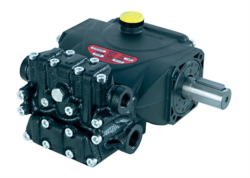
Gear pumps like the Interpump E1D1808 L (8 L/min, 180 bar) require specialized monitoring. Listen for noise changes—smooth operation becomes high-pitched whining as gear tooth wear accelerates. Monitor oil temperature; rising temperatures indicate friction increase. Track pressure stability; erratic pressure readings signal failing seals or internal wear. These symptoms, detected early through listening and observation, allow planned replacement rather than catastrophic failure.
Strategic Component Selection and Spare Parts Management
Maintenance & Service strategy includes an often-overlooked element: choosing components that minimize future maintenance burden. This is where equipment selection directly impacts long-term service requirements and costs.
When specifying high-pressure pumps for your operation, the choice between the KF30 (106 L/min, 200 bar, 40 kW) and the MW40 (211 L/min, 210 bar, 85 kW) isn't purely about flow and pressure ratings. It's about maintenance implications. The MW40's higher displacement and Italian engineering from Interpump Group typically deliver longer service intervals and lower seal replacement frequency—factors that directly reduce Maintenance & Service costs over the pump's 5-10 year lifespan.
Similarly, pressure regulators like the Francel B25/37mb with integrated safety relief represent superior Maintenance & Service design compared to separate regulator-relief combinations. The integrated safety feature means one fewer connection point prone to leakage, simpler troubleshooting, and easier replacement. This consolidated design translates to fewer Maintenance & Service interventions over time.
Establish a strategic spare parts inventory based on your Tier 1 equipment analysis:
- Critical spare parts (2-4 week lead time items): Keep at least one complete spare on hand. For a KF30 pump serving production lines, having a spare pump available means 2-4 hours repair time instead of 2-4 weeks downtime waiting for shipment.
- High-failure components (6-12 week lead time items): Stock 2-3 units. This includes seal kits, inlet valve components, and bearing assemblies.
- Consumables (pressure relief components, nozzle wear items): Maintain 6-12 months of anticipated consumption.
- Strategic inventory partnerships: For less common items like specific Euspray nozzle specifications or Interpump gear pump seals, establish supplier relationships that guarantee next-day or 2-day delivery with prepaid inventory accounts.
Your spare parts strategy should evolve quarterly. After each significant maintenance action, assess whether you had the right parts on hand. Did you have a specific seal size that would have prevented emergency ordering? Did you keep enough nozzles in stock? Adjust your inventory based on actual experience, not just manufacturer recommendations.
Implement a Maintenance & Service documentation system that tracks component history. When you replace a pump seal, record the date, operating hours, failure mode, and replacement part number. After 2-3 replacement cycles, you'll know exactly when to expect future failures and what parts to have ready.
Optimizing Maintenance & Service Intervals and Budget Planning
Maintenance & Service budgets often lack credibility because they're either unrealistically low (leading to emergency spending) or bloated (wasting resources on unnecessary maintenance). Plant managers can improve Maintenance & Service budgeting by basing it on actual equipment performance data.
For each Tier 1 component, develop a maintenance cost model:
- Typical service life: How many operating hours until major maintenance is required? The KF30 pump typically requires seal replacement at 5,000-8,000 operating hours depending on fluid quality and operating conditions.
- Preventive maintenance cost: What does scheduled maintenance cost (labor + parts)? For a pump, this might include seal kit ($300-500), labor (4-8 hours), and downtime.
- Failure cost: What does emergency maintenance cost? A catastrophic pump failure might require emergency ordering ($200-300 premium), extended downtime (24-72 hours), and potential secondary damage.
- Reliability improvement: Does preventive maintenance at lower thresholds (e.g., seal replacement at 4,000 hours instead of 8,000) reduce failure risk sufficiently to justify the extra cost?
For pressure regulators like the Francel B25/37mb, maintenance is primarily inspection-based with rare repair needs. Budget for annual calibration verification and testing ($100-200 per regulator) with replacement parts (rebuild kits) held in inventory at $400-600 each. This minimal preventive investment prevents the $2,000-5,000 cost of emergency replacement and system downtime.
For spray nozzles including Euspray flat jet models, adopt a different budgeting approach. Rather than waiting for failure, budget for planned annual replacement ($50-100 per nozzle × quantity) as a maintenance line item. This costs less than emergency replacement and ensures consistent application quality year-round.
Review your Maintenance & Service budget quarterly with actual expenditure data. Track:
- Planned vs. emergency maintenance ratio (target: 80% planned, 20% emergency)
- Cost per operating hour of critical equipment
- Mean time between failures (MTBF) for Tier 1 components
- Maintenance backlog and average turnaround time
These metrics reveal whether your Maintenance & Service strategy is working. Improving MTBF, reducing emergency repairs, and stabilizing costs indicate a maturing, effective program. Deteriorating metrics signal the need for strategy adjustment.
Leveraging Supplier Partnerships for Maintenance & Service Excellence
Plant managers often view equipment suppliers as transactional vendors. Strategic Maintenance & Service requires deeper partnerships. 3G Electric's 35+ years distributing global industrial equipment has revealed a critical insight: plants with strong supplier relationships achieve 20-30% better equipment reliability and 15-25% lower maintenance costs than those using purely commodity sourcing.
When sourcing pumps like the Pratissoli MW40 or Pratissoli KF30, regulators like the Francel B25/37mb, or application components like Euspray nozzles, develop these supplier relationships:
- Technical documentation access: Ensure your supplier provides complete technical specifications, maintenance manuals, and parts diagrams. Many failures result from incomplete information about operating limits or maintenance procedures.
- Spare parts availability and inventory programs: Negotiate consignment inventory arrangements or priority shipping for critical components. Your supplier should understand your critical equipment and proactively alert you to product updates or improvements.
- Application engineering support: When implementing new equipment or troubleshooting recurring issues, leverage your supplier's technical expertise. Their experience with hundreds of installations provides valuable insights specific to your industry and application.
- Training and certification: For critical equipment like the Interpump gear pump or MW40 pump systems, request manufacturer training for your maintenance team. Certified technicians diagnose issues faster and perform maintenance more effectively.
Implementation: Your Maintenance & Service Action Plan
Transforming Maintenance & Service from reactive to strategic requires structured implementation:
Month 1-2: Audit and categorize your equipment. Identify Tier 1 critical components. Document historical failures and costs for the past 24 months. Interview your maintenance team about their biggest challenges.
Month 3-4: Develop detailed specifications for Tier 1 equipment. Create baseline performance profiles (pressure, flow, temperature, noise) for each critical component. Establish condition monitoring checkpoints aligned with your equipment types.
Month 5-6: Implement documentation systems. Train your team on new inspection and recording procedures. Begin collecting baseline data and condition monitoring information.
Month 7-12: Analyze the data you've collected. Refine your Maintenance & Service intervals based on actual performance. Adjust spare parts inventory. Calculate Maintenance & Service costs and MTBF metrics. Compare with industry benchmarks.
Ongoing: Review Maintenance & Service performance quarterly. Update supplier partnerships. Continuously refine your approach based on results.