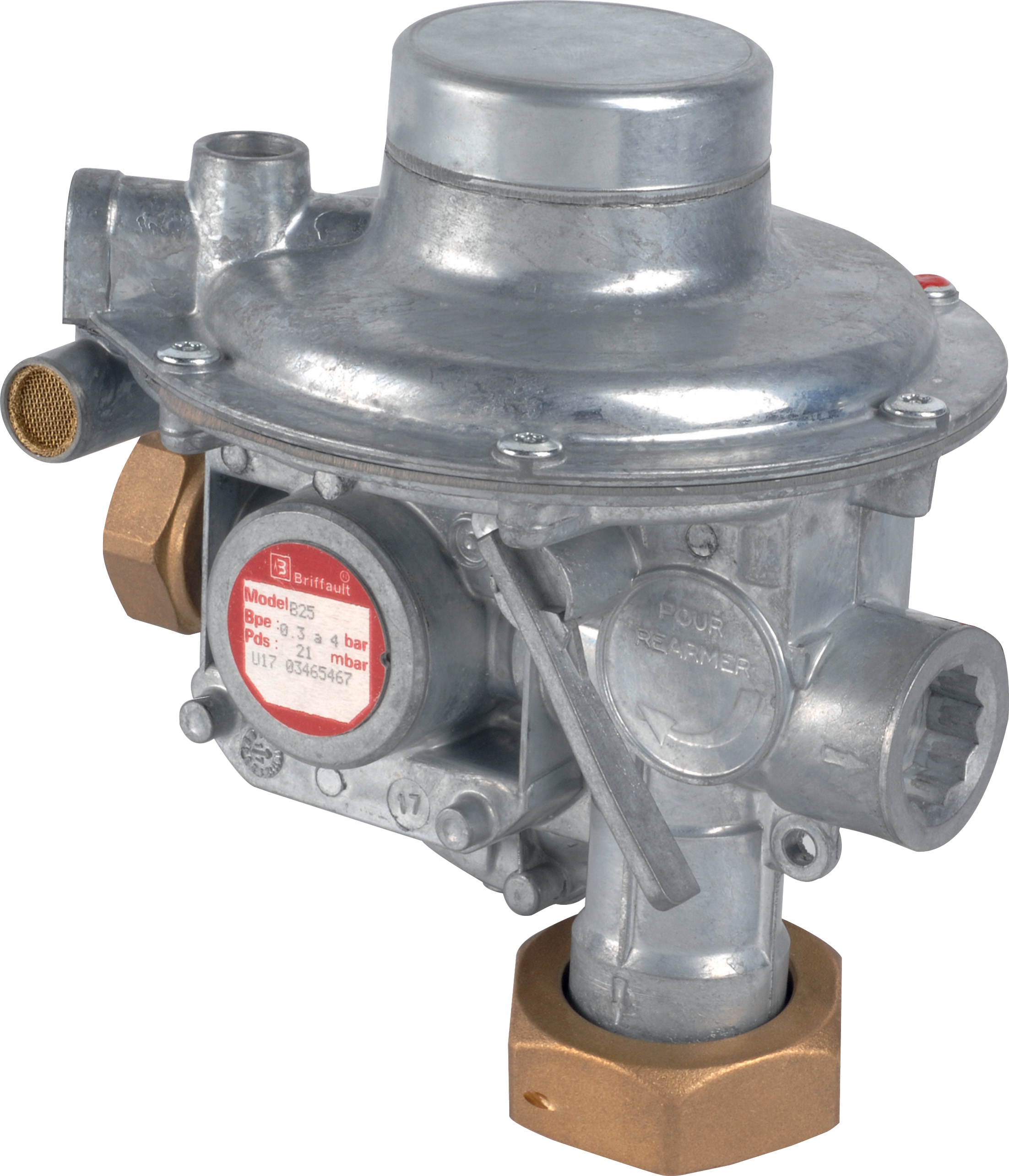
Understanding Gas Pressure Regulator Maintenance & Service Fundamentals
Maintenance & Service of gas pressure regulators requires a systematic approach to prevent safety failures and maintain consistent outlet pressure in industrial gas distribution systems. Since 3G Electric began distributing industrial equipment over 35 years ago, we've witnessed how improper regulator maintenance leads to costly downtime, safety hazards, and product quality degradation across Singapore's manufacturing and laboratory sectors.
Gas pressure regulators operate in demanding environments where inlet pressures fluctuate, moisture accumulates, and particulate contamination can compromise critical sealing surfaces. The Francel B25/37mb with integrated safety relief is engineered to deliver stable 37 mbar outlet pressure with a 10 mm vent size, but its performance depends entirely on proper maintenance protocols. Industrial professionals must understand that regulators are not "set and forget" devices—they require periodic inspection, recalibration, and component replacement to function safely.
The integrated safety relief component adds complexity to maintenance routines. This valve must be tested regularly to ensure it relieves excess pressure before system damage or personnel injury occurs. Unlike pressure gauges that only measure conditions, safety relief valves actively protect your system—making their maintenance non-negotiable in Singapore's stringent industrial safety environment.
Diagnosing Outlet Pressure Instability and Relief Valve Failures
Outlet pressure fluctuations are the most common complaint industrial professionals report with gas regulators. When a regulator that should maintain 37 mbar begins drifting to 32 mbar under load or spiking to 42 mbar, multiple root causes must be investigated systematically.
Pressure Instability Diagnostic Sequence:
- Install a calibrated pressure gauge downstream of the regulator (not the factory gauge if original calibration is unknown) and record readings under various flow conditions over 15 minutes
- Check inlet pressure stability—if inlet pressure varies more than ±5%, the upstream supply regulator or compressor requires maintenance before testing the suspect regulator further
- Close the downstream load valve completely and observe if outlet pressure rises above set point; if it does, the main diaphragm seal has failed and gas is bypassing internally
- Open a small vent hole (if equipped with manual vent like the Francel B25/37mb) and listen for hissing; continuous hissing under no-flow conditions indicates internal leakage requiring regulator replacement
- Measure the response time when suddenly closing a downstream ball valve—the outlet pressure should not spike more than 10% above set point; excessive spiking indicates a damaged relief valve spring or stuck poppet
The safety relief valve malfunction is particularly dangerous because it may fail silently. A relief valve that no longer opens at design pressure (37 mbar × 1.1 typically) can allow pressure to climb beyond system component ratings. To test relief function safely:
1. Isolate the regulator from the production line using isolation valves
2. Slowly increase inlet pressure while monitoring outlet pressure with a calibrated gauge
3. Record the pressure at which the safety relief begins venting (should occur within ±10% of design pressure)
4. If relief activates outside specifications, the regulator must be sent for factory recalibration or replaced
5. Never attempt to adjust relief valve springs without proper equipment and training—incorrect adjustment can disable the safety function
Preventive Maintenance & Service Schedules for Singapore Industrial Environments
Singapore's tropical climate, with high humidity and salt air near coastal industrial areas, accelerates corrosion of brass wetted surfaces and diaphragm degradation. Moisture entering gas regulators causes internal rust, valve stiction, and seal hardening.
Recommended Maintenance Intervals:
Monthly Visual Inspection:
- Check for external corrosion on brass body and cap
- Verify vent hole is clear (blocked vents prevent relief valve operation)
- Confirm inlet and outlet connection fittings are tight using appropriate wrench sizes
- Listen for audible gas leaks at joints or diaphragm vent area
- Review downstream pressure gauge reading—significant deviation from previous months indicates internal degradation
- Compare inlet and outlet pressure readings against baseline specifications
- Measure response time when load suddenly increases (downstream valve opens)
- Test relief function by temporarily restricting outlet flow and observing pressure behavior
- Replace any corroded or worn fittings
- Clean external vent area to prevent moisture accumulation
- Send regulator to authorized service facility for internal inspection and component replacement
- Replace diaphragm if visible wear is present (typically required every 18-24 months in humid environments)
- Have relief valve function verified on calibrated test equipment
- Inspect inlet filter element and replace if contamination is visible
- Document all service activities in equipment maintenance log for regulatory compliance
Industrial facilities in Jurong, Tampines, and other industrial estates experience humid salt-laden air that corrodes exposed metal surfaces. Install moisture traps upstream of regulators to prevent water ingestion. For coastal facilities within 5 km of shoreline, consider stainless steel variants of the Francel B25/37mb despite higher initial cost—the extended service life justifies the investment. Regulators installed outdoors or in high-vibration environments (adjacent to production machinery) require more frequent testing because vibration can loosen internal components.
Integration with Downstream Equipment and System Optimization
Gas pressure regulator maintenance must consider the entire distribution system. Undersized or poorly maintained hoses downstream can create back-pressure that affects regulator stability. If you operate high-flow applications requiring Pratissoli KF30 pumps (106 L/min capacity) or Pratissoli MW40 systems (211 L/min), gas supply pressure stability directly impacts combustion efficiency in burner applications using CBM Fluidics 1.35 45° SF oil nozzles.
Regulator inlet connections must be sized appropriately for expected gas flow. Undersized inlet fittings create excessive pressure drop before the regulator, causing the diaphragm to over-work and fail prematurely. Many Singapore industrial operations discovered this issue when upgrading equipment capacity without verifying upstream gas line sizing—the regulator was blamed for poor performance when the actual problem was inlet restriction.
Downstream system requirements should always be compared against regulator specifications. The Francel B25/37mb is rated for laboratory and moderate industrial gas distribution—if your application approaches maximum flow ratings continuously, consider adding a secondary regulator stage for redundancy and safety margin. This approach is common in semiconductor manufacturing and precision welding facilities where gas pressure stability directly affects product quality.
Document your system configuration including inlet pressure source, all hose lengths and diameters, downstream pressure requirements, and maximum flow rates. This information proves invaluable when troubleshooting unexpected pressure variations and justifies maintenance expenditures to facility managers.
Advanced Troubleshooting for Persistent Pressure Problems
When standard maintenance procedures don't resolve outlet pressure instability, systematic investigation becomes necessary. Fluctuating pressure that varies ±3 mbar randomly suggests a partially stuck poppet in the relief valve—the valve seat has accumulated debris or mineral deposits preventing smooth seating.
For this issue, never attempt flushing the regulator with high-pressure gas as this can drive particles deeper into the valve seat. Instead, isolate the regulator and apply regulated low-pressure air (0.5 bar) through the vent hole for 30 seconds to gently dislodge particles. If this doesn't resolve the problem, the regulator requires factory service or replacement.
Pressure that creeps upward over hours (not minutes) indicates the main diaphragm is tearing slowly. Gas leaks past the diaphragm into the bonnet space, and this accumulated gas slowly raises outlet pressure. The vent hole releases this pressure, but if vent hole cleaning is overdue, pressure rises significantly. Solve this by immediately cleaning the vent hole and scheduling regulator replacement within one week—this condition will worsen rapidly.
If outlet pressure remains stable during bench testing but drifts significantly after installation in your system, the problem likely involves the system itself, not the regulator. Verify that isolation ball valves are fully open (partially closed valves simulate high-flow demand and cause regulator hunting behavior). Check for temperature changes affecting gas density—regulators in direct sunlight or near heat sources will show pressure variations that correlate with temperature, not regulator failure.
Singapore's industrial professionals should maintain a spare Francel B25/37mb unit at critical facilities. This allows immediate replacement during troubleshooting rather than operating with a suspected failing regulator. The cost of one spare regulator ($300-500 equivalent) is trivial compared to production downtime from safety interlocks activating due to pressure anomalies.
Record-Keeping and Compliance Documentation
Singapore's Ministry of Manpower (MOM) and Health and Safety Executive guidelines require documented evidence of pressure system maintenance. Maintain a regulator maintenance log including: inspection date, outlet pressure reading, relief valve activation pressure, any corrective actions taken, and technician signature. This documentation protects your facility during safety audits and provides historical data revealing trends (gradually increasing outlet pressure indicates internal wear approaching critical point).
With over 35 years of experience distributing industrial equipment across Singapore and the region, 3G Electric emphasizes that proper Maintenance & Service documentation proves you're maintaining pressure systems to regulatory standards. This protection extends beyond regulatory compliance—it demonstrates due diligence to insurance providers and protects facility managers from liability claims if gas system failures occur.