Understanding HVAC Maintenance & Service Fundamentals for Contractors
Effective Maintenance & Service practices separate thriving HVAC contractors from those plagued by emergency service calls and equipment failures. After 35+ years supplying industrial equipment globally, 3G Electric understands that HVAC systems demand systematic care—not reactive repairs.
Modern HVAC systems are increasingly complex, integrating high-pressure components, solenoid controls, and precision fluid delivery. Your maintenance strategy must evolve beyond seasonal inspections to include continuous monitoring, diagnostic assessment, and component-level care. Contractors who master these practices reduce emergency callbacks by 40-60%, improve customer retention, and establish predictable revenue through service contracts.
The foundation of superior Maintenance & Service starts with understanding your system's pressure dynamics, fluid conditions, and control valve performance. Every component—from pressure gauges to solenoid valves—tells a story about system health. Learning to read these signals transforms you from a technician into a system diagnostician.
Pressure Monitoring as the Cornerstone of HVAC Diagnostics
Pressure is the language your HVAC system speaks. Understanding pressure variations reveals efficiency losses, component wear, and control problems before they escalate into failures.
Why Pressure Monitoring Matters
HVAC systems operate within precise pressure bands. Deviations indicate:
- Seal degradation - Rising differential pressure across pump seals
- Filter blockage - Excessive pressure drop across air filters or strainers
- Valve malfunction - Solenoid valves not fully opening or closing
- Capacity loss - Reduced system pressure from pump wear
- Control system failure - Erratic pressure swings indicating sensor issues
Contractors typically rely on a single pressure gauge at the pump outlet. This reveals only part of the story. Professional diagnostics require multiple measurement points: inlet, outlet, post-filter, and across critical control valves.
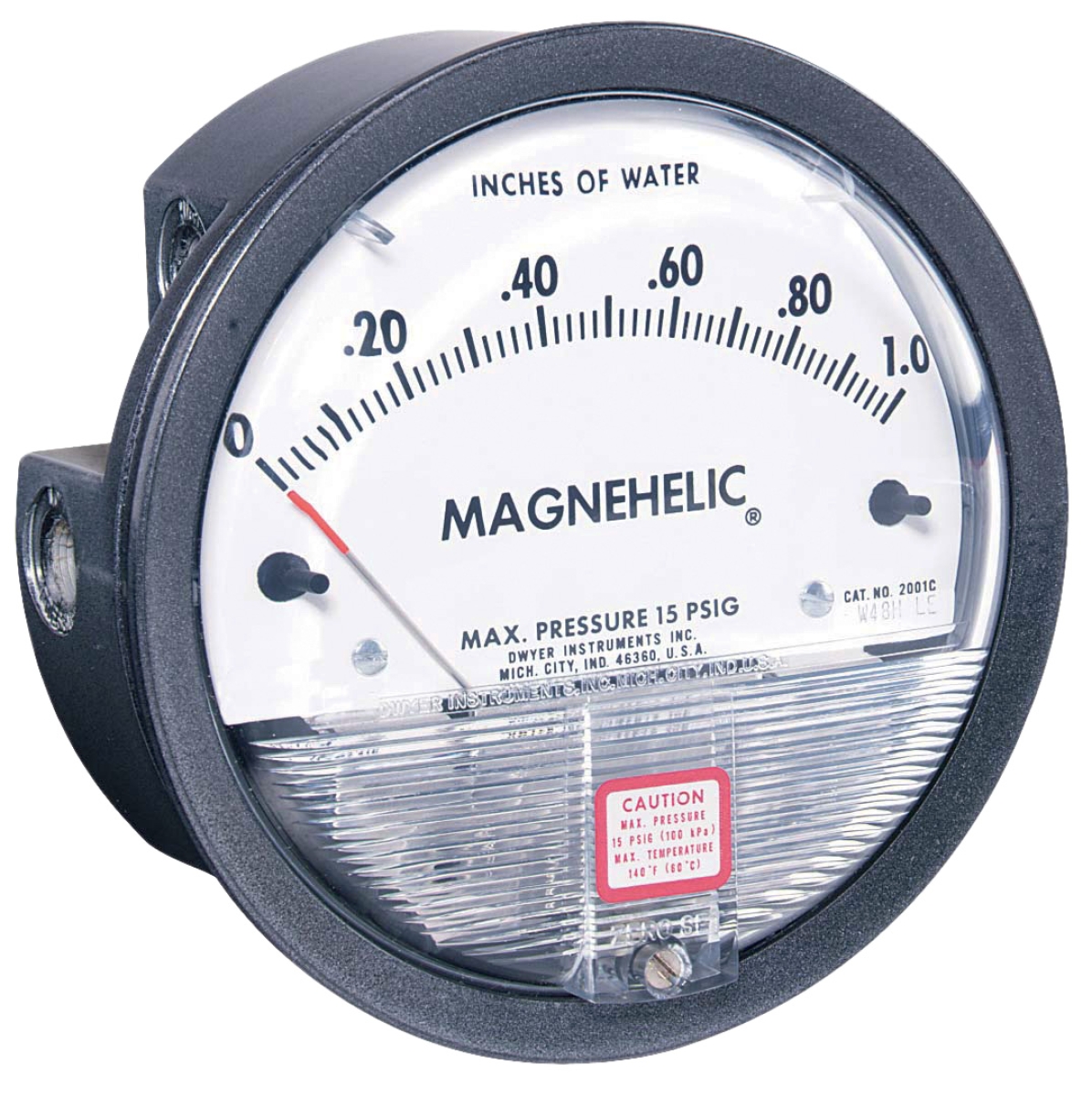
The Dwyer Magnehelic differential pressure gauge provides HVAC contractors with precise 0-8 kPa measurement capability, making it ideal for monitoring airside pressure drops and identifying filter maintenance needs before system performance degrades. Install this gauge across your filter bank to establish baseline readings, then track changes over time. When differential pressure exceeds design specifications by 20%, filter replacement becomes urgent.
Establishing Your Diagnostic Protocol
Begin each service visit with pressure baseline documentation:
1. Record system pressure at startup, operating conditions, and shutdown
2. Measure pressure drops across filters, strainers, and control components
3. Compare readings to equipment nameplate specifications
4. Document ambient conditions, load conditions, and runtime hours
5. Track trends over consecutive service intervals
Pressure trending reveals degradation patterns invisible in single-point measurements. A 5% monthly pressure rise may seem insignificant—until you realize it indicates seal wear accelerating toward catastrophic failure.
Solenoid Valve Maintenance & Service and Control System Reliability
Solenoid valves control fluid flow to HVAC actuators, dampers, and heating/cooling circuits. Valve failure causes loss of system control, temperature swings, and customer complaints. Yet many contractors ignore solenoid maintenance until failure occurs.
Common Solenoid Valve Problems
- Coil burnout - Electrical failure from voltage surges or moisture
- Stuck plunger - Particle contamination preventing full seating
- Seal leakage - Fluid escaping past valve seats under pressure
- Inconsistent response - Sluggish actuation from magnetic circuit wear
The Elektrogas Solenoid valve EVRM NA 7 flanges DN65 600 Mbar represents industrial-grade valve technology, with 600 Mbar (600 bar) pressure rating and IP 54 protection. While designed for high-pressure applications, it demonstrates the engineering standards that matter in reliable Maintenance & Service: robust construction, environmental protection, and precise pressure handling.
Solenoid Maintenance Protocol
Electrical inspection - Test coil resistance annually. Document baseline values. Rising resistance indicates moisture intrusion or insulation breakdown. Replace coils showing resistance change exceeding 10% from baseline.
Valve response testing - Energize solenoid and listen for sharp clicking. Slow, sluggish clicks indicate wear. Measure actuation time with a stopwatch. Factory specification typically allows 0.5-1.0 second actuation. Times exceeding 2 seconds warrant replacement.
Pressure drop testing - Measure pressure before and after solenoid valve at rated flow. Excessive drop (>0.3 bar at normal flow) indicates internal wear or clogging. Clean or replace as needed.
Fluid analysis - Dirty solenoid valves result from contaminated system fluid. Implement fluid sampling every 6-12 months. Track particle count, moisture, and acid number. Fluid showing particle counts exceeding ISO 16/14/11 requires immediate system flushing and filter upgrading.
Piping vibration isolation - Solenoid vibration accelerates seal wear. Install flexible hose connections on both solenoid inlet and outlet. This simple addition extends solenoid lifespan 50-75%.
High-Pressure Pump Systems: Maintenance & Service for Peak Performance
HVAC systems incorporating high-pressure pumps (heating systems, pressurized spray cooling, or industrial chiller applications) demand specialized maintenance knowledge. Pump failure represents your most expensive service call and greatest liability exposure.
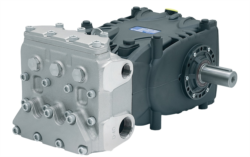
The Pratissoli KF30 high-performance industrial pump exemplifies the engineering precision in modern HVAC equipment—106 L/min flow capacity at 200 bar, 40 kW power rating, Italian-engineered reliability. Systems incorporating pumps of this caliber require equally sophisticated maintenance protocols.
Many contractors approach pump maintenance reactively: the system loses pressure, or flows reduces, and they schedule replacement. Professional maintenance prevents this crisis through systematic monitoring and component care.
Pump Health Monitoring
Pressure trending - Record pump discharge pressure weekly. Compare to load conditions and ambient temperature. Pressure loss over time indicates internal wear: worn pistons, cylinder wear, or valve spool degradation. When pressure drops 5-10% below design specification, plan for service or replacement.
Flow measurement - Measure system flow using your pump's integrated gauge or inline flow meter. Flow loss without pressure change indicates cavitation—the pump inlet isn't receiving adequate fluid supply. Check inlet filters, reservoir level, and suction line blockages immediately.
Noise and vibration analysis - Pump cavitation produces distinctive grinding or chattering sounds. Normal pump operation is relatively quiet. New noises always warrant investigation. Measure vibration amplitude; increasing vibration indicates bearing wear, internal clearance increase, or misalignment.
Fluid temperature monitoring - Elevated fluid temperature signals excessive pressure drop, cavitation, or internal leakage. Most systems operate at 45-55°C. Temperatures exceeding 65°C warrant immediate investigation. Excessive heat accelerates fluid degradation, seal failure, and internal corrosion.
Inlet condition inspection - Pump failure frequently traces to inadequate inlet conditions. Monthly inspection protocol:
- Check reservoir fluid level and top up as needed
- Inspect inlet strainer for blockage or contamination
- Verify suction line isn't kinked or damaged
- Ensure inlet filter bypass valve isn't leaking (indicates filter loading)
- Confirm pump inlet temperature below 40°C (cold inlet improves pump life)
- Visual seal inspection for seepage
- Bearing endplay measurement
- Shaft runout verification
- Coupling alignment check
Pump bearings typically last 5,000-10,000 operating hours. Track your equipment runtime. Once approaching bearing service life, schedule preventive replacement before failure occurs.
Fluid flushing and filtration - Contaminated fluid is your pump's enemy. System fluid filtration should maintain ISO cleanliness better than 18/16/13 at minimum. For critical HVAC applications, target 17/15/12 or cleaner.
Implement annual system flushing if particle monitoring indicates rising contamination trends. Flush with clean, filtered fluid circulating at 60-70% rated system pressure. Circulate until outlet fluid cleanliness matches inlet filter exit quality. This typically requires 2-4 hours at full circulation.
Spray gun maintenance for cooling systems - Some HVAC applications use the Pratissoli PISTOLA P560*LANCIA 1000 ATEX spray gun or similar spray cooling equipment. These precision components require meticulous maintenance:
- Flush nozzles after each use to prevent fluid crystallization
- Inspect nozzle spray pattern monthly; poor atomization indicates tip wear
- Check trigger function for smoothness and reliability
- Store in protective cases to prevent damage
- Replace nozzles annually regardless of appearance
Creating Your HVAC Maintenance & Service Schedule and Documentation System
Best practices mean nothing without consistent execution. Develop a documented maintenance schedule customized to each customer's equipment, operating hours, and fluid conditions.
Monthly Tasks
- Visual system inspection for leaks or damage
- Pressure baseline measurement at operating conditions
- Fluid level check and top-up
- Solenoid valve electrical and functional testing
- Filter bypass valve inspection
- Differential pressure measurement across filters
- Solenoid coil resistance baseline documentation
- Pump performance verification (pressure, flow, temperature)
- Fluid sampling for particle count and moisture analysis
- Seal and bearing visual inspection
- Comprehensive system pressure mapping
- Solenoid valve actuation timing measurement
- Pump cavitation assessment
- Control system functionality verification
- Documentation review and trend analysis
- Complete pump performance evaluation
- Bearing endplay and shaft runout measurement
- Coupling alignment verification
- System flushing if contamination trends warrant
- Fluid analysis comprehensive review
- Equipment efficiency assessment
Maintain detailed records for every service visit:
- Date, time, and ambient conditions
- Equipment operating runtime
- All pressure measurements with location notation
- Electrical readings (solenoid coil resistance)
- Flow measurements
- Fluid temperature
- Visual observations
- Parts replaced or serviced
- Customer communication notes
- Recommended future actions
This documentation creates your competitive advantage. When customers receive detailed reports explaining their system's condition, you position yourself as a professional partner, not a commodity technician. Over time, this data reveals patterns unique to each customer's application, allowing you to refine recommendations and demonstrate measurable value.
Conclusion: Building Your HVAC Maintenance & Service Excellence
Superior Maintenance & Service separates leaders from followers in HVAC contracting. By implementing systematic pressure monitoring, solenoid valve diagnostics, pump performance tracking, and fluid condition management, you transform service from a cost center into a profit engine.
3G Electric supports your expertise with 35+ years of experience supplying quality components and equipment worldwide. Our pressure gauges, solenoid valves, and pump systems represent the industrial standards that enable reliable performance diagnostics and long-term equipment reliability.
Begin by selecting two or three practices from this guide to implement immediately. Master those, then add additional protocols. Within 12 months, your Maintenance & Service practices will deliver measurable improvements: fewer emergency callbacks, higher customer satisfaction, improved equipment reliability, and stronger service contract revenue.
Your success depends on knowledge, discipline, and quality components. We provide the equipment; the excellence comes from your commitment to systematic care.