Understanding Controls & Safety Compliance Across Markets
Controls & Safety components form the backbone of reliable burner operations, yet compliance requirements differ significantly across regions. For HVAC contractors operating internationally or managing equipment in multiple markets, understanding these standards is critical to system reliability and liability management. With 35+ years of industry experience, 3G Electric has witnessed the evolution of safety frameworks and can help contractors navigate complex certification landscapes.
The global regulatory environment for burner control systems has consolidated around several key standards: EN 746-2 and EN 676 in Europe, UL standards in North America, FM approvals for insurance compliance, and SIL (Safety Integrity Level) ratings that apply worldwide. Each framework addresses the same core safety principles—flame supervision, ignition reliability, and fail-safe shutdown—but through different testing methodologies and performance criteria.
Contractors often mistakenly treat controls & safety components as interchangeable if they perform similar functions. This approach creates risk. A relay certified to UL standards alone may not meet European installation requirements. A pressure switch rated SIL 2 cannot replace a SIL 3-rated component in critical applications. Understanding these distinctions prevents costly retrofits, project delays, and potential safety violations.
European Standards: EN Compliance and SIL Ratings
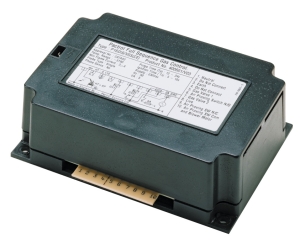
European burner controls operate under EN 746-2 (Safety of Industrial Burners) and EN 676 (Safety Equipment for Oil Burners), with optional SIL classification under EN 61508. The Kromschroder Relay BCU 570WC1F1U0K1-E exemplifies this framework—compliant with both EN 746-2 and EN 676, it supports direct ignition and intermittent/continuous pilot ignition modes across unlimited operating cycles.
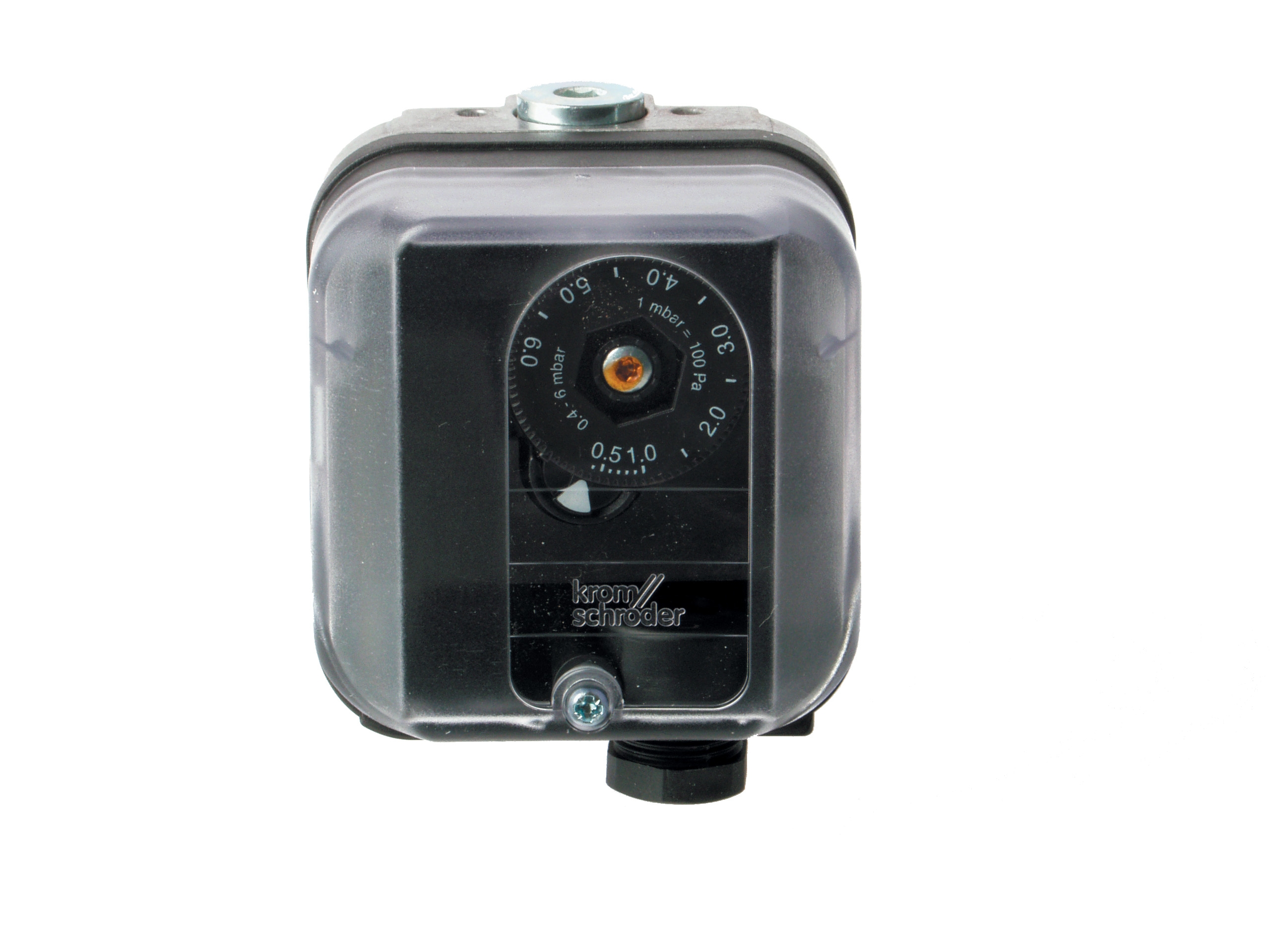
EN compliance focuses on functional safety through systematic design requirements. Manufacturers must document how their components respond to specific failure modes. For pressure switches, this means certified response at defined setpoints under repeatable conditions. The Kromschroder Pressure Switch DG 50U/6 achieves SIL 3 and Performance Level e ratings, meaning it has been tested to fail safely and respond predictably even during high-demand scenarios.
SIL levels range from 1 (lowest) to 4 (highest), representing the probability of a component failing dangerously. SIL 3 requires systematic failure analysis, documented testing, and proof that the component remains safe across its operational life. For contractors, this matters directly: systems handling high-risk applications (e.g., large industrial heating plants in densely populated areas) typically require SIL 2 or higher components. European jurisdictions often mandate this explicitly.
A practical consideration: European standards assume regular maintenance and competent technicians. Installation documentation is typically detailed and binding—cutting corners violates compliance even if the equipment functions. Contractors must allocate time for proper setup, sensor calibration, and documented testing before commissioning.
North American Standards: UL and FM Certifications
North America relies primarily on UL (Underwriters Laboratories) and FM (Factory Mutual) approvals, which operate under different philosophies than EN standards. UL focuses on product safety through standardized testing; FM adds insurance validation, confirming that approved equipment reduces fire risk to insurable levels. Many jurisdictions require FM approval for commercial installations.
The Kromschroder Pressure Switch DG 50U/6 carries UL, FM, AGA, and GOST-TR certifications, making it suitable for diverse North American installations. This multi-certification approach reflects real-world contractor needs: equipment must satisfy local codes, insurance requirements, and sometimes specialized standards (AGA for gas equipment, GOST-TR for equipment used in post-Soviet markets).
UL standards emphasize repeatability and safety margins. A component certified to UL standards has been tested multiple times under defined conditions with documented results. Unlike SIL ratings, UL doesn't formally classify components by failure probability—instead, it confirms that tested designs perform safely under specified conditions. This distinction matters when troubleshooting: a UL-certified component may not have documented failure behavior under abnormal conditions, requiring contractors to consult manufacturer support rather than referring to published SIL analysis.
FM approval adds an insurance dimension. FM-approved equipment typically costs more but significantly reduces insurance premiums for commercial properties. For contractors specifying equipment in commercial buildings, FM approval often becomes a cost-benefit calculation: higher equipment cost versus lower building insurance. Many facility managers demand FM approval regardless of code requirements, making it a practical necessity for contractor selection.
North American contractors should note: UL and FM approvals are jurisdiction-specific. Equipment approved for the United States may not be approved in Canada without separate certification. Similarly, recent revisions to UL 296 (for oil burners) introduced stricter requirements for flame monitoring, making older, "legacy" equipment non-compliant in retrofit scenarios. Always verify current certification status before specifying components.
Integrated Systems: Comparing Relay vs. Block Architecture
Controls & Safety systems combine multiple components—relays, pressure switches, gas blocks, ignition modules—into coordinated architectures. Two dominant approaches serve different contractor needs: traditional relay-based systems and modern integrated gas control blocks.
Relay-based systems use separate components connected by wiring and pneumatic lines. The Siemens Relay LFL 1.622 exemplifies this approach, offering UV and ionization flame monitoring with controlled air damper capability suitable for medium to high power burners. Relay systems provide:
- Modularity: Replace individual components without system redesign
- Familiarity: Contractors trained on traditional controls find troubleshooting intuitive
- Flexibility: Adapt control logic by rewiring rather than reprogramming
- Transparency: Visible component interaction aids diagnostics
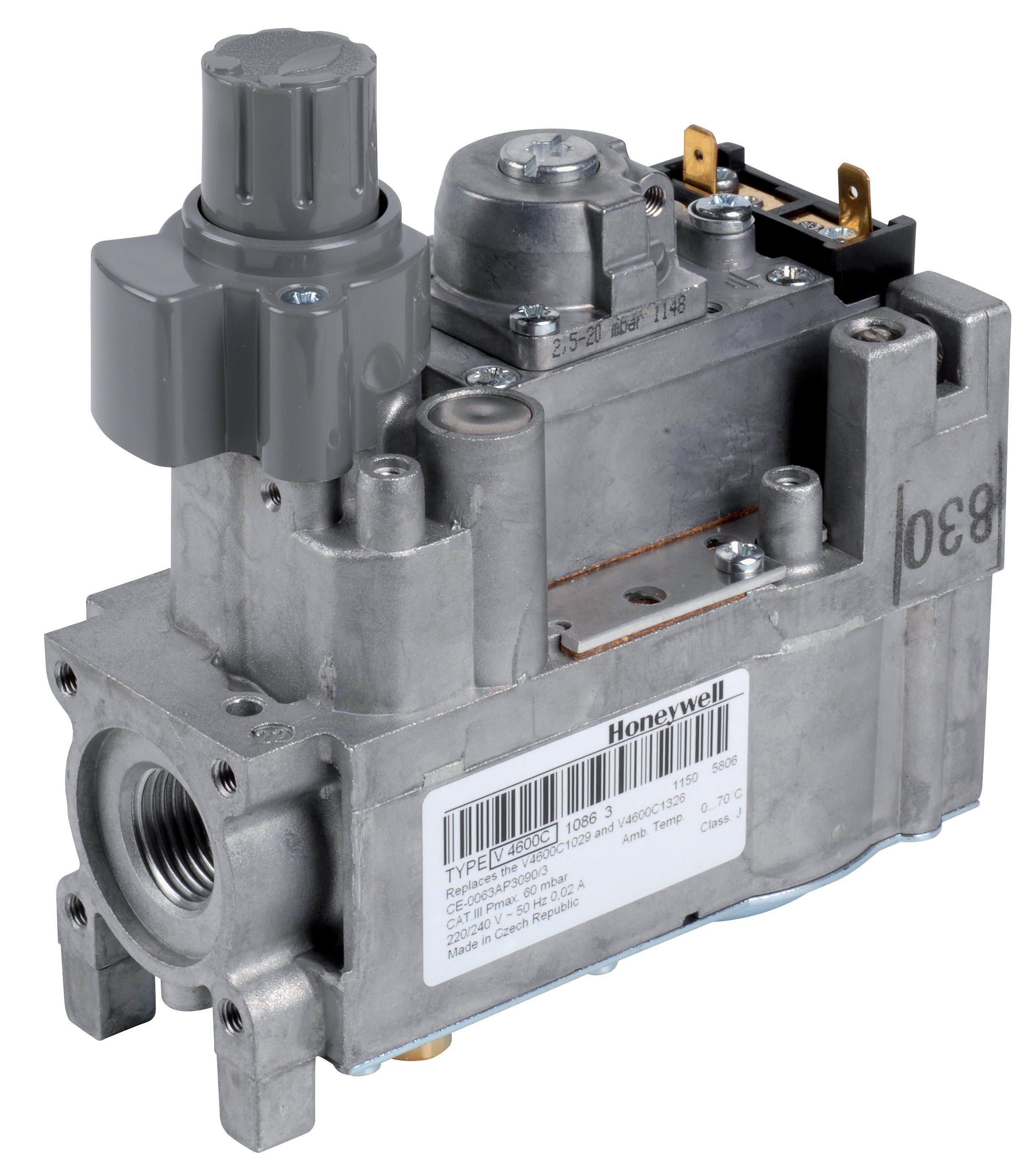
Integrated gas control blocks consolidate relay, solenoid valve, pressure regulation, and feedback mechanisms into single units. The Honeywell Gas Block VK 4105 C 1041 U operates as an electric modulating pressure regulator with M8×1 pilot connection and integrated feedback, serving high-efficiency applications. Block-based systems offer:
- Compactness: Reduce footprint on burner front-end
- Consistency: Factory-calibrated, reducing field commissioning variables
- Efficiency: Modulating pressure control optimizes fuel consumption
- Integration: Communicate with advanced BMS (Building Management Systems)
For contractors, the choice depends on application complexity and maintenance expectations. Simple on-off burner applications favor relays—they're easier to troubleshoot when controls fail and component replacement is straightforward. High-efficiency systems with modulating requirements demand integrated blocks—they maintain precise pressure regulation that manual relay adjustments cannot match.
Certification differences matter here too. A relay certified to EN 746-2 must be combined with separately-certified pressure switches and gas blocks that collectively satisfy system safety requirements. Integrated blocks are tested as complete systems; certification applies to the entire assembly. This affects commissioning: integrated blocks may require manufacturer setup assistance, while relay systems permit contractor-led field configuration.
Ignition and Flame Detection: Matching Controls to Burner Type
Controls & Safety systems must reliably ignite fuel and confirm flame presence within specific timeframes defined by standards. Ignition modules and flame detection sensors represent critical decision points for contractors.
The Pactrol Housing P 16 DI CE provides ignition and flame detection at 230V supply with 12 kV output and 10 MJ output energy. This specification targets spark ignition systems used in gas burners. Contractors must match ignition voltage and energy to burner electrode design—insufficient voltage prevents spark formation, while excess voltage can degrade electrodes prematurely.
Flame detection methods include:
- UV sensors: Detect ultraviolet radiation from flame, immune to ambient light, faster response
- Ionization sensors: Detect electrical conductivity in flame, simpler design, slower response, susceptible to contamination
- Infrared sensors: Detect specific wavelengths, highly selective, expensive, often overkill for simple burners
The Siemens LFL 1.622 combines UV and ionization monitoring, providing redundancy. This dual-sensor approach meets stringent safety standards because if one sensor fails, the other maintains flame supervision. For contractors, this redundancy reduces nuisance shutdowns—a common complaint in single-sensor systems when dust or moisture interferes with detection.
Response time specifications appear in standards like EN 746-2, which requires burner shutdown within 3 seconds if flame supervision is lost. Contractors must confirm that selected controls + flame detection combinations meet this requirement. Slower responding systems require shorter post-ignition flame stabilization delays, which can conflict with fuel efficiency tuning.
A practical workflow: Contractors should document the flame sensor type used in each installation. When commissioning similar burners later, they can specify matching controls without re-testing. This approach reduces commissioning time and leverages successful prior configurations.
Practical Selection Framework for Global Projects
When selecting Controls & Safety components, contractors should follow this systematic approach:
1. Identify the applicable regulatory regime: Where will the burner operate? Europe demands EN compliance; North America requires UL or FM; some regions accept multiple standards. Determine which standards are mandatory, which are preferred, and which are insurance-driven.
2. Define safety integrity requirements: What's the consequence of control failure? A residential heating system requires basic safety; a commercial building in a dense urban area may require SIL 2 components; critical infrastructure often mandates SIL 3. Match component ratings to application risk.
3. Match component architecture to commissioning resources: Relay systems demand contractor expertise in field configuration; integrated blocks require manufacturer support and longer lead times but reduce on-site troubleshooting needs. Consider your team's capabilities and the project timeline.
4. Verify certification chains: Don't assume a certified relay works with a certified pressure switch—ensure the combination is documented as compliant. Request system-level certification documentation from manufacturers or use 3G Electric's technical team to verify compatibility.
5. Plan for regional variants: Stock components certified for multiple standards where possible. The Kromschroder DG 50U/6 pressure switch, for instance, carries EN, UL, FM, and GOST-TR certifications—one SKU satisfies diverse markets, reducing inventory complexity.
6. Document your selections: Maintain records of which controls & safety components you've successfully commissioned in specific applications. This documentation accelerates future projects and provides liability protection by demonstrating consistent, informed selection practices.
Why Standards Matter to Contractor Liability
Controls & Safety component selection isn't merely technical—it carries legal and insurance implications. If a burner control system fails to shut down a runaway burner, investigation will examine whether components met applicable standards. Non-compliant equipment, even if functional, creates liability exposure.
Insurance companies increasingly audit contractor practices. They review documentation of component certifications, commissioning procedures, and maintenance records. Contractors who consistently specify certified components and follow manufacturer commissioning procedures demonstrate due diligence; those who substitute non-certified components or skip documented setup face coverage denial if incidents occur.
With 35+ years of industry experience, 3G Electric understands these liability dimensions. We maintain current certification data for thousands of components, help contractors verify compliance, and source equipment that meets regional requirements. When you select components through 3G Electric, you're accessing verification expertise that protects your business.
Commissioning and Maintenance Considerations
Controls & Safety systems aren't "set and forget." Standards like EN 746-2 and UL 296 require periodic functional testing. Contractors must plan commissioning time—typically 2-4 hours for relay-based systems, 4-8 hours for complex integrated blocks with modulating control.
Post-commissioning maintenance involves annual testing of safety interlock functions, verification that flame supervision responds within required timeframes, and inspection of electrical connections. Many contractors underestimate this workload, leading to incomplete commissioning that creates latent safety issues discovered only during insurance audits.
Documentation is non-negotiable. Record the specific components installed, their certifications, commissioning test results, and sensor response times. This documentation demonstrates compliance and provides baseline data for future troubleshooting. Digital records (photos of control wiring, scanned certification documents) prove invaluable when disputes arise months or years after installation.