Understanding Pumps & Compressors as System Components
Pumps & Compressors are often treated as standalone units during procurement, but their true performance is determined by how they integrate into the larger fluid power ecosystem. Unlike simple specification matching, system architecture requires understanding how pressure regulation, flow distribution, accumulator sizing, and load characteristics interact across your entire installation.
With 35+ years of global distribution experience, 3G Electric has observed that roughly 40% of pump and compressor failures stem not from component defects but from integration errors—mismatched manifold configurations, inadequate pilot pressure supplies, or unsuitable relief valve settings. Procurement engineers must shift their focus from isolated unit selection to holistic system design.
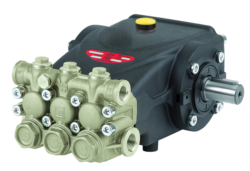
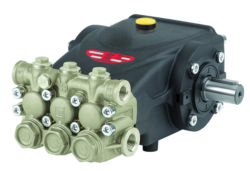
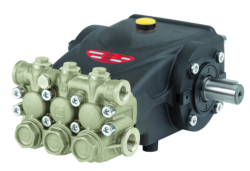
The distinction matters operationally. A Interpump PUMP E3B2515I R may be technically capable of delivering 25 cc/rev at 2500 RPM, but if your system architecture doesn't include proper load-sensing controls or pilot-operated makeup provisions, you'll experience cavitation, heat generation, and premature wear—regardless of the pump's inherent quality.
Pressure Architecture and System Configuration Strategy
Modern industrial systems demand configurable pressure architecture to handle variable load conditions. Your pump selection must accommodate three distinct operational phases: standby idle, partial load, and peak demand—each with different pressure requirements and energy costs.
Pressure Rating Considerations:
Pumps & Compressors operate across pressure bands from low-pressure (210 bar) agricultural applications to ultra-high-pressure (350+ bar) industrial installations. The critical decision isn't "what's the maximum rated pressure" but rather "what pressure profile suits my duty cycle?"
Consider two procurement scenarios:
1. Fixed-Displacement System: A Interpump PUMP E3B2515 L with constant 25 cc/rev output requires full-flow relief valve operation during idle periods. System generates continuous heat loss equivalent to pressure × flow rate. Suitable for applications with consistent demand (continuous production lines, water circulation systems).
2. Load-Sensing System: Variable-displacement Pumps & Compressors (exemplified by Interpump PUMP E3B1515 DX*VALV.DX + GEARBOX RS500H) reduce displacement to match load, cutting relief valve losses by 60-75%. Requires pressure-compensated proportional controls but delivers superior energy profiles for intermittent-duty applications (presses, injection molding, material handling).
Your procurement decision hinges on duty cycle analysis. Intermittent loads favor variable systems despite higher component complexity. Continuous steady-state loads justify fixed-displacement simplicity.
Pilot Pressure Supply Architecture:
Often overlooked during procurement, pilot pressure systems deserve explicit attention. Many modern proportional-spool Pumps & Compressors require dedicated 25-30 bar pilot supply to actuate displacement control mechanisms. If your existing plant generates pilot pressure from main pump discharge (common in legacy systems), you've locked the pump into pressure-sensitive operation and eliminated load-sensing benefits.
The solution: independent pilot pressure generation through auxiliary gear pump stages or dedicated pilot systems. Interpump's PUMP E3C1021 DXV.DXNO.C/J accommodates external pilot supplies, enabling flexible architecture. Without this architectural consideration during procurement phase, you'll either overspend on components that can't deliver promised efficiency or underspend and accept performance penalties.
Compressor Integration and Receiver Tank Sizing
While Pumps handle liquid fluid power, Compressors govern gas (air) systems with fundamentally different thermodynamic constraints. The integration challenge for Pumps & Compressors in hybrid systems involves pressure synchronization and duty cycling.
Receiver Tank as System Stabilizer:
Unlike hydraulic systems where reservoirs primarily serve as fluid storage, pneumatic receiver tanks function as critical energy buffers. Tank volume determines system response time, pressure ripple, and compressor duty cycle. Undersized tanks force compressors into continuous load-unload cycling, reducing bearing life and increasing leak risk at seal interfaces.
Engineering rule: Minimum tank volume = 3 × compressor volume delivered per minute (VDM). For a 10 CFM compressor, specify minimum 30-gallon receiver tank. This ensures pressure stability and limits compressor on/off cycles to 6-10 per hour (acceptable bearing duty) rather than 20+ cycles (accelerated wear).
Pressure Matching in Hybrid Systems:
Industrial facilities increasingly employ hybrid Pumps & Compressors architectures—hydraulic systems for high-power actuation (presses, punch machines) coupled with pneumatic systems for low-power controls (pneumatic valves, air cylinders). Pressure coordination becomes critical:
- Hydraulic pilot pressure: typically 210-280 bar
- Pneumatic control pressure: typically 90-100 psi (6.2-6.9 bar)
Interfacing these systems requires pressure reducers, isolation check valves, and logic controllers to prevent backpressure contamination. Procurement engineers must specify these interface components explicitly rather than assuming field integration. The Interpump PUMP E3C1515 L represents a mid-range variable option but only delivers expected performance when paired with matching pilot and load-sensing architecture.
Displacement, Flow Rate, and Load Matching Architecture
Beyond individual specification matching, system architecture determines whether your selected Pumps & Compressors operate in their design envelope or constantly struggle against mismatched loads.
Flow Architecture Design:
Each pump displacement (measured in cc/rev for hydraulic, CFM for pneumatic) pairs with rotational speed to establish flow capacity. A 25 cc/rev pump at 2500 RPM delivers 62.5 cc/rev per revolution = ~1.56 liters/minute at theoretical 100% efficiency.
But your system architecture determines actual delivery:
- Open-center systems (typical in manual control) see volumetric efficiency drop to 85-88% due to internal leakage across spool clearances
- Closed-center proportional systems improve to 92-95% efficiency
- Load-sensing systems add pressure-compensation efficiency gains (reducing relief valve losses) but introduce pilot pressure overhead
Procurement error: Specifying 25 cc/rev pump for application requiring 1.5 liters/minute continuous flow, then discovering actual system delivers only 1.33 liters/minute (15% loss) and pressure rises above design limits. The pump didn't fail; the architecture mismatch created undersizing.
Load Characteristics and Compressor Duty:
Compressors face similar matching challenges. A 10 CFM air compressor specified for intermittent pneumatic tool operation (nail guns, impact wrenches) may cycle excessively if installed on facilities with multiple concurrent tools operating. System architecture should include:
1. Accurate demand profiling (peak simultaneous CFM requirement)
2. Duty cycle mapping (continuous vs. intermittent percentage)
3. Receiver tank sizing for demand smoothing
4. Pressure control ranges to prevent excessive compressor unloading
Industrial pneumatic systems commonly underperform because procurement selected compressor displacement based on single-tool requirements without analyzing plant-wide concurrent demand.
Integration Specification Checklist for Procurement Engineers
When evaluating Pumps & Compressors for your procurement, move beyond component datasheets to system-level questions:
Hydraulic Pump Architecture:
- Is load-sensing control required, or does fixed-displacement suit the application?
- What pilot pressure source exists (main pump discharge, auxiliary pump, or external supply)?
- Does manifold configuration match the selected pump's port sizing and pressure ratings?
- Is relief valve set pressure compatible with pump displacement and expected duty?
- What accumulator capacity supports system pressure stability and emergency supply?
- What is peak simultaneous CFM demand (not single-tool peak)?
- How many on/off cycles per hour will the compressor experience under normal operation?
- Is receiver tank volume sized for adequate pressure buffering (minimum 3× CFM)?
- Does plant compressed air distribution include moisture removal adequate for system components?
- What pressure control strategy prevents excessive unload-load cycling?
These architectural questions determine whether your Interpump PUMP E3B2515I R, PUMP E3B2515 L, PUMP E3B1515 DX*VALV.DX, PUMP E3C1021 DX, or PUMP E3C1515 L will deliver expected performance or struggle against systemic constraints.
3G Electric's experience supporting global industrial facilities reveals that procurement engineers who approach Pumps & Compressors selection through system architecture lens—rather than isolated component specifications—achieve 35-40% longer component lifespan, 25-30% lower energy costs, and significantly reduced failure-related downtime. The investment in architectural clarity during procurement phase pays exponential operational dividends.