Understanding the Pumps & Compressors Selection Challenge
Procurement engineers managing industrial equipment portfolios must balance competing pressures: capital budget constraints, operational performance requirements, supply chain reliability, and total cost of ownership (TCO). When evaluating Pumps & Compressors, the decision extends far beyond initial purchase price. With 35+ years of experience as a global industrial equipment distributor, 3G Electric has observed that organizations often overlook critical factors that directly impact procurement success.
The fundamental challenge is that pump and compressor specifications alone—displacement, pressure ratings, flow capacity—don't tell the complete story. A lower-cost unit may require frequent maintenance, consume excess energy, or introduce compatibility risks across your operational footprint. Conversely, premium models might deliver capabilities your applications don't require, inflating capital expenditure unnecessarily.
This guide provides procurement engineers with a comparative framework for evaluating Pumps & Compressors options, enabling data-driven decisions that align equipment selection with actual operational needs and financial constraints.
Comparative Analysis: Right-Sizing Your Pump Selection
Understanding Your Displacement and Pressure Profile
Displacement (measured in cubic centimeters per revolution) and maximum operating pressure represent the primary performance parameters distinguishing pump models. However, procurement decisions shouldn't anchor solely on peak specifications.
Consider two scenarios from the Interpump product portfolio:
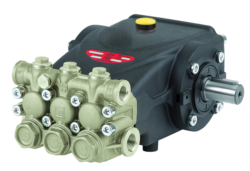
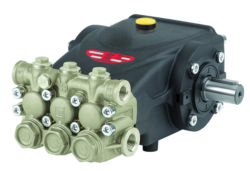
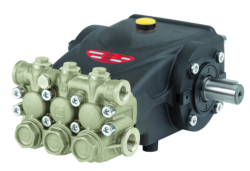
Mid-Range Displacement Pumps (1500cc class): The Interpump PUMP E3B2515I R and Interpump PUMP E3B2515 L represent the 2500-displacement segment. These models deliver strong performance for standard industrial cleaning, mobile equipment, and medium-duty industrial applications. The right-hand rotation variant (R) versus left-hand (L) affects integration complexity and shaft coupling requirements—factors directly influencing installation costs and commissioning timelines.
Enhanced Capacity with Integrated Components: The Interpump PUMP E3B1515 DX with Valve and Gearbox RS500H combines pumping capacity with integrated directional valve and gearbox, reducing overall component count and assembly requirements. From a procurement perspective, integrated units often present false economy: while component count decreases, replacement costs escalate (complete unit replacement rather than component swap), and supply chain dependencies intensify.
Specialized Small Displacement: The Interpump PUMP E3C1021 DX with Valve and Nozzle targets applications requiring precise flow control and compact installation. The 1021cc displacement sits significantly lower, making this model suitable for laboratory equipment, small-scale industrial cleaning, or portable systems where weight and space constraints exist.
Key Comparative Metrics for Procurement Decisions
When comparing pump models, evaluate these factors beyond raw specifications:
1. Operational Efficiency at Partial Load
Most industrial equipment operates at 40-70% of rated capacity. Pump models vary significantly in efficiency curves across load ranges. High-displacement pumps designed for peak performance often exhibit poor efficiency when operating at partial loads, consuming excess energy and generating unnecessary heat. Evaluate manufacturer efficiency curves across your anticipated operational envelope—not just peak specifications.
2. Maintenance Access and Component Availability
The Interpump PUMP E3C1515 L represents established product lines with mature supply chains and readily available replacement components. Newer or specialized models may offer advanced features but introduce supply chain risks, extended lead times, and higher maintenance costs due to limited component standardization. For global operations, component availability across your regional footprint substantially impacts total cost of ownership.
3. Integration vs. Modularity Trade-offs
Integrated units like the E3B1515 DX with Gearbox reduce initial assembly requirements but compromise flexibility. If your operational requirements evolve—new pressure setpoints, modified directional control sequences, or equipment redeployment—integrated systems may require complete replacement rather than component modification. Modular pump configurations (pump + separate valve + separate gearbox) enable selective upgrades and reduce waste when operational parameters shift.
4. Pressure Rating vs. Application Demands
Procurement engineers frequently over-specify pressure ratings, selecting pumps rated to 280 bar when applications require 210 bar. Higher pressure ratings increase manufacturing complexity, component costs, and energy consumption. However, modest over-specification (10-15% above peak requirements) provides operational safety margin without proportional cost increases. Evaluate your actual system pressure requirements across all connected equipment—maximum pressure is determined by your least-robust component, not your pump's peak capability.
Global Supply Chain Considerations
Regional Availability and Lead Time Impact
With operations spanning multiple continents, procurement engineers must account for regional supply chain dynamics. Interpump products distributed through 3G Electric's global network exhibit varying lead times depending on your geographic region. European-sourced models typically offer faster delivery within EU operations but may require 8-12 week lead times for Asian or Americas deployment.
When comparing pump models for global procurement:
- Standardized Models with High Production Volume: The E3B2515 series (both I R and S variants) benefit from established manufacturing relationships and distributed inventory across 3G Electric's global network. Standard lead times typically span 4-6 weeks regardless of destination region.
- Specialized Configurations: Integrated units like the E3B1515 DX with Gearbox RS500H often require 10-14 week lead times as custom component assembly occurs near point-of-use to minimize shipping volume and weight.
- Component Sourcing Flexibility: Modular pump configurations enable hybrid sourcing strategies—procuring the core pump unit from established inventory while sourcing ancillary components (valves, gearboxes) from regional suppliers, potentially reducing overall lead time and transportation costs.
Procurement strategy should incorporate these lead time variations into equipment replacement cycles and capital planning. Critical operational equipment warrants maintaining strategic spare inventory for high-volume standard models, while specialized units may justify just-in-time ordering despite longer lead times.
Cost Structure Analysis Across Product Tiers
Interpump's product range exhibits different cost structures reflecting manufacturing complexity and production volume:
Economy Segment (1021cc displacement): Lower capital cost but typically exhibits higher operational costs across energy consumption and maintenance. Appropriate for lower-utilization applications or environments where equipment replacement cycles are short (2-4 years).
Mainstream Segment (2500cc displacement variants): Optimal cost-performance balance for 60-70% of industrial applications. Established supply chains, reasonable lead times, and moderate component costs. Suitable for 5-8 year asset lifecycles in typical industrial environments.
Premium/Integrated Segment: Higher capital cost justified by reduced assembly requirements and integrated functionality. Evaluate TCO carefully—while initial acquisition cost increases 15-25%, potential labor savings and reduced commissioning time may offset premium pricing across multi-unit deployments.
Practical Procurement Framework
Establishing Your Decision Matrix
Structure pump selection decisions around documented operational requirements:
Step 1: Quantify Actual Performance Demands
- Peak operating pressure (bar) across your most demanding application
- Sustained operating pressure for typical operations (usually 60-70% of peak)
- Flow rate requirements (liters per minute) at both peak and sustained conditions
- Duty cycle characterization (continuous, intermittent, seasonal variations)
- Document displacement requirements across all intended applications
- Identify common displacement values enabling standard spare inventory policies
- Flag applications requiring specialized configurations (integrated valves, directional control)
- Document typical lead times for candidate models across your geographic footprint
- Evaluate inventory availability through 3G Electric's global distribution network
- Calculate procurement costs including transportation, tariffs, and cross-border logistics
Acquisition Cost + (Annual Maintenance Cost × Expected Service Life in Years) + (Energy Cost Premium × Annual Operating Hours × Service Life) + (Supply Chain Risk Premiums)
For most industrial applications, the pump acquisition cost represents only 20-30% of total ownership cost. Energy consumption, maintenance requirements, and supply chain reliability often dominate long-term expense.
Step 5: Validate Against Strategic Sourcing Objectives
- Align equipment selection with existing supplier relationships through 3G Electric
- Consider standardization benefits—standardizing on 2-3 pump models across operations reduces spare parts inventory, technician training requirements, and procurement complexity
- Evaluate flexibility for future modifications without requiring complete equipment replacement
Documentation and Procurement Authorization
Effective procurement practices require documented specifications preventing costly errors:
1. Specification Sheets: Develop written specifications for each approved pump model, including displacement, pressure rating, rotational direction, port configuration, and material certifications required for your industry
2. Compatibility Matrix: Document validated configurations confirming specific pump models operate successfully with your motor types, valve sets, accumulator specifications, and control systems
3. Warranty and Support Terms: Establish clear expectations regarding Interpump product warranties, 3G Electric support response times, and component availability guarantees
4. Lead Time Buffer: Build procurement timelines incorporating realistic lead times plus 20% contingency buffer for unexpected delays
Summary: Strategic Pump Selection for Procurement Excellence
Pumps & Compressors selection succeeds when procurement engineers move beyond specification comparison toward holistic evaluation encompassing performance requirements, cost structures, supply chain reliability, and operational flexibility. The Interpump portfolio—represented by models from compact 1021cc displacement units through integrated 2500cc systems—offers solutions across diverse industrial applications.
3G Electric's 35+ years of global distribution experience has demonstrated that procurement success correlates with decisions grounded in documented operational requirements, realistic cost accounting across equipment lifespans, and supplier relationships supporting long-term operational reliability. By implementing structured evaluation frameworks and maintaining strategic flexibility for future modifications, procurement engineers optimize equipment investment while mitigating operational risks across global operations.
Your pump selection decisions today establish operational parameters, maintenance cost structures, and supply chain dependencies extending across 5-10 years of operations. Invest the analytical effort upfront to ensure your selections align with actual requirements, realistic cost structures, and organizational risk tolerance.