Understanding the Energy Efficiency Challenge in Pumps & Compressors
Energy costs represent 15-30% of total operational expenses in most industrial facilities, with Pumps & Compressors accounting for approximately 40-50% of that consumption. Unlike maintenance costs that spike unexpectedly, energy expenses accumulate continuously—making efficiency improvements one of the most predictable ROI investments available to plant managers.
The critical distinction between pumps and compressors often confuses procurement decisions. Pumps move incompressible fluids (hydraulic oil, water, coolants) at varying pressures, while compressors reduce compressible gases to higher pressures for storage or delivery. Despite this fundamental difference, both systems share identical efficiency principles: minimizing energy waste through proper specification matching, variable speed operation, and load-appropriate configurations.
3G Electric's 35+ years as an global industrial equipment distributor has revealed a consistent pattern: facilities achieve 15-25% energy reductions not through expensive equipment replacement, but through specification optimization. Plant managers who understand their actual operating conditions—rather than theoretical maximum requirements—consistently outperform peers on energy metrics.
Specification Matching: The Primary Driver of Efficiency Gains
Most industrial systems operate far below their rated capacity. A pump specified for peak seasonal demand runs oversized during normal operations, consuming excess energy for every operating hour. This oversizing represents invisible waste—the system functions adequately, masking the efficiency penalty.
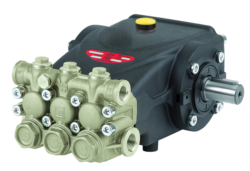
Consider displacement and flow rate interaction. The Interpump PUMP E3B2515I R delivers consistent displacement across its operational range, but efficiency varies dramatically with load. Operating at 60% of rated capacity wastes approximately 30% more energy than operating at 85% capacity. Conversely, undersized equipment forces higher pressure compensation, equally wasteful.
Effective specification matching requires three data points:
- Actual sustained flow requirements (not peak theoretical demand): Measure real system demand across typical operating cycles over 30-day periods. Most facilities discover actual needs are 30-40% below original specifications.
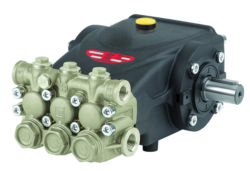
- Pressure profile across operational windows: Many systems require full rated pressure only during specific process phases. The Interpump PUMP E3B2515 L can be configured with pressure control systems that reduce output pressure during low-demand periods, recovering 8-12% energy efficiency during those operational phases.
- Load variability and seasonal patterns: Manufacturing facilities experience significant seasonal fluctuations. A system optimized for year-round peak load wastes substantial energy during lower-demand periods. Identifying true baseline, normal, and peak demand windows enables right-sizing strategies.
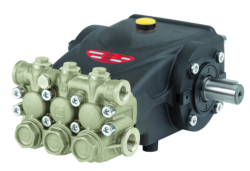
The Interpump PUMP E3B1515 DX*VALV.DX + GEARBOX RS500H exemplifies specification sophistication—combining valve technology with integrated gearbox ratios to match system requirements more precisely. Rather than forcing a single pump speed to handle variable demand, gearbox configurations allow speed reduction during normal operations, with proportional energy savings.
Variable Speed and Load-Proportional Operation
Traditional fixed-displacement pumps and compressors operate at constant speed regardless of actual system demand. When demand decreases, pressure relief valves dump excess flow back to tank or atmosphere—energy converted entirely to waste heat. This represents the largest controllable efficiency loss in most industrial systems.
Variable displacement equipment adjusts output based on actual demand, fundamentally changing the efficiency equation. A pump operating at 50% displacement consumes approximately 55-60% of full-load energy—not 50%, but substantially less than fixed-displacement alternatives at equivalent load.
Implementing variable speed requires understanding your system's demand profile:
- Compressor systems benefit significantly from variable displacement because peak pressure demands are intermittent. The Interpump PUMP E3C1021 DXV.DXNO.C/J configuration enables proportional output adjustment, reducing energy consumption during lower-pressure demand periods while maintaining system responsiveness.
- Hydraulic pump systems with variable loads show 20-35% energy improvements through variable displacement operation. The key is matching displacement range to actual operating windows—oversized displacement capabilities waste energy during typical operations just as oversized fixed-displacement units do.
- Pressure compensator settings directly influence energy consumption. Conservative pressure settings (closer to actual system requirements rather than theoretical maximums) reduce relief valve bypass and heat generation. Reviewing pressure settings annually often reveals 3-5% efficiency improvements at zero capital cost.
The Interpump PUMP E3C1515 L exemplifies modern design philosophy—integrating variable displacement capabilities with efficient pressure compensation. Systems using this equipment in variable-load applications report sustained 18-22% energy reductions compared to fixed-displacement predecessors.
Thermal Management and System Integration Effects
Energy efficiency extends beyond individual pump or compressor selection—system-level thermal management amplifies or erases equipment-level improvements. A highly efficient pump discharging into a poorly designed hydraulic circuit with excessive heat loss negates efficiency gains.
Heat generation in Pumps & Compressors operates through two mechanisms: mechanical friction within the equipment, and energy waste through pressure relief and throttling. High-efficiency equipment reduces the first; intelligent system design reduces the second.
Plant managers should evaluate:
- Cooler sizing and operation: Undersized coolers force higher system temperatures, degrading fluid viscosity and increasing internal leakage losses in both pumps and motors. Conversely, oversized coolers with always-on operation consume unnecessary energy. Load-proportional cooler control (variable fan speed based on system temperature) typically recovers 4-6% system efficiency.
- Filtration system pressure drop: Clogged filters increase system pressure requirements, forcing higher pump pressures and energy consumption. Implementing differential pressure indicators with predictive change schedules prevents efficiency creep. A 0.5 bar pressure drop increase across a filter costs approximately 2-3% additional energy across the operating year.
- Hose and circuit routing: Unnecessarily long hose runs and excessive bends create pressure drops that force higher pump discharge pressures. Reviewing circuit layouts during routine maintenance often identifies opportunities for pressure loss reduction, yielding 2-4% system efficiency improvements.
- Integrated gearbox selection: The combination of pump displacement with gearbox ratios determines operational efficiency across your actual speed range. A pump running at 1200 RPM with a 2:1 reduction gearbox (creating 600 RPM output) often delivers better efficiency than higher-speed pump configurations with proportional displacement increases. This is why the Interpump PUMP E3B1515 DX with RS500H gearbox configuration proves more efficient than theoretically equivalent single-speed alternatives—matching displacement and speed to actual system requirements.
Thermal management becomes critical in global operations where ambient temperatures vary significantly. Equipment specified for temperate climates operates with reduced efficiency in high-temperature regions due to increased cooling demands and fluid degradation. 3G Electric's experience across 35+ years and multiple climate zones demonstrates that thermal design considerations often outweigh displacement specifications in determining real-world efficiency.
Practical Implementation Framework for Plant Managers
Transitioning from theoretical efficiency to measurable operational improvement requires structured implementation:
Phase 1: Baseline Documentation (Week 1-2)
Measure actual operating conditions: discharge pressure under normal and peak loads, flow rates across typical cycles, ambient temperatures, cooler discharge temperature, and energy consumption (kW hours or fuel consumption). Most facilities discover 20-30% variance between design assumptions and actual conditions.
Phase 2: Gap Analysis (Week 3-4)
Compare your current equipment specifications against documented actual requirements. Calculate the efficiency penalty of oversizing, fixed-speed operation, and poor thermal management. Quantify potential improvements in kWh per month.
Phase 3: Equipment Evaluation (Week 5-6)
Work with 3G Electric's technical team to evaluate alternative configurations addressing identified gaps. Consider whether variable displacement, different displacement ratings, or integrated solutions like the Interpump PUMP E3C1515 L better match your actual profile. Request energy consumption estimates based on your documented duty cycle, not theoretical scenarios.
Phase 4: Pilot Implementation (Month 2-3)
If substantial improvements are identified, implement on one equivalent system first. Monitor actual energy consumption and operational parameters for 4-6 weeks. Real-world verification prevents over-specification of the "improved" solution.
Phase 5: Scaling and Continuous Monitoring
Once pilot results confirm projected improvements, apply to remaining systems. Establish quarterly efficiency audits monitoring pressure settings, cooler performance, filter cleanliness, and thermal management. Small monthly adjustments prevent efficiency creep that typically reduces energy savings 15-20% annually if unmanaged.
This systematic approach has enabled 3G Electric customers to achieve average energy improvements of 18-24% within six months, with implementation costs recovered in 14-22 months through reduced energy consumption. More importantly, these improvements prove sustainable because they're based on actual operational requirements rather than theoretical specifications.