Understanding Pumps & Compressors Performance Metrics
Pumps & Compressors are critical infrastructure components that require precise specification matching to avoid costly downtime and inefficient operations. With over 35 years of experience as a global industrial equipment distributor, 3G Electric has guided thousands of procurement engineers through the complexities of equipment selection. Rather than generic "one-size-fits-all" recommendations, this guide focuses on the quantifiable performance metrics that drive procurement decisions.
The foundation of smart Pumps & Compressors procurement begins with understanding three core performance indicators: displacement volume (measured in cc/rev or cm³), maximum operating pressure (bar or PSI), and actual flow rate delivery under load. Many procurement engineers overlook the critical difference between theoretical displacement and real-world performance, leading to specifications that look correct on paper but underperform in actual installations.
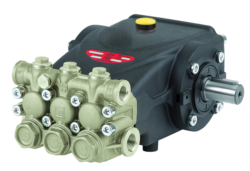
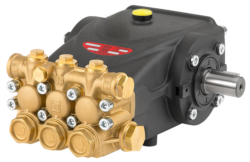
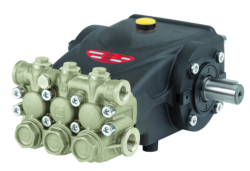
Displacement volume directly correlates to the pump's ability to move fluid per revolution. A higher displacement pump delivers more volume per cycle, but requires more input power. The Interpump PUMP E3B2515I R features a displacement that balances flow delivery with reasonable power requirements for standard industrial applications. Understanding your actual volumetric requirements—not theoretical maximums—prevents over-specification and reduces operational costs.
Pressure rating represents the maximum stress the pump housing can withstand while maintaining reliability. This specification varies significantly across models and directly impacts component longevity. Specifying equipment below maximum pressure ratings provides safety margins and extends service intervals, while undersizing pressure ratings invites catastrophic failure.
Comparative Analysis Framework for Equipment Selection
Procurement engineers managing global operations face significant complexity when standardizing equipment across multiple facilities. The decision matrix approach eliminates ambiguity by comparing key specifications side-by-side across candidate models.
Displacement and Flow Comparison
The Interpump PUMP E3B2515 L and Interpump PUMP E3B1515 DX*VALV.DX + GEARBOX RS500H serve different operational purposes despite similar naming conventions. The E3B2515 L model emphasizes flow capacity with its larger displacement geometry, making it suitable for applications requiring high-volume transfer at moderate pressures. The E3B1515 series, when paired with the RS500H gearbox configuration, provides mechanical advantage for pressure multiplication while accepting lower flow rates.
Your procurement decision hinges on the specific application demand. High-volume, lower-pressure applications (such as transfer and circulation systems) require flow-optimized pumps. Conversely, applications demanding precise pressure multiplication with controlled flow—common in manufacturing equipment and presses—benefit from smaller displacement pumps paired with mechanical advantage systems.
Pressure and Power Requirements
Pressure specifications directly impact downstream component costs and system efficiency. A specification 20% above actual requirement unnecessarily increases component pricing across hydraulic lines, fittings, hoses, and relief valves. Over-specification also increases energy consumption without performance benefit.
The Interpump PUMP E3C1021 DXV.DXNO.C/J and Interpump PUMP E3C1515 L represent Interpump's precision-engineered series designed for applications where pressure control and flow consistency directly impact product quality. These models incorporate valve systems optimized for stable pressure delivery, reducing downstream pressure spikes that damage connected equipment.
Operational Efficiency Considerations
Efficiency metrics extend beyond mechanical specifications to include volumetric efficiency (actual flow delivered vs. theoretical maximum) and overall system efficiency when integrated with drivers and support equipment. Industrial Pumps & Compressors typically operate at 85-95% volumetric efficiency depending on design and condition. Older equipment or models with loose tolerances may perform at 75-80% efficiency, directly impacting long-term operational costs.
When evaluating total cost of ownership over a 10-year equipment lifecycle, a 10% efficiency improvement translates to thousands of dollars in energy savings. Many procurement engineers focus exclusively on acquisition cost while overlooking these cumulative operational expenses.
Integration and Compatibility Considerations
Pumps & Compressors do not operate in isolation. Successful procurement requires understanding integration points with existing infrastructure, including driver power sources, fluid management systems, and control mechanisms.
Driver Compatibility and Power Requirements
Pump selection must align with available prime movers. An electric motor-driven installation differs significantly from engine-driven or variable-speed drive applications. The Interpump PUMP E3B2515I R integrates effectively with standard three-phase electric motors, while variable displacement models may require auxiliary components for pressure compensating systems.
Procurement engineers must specify pump displacement with corresponding motor horsepower, including service factors. Undersizing motor capacity relative to pump displacement creates chronic overheating and premature failure, while oversizing drives unnecessary energy consumption. Professional specifications include calculated input torque, speed (RPM), and power factor to match available drivers.
Fluid Management Systems
Pump performance depends critically on fluid condition. Hydraulic fluid contamination causes accelerated wear in precision pumps, reducing service life from expected 10,000+ hours to less than 2,000 hours. Specifying compatible filtration systems, fluid types, and reservoir sizing becomes part of the integrated Pumps & Compressors strategy.
The Interpump PUMP E3B1515 DX*VALV.DX + GEARBOX RS500H configuration includes integrated valve systems that require specific fluid viscosity ranges. Specifying incorrect fluid viscosity—a common procurement oversight—creates performance issues indistinguishable from equipment failure. Fluid selection drives pump efficiency, response time, and service intervals.
Control and Monitoring Integration
Modern Pumps & Compressors operate within larger automated systems requiring pressure monitoring, flow feedback, and load-responsive control. Pressure compensators, load-sensing governors, and proportional valve systems add significant cost but optimize energy consumption and equipment protection.
Procurement decisions should evaluate whether fully compensated systems justify their cost premium for specific applications. Constant-displacement pump systems with simple relief valves cost less initially but waste considerable energy in applications with variable load profiles.
Global Supply Chain and Procurement Strategy
With 35+ years of experience as an experienced global distributor, 3G Electric understands the complexities of securing consistent equipment across international operations. Standardization on specific pump models—such as the Interpump series—simplifies maintenance, reduces spare parts inventory, and enables technician skill development across multiple facilities.
Standardization Benefits
Global operations benefit tremendously from equipment standardization. Rather than maintaining expertise across dozens of pump models, technicians become expert on two or three standardized models. Parts inventory becomes predictable. Procurement cycles accelerate when specifications are pre-approved globally. A procurement engineer supporting facilities in Singapore, Europe, and North America can confidently specify the Interpump PUMP E3C1515 L across all regions, knowing that replacement parts, technical support, and operator training transfer seamlessly.
Lead Time and Availability Management
Global supply chain disruptions increasingly impact industrial equipment procurement. Equipment standardization allows advance inventory positioning and demand forecasting. Identifying critical spare parts—such as complete pump assemblies—and pre-positioning inventory at strategic locations reduces production downtime risk.
Technical Support and Documentation
3G Electric maintains comprehensive technical documentation, specification sheets, and application notes for all referenced equipment. Procurement engineers benefit from access to proven installation procedures, maintenance schedules, and troubleshooting guides that accelerate project timelines. Rather than deciphering manufacturer documentation in multiple languages, standardized equipment partnerships provide consistent support.
Performance Optimization and Long-Term Value
Successful Pumps & Compressors procurement extends beyond initial specification to include commissioning optimization and ongoing performance monitoring. Many installations perform below design capabilities due to improper startup procedures or suboptimal system configuration.
Commissioning Procedures
Proper fluid flushing before initial operation removes manufacturing residues and installation contamination that damage pump internals. Air purging ensures stable pressure delivery in initial operation. Pressure and flow verification against specifications confirms correct installation. Many procurement engineers delegate these critical steps to field technicians without proper procedures, compromising equipment longevity.
Preventive Maintenance Integration
Pumps & Compressors performance depends on fluid condition maintenance and proper operating parameters. Fluid analysis programs—monitoring viscosity, particle contamination, and water content—predict equipment issues before catastrophic failure. Procurement decisions should include maintenance program specifications that extend equipment service life by 50-100%.
Specifying regular filter changes, fluid analysis at predetermined intervals, and periodic pump performance testing creates measurable value throughout the equipment lifecycle. Procurement engineers who integrate preventive maintenance into specifications significantly reduce total cost of ownership while improving operational reliability.