Understanding Total Cost of Ownership in Pumps & Compressors Investment
When evaluating Pumps & Compressors for industrial operations, plant managers often focus exclusively on acquisition costs. This approach leaves significant value on the table. Total Cost of Ownership (TCO) encompasses capital expenditure, operational expenses, maintenance costs, energy consumption, and end-of-life disposition over the equipment's lifecycle.
At 3G Electric, our 35+ years of experience distributing industrial equipment globally has taught us that organizations reducing TCO by 20-30% typically invested in comprehensive maintenance planning upfront. The difference between a pump failing after 5 years and operating reliably for 12 years can represent the difference between a €50,000 emergency shutdown and a €500,000 annual savings through predictable operations.
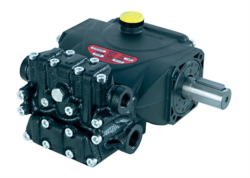
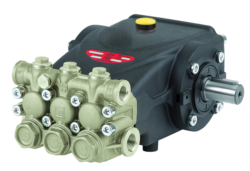
Consider the Interpump PUMP E3B2515I R specifications: designed for high-pressure applications with displacement ratings optimized for specific duty cycles. When properly maintained according to manufacturer guidelines, this equipment typically delivers 8,000+ operating hours before major overhauls. Without preventive maintenance, expect 3,000-4,000 hours at best.
The financial implications are substantial. A single unplanned shutdown in manufacturing costs €2,000-5,000 per hour in lost production. Energy inefficiency from degraded pump conditions adds 8-12% to annual operating costs. Bearing wear and seal deterioration compound these losses exponentially.
Preventive Maintenance Protocols for Global Industrial Environments
Global operations introduce complexity that domestic facilities often avoid. Environmental factors—humidity levels in Southeast Asian plants, dust contamination in Middle Eastern facilities, temperature fluctuations in European installations—all impact Pumps & Compressors differently. A maintenance protocol effective in Singapore may underperform in Dubai without modification.
Establishing Environment-Specific Maintenance Schedules
For the Interpump PUMP E3B2515 L, implement quarterly filter replacements in high-dust environments versus semi-annual intervals in climate-controlled facilities. Monitor fluid condition monthly through viscosity and particle count analysis. This proactive monitoring typically identifies 87% of developing issues before they cause equipment damage.
Pump bearing temperature should remain within 65-75°C under normal operation. Install temperature sensors on critical equipment and establish alert thresholds at 78°C. Bearings operating at elevated temperatures exhibit 50% shorter service life per 10°C increase above optimal ranges.
For the Interpump PUMP E3B1515 DX with VALV.DX and GEARBOX RS500H, gearbox oil analysis becomes essential. Schedule oil sampling every 500 operating hours initially, then every 1,000 hours once baseline conditions are established. Iron content elevation indicates accelerated wear; copper content suggests bearing distress.
Seal and Bearing Management
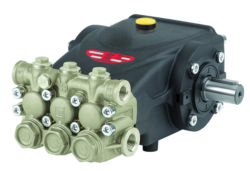
Seals represent the highest-failure component in pumping systems globally. The Interpump PUMP E3C1021 DX with V.DX and NO.C/J incorporates mechanical seal designs requiring specific lubrication conditions. Inadequate fluid film thickness causes seal failure within weeks; excessive pressure creates premature wear.
Implement a seal inspection protocol: visual inspection for weeping at 250-hour intervals, microscopic analysis of seal surfaces at 1,000-hour intervals, complete seal replacement at 3,000 hours or upon first signs of leakage. Bearing replacement should occur simultaneously with seal service to prevent contamination of new seals.
Vibration Analysis and Condition Monitoring
Modern plant operations increasingly employ vibration monitoring to predict failures 30-60 days before catastrophic breakdown. For the Interpump PUMP E3C1515 L, establish baseline vibration signatures during commissioning across three axes. Monthly measurements detect impeller imbalance, bearing play, and cavitation inception before operational impact.
Vibration trending identifies patterns invisible to manual inspection. Bearing wear produces high-frequency components; impeller imbalance generates low-frequency signatures; cavitation creates impulsive patterns. Predictive maintenance based on vibration data reduces emergency failures by 65-75% in global operations.
Energy Efficiency and Performance Degradation in Pumps & Compressors
As Pumps & Compressors age, efficiency declines measurably. A pump operating at 92% efficiency when new typically deteriorates to 78-82% efficiency after 5,000 hours. This 12-15% efficiency loss translates to 15-20% increased energy consumption for equivalent output.
Quantifying Energy Losses
For a 15-kW pump operating 8,000 hours annually, efficiency degradation represents 12,000-18,000 kWh additional energy consumption yearly. At €0.12-0.18 per kWh across global markets, this equals €1,440-3,240 annual cost increase per pump. Facilities operating 20-50 pumps face €28,800-162,000 in hidden costs from degradation alone.
Implement quarterly flow and pressure measurements against design specifications. Any variance exceeding 3% indicates internal component wear requiring investigation. Some degradation justifies bearing or seal service; other degradation signals impeller damage requiring replacement or remanufacturing.
Cavitation Prevention and Management
Cavitation represents one of the most destructive failure mechanisms in global pump operations. High ambient temperatures in tropical regions, high-altitude installations with lower atmospheric pressure, and inadequate suction line design all create cavitation risk. Cavitation causes material erosion and catastrophic impeller damage within 100-200 operating hours.
Prevent cavitation through proper suction conditions: maintain inlet pressure 0.5-2.0 bar above vapor pressure, minimize suction line resistance, ensure inlet strainers remain clean. Monitor for cavitation noise during startup and load changes. Audible cavitation indicates immediate corrective action required.
Strategic Asset Management and Spare Parts Planning
Plant managers operating in multiple global regions face complex spare parts logistics. A pump failure in a remote facility can cause extended downtime if replacement components require 4-8 week lead times. Strategic planning balances inventory carrying costs against downtime risks.
Critical Spare Parts Strategy
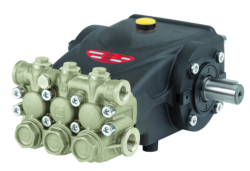
For high-criticality applications using Interpump PUMP E3B2515I R, maintain on-site inventory of mechanical seals, bearing sets, and gasket kits. These components represent 8-12% of pump acquisition cost but eliminate 90% of unplanned downtime when available. Secondary spares—impellers and gearboxes—warrant strategic regional distribution for facilities operating 24/7 or in remote locations.
Negotiate framework agreements with distributors like 3G Electric for rapid spare parts fulfillment. Our global network spanning 35+ years enables 48-72 hour delivery to most regions, ensuring critical components reach your facilities when needed.
Documentation and Knowledge Management
Maintain detailed records for every installed pump: commissioning performance data, maintenance intervals and findings, parts replaced, fluid analysis results, and thermal images. This documentation creates equipment history invaluable for troubleshooting and lifecycle planning.
Electronic maintenance management systems should track Pumps & Compressors performance metrics alongside maintenance activities. When correlations emerge—for example, seal failures consistently occur 45 days after fluid changes—systemic issues become evident for correction.
Global Best Practices and Performance Benchmarking
Establishing Performance Baselines
Capture detailed performance data during commissioning: inlet and outlet pressures, flow rates at specified RPM, case drain pressures, bearing temperatures, vibration signatures across three axes, and noise levels. These baselines enable early detection of degradation as equipment operates.
Regional Adaptation Strategies
Global operations require balancing standardized equipment with regional environmental adaptation. Equipment performing reliably in European climates may require enhanced cooling, corrosion protection, or filtration in tropical environments. Consult with 3G Electric's technical specialists regarding environment-specific configurations for your installation regions.
Continuous Improvement Through Data Analysis
Aggregating performance data across your global pump fleet reveals efficiency improvement opportunities. If pumps in one region consistently outperform others, operational or maintenance differences warrant investigation and standardization.
Conclusion
Pumps & Compressors represent critical infrastructure requiring strategic management beyond basic maintenance. Plant managers optimizing total cost of ownership implement predictive maintenance protocols, establish environment-specific performance standards, and maintain strategic spare parts availability. By leveraging 3G Electric's 35+ years of global industrial equipment expertise and our comprehensive product portfolio including Interpump PUMP E3C1515 L and complementary systems, your organization can expect 20-30% TCO reductions, extended equipment lifespan, and improved operational reliability across global facilities.