Understanding Pumps & Compressors Commissioning Objectives
Commissioning represents the validation phase where Pumps & Compressors transition from procurement documentation to operational equipment. For procurement engineers, this is where contractual specifications meet real-world performance, and discrepancies often emerge. Drawing on 35+ years of industrial equipment distribution experience, 3G Electric recognizes that commissioning failures typically stem from inadequate baseline testing rather than equipment defects.
The commissioning phase serves three critical functions: confirming that delivered equipment matches purchase specifications, establishing baseline performance metrics for future comparison, and identifying installation or integration issues before production loads commence. Procurement engineers must actively participate in this phase to protect organizational interests and ensure warranty coverage remains valid.
Key commissioning objectives include pressure validation under no-load and rated-load conditions, flow rate measurement against manufacturer specifications, motor current and power consumption verification, thermal stability assessment during extended operation, and noise/vibration baseline documentation. Each of these parameters directly impacts equipment warranty validity and provides early warning of specification mismatches or component degradation.
Pre-Commissioning Documentation and Specification Verification
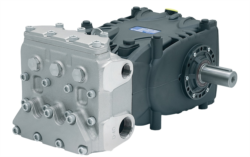
Before any physical testing begins, procurement engineers should conduct a comprehensive document review. Compare the delivered equipment's nameplate specifications against your purchase order, manufacturer datasheets, and system design calculations. For high-performance equipment like the Pratissoli KF30, verify that the actual model designation matches orders—these Italian-engineered pumps deliver 106 L/min at 200 bar with 40 kW power input, specifications that must align precisely with your system design.
Examine shipping documentation, manufacturer test certificates, and equipment serial numbers. Verify that all certifications (pressure vessel marks, electrical compliance, performance test reports) accompany the equipment. Document any visible damage, corrosion, or discrepancies in paint conditions that might indicate improper storage or handling during transit—critical in Singapore's tropical climate where humidity and salt air accelerate corrosion.
Request original manufacturer documentation for all components. When procuring units like the Pratissoli MW40 (211 L/min at 210 bar, 85 kW), ensure you receive factory test curves showing pressure-flow relationships across the operating range. These curves become your baseline for detecting future performance degradation. Verify motor nameplate data: voltage, frequency (50 Hz for Singapore), phase, power factor, and thermal protection settings.
Document ambient conditions at installation: temperature, humidity, elevation, and any environmental contamination sources. High ambient temperatures in Singapore can reduce cooling effectiveness, especially for equipment not specifically rated for tropical operation. Request clarification from suppliers if equipment specifications don't explicitly address 35°C+ ambient conditions common in Southeast Asian industrial facilities.
Active Commissioning Testing Protocol
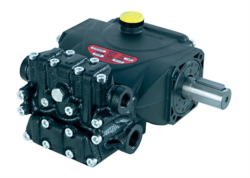
Commissioning testing must follow a structured protocol with documented results at each stage. Begin with static checks: verify foundation bolting, alignment, and coupling integrity before any rotation occurs. For compact gear pumps like the Interpump E1D1808, manual rotation should rotate freely without binding—any resistance indicates internal damage or assembly errors.
Perform initial rotation tests at reduced speed (typically 25-50% rated rpm) for 10-15 minutes while monitoring for unusual sounds, vibrations, or leakage. Document outlet pressure, inlet conditions, and motor current during this phase. This low-speed run-in period allows bearing seating and confirms proper directional rotation before introducing rated operating conditions.
Transition to pressure ramp testing, increasing system pressure in 20-30 bar increments while monitoring flow rate, motor current, temperature rise, and noise levels. Record data at each pressure step: maintain steady-state conditions for at least 5 minutes before advancing. For equipment like the Interpump ET1C1612 rated at 160 bar with 12 L/min delivery, measure actual flow using calibrated flow meters—common discrepancies of 5-8% may indicate manufacturing tolerance variations requiring supplier clarification.
Measure pump/motor temperature at 30-minute intervals during full-load operation. Establish thermal equilibrium curves—temperature should stabilize within 2-3 hours of continuous operation. Excessive temperature rise (>60°C above ambient) suggests inadequate cooling, cavitation, or internal component binding. For high-power equipment like the Pratissoli SS71153 operating at 800 rpm with 37.5 kW motor input, temperature management becomes critical in Singapore's heat-intensive industrial environments.
Document vibration severity using qualitative assessment (hand feel at pump casing) and quantitative measurement if vibration analysis equipment is available. Establish baseline vibration signatures for future condition monitoring. Compare your measured data against manufacturer performance curves—deviations exceeding ±5% should trigger investigation with equipment suppliers before final acceptance.
Test all safety and protective devices: pressure relief valve operation, thermal overload protection response, and emergency shutdown systems. Verify that relief valves open at specified pressure ±5 bar. These acceptance tests protect your organization from inheriting latent defects masked by inadequate commissioning.
Post-Commissioning Documentation and Long-Term Performance Tracking
Commissioning completion requires comprehensive documentation that serves multiple purposes: warranty claim support, preventive maintenance scheduling, performance degradation detection, and troubleshooting reference. Create a commissioning report package containing nameplate photographs, baseline performance test results, thermal behavior curves, and noise/vibration signatures.
Establish a performance tracking system comparing periodic measurements against commissioning baselines. Monitor pressure-to-flow relationships—declining flow at constant pressure indicates internal wear, cavitation, or suction-side restrictions. Compare motor current against baseline values; increasing current at identical operating conditions suggests mechanical resistance increase from bearing wear or component degradation.
Implement monthly baseline trend tracking for critical parameters. Plot temperature rise against operating hours to identify accelerating thermal performance loss. Track noise signature changes—increasing noise at specific operating frequencies often precedes mechanical failure. These trend analyses provide procurement teams with objective data for warranty claims or supplier performance disputes.
Maintain detailed operating logs recording ambient temperature, system pressure, flow rate, motor current, and equipment temperature during normal operations. Over 6-12 months, these logs establish seasonal variation patterns and identify anomalies requiring investigation. Temperature fluctuations exceeding ±5°C at identical operating conditions warrant inspection of cooling system effectiveness or internal component changes.
Document any maintenance performed during the commissioning warranty period. Record parts replaced, service duration, and performance changes resulting from maintenance. This information supports future maintenance scheduling and helps distinguish between inherent equipment issues versus maintenance-related degradation.
For procurement engineers managing equipment portfolios, maintain comparative performance data across multiple identical units (if procured). Significant performance variation between nominally identical equipment suggests manufacturing quality issues or installation problems requiring supplier escalation. This comparative data strengthens warranty claim positions when equipment fails to meet contractual specifications.
Troubleshooting Commissioning Failures
When commissioning tests reveal specification mismatches or performance shortfalls, systematic troubleshooting must precede equipment rejection. Common commissioning issues stem from installation problems rather than manufacturing defects—valve positioning, flow meter calibration, or suction-side restriction account for 40-50% of apparent failures.
Verify suction line conditions before attributing flow deficiencies to pump performance. Confirm inlet strainer cleanliness, suction line diameter, and lift height above fluid level. For positive displacement pumps like the Pratissoli and Interpump units referenced above, excessive suction-side restriction creates cavitation and apparent flow loss. Measure suction pressure using calibrated gauges—negative pressure exceeding -0.5 bar indicates suction-side problems unrelated to pump condition.
Validate pressure measurement accuracy before assuming relief valve malfunction or excessive system pressure. Verify pressure transducers against certified standards. Compare readings between multiple gauge locations—pressure gauge location errors and dynamic vs. static pressure measurement differences frequently cause acceptance disputes.
If measured flow rate falls below specification, measure outlet line backpressure under no-load conditions. Flow limitations may result from downstream system restrictions rather than pump performance. Isolate the pump from system components using temporary bypass lines to identify the source of flow restrictions.
For thermal performance concerns, measure fluid inlet temperature separately from motor cooling conditions. A pump operating at 60°C may be acceptable with 25°C inlet fluid but problematic with 35°C ambient conditions affecting cooling. Verify cooler effectiveness and confirm adequate fluid circulation through heat rejection paths.
Noise and vibration complaints require spectral analysis if available, or systematic elimination of external sources. Isolate pump vibration from mounting structure resonance by temporarily supporting the pump on soft isolators—sometimes 50% of measured vibration originates from structure amplification rather than pump condition.
When equipment fails commissioning acceptance, request detailed factory test reports from suppliers showing identical equipment units meeting specifications. Request expedited factory inspection of your unit or replacement equipment. Document all commissioning findings photographically and through recorded measurements. Maintain detailed correspondence with suppliers establishing clear evidence that commissioning failures are not installation or integration related.
Commissioning Checklist for Procurement Teams
Establish a standardized commissioning checklist ensuring consistent quality across all equipment acquisitions:
- Pre-Commissioning: Nameplate verification, shipping damage assessment, document completeness, ambient condition recording
- Static Checks: Foundation stability, bolt torque verification, alignment tolerance, coupling condition
- Initial Operation: Low-speed rotation test (25-50% rpm), sound/vibration baseline, leakage observation
- Pressure Testing: Incremental pressure ramp testing at 20-30 bar intervals, flow measurement at each step, motor current documentation
- Thermal Performance: Temperature stabilization confirmation, thermal rise rate measurement, cooler effectiveness validation
- Safety Systems: Relief valve response verification, overpressure protection testing, emergency shutdown confirmation
- Documentation: Photographic evidence, baseline data recording, baseline curve creation, performance signature documentation
- Final Acceptance: Comparison against manufacturer specifications, variance analysis, remedial action approval
With 35+ years of industrial equipment distribution experience, 3G Electric supports procurement engineers through all commissioning phases, providing technical guidance, specification verification, and supplier liaison services. Proper commissioning protects equipment investments and ensures warranty coverage remains valid throughout the operational lifecycle.