Understanding Pumps & Compressors Lifecycle in Southeast Asia
Pumps & Compressors are critical assets in Southeast Asian manufacturing, processing, and utility operations. Unlike many industrial components, these machines operate under continuous pressure cycles that accelerate wear patterns differently across tropical and subtropical climates. The equipment lifecycle—typically 5 to 15 years depending on duty cycle—demands proactive management strategies that account for regional environmental factors including high humidity, temperature fluctuations, and salt spray exposure in coastal facilities.
With over 35 years of distribution experience across Southeast Asia, 3G Electric has observed that maintenance teams often focus narrowly on failure response rather than lifecycle optimization. The most effective approach integrates four distinct phases: commissioning validation, operational monitoring, preventive interventions, and end-of-life assessment. This comprehensive strategy reduces unplanned downtime by 40-60% and extends equipment life by 25-35% compared to reactive maintenance approaches.
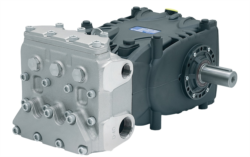
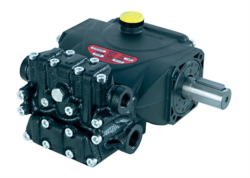
The challenge intensifies when equipment specifications don't match environmental conditions. High-performance industrial pumps like the Pratissoli KF30 (106 L/min at 200 bar) and Pratissoli MW40 (211 L/min at 210 bar) deliver exceptional flow and pressure ratings, but only when maintenance protocols align with actual operating conditions. Compact gear pumps such as the Interpump E1D1808 L (8 L/min at 180 bar) introduce additional complexity when deployed in high-temperature applications or those requiring sealed construction.
Phase 1: Commissioning and Baseline Establishment
The commissioning phase establishes the foundation for entire lifecycle management. Many maintenance teams skip rigorous baseline documentation, missing critical opportunities to detect degradation later. Proper commissioning involves three essential steps:
Baseline Performance Measurement: Record actual operating parameters against manufacturer specifications. For the MW40 pump rated at 211 L/min and 210 bar, baseline testing should confirm flow delivery within 2% of specification under controlled conditions. Use calibrated flow meters and pressure transducers, not estimation. This baseline becomes the reference point for all future condition assessments.
Environmental Condition Profiling: Document ambient temperature ranges, relative humidity cycles, vibration levels at mounting points, and electrical supply quality. Southeast Asian facilities often experience 10-15°C temperature swings within 24 hours during monsoon seasons, plus humidity levels exceeding 85%. These conditions accelerate seal degradation and corrosion if not properly addressed during commissioning. Specify corrosion-resistant materials for Interpump ET1C1612 SX*D20 units operating in coastal or chemical processing environments where PTFE construction provides superior durability.
System Integration Testing: Verify that pump discharge pressures remain stable under varying flow demands, that relief valves function at design settings, and that filtration systems maintain ISO 16/14/11 cleanliness levels. Contaminated hydraulic fluid reduces pump lifespan by 50-70%, particularly for compact units like the E1D1808 L. Establish fluid sampling protocols during commissioning—quarterly sampling for standard duty, monthly for high-pressure or high-temperature applications.
Documentation Protocol: Create comprehensive equipment records including manufacturer documentation, baseline performance data, environmental assessment, system schematic diagrams, and parts inventory lists. Digital asset management systems should capture maintenance hours, component replacements, and service costs from day one. This historical data becomes invaluable for predicting failure patterns and optimizing intervention timing.
Phase 2: Operational Monitoring and Degradation Detection
Once baseline conditions are established, systematic monitoring detects degradation before functional failure occurs. Unlike sudden mechanical failures, pump and compressor degradation follows predictable patterns when properly monitored. Implementation requires three monitoring layers:
Routine Observation Metrics: Train maintenance technicians to perform daily walk-through inspections noting unusual noise characteristics, vibration intensity changes, temperature rises at discharge lines, and fluid discoloration. The KF30 and MW40 pumps typically produce consistent acoustic signatures; deviations indicate developing issues. Discharge temperature monitoring proves particularly effective in Southeast Asian facilities—these systems often run 5-10°C hotter than Northern Hemisphere equivalents due to ambient conditions. Temperature increases of 8-12°C above baseline signal imminent bearing wear or seal degradation.
Condition Monitoring Technology: Implement vibration analysis for pumps rated above 50 kW (both the KF30 and MW40 fall into this category). Modern portable vibration meters detect bearing wear 4-8 weeks before audible noise emerges. Establish alarm thresholds at 1.5x baseline velocity readings for early warning and 2.5x baseline for urgent intervention scheduling. Ultrasonic testing detects cavitation in centrifugal applications and pressure ripple anomalies in positive displacement pumps like the Pratissoli SS71153. Infrared thermography identifies hot spots in motor windings and bearing assemblies, essential for equipment operating near thermal limits.
Fluid Analysis Protocol: Implement monthly hydraulic fluid testing measuring viscosity, acid number (TAN), water content, particle count, and ferrous debris concentration. Establish intervention thresholds: ISO particle count exceeding 18/16/13 requires filtration system service; water content above 300 ppm requires fluid conditioning or replacement; ferrous debris exceeding 200 mg/kg indicates internal wear. This data-driven approach prevents catastrophic failures; a failed pump replacement costs 10-15x more than preventive fluid conditioning.
Data Integration: Consolidate monitoring data into maintenance management software, creating trend analysis that reveals patterns invisible in individual readings. Equipment operating 70% of baseline flow with 15% pressure rise typically indicates approaching seal failure—schedule replacement within 2-4 weeks rather than waiting for complete failure.
Phase 3: Planned Intervention and Component Lifecycle
Scientific lifecycle management replaces guesswork with planned interventions based on degradation monitoring. Three intervention categories apply:
Predictive Seal and Bearing Replacement: Seals represent the weakest lifecycle component in tropical environments. While manufacturers specify 3,000-5,000 operating hours, Southeast Asian high-humidity conditions reduce seal life to 2,000-3,500 hours. Schedule seal replacement at 80% estimated life, not at failure. For KF30 and MW40 units operating continuously, this translates to every 18-28 months rather than waiting for leakage. Procure OEM-equivalent seal kits in advance; 3G Electric maintains inventory of Pratissoli and Interpump seal assemblies ensuring minimal downtime.
Motor Winding Rewind vs. Replacement: Motors driving SS71153 and similar 37.5+ kW pumps cost $3,000-8,000 to rewind but represent 30-40% of total pump system cost. Establish motor replacement criteria: winding resistance increase exceeding 15% baseline, insulation resistance below 100 megohms, or core loss measurements indicating lamination degradation. Plan replacements during scheduled facility shutdowns rather than emergency situations.
Filtration System Lifecycle: High-pressure pump systems require filter element replacement every 500-1,000 operating hours in dusty Southeast Asian facilities. Integrate element replacement into preventive maintenance schedules. Implementing offline kidney-loop filtration during seasonal shutdowns extends fluid life 40-50%, reducing total operating costs despite additional equipment investment.
Component Exchange vs. Repair: Establish decision thresholds: repair small gear pumps like E1D1808 L when repair costs remain below 60% replacement; for large pumps like MW40, use 40% as threshold since rebuild quality variability increases risk. Maintain relationships with qualified repair facilities but develop exchange programs with 3G Electric for faster service restoration.
Phase 4: End-of-Life Assessment and System Upgrade Planning
Planned lifecycle management culminates in systematic end-of-life assessment, enabling smooth equipment transitions and informed upgrade decisions.
Performance Decline Documentation: When equipment reaches 70% of baseline flow with stable pressure or maintains flow with 20%+ pressure increase, document trending data for 4-6 weeks. This extended observation distinguishes normal wear curves from accelerated failure patterns. Equipment trending toward 50% baseline performance typically merits replacement within 6-12 months, allowing procurement lead time and facility planning.
Failure Mode Analysis: Classify end-of-life equipment by failure mode—seal leakage, bearing noise, cavitation, flow loss, or pressure ripple. Aggregate this data across your facility's equipment population. Consistent early-life failures (before year 2) indicate specification/application mismatch; corrective action requires different models or operating parameter changes. Mid-life failures (years 3-7) suggest maintenance protocol gaps. Late-life failures (years 7+) represent normal wear cycles and inform replacement schedules.
Upgrade Technology Assessment: Modern pumps like the KF30 incorporate variable displacement and load-sensing technologies reducing system energy consumption 15-25% compared to legacy fixed-displacement units. During end-of-life assessment, evaluate whether replacement equipment offers efficiency gains, environmental benefits, or operational advantages justifying capital investment. Southeast Asian facilities increasingly adopt efficiency upgrades during pump replacement cycles due to rising electrical costs (typically $0.12-0.18 per kWh across the region).
Remanufacturing and Asset Recovery: Established remanufacturing programs exist for Pratissoli and Interpump equipment, extending lifecycle through factory rebuilds at 50-60% replacement cost. Consider this option for equipment with 5-7 years service life and minimal accumulated wear. Return cores to 3G Electric for credit toward replacement equipment, reducing net capital outlay.
Best Practices for Southeast Asian Conditions
Humidity Management: Install desiccant breathers on all pump and motor enclosures. High ambient humidity (often 80-95% in monsoon regions) causes internal moisture condensation, corroding internal components. Monthly desiccant cartridge replacement in facilities near coastal areas prevents moisture-related failures.
Temperature Extremes: Deploy discharge line heat exchangers on systems running above 65°C, particularly the MW40 and SS71153 under full-load conditions. Even 5°C reduction in operating temperature extends seal and bearing life 20-30%.
Vibration Isolation: Mount pumps and motors on elastomeric isolators rated for tropical weather. Standard rubber compounds degrade rapidly under Southeast Asian UV and ozone exposure; specify EPDM or synthetic rubber formulations rated for 50+ years tropical exposure.
Spare Parts Logistics: Maintain critical spare inventory (seals, bearing sets, filter elements, coupling components) for all equipment. With 3G Electric's global distribution network, expedited parts availability ensures maintenance response times of 24-48 hours across Southeast Asia, preventing extended downtime.
Conclusion
Systematic lifecycle management transforms Pumps & Compressors from unpredictable cost centers into managed assets with predictable performance and planned replacement cycles. By implementing the four-phase approach—commissioning validation, operational monitoring, planned interventions, and end-of-life assessment—Southeast Asian maintenance teams achieve 25-35% lifecycle cost reductions and reduce catastrophic failures by 70-80%. 3G Electric's 35+ years supporting regional operations provides access to equipment, expertise, and spare parts essential for executing these strategies effectively. Begin with baseline documentation and vibration monitoring on your highest-consequence equipment, progressively expanding systematic management across your pump and compressor fleet.