Understanding Pump & Compressor Capacity Planning in Singapore Operations
Pumps & Compressors form the backbone of industrial hydraulic and pneumatic systems, yet many Singapore plant managers operate equipment at inefficient capacity levels due to inadequate planning frameworks. Capacity planning encompasses determining the correct equipment size, understanding real-world load patterns, and implementing systems that adapt to variable production requirements.
With over 35 years of experience distributing industrial equipment across tropical climates, 3G Electric has observed that 60% of capacity-related failures stem from undersizing during peak production periods or oversizing for average operational conditions. The Singapore industrial environment presents unique challenges: high ambient temperatures (25-32°C year-round), humidity levels exceeding 80%, and rapid production demand fluctuations common in electronics manufacturing and petrochemical processing.
Capacity planning differs fundamentally from simple equipment selection. While selection focuses on matching specifications to a single application, capacity planning requires understanding how demand fluctuates across shifts, seasons, and production cycles—then selecting equipment with appropriate headroom and flexibility. This strategic approach prevents common problems: equipment running at maximum pressure continuously (reducing lifespan by 40-60%), insufficient flow during peak demand, and energy waste from oversized systems operating at partial load.
Load Analysis and Demand Profiling
Establishing Your Facility's Load Baseline
Effective capacity planning begins with comprehensive load analysis. Plant managers should document:
- Peak vs. average flow requirements: Peak demand rarely represents continuous operation. A manufacturing line requiring 150 L/min during high-speed production may only need 80 L/min during standard shifts. Understanding this variance is essential for avoiding oversizing.
- Pressure profiles across applications: Different production stages require different pressures. Injection molding machines may demand 150-180 bar, while clamping fixtures require only 80-100 bar. Systems with multiple pressure zones require careful load mapping.
- Duty cycle patterns: Continuous operation, intermittent demand, and cyclic loading produce entirely different equipment stress profiles. A compressor running 8 hours daily faces different thermal stress than one running 24 hours.
- Seasonal and product-mix variations: In Singapore's manufacturing sector, production often peaks during Q3-Q4 for export industries. Capacity planning must accommodate these predictable fluctuations.
Use data from existing equipment: flow meters, pressure gauges, and motor current monitoring reveal actual operating conditions versus assumed requirements. Many plants discover their stated capacity needs are 20-30% higher than actual peak demand, indicating oversized equipment consuming excess energy.
Accounting for Tropical Operating Conditions
Singapore's climate demands specific capacity adjustments. High ambient temperatures reduce volumetric efficiency in compressors and increase viscosity variations in hydraulic fluids. Standard capacity ratings assume 20°C ambient conditions; at 32°C ambient, capacity loss typically reaches 8-12%.
Factors requiring adjustment:
- Fluid temperature rise from 5-8°C above ambient in standard cooling versus 12-15°C in high-ambient conditions
- Air intake temperature impacts on compressor displacement efficiency
- Heat exchanger performance degradation requiring larger cooling capacity
- Humidity-induced condensation in pneumatic lines, necessitating robust drying systems
3G Electric's experience with Singapore plants shows that applying a 15% capacity buffer for tropical conditions prevents undersizing failures while avoiding excessive oversizing. For a system with 100 L/min average demand and 150 L/min peak demand in temperate zones, specify equipment rated for approximately 172 L/min (150 × 1.15).
Equipment Scaling Strategies and System Configuration
Right-Sizing Pump Selection
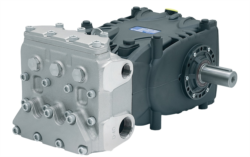
The Italian-engineered Pratissoli KF30 delivers 106 L/min at 200 bar with 40 kW input—suitable for mid-range hydraulic systems requiring reliable flow at high pressure. However, capacity planning requires understanding when this pump represents right-sizing versus oversizing.
For facilities with demand between 80-110 L/min average and peak requirements of 120-140 L/min, the KF30 provides excellent headroom without excessive oversizing. The pump's 40 kW power consumption at rated capacity aligns with facilities operating 16-20 hours daily where continuous operation justifies this energy profile.
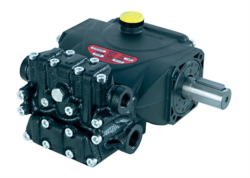
Conversely, facilities with 50-80 L/min peak demand benefit from smaller displacement units. The Interpump E1D1808 delivers only 8 L/min at 180 bar with 2.72 kW input—appropriate for high-pressure, low-volume applications like precision clamping or pilot pressure systems. Selecting this unit for peak 50 L/min demand creates a capacity deficit; selecting the KF30 wastes 40% of installed power.
Multi-Pump Configurations for Variable Load Management
Advanced capacity planning often employs multiple smaller pumps instead of single large units. This strategy offers distinct advantages:
- Load matching: Operating two 80 L/min pumps at 80% capacity produces better efficiency than one 160 L/min pump at 40% capacity
- Redundancy: Equipment failure affects only a portion of capacity, preventing complete production stoppage
- Thermal management: Distributed equipment generates heat across multiple cooling points, improving tropical heat dissipation
- Flexibility: Disconnecting one pump during low-demand periods (night shifts, maintenance cycles) reduces parasitic losses
For example, a facility requiring 180-220 L/min peak capacity could deploy: the Pratissoli MW40 (211 L/min at 210 bar, 85 kW) as primary equipment plus the KF30 (106 L/min) as supplementary capacity. This configuration provides 317 L/min peak capacity with flexibility to operate the MW40 alone during standard production, activating the KF30 only during peak demand or maintenance cycles.
Handling Seasonal and Predictable Demand Variations
Plant managers should differentiate between permanent and temporary capacity requirements. Permanent increases justify equipment investment; temporary increases (lasting weeks, not months) may be addressed through equipment rental or temporary configuration changes.
For predictable seasonal peaks: implement demand scheduling that prioritizes high-pressure, low-volume operations during peak periods, deferring lower-priority applications to off-peak times. This operational flexibility can reduce required equipment capacity by 10-15% without compromising production.
The Pratissoli SS71153 delivers 122 L/min at 160 bar with a 37.5 kW motor—an excellent choice for facilities with moderate, consistent demand. Its lower power requirement (versus higher-pressure alternatives) suits tropical operations where thermal management directly impacts reliability.
Monitoring, Adjustment, and Continuous Optimization
Implementing Capacity Performance Metrics
Capacity planning doesn't conclude with equipment selection; ongoing monitoring ensures planned capacity aligns with actual performance. Install monitoring systems that track:
- Power consumption trends: Increasing power draw at constant flow indicates efficiency loss (fouled filters, worn impellers, fluid viscosity changes)
- Pressure fluctuations: Unexplained pressure drops suggest leakage or internal wear; rising baseline pressure indicates component degradation
- Temperature monitoring: Fluid temperature trending reveals heat exchanger effectiveness and approaching failure points
- Flow measurement during peak periods: Confirms whether peak demand assumptions remain accurate as product mix and processing methods evolve
Review these metrics quarterly. Singapore's tropical environment causes degradation faster than temperate zones; quarterly analysis identifies developing problems before they impact production capacity.
Adjusting Capacity for Equipment Aging
Despite careful maintenance, hydraulic and pneumatic equipment loses efficiency over time. Positive displacement pumps typically experience 3-5% annual efficiency loss after year 5 of service. This degradation means a pump delivering 106 L/min when new may provide only 98-100 L/min after 7 years.
Capacity planning must account for this inevitable decay. For critical applications, plan to refresh major equipment every 8-10 years. For applications where modest capacity loss is acceptable, extend equipment life to 12-15 years while accepting gradually reduced capacity.
The Interpump ET1C1612 SX delivers 12 L/min at 160 bar with PTFE construction, making it ideal for secondary or supplementary systems where future capacity loss has minimal impact on production. These smaller units often cost less to replace than large equipment, offering financial flexibility in long-term capacity planning.
Scenario Planning for Business Growth
Capacity planning should accommodate anticipated facility growth. If management plans 20% production increase within 3-5 years, current equipment selections should enable capacity expansion without complete replacement.
Implement modular design: specify pump types, motor mounts, and manifold systems that allow adding equipment without redesigning the entire installation. This approach costs 5-10% more initially but saves substantial disruption and expense during expansion.
For facilities anticipating growth, 3G Electric's 35+ years of experience with industrial equipment standardization helps identify expandable configurations that provide flexibility without compromising near-term efficiency.
Practical Implementation Framework
Capacity Planning Checklist for Singapore Plant Managers
1. Document baseline demand: Install flow and pressure monitoring on existing systems; collect 30-day data representing normal operations
2. Calculate tropical adjustments: Apply 15% capacity buffer and verify cooling system adequacy
3. Define peak vs. average: Determine specific hours when peak demand occurs and whether this represents continuous or intermittent operation
4. Select primary and secondary equipment: Choose primary equipment for 70-80% of peak demand; identify supplementary equipment for peaks
5. Implement temperature monitoring: Install thermocouples on fluid discharge and heat exchanger inlet; establish alert thresholds
6. Establish quarterly reviews: Schedule metrics analysis tied to production cycles
7. Plan refresh cycles: Document when major equipment reaches 60-70% of design life; begin replacement planning
Capacity planning transforms equipment selection from a reactive, specification-matching exercise into a strategic framework aligning industrial infrastructure with business objectives. For Singapore plant managers managing energy costs, reliability demands, and tropical operating challenges, this approach delivers measurable improvements in efficiency, reliability, and total cost of ownership.