Understanding Pumps & Compressors Selection for Singapore HVAC Systems
Pumps and compressors form the backbone of reliable HVAC performance in Singapore's demanding tropical climate. With 35+ years of experience distributing industrial equipment across Southeast Asia, 3G Electric understands the specific pressures—both literal and operational—that HVAC contractors face in this region.
The difference between a system that runs efficiently for a decade and one that fails during the peak cooling season often comes down to selecting the right pump or compressor at the specification stage. In Singapore, where humidity levels consistently exceed 80% and cooling demand is year-round, equipment selection mistakes compound quickly. A undersized condensate pump forces water backup; an overspecified compressor wastes energy costs; a pressure-mismatched system creates maintenance headaches.
This article cuts through technical datasheets to address what HVAC contractors actually need: practical guidance on matching equipment to real-world job conditions, understanding the cost implications of your choices, and avoiding installation pitfalls specific to Singapore's infrastructure.
Flow Rate vs. Pressure: The Core Decision Matrix for HVAC Applications
Small-Capacity, High-Pressure Applications
Many Singapore HVAC installations involve compact equipment serving individual chiller units, condensate drainage systems, or localized hydraulic controls. In these scenarios, contractors often choose between compact, efficient units designed for specific pressure points.
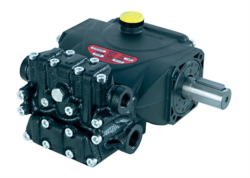
The Interpump E1D1808 L delivers 8 L/min at 180 bar pressure—a specification that sounds modest until you understand the application. This pump weighs just 5 kg and operates at 2800 rpm, consuming only 2.72 kW. For condensate removal from rooftop or basement equipment rooms where space is constrained and pressure spikes are common, this unit excels. The math: a 5-story building with ten 5-ton units generates roughly 50-60 L of condensate daily. At 8 L/min capacity, the E1D1808 handles draining cycles in 6-8 minute bursts, which is typical for intermittent condensate systems.
For slightly higher flow demand with similar pressure tolerance, the Interpump ET1C1612 SX*D20 steps up to 12 L/min at 160 bar, with PTFE construction that resists Singapore's humid environment. The trade-off: it draws 3.68 kW and runs at 1750 rpm, creating fractionally more vibration. In retrofit installations where you're replacing failed pumps in existing piping, the 160-bar rating often matches original specifications better than 180-bar alternatives, reducing seal strain.
Mid-Range Systems: Balancing Flow and Pressure
When contractors size systems for medium-scale facilities—shopping centers, office towers, or industrial cooling plants—they typically need higher flow capacity without sacrificing pressure stability.
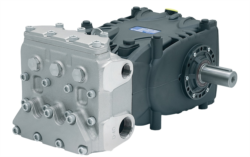
The Pratissoli SS71153 delivers 122 L/min at 160 bar, representing the practical sweet spot for many Singapore installations. At 37.5 kW input and 800 rpm operation, this unit runs cooler and quieter than faster alternatives, which matters in occupied buildings. For a typical downtown facility with 20-30 tons of cooling capacity distributed across multiple chiller units, 122 L/min handles primary circulation without bottlenecking. The 160-bar rating provides margin for pressure spikes during hot-start conditions common in tropical climates where outdoor temperatures jump rapidly.
Installation consideration: The 800 rpm speed means lower vibration transmission to building structure. In office buildings, this translates to fewer noise complaints and reduced coupling wear. The 264 kg weight (if mounting this unit) sits comfortably within standard equipment room floor loading typical in Singapore commercial construction.
High-Capacity Industrial Applications
For large facilities or facilities combining HVAC with secondary hydraulic systems, stepping to larger displacement pumps becomes necessary.
The Pratissoli KF30 from the KF Family sits in the compact-to-midrange category at 106 L/min and 200 bar pressure, drawing 40 kW. It's lighter (72 kg) than you might expect for its performance tier, making it suitable for equipment room ceilings or rooftop installations where weight distribution matters.
For maximum capacity in 3G Electric's current Singapore inventory, the Pratissoli MW40 delivers 211 L/min at 210 bar—more than double the KF30's flow. At 85 kW input and 264 kg, this unit suits:
- Central chiller plants serving multiple buildings or campus installations
- Facilities requiring both HVAC circulation and separate hydraulic systems for damper controls or variable-flow distribution
- Industrial facilities combining comfort cooling with process cooling demands
For a 100+ ton cooling facility in Singapore, the MW40 typically runs continuously during peak demand (May-September), so the 85 kW power draw factors into operational budgeting. Over a 10-year service life with electricity costs around SGD 0.25/kWh, that's approximately SGD 186,000 in power consumption—making efficiency specifications critical during selection.
Installation Realities: Singapore-Specific Considerations
Humidity and Corrosion Management
Singapore's year-round humidity (typically 70-90%) accelerates corrosion on uncoated steel and promotes biological growth in standing water. Contractors frequently specify pumps with PTFE seals (like the ET1C1612 SX*D20) not for pressure advantages, but for moisture resistance in the seal chamber.
When installing any pump in Singapore, verify:
- Shaft seal material: Carbon-graphite seals degrade faster in humid conditions; PTFE or ceramic upgrades extend service intervals by 30-40%
- Paint specification: Standard industrial enamel fails within 2-3 years; specify epoxy or polyurethane coatings for rooftop units
- Drain provisions: Design pump installations with sloped piping to prevent water pooling. Many contractors learn this the hard way after monsoon season flooding damages pump casings
Space Constraints in Urban Installations
Singapore's vertical urban density creates equipment room bottlenecks. The compact Interpump models (E1D1808 L at 5 kg, ET1C1612 at under 20 kg) solve installation headaches in buildings where space was designed 20 years ago for smaller systems.
When retrofitting systems in existing buildings:
- Measure actual available space including pipe routing before ordering
- Confirm mounting orientation (vertical, horizontal, angled): smaller pumps offer flexibility; larger units like MW40 require permanent mounting
- Plan for vibration isolation: Singapore building codes require rubber isolators under pumps heavier than 50 kg in occupied structures
Power Infrastructure Limitations
Many older Singapore buildings have single-phase or limited three-phase power in equipment rooms. The smaller Interpump models operate efficiently on single-phase or compact three-phase supplies. The Pratissoli units (KF30, MW40) require robust three-phase power and may need electrical upgrades in some retrofits.
Before specifying equipment:
- Verify available electrical capacity: MW40 at 85 kW requires a dedicated 125A+ circuit
- Confirm motor starting current: Some buildings experience voltage sag when large motors start; soft starters add cost but prevent nuisance breaker trips
- Check earthing adequacy: Singapore's marine environment demands proper grounding; confirm building earthing meets current 2024 standards
Cost Comparison and Total Cost of Ownership
Purchase price is only the beginning. A comprehensive cost analysis for HVAC contractor decision-making includes:
Acquisition Costs
For a typical Singapore facility needing primary circulation:
- Compact tier (ET1C1612) + motor: SGD 3,500-4,500
- Mid-range (SS71153) + motor: SGD 8,000-10,000
- High-capacity (MW40) + motor: SGD 15,000-18,000
3G Electric's 35+ years of distributor relationships mean you access competitive pricing without distributor markups, but these figures establish your baseline.
Operational Costs (10-Year Horizon)
Energy consumption dominates long-term cost:
- E1D1808 (2.72 kW, intermittent use, 2 hours/day average): SGD 4,964
- SS71153 (37.5 kW, continuous during peak 6 months): SGD 41,063
- MW40 (85 kW, continuous during peak 6 months): SGD 93,100
For Singapore facilities with 12-month cooling demand, these figures roughly double.
Maintenance and Replacement
- Compact pumps (E1D1808, ET1C1612): Annual seal service SGD 200-300, seal kit replacement SGD 500-800 every 5 years
- Mid-range (SS71153): Annual service SGD 400-500, rebuild kit SGD 2,000-3,000 every 7-8 years
- High-capacity (MW40): Annual service SGD 600+, rebuild SGD 4,000-5,000 at 8-10 year mark
Smaller pumps reach end-of-life replacement (usually more economical than major rebuild) around year 8-10; larger units justify full rebuilds.
Pressure Rating and System Lifespan
A counterintuitive cost factor: oversized pressure ratings (200-210 bar when your system only needs 160 bar) create unnecessary seal stress. The KF30 and MW40 at 200+ bar are excellent for multi-use facilities, but pure HVAC circulation rarely benefits from that margin. Specifying to actual system pressure extends pump life by 2-3 years.
Practical Specification Workflow for HVAC Contractors
Step 1: Calculate actual system demand
Don't rely on equipment nameplate capacity. Measure or calculate:
- Chiller evaporator flow requirement (usually 1.5 GPM per ton minimum)
- Circulating pump head loss through piping and coils (consult engineer or model in CAD)
- Condenser water flow (often 2-3 GPM per ton but varies by chiller type)
Singapore's outdoor temperature spikes create pressure transients. Add 10% to your base pressure requirement. If calculations show 160 bar needed, specify 180-bar equipment to handle weekend startup pressure spikes.
Step 3: Match equipment to space and power availability
If equipment room is constrained, compact Interpump models solve problems larger pumps can't fit. If three-phase power is limited, plan electrical upgrades early—they cost SGD 2,000-5,000 and take 4-6 weeks for approval in commercial buildings.
Step 4: Select based on runtime expectations
- Intermittent use (condensate, seasonal cooling): Compact pumps, accept higher cycling wear
- 6-month continuous (typical Singapore commercial): Mid-range Pratissoli (SS71153, KF30)
- Year-round continuous (tropical industrial): MW40 or equivalent, prioritize efficiency
Always upgrade from standard carbon seals to PTFE when available. It costs SGD 200-400 more upfront and extends service intervals by 18-24 months. In Singapore's climate, that's an easy ROI.
Real-World Case Study: Downtown Office Complex Retrofit
A 25-story office tower in Marina Bay originally installed four 50-ton chillers in 1998 with a single 80 L/min, 180-bar circulation pump. In 2023, it needed upgrade to meet current cooling demand (tenant fit-outs added heat load) and aging pump reliability.
Original approach (rejected): Install larger pump, same pressure—estimated SGD 12,000 equipment + SGD 8,000 electrical upgrade.
Selected approach (3G Electric recommendation): Install Pratissoli SS71153 (122 L/min, 160 bar). Reasoning:
- Actual system pressure never exceeded 155 bar (verified by pressure logging)
- 160-bar rating ideal—no unnecessary seal stress
- 122 L/min accommodates growth without equipment room expansion
- PTFE seals match Singapore humidity requirements
- 800 rpm operation reduced vibration complaints in occupied offices above equipment room
This retrofit illustrates the practical difference between datasheet specifications and real-world HVAC performance.