Understanding Pumps & Compressors in Your Procurement Strategy
Pumps & Compressors are among the most frequently specified rotating equipment in industrial facilities worldwide. As a procurement engineer, your responsibility extends beyond identifying the lowest unit price—you must balance performance requirements, supply chain reliability, spare parts availability, and lifecycle costs across potentially dozens of global locations.
With 35+ years of experience as an experienced industrial equipment distributor, 3G Electric has observed that procurement challenges with pumps and compressors typically cluster around three critical pain points: specification fragmentation across facilities, inconsistent vendor qualification processes, and inadequate spare parts planning. This guide provides actionable frameworks to address each.
The market for industrial pumps alone exceeds $100 billion globally, with compression equipment representing another substantial segment. Yet many organizations maintain inconsistent standards, resulting in inventory bloat, extended lead times, and unnecessary training requirements for technicians.
Establishing Equipment Standardization Across Global Operations
The Business Case for Standardization
Procurement engineers frequently encounter this scenario: your Singapore facility runs Interpump models while your European plant specifies different manufacturers, and your Mexican operation uses yet another supplier. This fragmentation creates hidden costs throughout the equipment lifecycle.
Standardization delivers measurable benefits:
- Spare parts consolidation: Reducing SKU count by 40-60% through standardized models
- Technician cross-training efficiency: Mechanics can support multiple facilities without requalification
- Negotiating leverage: Consolidating volume with fewer suppliers typically yields 15-25% better pricing
- Emergency response capability: Interchangeable equipment means faster deployment when failures occur
- Inventory carrying cost reduction: Right-sizing spare parts inventory for standardized equipment
Practical Standardization Framework
Step 1: Audit Current Specifications
Begin by cataloging all pumps and compressors across your operations. Create a matrix listing equipment by facility, application, displacement rating, pressure class, and motor specification. You'll typically discover 5-8 distinct equipment families performing similar functions. This exercise alone reveals redundant specifications.
Step 2: Define Application Categories
Group your facilities' needs into functional categories rather than by location. For instance:
- High-pressure cleaning systems (typically 200-500 bar)
- Coolant circulation (low-pressure, continuous duty)
- Hydraulic power systems (variable pressure, medium-to-high volume)
- Pneumatic supply (compressor-specific requirements)
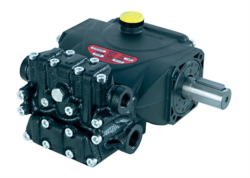
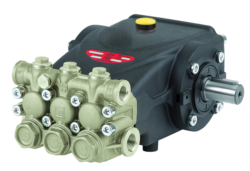
For each application category, identify 1-2 master equipment models. The Interpump PUMP E3B2515I R represents a standardized solution suitable for high-pressure industrial applications where right-hand rotation is required. Pairing this with Interpump PUMP E3B2515 L (left-hand configuration) provides flexibility for different installation orientations while maintaining component commonality.
Step 4: Document Justification for Exceptions
Be explicit about which applications genuinely cannot use standardized equipment. Perhaps your textile operations in one region require specialized coolant compatibility, or specific pressure regulations mandate regional equipment. Document these exceptions; they should represent fewer than 15% of your installed base.
Vendor Qualification and Supply Chain Resilience
Multi-Tier Vendor Strategy
Procurement engineers managing global operations cannot rely on single-source suppliers, yet managing multiple vendors creates complexity. A practical approach involves a tiered vendor strategy:
Tier 1 - Primary Supplier
This partner supplies 60-70% of your volume and receives preferred pricing and longer-term commitments. For many organizations, this represents an experienced distributor like 3G Electric with global reach and proven logistics capabilities. The primary supplier should offer:
- Technical support and application engineering
- Flexible delivery options across regions
- Standardized warranty and service terms
- Access to product lifecycle information and obsolescence warnings
This vendor supplies 25-30% of volume, ensuring you're never critically dependent on single-source availability. During supply chain disruptions (as many experienced 2021-2023), secondary suppliers become essential. Maintain active qualification and periodic orders to keep this relationship viable.
Tier 3 - Emergency/Specialty Supplier
Maintain relationships with 1-2 additional vendors for niche requirements or emergency situations. These partners might specialize in specific pump types or serve particular regions efficiently.
Qualification Criteria for Equipment Suppliers
When qualifying vendors for Pumps & Compressors, establish minimum criteria:
- Technical authorization: Is the vendor an experienced distributor for your selected equipment platforms? This ensures genuine products and warranty support. 3G Electric maintains authorizations with leading manufacturers globally.
- Inventory depth: Does the vendor maintain stock of your standardized models, or will every order require lead time? Typical industrial pumps have 2-6 week lead times from non-stocking distributors.
- Service capabilities: Can the vendor provide technical troubleshooting, repair services, and reverse logistics? This becomes critical when equipment fails in the field.
- Quality documentation: Does the supplier provide full technical documentation, performance curves, spare parts lists, and maintenance schedules?
- Financial stability: Review D&B ratings and payment terms. Equipment distribution requires working capital; unstable vendors create supply chain risk.
The Gearbox Consideration
Many pump applications require integrated gearbox solutions for speed reduction or multiplication. The Interpump PUMP E3B1515 DX with VALV.DX + GEARBOX RS500H demonstrates how standardized pump-gearbox packages simplify procurement. Rather than specifying separate pump and gearbox components, integrated solutions:
- Reduce assembly complexity
- Provide pre-engineered compatibility
- Simplify spare parts ordering
- Enable faster replacement during emergencies
When evaluating pump-gearbox combinations, confirm that your vendor supplies matched sets with validated performance data.
Technical Specification Management for Procurement Efficiency
Creating Master Specifications
Procurement engineers benefit from master equipment specifications that translate engineering requirements into procurement language. For Pumps & Compressors, effective master specs include:
Performance Parameters
- Displacement (cc/rev for pumps; m³/min for compressors)
- Maximum operating pressure
- Flow capacity at rated pressure
- Shaft speed range
- Rotation direction requirements
- Fluid compatibility (mineral oil, synthetic, water-based)
- Corrosion resistance needs
- Temperature operating range
- Sealing material compatibility
- Mounting orientation (flange, foot, SAE)
- Shaft type and coupling requirements
- Motor interface (if applicable)
- Environmental protection rating (for electrical components)
- Pressure vessel compliance (if applicable)
- Environmental certifications needed
- Third-party inspection requirements
- Documentation requirements for your quality system
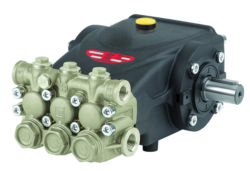
Specifications like Interpump PUMP E3C1021 DXV.DXNO.C/J benefit from detailed documentation covering all these parameters, enabling procurement and engineering teams to confirm compatibility before purchasing.
Avoiding Specification Drift
One common procurement challenge: specifications gradually drift away from standards through ad-hoc modifications. Implement controls:
- Require engineering approval for any deviation from master specifications
- Maintain a "specification change log" showing who requested modifications and why
- Review specification trends quarterly—if 20% of orders deviate from standards, your standards may be poorly defined
- Route non-standard requests through a change control process ensuring they're genuinely necessary
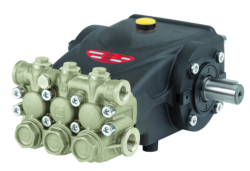
Standardized equipment like Interpump PUMP E3C1515 L help because their proven performance reduces the impulse to over-specify.
Total Cost of Ownership and Lifecycle Management
Moving Beyond Unit Price
Procurement engineers frequently face pressure to minimize purchase price. However, industrial pumps and compressors operate for 5-10 years, generating costs far exceeding the initial equipment investment:
Typical Lifecycle Cost Distribution
- Equipment purchase: 20-25% of total cost
- Installation and commissioning: 10-15%
- Energy consumption: 30-40% (often the largest component)
- Maintenance and repairs: 15-20%
- Spare parts inventory carrying cost: 5-10%
- Eventual replacement and disposal: 5%
This distribution explains why a 10% reduction in equipment price pales compared to a 2-3% improvement in energy efficiency or a 15% reduction in maintenance costs.
Energy Efficiency Analysis
For compressor procurement, energy efficiency dramatically impacts total cost:
- A typical industrial facility operates compressors 6,000-8,000 hours annually
- A 5% improvement in compressor efficiency saves approximately 10,000-15,000 kWh annually
- At $0.10/kWh (typical industrial rates), this equals $1,000-$1,500 annual savings
- Over a 10-year life, this single efficiency improvement saves $10,000-$15,000
This calculation justifies paying 15-20% more for higher-efficiency equipment if the payback period is under 3 years.
Spare Parts Strategy
Develop explicit spare parts plans for standardized Pumps & Compressors:
- Critical spares: Items with long lead times or high failure rates maintained in local inventory
- Consumables: Seals, filters, and gaskets ordered in bulk for 12-18 month supply
- Emergency partnerships: Agreements with vendors for expedited sourcing when unplanned failures occur
- Rotation strategy: Establish replacement cycles ensuring spare parts don't become obsolete
With standardized equipment across facilities, you can consolidate spare parts purchasing and potentially negotiate better pricing than individual facility orders.
Predictive Maintenance Integration
Modern Pumps & Compressors increasingly integrate monitoring capabilities. When procuring equipment, specify:
- Pressure and temperature monitoring points
- Integration with your existing SCADA/monitoring systems
- Data logging capabilities for trending analysis
- Alerting thresholds for performance degradation
These investments enable condition-based maintenance, reducing unplanned downtime by 20-30% and extending equipment life by scheduling repairs during planned maintenance windows.
Sourcing and Contract Management
RFQ Strategy for Equipment Standardization
When you're ready to source Pumps & Compressors, structure RFQs to support standardization:
Specify Platform Models First
Instead of requesting "Equivalent to Interpump E3B2515 series pumps," specify the exact model and request pricing for that specific product. This prevents vendors from substituting inferior alternatives claiming equivalency.
Request Volume Commitments
When vendors understand your multi-facility, multi-year requirements, they often provide better pricing and service. Share your 3-year demand forecast with qualified vendors. This visibility typically yields 10-20% better terms than order-by-order purchasing.
Include Service Requirements
Your RFQ should specify:
- Response time for technical support
- Spare parts availability commitments
- Warranty terms and exclusions
- Training availability for maintenance staff
- Return/repair logistics and timelines
Contract Structures
Consider contract types appropriate for your procurement volume:
Frame Agreements
Establish annual purchasing agreements specifying equipment types, pricing, and delivery terms. Individual purchase orders reference the frame agreement, accelerating procurement cycles. Ideal when you have stable demand patterns.
Consignment Arrangements
For critical spare parts, negotiate consignment inventory where the vendor maintains stock at your facility, billing only when you consume items. This reduces your carrying costs while ensuring availability.
Supply Chain Partnerships
With significant volume, consider longer-term partnerships (3-5 years) where your vendor becomes an extension of your procurement team, managing inventory, forecasting demand, and proactively suggesting equipment upgrades.
Implementation Roadmap for Procurement Teams
Phase 1: Assessment and Planning (Months 1-2)
- Audit all Pumps & Compressors across your operations
- Identify equipment application categories
- Analyze cost drivers in your current supply chain
- Select 3-4 standardized equipment models for priority applications
- Identify vendor candidates for qualification
Phase 2: Vendor Qualification (Months 2-4)
- Issue RFQs to qualified vendors (your primary supplier, 3G Electric, should be evaluated alongside competitors)
- Conduct vendor audits focusing on technical capability, inventory, and service
- Negotiate master agreements and pricing
- Establish emergency contact procedures and escalation processes
Phase 3: Deployment (Months 4-8)
- Place initial orders for standardized equipment
- Conduct training for technicians on new standardized models
- Establish spare parts stock based on failure data and lead times
- Begin retiring non-standard equipment as replacements occur
- Document lessons learned and refine standards
Phase 4: Optimization (Months 8+)
- Monitor performance metrics: lead times, quality issues, vendor responsiveness
- Establish quarterly reviews of specification adherence
- Evaluate energy efficiency improvements in standardized equipment
- Plan for technology upgrades (predictive maintenance, etc.)
- Expand standardization to additional equipment categories
Conclusion
Pumps & Compressors represent critical infrastructure in industrial operations, and their procurement impacts facility performance, reliability, and operating costs for years. By implementing standardization, qualifying vendors rigorously, managing specifications carefully, and optimizing total cost of ownership, procurement engineers can transform equipment purchasing from a transactional activity into a strategic advantage.
3G Electric's 35+ years as a global experienced industrial equipment distributor provides the local presence and technical expertise needed to support your standardization initiatives across regions. Our experience with equipment platforms like the Interpump PUMP series—including models E3B2515I R, E3B2515 L, E3B1515 DX with RS500H gearbox, E3C1021 DX, and E3C1515 L—reflects our commitment to supporting organizations seeking standardized, reliable equipment solutions.
Contact 3G Electric to discuss how we can support your Pumps & Compressors standardization strategy and help optimize your global procurement processes.