Understanding Maintenance & Service Through Pump Selection Strategy
Maintenance & Service excellence starts with selecting equipment that matches your plant's operational reality, not just peak capacity. For plant managers across Southeast Asia, the difference between a well-maintained operation and a breakdown-prone facility often comes down to choosing pumps and pressure systems rated for typical working conditions rather than maximum theoretical loads.
With over 35 years of experience distributing industrial equipment throughout the region, 3G Electric has observed that most equipment failures occur when systems run continuously at pressures or flow rates they weren't designed for. This article examines how to match pump specifications to your actual Maintenance & Service requirements, helping you build reliability into your operation from the procurement stage.
Comparing Flow Rate Specifications Against Operational Demand
Understanding Your True Flow Requirements
Plant managers often specify pumps based on peak production scenarios that occur only occasionally. The Pratissoli KF30 delivers 106 L/min at 200 bar, making it suitable for facilities requiring moderate flow with consistent pressure delivery. The Pratissoli MW40, by contrast, provides 211 L/min at 210 bar—roughly double the flow capacity at similar pressure ratings.
The critical question for Maintenance & Service planning isn't "what's the maximum we might need?" but rather "what flow rate do we run at 70-80% of our operational hours?" Equipment operating at 60-70% of rated capacity typically experiences:
- Lower thermal stress on seals and bearings
- Extended service intervals between mandatory maintenance windows
- Reduced preventive replacement of wear items
- Predictable failure patterns that allow scheduled downtime
A pump running consistently at 80% of its rated flow generates far fewer service calls than one that swings between 40% and 95% capacity depending on daily production demands. Southeast Asian plants managing seasonal variations—particularly those in food processing, textile manufacturing, or chemical distribution—benefit significantly from oversizing flow capacity by one nominal step.
The Interpump E1D1808S Approach: Right-Sizing Compact Systems
For facilities with tighter spatial constraints or lower flow requirements, the Interpump PUMP E1D1808 L offers 8 L/min at 180 bar in a 5 kg compact form factor. This pump suits auxiliary Maintenance & Service applications—lubrication systems, pilot pressure circuits, or secondary cooling loops—where oversizing creates maintenance problems rather than solving them.
Smaller, right-sized pumps in secondary circuits actually reduce overall system complexity and failure points. A common mistake plant managers make is running large primary pumps through throttling valves to feed small-volume circuits. This generates heat, wastes energy, and creates frequent maintenance on the control valves themselves.
Pressure Regulation and Safety Integration in Maintenance & Service Design
Protecting Equipment Through Proper Pressure Management
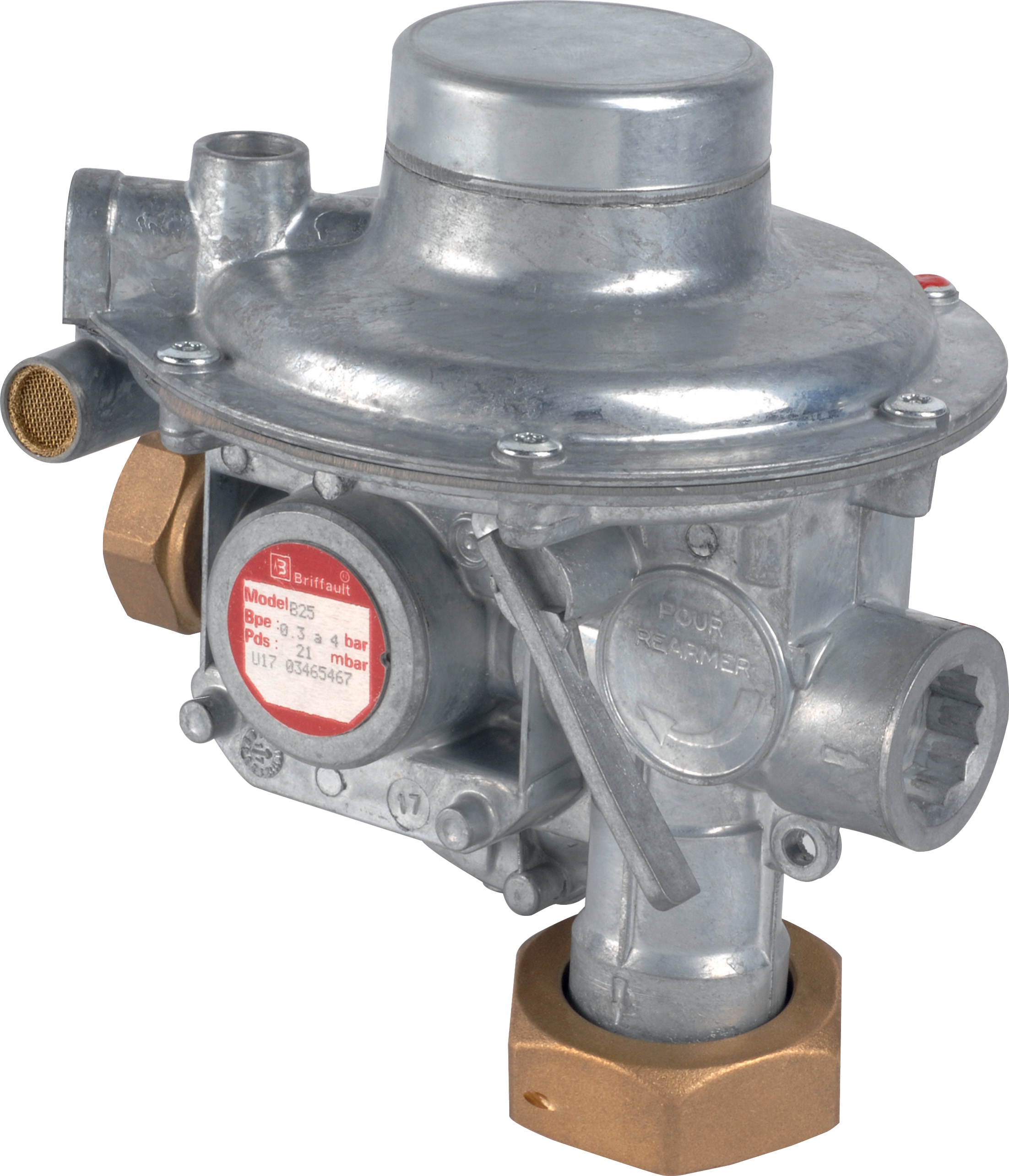
Pressure regulation isn't merely a safety feature—it's a cornerstone of preventive Maintenance & Service. The Francel B25/37mb pressure regulator with integrated safety relief demonstrates how pressure management prevents cascading equipment failures.
This regulator delivers consistent 37 mbar outlet pressure with integrated safety relief rated at 10 mm vent size. For plant managers, the practical benefit lies in maintaining stable operating pressure regardless of upstream supply fluctuations. Southeast Asian facilities often experience grid voltage variations and compressed air supply pressure swings that exceed those in developed markets.
A regulator without integrated safety relief forces your Maintenance & Service team to monitor downstream equipment more frequently because:
- Pressure spikes from supply line transients can damage seals and gaskets
- Relief valves mounted separately require more frequent calibration checks
- Redundant venting paths complicate troubleshooting when leaks develop
- Component wear accelerates unpredictably without stabilized supply pressure
Integrated safety relief consolidates these functions into a single maintenance point. Your technicians verify one component instead of cross-checking multiple pressure control devices. For facilities running 24/7 operations, this simplification alone can reduce monthly Maintenance & Service labor by 10-15%.
Spray System Performance and Nozzle Selection for Reliable Operations
Matching Nozzle Design to Plant Maintenance Intervals
Spray system reliability directly impacts production uptime and Maintenance & Service frequency. The Euspray flat jet nozzle HP 1/4" M BSPT index 30 angle 25° represents industrial-grade spray hardware designed for applications requiring consistent pattern geometry across extended service intervals.
Plant managers should understand how nozzle specifications drive Maintenance & Service schedules:
Spray Angle and Pattern Stability: The 25° angle on this Euspray nozzle suits applications where spray pattern creep—gradual widening or narrowing over time—creates product quality variance. Chemical coating operations, industrial cleaning systems, and dust suppression require stable spray geometry. Nozzles that drift beyond their design angle typically indicate:
- Internal deposits restricting flow
- Orifice erosion from abrasive fluid particles
- Seal degradation from pressure cycling
The index 30 design and 1/4" M BSPT connection standardize this nozzle across multiple facility locations, simplifying inventory management for regional operations.
Preventive Replacement Scheduling: Rather than waiting for spray pattern degradation to trigger emergency maintenance, plant managers should budget for nozzle replacement at fixed intervals. A facility running eight hours daily should plan nozzle replacement every 2,000-3,000 operating hours depending on fluid type. This forward-looking approach to Maintenance & Service prevents the production disruptions that occur when spray system failure forces unplanned downtime.
Integration with High-Flow Pump Systems
When pairing the Pratissoli MW40 (211 L/min capacity) with spray systems, pressure drop across nozzles becomes a critical design consideration. High-flow pumps require proportionally more nozzles operating in parallel to avoid excessive backpressure, which generates heat and accelerates seal wear.
This is where 3G Electric's 35+ years of regional experience proves valuable. We help plant managers calculate the nozzle array required for your specific pump selection, ensuring your spray system operates in the 150-180 bar sweet spot rather than fighting against restrictive orifice sizes.
Practical Maintenance & Service Implementation for Multi-Equipment Systems
Creating Standardized Service Schedules Across Pump and Pressure Systems
Plant managers overseeing multiple production lines benefit from consolidating equipment specifications where operationally feasible. If two separate production areas use different pump models, pressure regulators, and nozzles, your Maintenance & Service team must maintain separate parts inventories, follow different troubleshooting procedures, and train technicians on multiple control systems.
A more efficient approach: standardize on equipment families. Using Pratissoli pumps across multiple lines (KF30 for moderate-flow operations, MW40 for high-demand applications) reduces spare parts proliferation. Pairing all lines with Francel regulators provides consistent pressure control logic across your facility.
This consolidation produces tangible Maintenance & Service improvements:
- Reduced inventory carrying costs through higher-volume, faster-moving parts
- Faster technician response when staff understand standardized equipment deeply
- Better predictive maintenance because historical failure data clusters around proven equipment families
- Simplified training for new maintenance staff and rotating technicians
Regional Considerations for Southeast Asian Operations
Southeast Asian industrial environments impose specific stresses on Maintenance & Service systems:
Thermal Management: Equipment running in tropical climates experiences higher baseline fluid temperatures. Your pump pressure regulators and relief systems must account for this thermal load. The Francel B25/37mb includes safety relief calibrated for industrial environments, but confirming that settings account for your facility's ambient conditions should happen during commissioning, not after the first summer malfunction.
Humidity and Corrosion: Coastal facilities and high-humidity inland locations accelerate corrosion on pump casings, coupling bolts, and pressure gauge connections. Maintenance & Service protocols should include quarterly visual inspections for corrosion hotspots and planned replacement of any degraded fasteners before they create emergency failures.
Supply Chain Lead Times: Component sourcing in Southeast Asia sometimes requires 3-4 week lead times compared to 1-2 weeks in developed markets. Your Maintenance & Service planning should stock critical spares—pump seals, pressure regulator diaphragms, and nozzle assortments—at levels that provide 4-6 weeks of runway before reordering.
3G Electric's regional distribution network maintains inventory across Singapore, Thailand, Malaysia, and Indonesia, reducing these lead time pressures significantly for our partners.
Building Long-Term Reliability Through Specification Discipline
The highest-performing Maintenance & Service operations share one characteristic: their equipment was right-sized during procurement rather than oversized and then throttled. Plant managers who invest time in understanding whether they need the KF30's 106 L/min or the MW40's 211 L/min—and who choose accordingly—build operational advantages that compound over years.
Every liter of flow above your actual requirement adds thermal load, accelerates seal wear, and increases Maintenance & Service burden. Conversely, undersizing creates chronic backpressure conditions that damage equipment even faster.
Work with your equipment suppliers during specification phases to model realistic duty cycles, not theoretical maximums. The small investment in this analysis during procurement phase prevents tens of thousands in emergency repairs and lost production across your equipment's service life.