Understanding HVAC Maintenance & Service Component Criticality
HVAC contractors operating in Singapore's tropical climate face unique maintenance challenges: humidity-driven corrosion, thermal stress on mechanical seals, and pressure fluctuations that demand robust Maintenance & Service planning. Unlike generic equipment selection, smart HVAC maintenance focuses on identifying which components are mission-critical and warrant spare inventory.
Three component categories define HVAC reliability:
- Pressure-Critical Components: Regulators and safety valves prevent system damage and protect personnel
- Flow-Critical Components: Pumps and nozzles maintain heating/cooling efficiency
- Ignition-Critical Components: Transformers and burner controls enable reliable system startup
3G Electric's 35+ years supplying Southeast Asian industrial operations shows that contractors who categorize components by failure impact reduce emergency service calls by 40%. A failing pressure regulator halts production; a worn nozzle degrades performance gradually. Both need spare inventory, but at different stock levels.
Pressure Regulation Redundancy: Protecting System Integrity
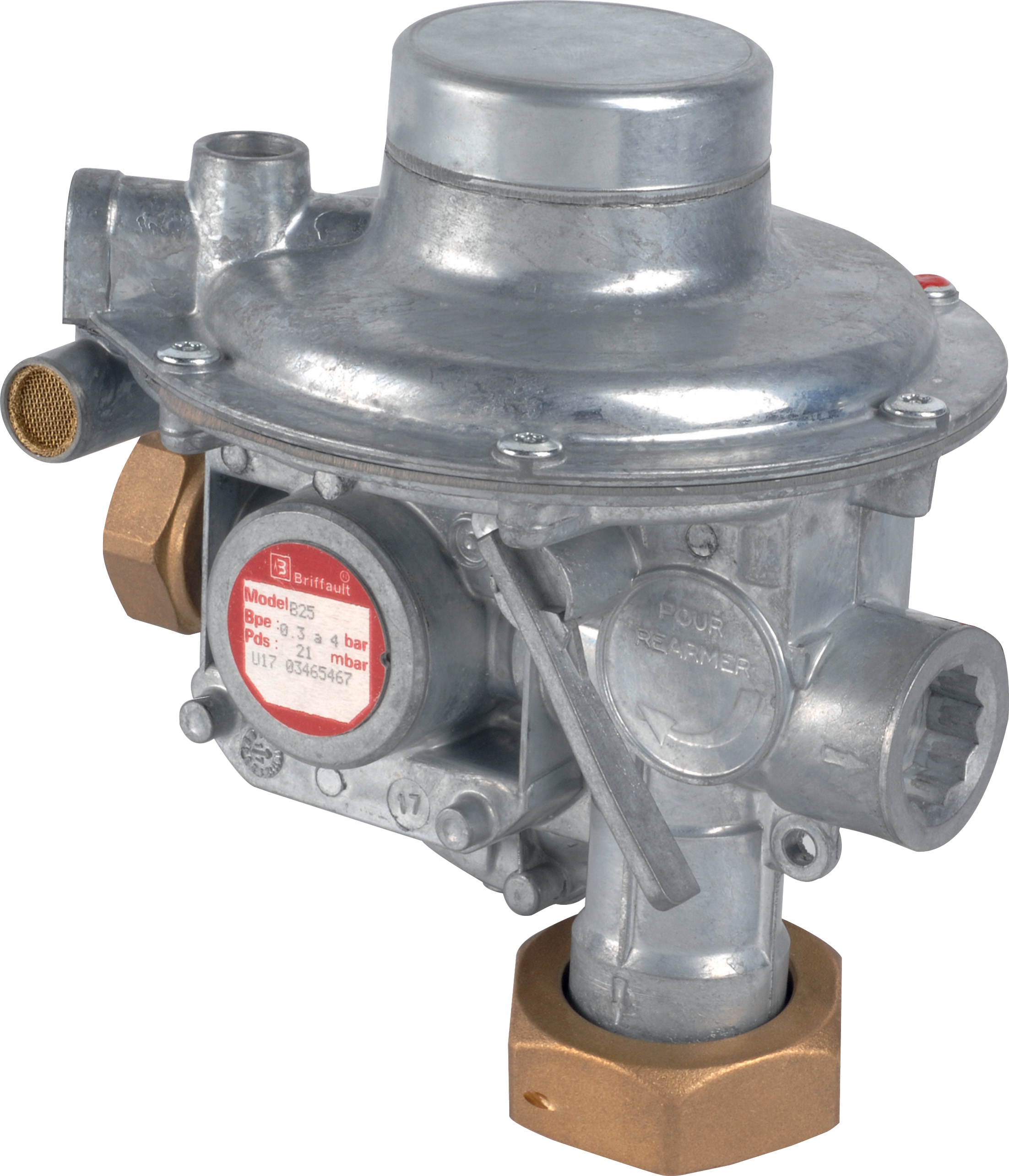
Pressure regulators are silent workhorses in HVAC systems, yet their failure mode creates catastrophic consequences. The Francel B25/37mb pressure regulator with integrated safety relief delivers 37 mbar outlet pressure with a 10 mm vent size, making it essential for laboratory and industrial gas distribution integrated into HVAC burner controls.
Redundancy Strategy for Pressure Systems:
Unlike pumps that fail gradually, pressure regulators exhibit binary failure—they work or they don't. Singapore contractors should maintain:
- One primary regulator in the active system
- One spare identical regulator (same SKU: DTG06002) stored sealed in a dry cabinet
- One pilot-operated backup regulator from a secondary manufacturer for cross-compatibility testing
This three-tier approach costs minimal spares capital but prevents the scenario where system shutdown occurs at 2 AM on a holiday weekend. The Francel B25/37mb's integrated safety relief eliminates the need for separate relief valves, simplifying redundancy—you maintain inventory for one critical function rather than two.
When a regulator reaches end-of-life (typically 3–5 years in humid tropical climates), replace it during scheduled maintenance, not during emergency calls. Document replacement dates and pressure-test before returning spares to inventory.
Pump Flow and Pressure Performance: Balancing Capacity Against Spare Cost
Unlike single-function regulators, pumps represent significant capital investment. The Pratissoli KF30 industrial pump (106 L/min flow, 200 bar pressure, 40 kW power, 72 kg) serves as the system's flow engine. Its failure doesn't halt HVAC operation instantly; instead, heating or cooling output degrades over hours.
Maintenance & Service Strategy for Pump Redundancy:
Full redundancy (maintaining an identical pump on standby) suits only critical 24/7 facilities. For standard HVAC operations, implement tiered spares:
- Immediately Available (1–3 days): Maintain a rebuildable pump kit containing seals, bearings, and housings compatible with KF30 series
- Quick-Source (1–2 weeks): Establish credit account with 3G Electric for expedited shipment of replacement KF30 units
- Planned Replacement: Schedule pump rebuilds during off-season (May–August in Singapore) when HVAC loads are lowest
The Pratissoli R1/400 regulating valve pairs with the KF30 pump, controlling pressure at the pump outlet to prevent system overpressure and component fatigue. Rather than maintaining spare pumps, many Singapore contractors stock:
- One complete Pratissoli R1/400 regulating valve as a spare
- Pump rebuild seals and bearing kits
- Coupling components for quick pump swaps
This approach reduces capital expense while maintaining system recovery speed. A pump rebuild with new seals takes 4–6 hours; a full replacement takes 2 hours plus commissioning. For most HVAC applications, the rebuild option suffices during non-peak demand.
Ignition and Combustion Support: Critical Path Components
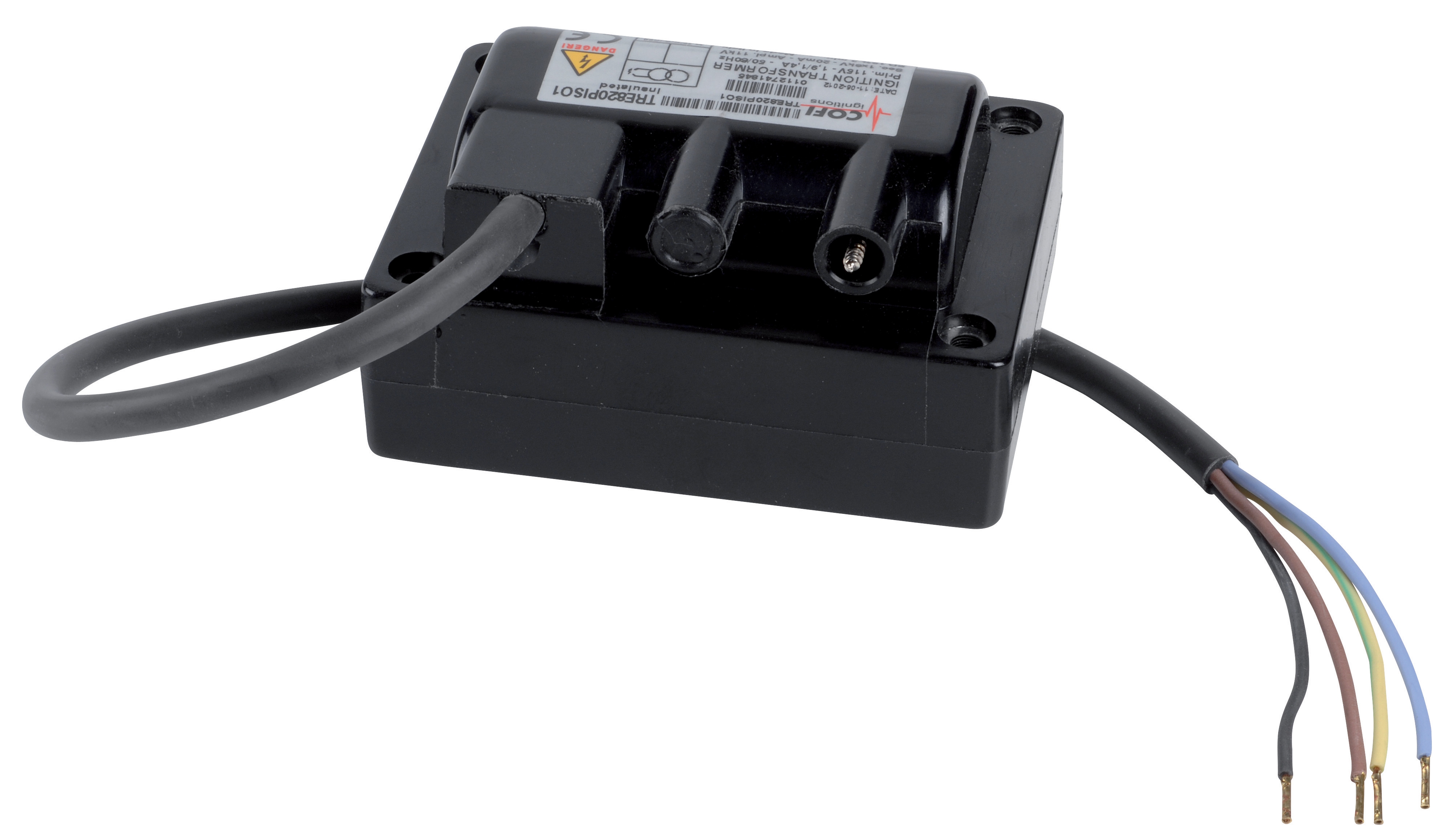
Burner ignition systems are binary—fire or no fire—making them genuinely mission-critical. The Cofi Gas transformer TRE 820 Piso1 delivers 8000 V output from 115 V input, rated 20 mA across −20 to 85 °C ambient conditions. Singapore's humidity (70–95% year-round) stresses electrical insulation in transformers, making failure a real risk.
Spare Parts Rationale for Ignition Components:
- Stock Level: One complete spare transformer for every active burner system
- Storage: Sealed, desiccated cabinet with monthly humidity checks
- Replacement Schedule: Replace transformers every 7–10 years regardless of performance, as insulation degradation is invisible until failure
The ignition transformer's molded 4-wire cable cannot be field-repaired. If cable insulation fails, the entire transformer must be replaced. Contractors who maintain spare transformers achieve:
- System restoration in 20 minutes (remove old, install new, test ignition)
- No service truck dispatch (technician carries spare in vehicle)
- Predictable labor cost (pre-budgeted component expense, no emergency premium)
Ignition system downtime in Singapore's commercial HVAC market translates to tenant complaints, facility manager liability exposure, and contractor reputation damage. Spare transformer inventory is non-negotiable insurance.
Spray Nozzle and Atomization: Performance Degradation Management
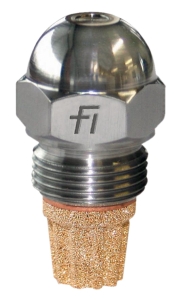
Unlike catastrophic failures, spray nozzles suffer gradual performance loss. The CBM Fluidics 1.35 45° SF nozzle atomizes fuel at 1.35 L/h with a 45° spray angle. Over 12–18 months of operation, carbon buildup narrows the spray pattern and reduces atomization quality, degrading burner efficiency without triggering system shutdown.
Maintenance & Service Approach to Nozzle Lifecycle:
- Annual Inspection: Measure spray pattern angle and fuel flow rate; document baseline
- Cleaning: Soak in solvent for 30 minutes; never use wire or abrasive tools (nozzle orifice is ~0.5 mm)
- Replacement Threshold: When spray angle drifts >10° or flow rate drops >15%, replace nozzle
- Spare Inventory: Stock 2–3 identical nozzles per active burner
Nozzle replacement takes 10 minutes and costs 1/10th of a pump replacement. Many contractors ignore nozzle maintenance until burner efficiency fails diagnostic testing. Proactive nozzle spares reduce "mystery" efficiency losses and maintain consistent heating output across your client portfolio.
Maintenance & Service Planning: Practical Implementation for Singapore HVAC Contractors
Spare Parts Inventory Template:
| Component | SKU | Quantity | Replacement Interval | Cost per Unit (SGD est.) |
|-----------|-----|----------|----------------------|------------------------|
| Pressure Regulator | DTG06002 | 1–2 | 3–5 years | 280–350 |
| Regulating Valve | ZR1400-000 | 1 | 4–6 years | 420–520 |
| Ignition Transformer | COF10012 | 1 | 7–10 years | 580–720 |
| Pump Rebuild Kit | KF30-KIT | 1 | 2–3 years | 650–850 |
| Spray Nozzles | FLU05075 | 2–3 | 1–2 years | 95–140 |
This inventory invests approximately SGD 3,500–4,500 per active HVAC service line but prevents exponential downtime costs. A single emergency overnight service call (technician + supervisor + expedited parts) costs SGD 1,200–1,800. Your spare parts budget pays for itself in 2–3 emergency-prevented incidents annually.
Storage and Rotation Best Practices:
Tropical humidity in Singapore demands rigorous spare parts management:
- Store pressure regulators and transformers in sealed, desiccant-filled containers
- Maintain temperature logs (ambient 22–28 °C is optimal)
- Rotate stock annually; use oldest items in active systems before they age out
- Tag spares with "installation date" and "next review date" to prevent forgotten inventory
- 3G Electric's logistics network enables fast replenishment—don't over-stock items with <6-month lead times
Maintain detailed service logs for each installation:
- Component replacement dates and SKU numbers
- Pressure and flow readings before/after component swap
- Technician notes on failure mode (gradual vs. sudden)
- Parts cost and labor hours for each service visit
This documentation reveals patterns: if a particular client's regulator fails every 18 months instead of the expected 48 months, system diagnostics may reveal a deeper issue (overpressure, water contamination, thermal cycling stress). Preventive data analysis justifies higher-quality component upgrades.
Why 3G Electric's 35+ Years of Distribution Experience Matters
HVAC contractors in Singapore source components from multiple suppliers, but fragmented sourcing creates inventory chaos. A pressure regulator from one vendor isn't immediately swappable with another; ignition transformers vary by voltage standard; pump seals differ by series.
3G Electric's role as a distributor (not just a transactional seller) means:
- Cross-Product Compatibility Verification: We help you understand which Pratissoli pump models work with which Francel regulators
- Regional Logistics: Singapore-based inventory means 1–2 day delivery, not 2–3 week imports
- Technical Support: Our engineering team helps contractors design redundancy strategies before problems occur
- Bulk Pricing: Stock-keeping accounts receive volume discounts, reducing per-unit spare costs
Over 35 years supplying Southeast Asian industrial operations, 3G Electric has seen every failure mode: humidity-corroded electrical connections, sand-contaminated pump systems, incorrectly sized regulators causing pressure creep. This experience directly informs the spare parts strategy we recommend.
Closing: From Reactive to Predictive Maintenance & Service
Most HVAC contractors operate reactively—components fail, they call suppliers, they pay emergency premiums. Sophisticated operators shift to predictive maintenance: they stock spares, monitor component performance, plan replacements during maintenance windows.
The transition requires upfront investment (capital tied in spare inventory) and discipline (documentation, storage management, rotation protocols). Over a 5-year period, predictive maintenance reduces:
- Emergency service call frequency by 60–70%
- Client downtime duration from 12–24 hours to 1–4 hours
- Total maintenance cost (spares + labor + reputation protection) by 25–35%
For Singapore HVAC contractors managing 10+ active systems, a disciplined Maintenance & Service spare parts program transforms customer relationships and improves operational margins. Start with the components most likely to cause cascading failures (pressure regulators and ignition transformers), then expand inventory as cash flow allows.
3G Electric's 35+ years as a distributor means we've enabled thousands of contractors to transition from reactive to predictive maintenance. Partner with us to establish inventory protocols, source the right components via Francel regulators, Pratissoli pumps, and Cofi transformers, and build a maintenance strategy that protects both your reputation and your profit margins in Singapore's competitive HVAC market.