Understanding Industry Applications in Fluid Power Systems
Industry Applications represent the intersection of component selection, system integration, and operational reliability in industrial environments. For procurement engineers, understanding these applications means recognizing how individual pumps, valves, and regulators work together as cohesive systems rather than standalone parts.
Over 35 years, 3G Electric has observed that procurement failures rarely occur due to component failure alone—they result from misaligned applications. A pump rated for 140 bar may fail catastrophically if installed in a system designed for 100 bar operation. A pressure regulator specified for gas applications performs dangerously when subjected to liquid hydraulic loads. These errors compound across global supply chains where specifications travel through multiple stakeholders.
Industry Applications framework addresses this by analyzing how equipment performs within specific operational contexts: pressure ranges, flow rates, thermal conditions, duty cycles, and environmental factors. This article equips you with practical decision-making criteria for three critical industrial sectors where component integration determines system success or failure.
High-Pressure Cleaning and Surface Treatment Operations
High-pressure cleaning, surface coating, and preparation systems operate at pressures ranging from 100 to 250 bar, with flow rates between 10-120 L/min. These applications demand pumps that deliver consistent pressure under variable load conditions while maintaining spray pattern consistency.
The Interpump VHT4721 SX exemplifies purpose-built design for these applications. Operating at 140 bar with 21 L/min flow, its 5.51 kW motor runs at 1450 rpm—a speed optimized for cavitation prevention and seal longevity in high-frequency cycling. The 315.5 mm compact length enables retrofit into existing machine frameworks without structural redesign. Its 14.5 kg weight matters when equipment must be repositioned frequently across job sites.
Procurement engineers specify this pump for:
- Industrial equipment surface preparation before coating or welding
- Concrete cleaning in infrastructure maintenance projects
- Food processing facility sanitation systems
- Automotive parts degreasing lines
When designing high-pressure systems, integrate pressure relief valves that respond within 50-100 milliseconds to load spikes. Uncontrolled pressure surges damage seals, create seal leakage, and cascade into system failures. 3G Electric has seen procurement errors where engineers sourced relief valves rated for static duty rather than pulsating pressure cycles—resulting in pressure creep and component failure within months.
Calculate actual system demand by multiplying spray nozzle count by individual nozzle flow rate, then add 15% for pressure drop through distribution lines. A system with eight 2.5 L/min nozzles requires minimum 23 L/min pump capacity—meaning the VHT4721 operates near its rated capacity. This leaves minimal headroom for future expansion or pressure maintenance as seals age. Procurement decisions here must account for 3-5 year operational life, not just day-one specifications.
Condensate and Low-Flow Cooling System Applications
Air conditioning, refrigeration, and chilled water systems generate condensate that must be continuously evacuated from drain pans. These applications present unique challenges: very low flow rates (15-30 L/h), intermittent duty cycles, thermal protection requirements, and the need for automatic operation without operator intervention.
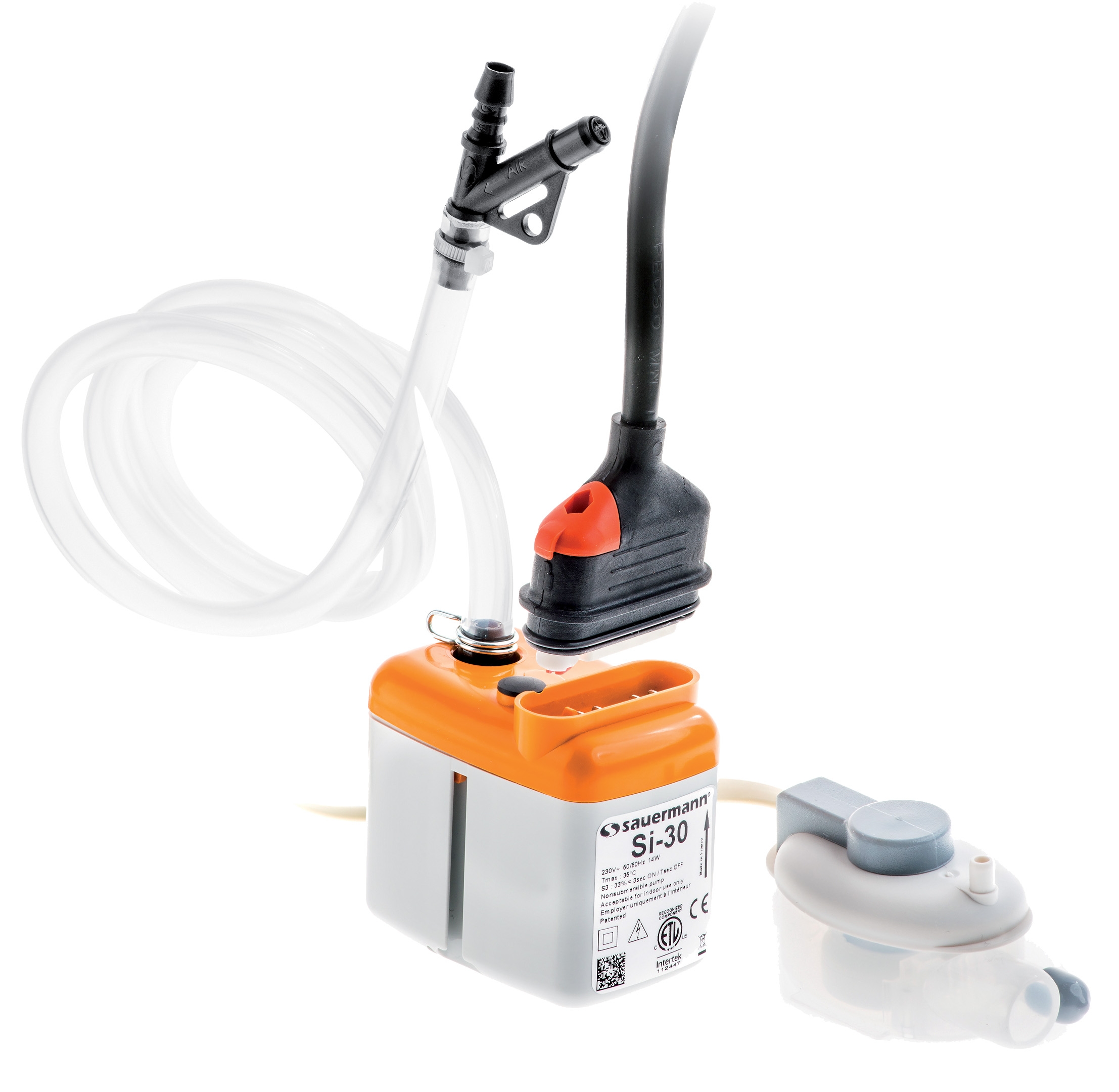
The Grundfos SI-30 condensate pump addresses this through integrated automatic thermal protection at 115°C and continuous duty capability. Its 20 L/h maximum flow rate suits systems up to 20 kW cooling capacity. The thermal protection prevents catastrophic pump damage if condensate flow stops (common when drain pans freeze or become blocked).
Procurement considerations for cooling applications:
- Thermal cycling affects seal materials; verify elastomer compatibility across operating temperature range
- Intermittent duty creates different wear patterns than continuous operation; thermal protection becomes critical
- Installation elevation relative to discharge point determines static head; undersized pumps cannot overcome 2-3 meter vertical discharge lines
- Water quality impacts pump longevity; systems with hard water sediment require more frequent maintenance
Specifying the SI-30 for a 15 kW chiller system operating 8,000 hours annually requires procurement validation that 20 L/h capacity maintains system drain time under 15 minutes during peak condensate generation. Undersizing forces thermal cutoff activation—which protects the pump but creates downtime.
When procuring condensate systems globally, account for regional power standards. Many markets operate 220-240V equipment differently than North American 110V systems. Backup pump capacity considerations also matter: if the primary condensate pump fails, where does condensate accumulate? Procurement must address redundancy for mission-critical cooling in data centers, medical facilities, or continuous manufacturing.
High-Performance Hydraulic Pressurization for Industrial Equipment
Industrial machinery from injection molding equipment to hydraulic presses to metal fabrication systems requires pumps delivering controlled pressures at 150-250 bar continuously. These applications demand pumps engineered for pulsating loads, long seal life, and integrated valve functionality to prevent catastrophic pressure spikes.
The Interpump E3B1911 with integrated valve delivers 11 L/min at 190 bar with built-in pressure relief. Its 5.4 hp motor operates at 1450 rpm, optimized for load-responsive pressure control. The integrated valve eliminates external plumbing connections—reducing potential leak points and simplifying procurement specifications.
For comparison, the Pratissoli KF30 offers industrial-grade capacity: 106 L/min at 200 bar, 40 kW power, 72 kg mass. This pump suits larger machinery requiring proportional pressure control and multiple simultaneous functions (clamping, holding, positioning).
Procurement strategy differs fundamentally between these two pump classes:
E3B1911 Applications:
- Single-circuit pressure control (press, clamp, or lift function)
- Equipment where pump displacement remains fixed
- Installations requiring compact footprint
- Systems where integrated relief prevents external valve specification complexity
- Annual run hours: 5,000-8,000 (moderate duty)
- Multi-circuit systems requiring proportional flow distribution
- High-volume production equipment operating 16,000+ hours annually
- Systems requiring variable displacement or load-responsive operation
- Installations where pump efficiency directly impacts energy costs
- Machinery demanding modular valve configuration
When procuring for hydraulic systems, validate that pressure relief response time matches load velocity. A hydraulic press raising 50 tons at 0.5 m/sec generates enormous pressure energy—if relief valve response exceeds 150 milliseconds, pressure spikes damage cylinders and seals. 3G Electric procurement guidance emphasizes that relief valve selection drives system reliability more than pump selection alone.
System Integration: Pressure Regulation and Safety Considerations
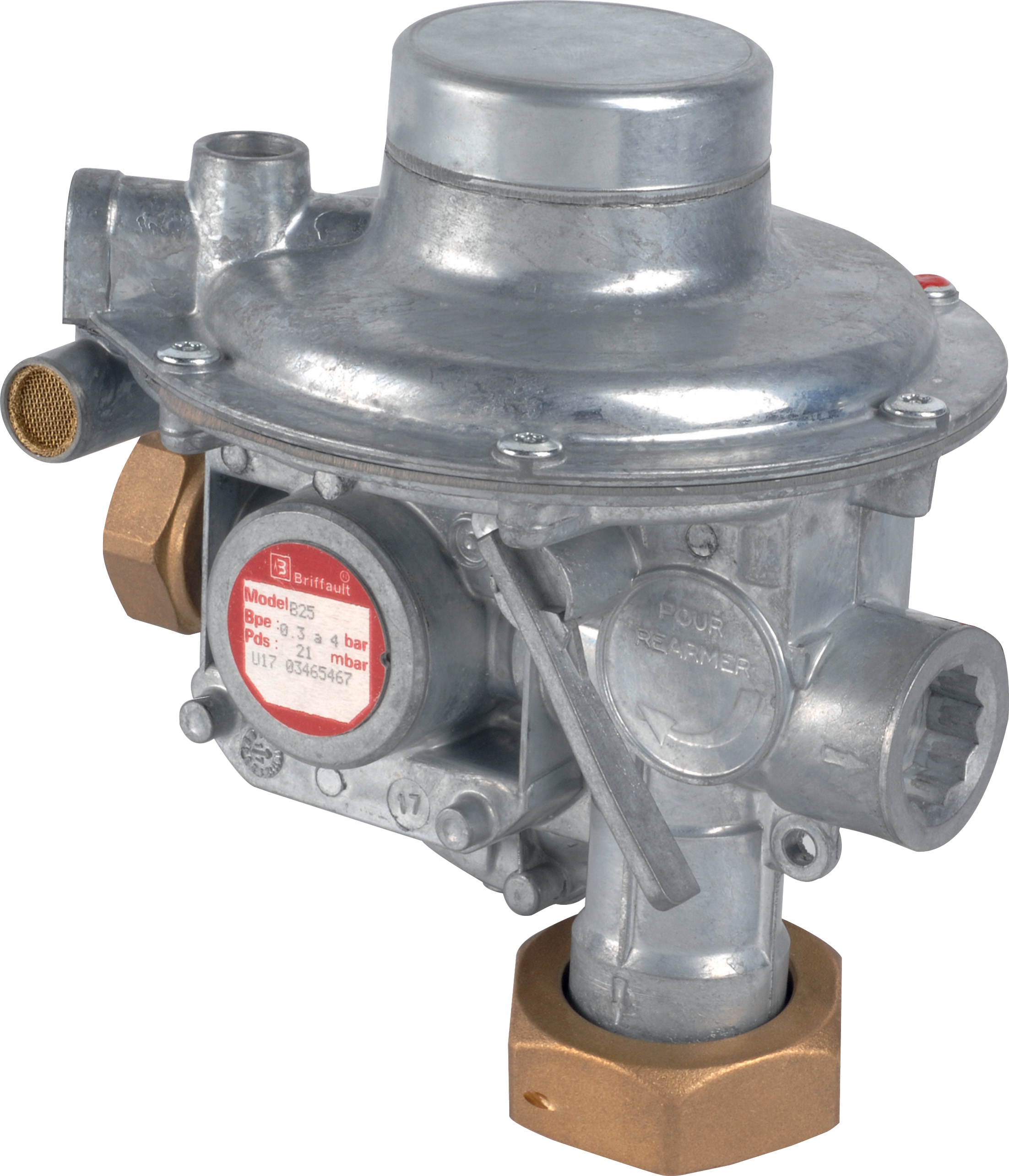
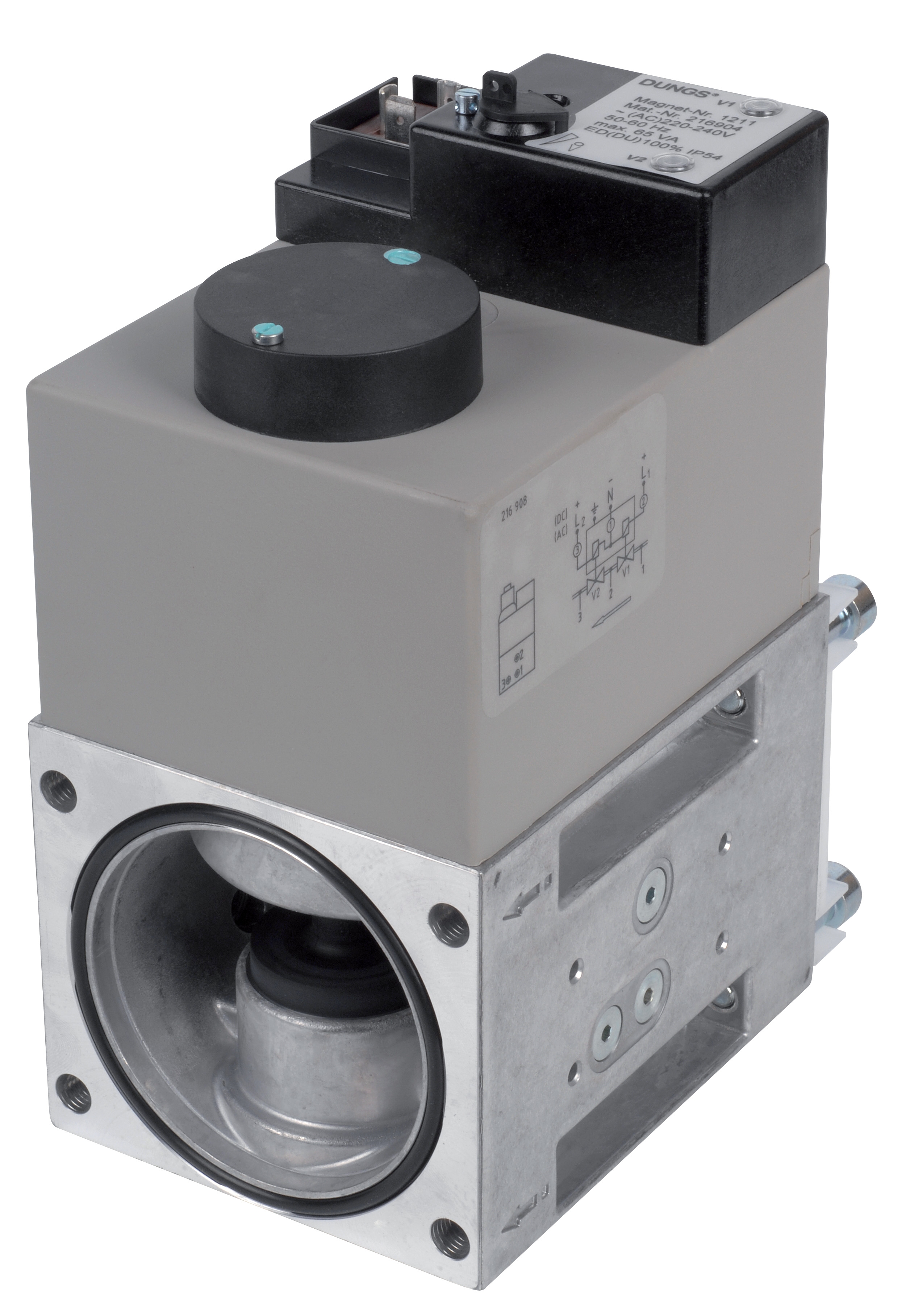
Beyond pump selection, Industry Applications require pressure regulation components that interface safely with different media. The DUNGS DMV-D 512/11 gas regulation valve block illustrates this principle for combustion systems operating at controlled pressures.
Rated for Rp 3/8 to Rp 2 connections and operating at 220-240V AC (50-60 Hz), this solenoid valve block regulates gas pressure in burner systems. Procurement specifications must verify:
- Electrical compatibility with facility power standards (some regions use 110-120V exclusively)
- Gas type compatibility (natural gas, propane, hydrogen require different regulator specifications)
- Pressure rating alignment with system design pressure
- Response time matching ignition sequence requirements
Integration failure occurs when procurement teams specify components in isolation. A 140 bar pump (VHT4721) cannot integrate with a 100 bar system regulator without pressure relief. Similarly, a condensate pump (SI-30) cannot discharge against 2 meters of vertical head without proper sizing validation.
3G Electric's 35-year experience reveals that procurement engineers who succeed across global markets follow these principles:
1. Validate system context before component selection — understand pressure requirements, flow demands, duty cycles, and environmental conditions
2. Specify component families rather than individual SKUs — allows regional availability flexibility while maintaining performance standards
3. Plan for aging — components performing at rated specifications today operate below specifications after 3-5 years as seals wear and clearances increase
4. Account for integration complexity — plumbing, electrical connections, and valve sequencing add cost and failure risk beyond pump cost
5. Test specifications against worst-case scenarios — thermal extremes, pressure spikes, contamination events, and extended duty cycles
Procurement Decision Framework for Industry Applications
When evaluating Industry Applications for your facility:
Step 1: Define Operational Context
Document actual pressure requirements (not maximum rating), sustained flow demand, temperature range, and duty cycle (continuous vs. intermittent). Many procurement errors stem from specifying maximum-rated components for average-duty applications.
Step 2: Identify Integration Points
Map how selected pumps connect to existing regulators, relief valves, nozzles, and control systems. Missing integration details force on-site modifications and increase failure risk.
Step 3: Evaluate Component Longevity
Specify components matching your replacement cycle expectations. High-performance pumps like the KF30 justify higher procurement cost through extended service intervals. Lower-cost alternatives may require replacement during equipment lifecycle, multiplying total cost of ownership.
Step 4: Validate Supplier Support
3G Electric maintains 35+ years of global distribution relationships enabling rapid parts availability and technical support across regions. Procurement decisions should favor suppliers with documented experience in your specific Industry Applications sector.
Step 5: Plan Redundancy and Maintenance
Estimate backup component needs, establish maintenance intervals based on duty cycles, and budget for seal replacement. Catastrophic failures during operation cost far more than planned maintenance and component redundancy.
Industry Applications success requires viewing procurement not as component purchasing but as system design validation. Each pump, valve, and regulator must align with documented operational requirements while accounting for real-world wear, thermal variation, and pressure transients.