Understanding Industry Applications: Core Principles for Southeast Asian Facilities
Industry applications span manufacturing plants, food processing facilities, textile mills, automotive service centers, and facility management operations across Southeast Asia. Each sector demands specific fluid system components—pumps, pressure regulators, and spray nozzles—that must withstand tropical humidity, temperature fluctuations, and continuous operational demands.
As a distributor serving the region for over 35 years, 3G Electric has observed that successful maintenance programs don't simply install equipment and wait for failure. Instead, they match component specifications to actual operational conditions, plan for environmental stressors, and establish preventive maintenance intervals that account for local climate factors.
The difference between a facility that experiences unexpected downtime and one that operates reliably often comes down to three factors: understanding your equipment's actual performance envelope, recognizing how Southeast Asian environmental conditions affect component lifespan, and building maintenance protocols around realistic usage patterns rather than manufacturer defaults.
Pressure Regulation and Safety in Tropical Environments
Environmental Challenges in Southeast Asia
Southeast Asian industrial facilities operate under conditions that accelerate component degradation. High humidity (70-95% year-round in coastal areas), temperatures ranging from 25-38°C, salt air corrosion in coastal regions, and sudden weather changes all impact pressure regulation systems.
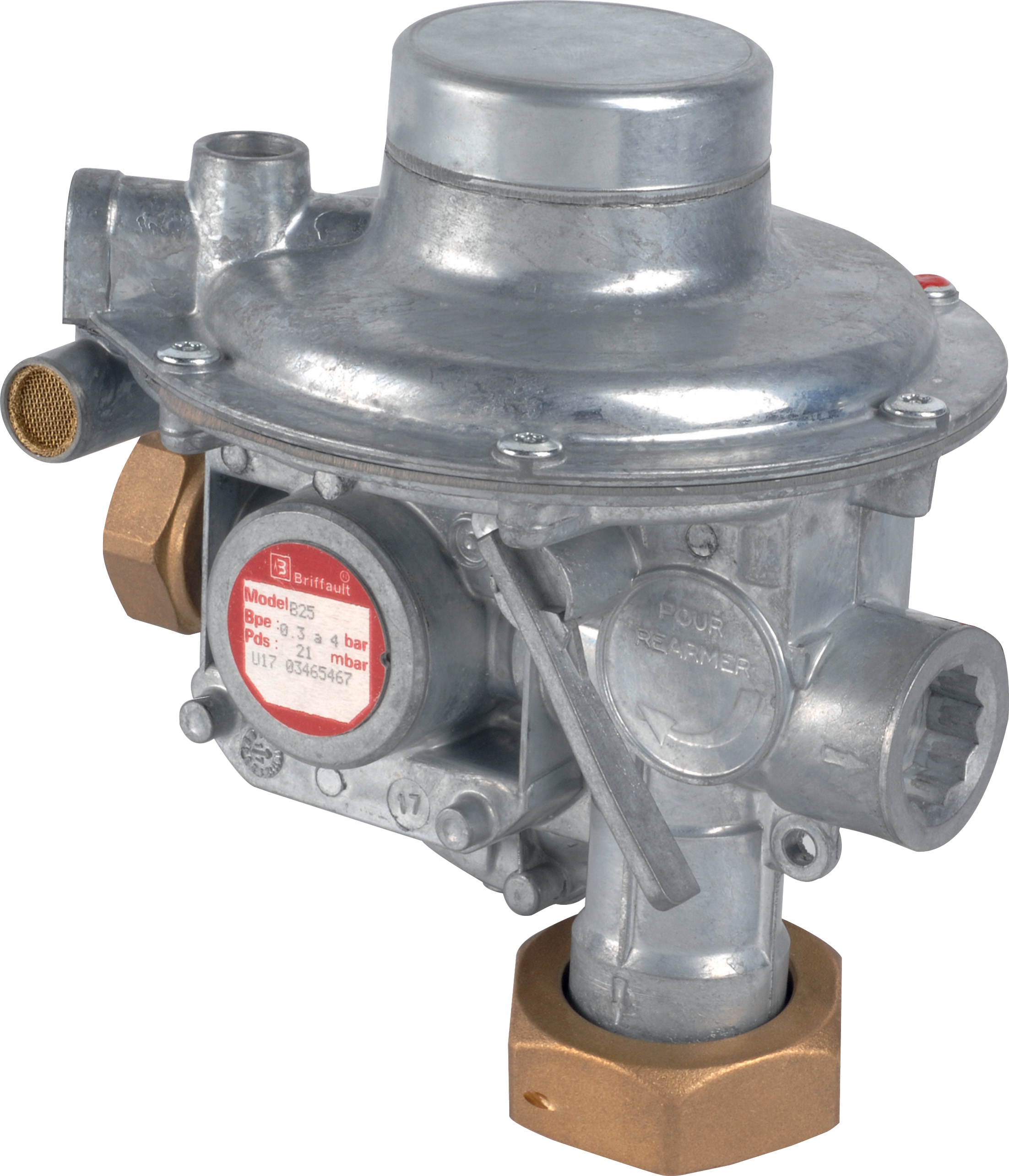
Pressure regulators like the Francel B25/37mb with integrated safety relief serve critical functions in laboratory and industrial gas distribution. However, maintaining consistent 37 mbar outlet pressure becomes challenging when environmental humidity causes internal corrosion or when temperature swings affect gauge calibration.
Practical Maintenance Strategy for Regulators
Monthly Inspection Protocol:
- Check for moisture accumulation in vent passages (common in high-humidity areas)
- Verify outlet pressure readings against calibrated reference gauge
- Inspect connection points for salt corrosion or oxidation
- Test safety relief function by slowly increasing inlet pressure to confirm relief activation
Regulators in coastal facilities should be inspected every 30 days rather than the standard 90-day interval. The salt-laden air corrodes internal seals and relief mechanisms faster than inland installations. Installing a desiccant-style breather on the vent outlet significantly extends regulator life by preventing moisture ingress.
Maintenance teams should document baseline pressure readings immediately after installation. Pressure drift (more than 2 mbar variance) indicates internal seal degradation and necessitates replacement, not adjustment.
High-Pressure Pump Selection and Performance Matching
Assessing Real-World Operating Demands
Southeast Asian manufacturing facilities often specify pumps based on peak demand rather than actual daily operating conditions. A textile mill might purchase a Pratissoli MW40 (211 L/min at 210 bar) for maximum production capacity, but operate at 60-70% capacity 80% of the time.
This mismatch creates maintenance challenges:
- Oversized pumps running below optimal efficiency consume more energy
- Partial load operation can cause cavitation and premature seal wear
- Thermal stress from continuous circulation at low demand creates bearing fatigue
Instead of sizing pumps to maximum theoretical demand, maintenance teams should:
1. Document actual operating pressure and flow requirements across a 30-day period
2. Identify the pressure/flow combination that represents 70% of operational time
3. Select pump capacity for that realistic demand point
4. Confirm the pump can handle peak demand without exceeding 90% rated capacity
For example, a facility requiring 180-190 bar at 80 L/min during normal operations might choose the Pratissoli KF30 (106 L/min at 200 bar) instead of the larger MW40. The KF30 operates closer to its optimal efficiency band during normal production, extends bearing life, and provides adequate peak capacity cushion.
Condition-Based Maintenance for Pump Systems
Monitor These Parameters Weekly:
- Discharge pressure (confirm it's within ±5 bar of setpoint)
- Pump noise (grinding or cavitation sounds indicate internal wear)
- Fluid temperature at discharge (above 65°C indicates efficiency loss or internal friction)
- Fluid color and odor (darkening or burnt smell indicates thermal breakdown)
Tropical ambient temperatures mean fluid cooling becomes critical. Hydraulic and pressure fluid temperature directly impacts viscosity, seal performance, and component lifespan. Facilities operating at 210 bar (like the MW40) should implement fluid coolers when ambient temperature regularly exceeds 32°C. Without cooling, fluid reaching 75-80°C causes accelerated seal degradation and reduces expected pump life by 40-50%.
Maintenance teams often underestimate this factor, attributing premature pump failures to manufacturing defects when root cause was inadequate cooling.
Precision Nozzle Systems and Application Integrity
Matching Nozzles to Application Requirements
Spray nozzles like the Euspray flat jet nozzle (1/4" BSPT, 25° angle) deliver targeted application in cleaning, coating, and wash-down operations. However, nozzle selection errors—using the wrong spray angle, flow rating, or pressure—cause:
- Incomplete coverage (dry spots or over-spray to adjacent areas)
- Excess chemical consumption (costs increase while results deteriorate)
- Inconsistent product quality (especially critical in food processing and textiles)
- Premature equipment wear (incorrect velocity damages target surfaces)
Application-Specific Selection Matrix
Textile Mills (Common Southeast Asian Application):
Flat jet nozzles with 25-30° angles work well for fabric washing and chemical application when operated at 3-5 bar. This pressure range (not the 200+ bar of hydraulic systems) provides complete fabric penetration without fiber damage. The Euspray flat jet with index 30 design allows quick changeover for different fabric types without system shutdown.
Maintenance teams should stock multiple nozzle sizes and angles, rotating them to extend individual nozzle life. A single nozzle operating continuously accumulates sediment and mineral deposits (particularly problematic in hard-water areas common across Southeast Asia). Swapping three nozzles in rotation means each operates 8 hours daily instead of 24, tripling effective lifespan.
Food Processing Applications:
Stainless steel nozzles (verify specifications when ordering) resist corrosion from sanitizing chemicals. Spray patterns should provide even distribution without creating splash-back zones where bacteria can accumulate. Pressure should be sufficient for penetration but insufficient to aerosolize contaminants into breathing zones (typically 2-4 bar for food facility wash-down).
Maintenance Protocol for Nozzles:
- Weekly visual inspection for mineral buildup or debris blockage
- Monthly flow testing (verify discharge matches specification)
- Quarterly replacement of heavily-used nozzles (even if still partially functional)
- Annual cleaning with appropriate solvents (do not use ultrasonic cleaning, which can damage internal passages)
Integrated System Approach: Coordinating Component Selection with Facility Operations
Building a Component Inventory System
Maintenance teams managing multiple facilities across Southeast Asia benefit from standardized component selection. Rather than each facility independently choosing pumps, regulators, and nozzles, a centralized approach:
- Reduces spare parts inventory (fewer unique SKUs to stock)
- Enables bulk purchasing for cost efficiency
- Creates consistent maintenance training across locations
- Simplifies troubleshooting when technicians understand standard configurations
3G Electric's 35+ years distributing industrial equipment across the region has revealed that facilities using 4-6 standard component configurations outperform those with 15-20 unique setups. Training costs decrease, parts availability improves, and troubleshooting becomes faster when teams know their systems deeply.
Environmental Adaptation Checklist for Southeast Asian Deployments
Before deploying pump systems like the Interpump E1D1808 (8 L/min at 180 bar) or larger models, confirm:
Corrosion Protection:
- Are all exposed fasteners stainless steel or zinc-plated?
- Does the facility's salt-air exposure (distance from coast) require specialist coatings?
- Are electrical connections sealed against humidity ingress?
- Is ambient temperature regularly above 32°C (requires active cooling)?
- Can the facility provide adequate ventilation around heat-generating components?
- Is fluid cooler capacity sized for continuous operation at peak load?
- Is facility power stable (voltage fluctuations >10% damage motor windings)?
- Are soft-starters or variable frequency drives installed to reduce inrush current?
- Is backup power available to prevent unexpected shutdown damage to seals?
- Are open reservoirs protected from rainfall and humidity-condensed moisture?
- Is fluid filtration adequate (target 10 micron absolute for high-pressure systems)?
- Can the facility maintain fluid change intervals (typically 2,000-3,000 operating hours in tropical environments vs. 5,000+ in temperate climates)?
Summary: Practical Application in Your Facility
Effective component selection and maintenance across Southeast Asian industrial facilities requires understanding three layers: the component's designed performance envelope (pressure, flow, temperature ratings), your facility's actual operating conditions (not theoretical maximums), and the regional environmental factors that accelerate degradation.
Maintenance teams achieve the best outcomes by:
1. Documenting actual operational demands over 30-60 days before specifying components
2. Selecting equipment rated for realistic operating points, not peak theoretical demand
3. Implementing preventive maintenance intervals adjusted for tropical environmental factors (30-50% shorter than temperate climate recommendations)
4. Building standardized component libraries across multiple facilities to improve training and troubleshooting efficiency
5. Monitoring key performance parameters (pressure, temperature, flow) weekly rather than waiting for failure symptoms
With 35+ years serving Southeast Asian industrial operations, 3G Electric continues to support maintenance teams by supplying quality components matched to regional conditions and providing technical guidance based on real-world facility performance data.