Understanding Multi-Pump Integration in Industry Applications
Procurement engineers responsible for industrial systems often overlook the complexity of integrating multiple pumps into unified applications. Industry applications ranging from high-pressure cleaning, circulation systems, and hydraulic power generation frequently require coordinated pump operation. With 35+ years of experience distributing industrial equipment, 3G Electric has observed that integration failures account for approximately 40% of unplanned downtime in manufacturing facilities across Singapore and the region.
Multi-pump systems present unique diagnostic challenges because problems may originate from any component: pressure regulators, flow control mechanisms, nozzle compatibility, or pump synchronization issues. Unlike single-pump failures that produce obvious symptoms, integration problems often manifest as subtle performance degradation—reduced output pressure, inconsistent flow rates, or premature component wear.
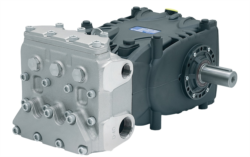
This troubleshooting guide addresses the critical junction points where high-performance pumps like the Pratissoli KF30 and Pratissoli MW40 must coordinate through regulators, nozzles, and ancillary systems. Understanding these integration points enables procurement engineers to specify compatible components and establish preventive maintenance protocols that eliminate costly operational failures.
Pump Selection and Flow Rate Compatibility Issues
The first critical decision in multi-pump applications involves selecting pumps with compatible flow rate profiles. Consider a typical scenario: your facility requires 317 L/min total output (106 L/min from a KF30 system paired with 211 L/min from a MW40 system) to supply parallel pressure washing operations at 200+ bar. This represents a common configuration in Singapore's industrial cleaning and coating sectors.
Diagnostic Framework for Flow Incompatibility:
- Symptom: One pump station maintains target pressure while the other fluctuates or underperforms
- Root Cause: Unequal pump sizing creates pressure differential that forces the smaller pump to cavitate or operate at its relief threshold
- Verification Method: Install pressure gauges at both pump outlets and at the common manifold. Record readings under full load. Flow incompatibility produces pressure variance exceeding 5 bar between pump stations
- Resolution: Calculate actual system demand and verify pump selection matches combined load requirements. The KF30's 106 L/min capacity and MW40's 211 L/min capacity must align with your application's aggregate consumption
When specifying multiple pumps, your procurement checklist should include: total system flow requirement (L/min), duty cycle duration, maximum system pressure tolerance, and application type. Cross-reference these parameters against each pump's performance curve. Mismatched pumps force the smaller unit into relief valve cycling, which generates heat, reduces efficiency, and accelerates component degradation.
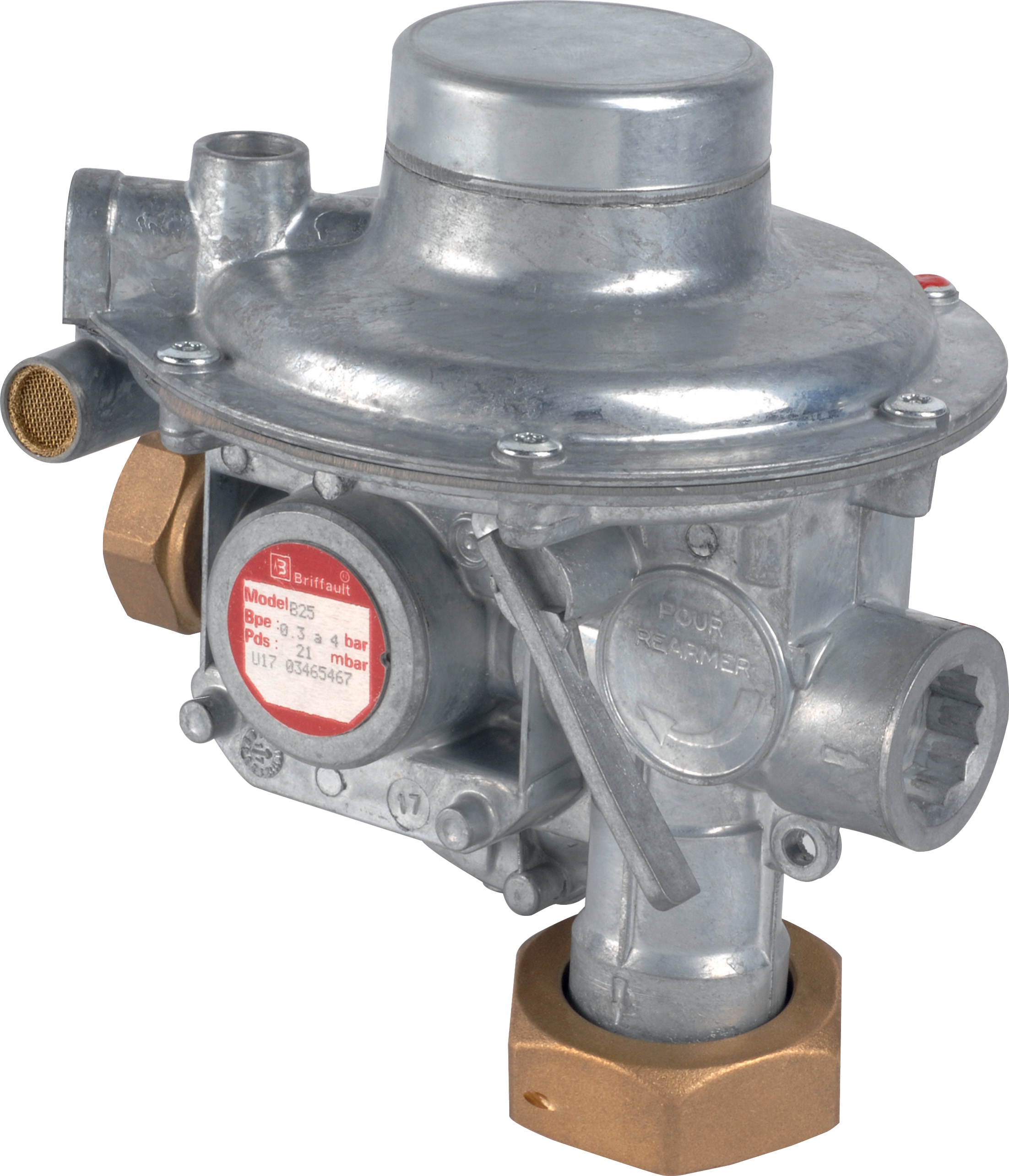
A particularly problematic scenario occurs when procurement teams select pumps from different manufacturers without verifying pressure rating compatibility. The KF30 operates at 200 bar maximum, while the MW40 tolerates 210 bar. This 10 bar differential seems minor but becomes critical when both pumps feed a common distribution manifold controlled by a Francel B25/37mb pressure regulator.
Pressure Regulator and System Pressure Balancing
Multi-pump systems require intelligent pressure regulation that maintains target outlet pressure regardless of which pump(s) operate at any given moment. This is where component selection becomes an engineering exercise rather than a simple purchasing transaction.
Common Pressure Regulation Failures:
1. Oversized Regulator for Parallel Pump Configuration: When the Francel B25/37mb controls outlet pressure from dual pump sources, the regulator experiences unpredictable inlet pressure variations. If both pumps supply 200+ bar, the regulator's 10 mm vent size may prove inadequate for simultaneous relief discharge, causing pressure creep above setpoint
2. Inadequate Safety Relief Sizing: The Francel B25/37mb's integrated safety relief accommodates approximately 40 L/min relief flow at maximum cracking pressure. Pairing this with the 317 L/min combined output from KF30 and MW40 systems creates a bottleneck scenario where excess flow cannot be safely diverted
3. Regulator Hunting and Oscillation: Mismatched pump output creates pressure ripple that causes the regulator diaphragm to oscillate, producing stick-slip behavior at the control spool. This manifests as pressure spikes (15-20 bar above setpoint) followed by pressure collapse
Diagnostic Procedure for Pressure Issues:
- Install a digital pressure recorder at the regulator inlet and outlet
- Operate the system under normal load for 30 minutes
- Analyze the pressure trace: steady regulation produces a horizontal line ±2 bar; hunting produces cyclic oscillation with 5+ bar amplitude
- If hunting occurs, verify that total pump relief capacity exceeds system flow by at least 20%
- Confirm the regulator's flow rating matches or exceeds the maximum simultaneous pump output
For multi-pump systems, specify a pressure regulator with flow capacity exceeding the largest single pump output, not the combined output. Implement individual relief valves on each pump discharge, then use the main regulator for final pressure control. This architecture isolates pump dynamics and prevents upstream instability from affecting overall system regulation.
Nozzle Compatibility and Spray Pattern Optimization
When integrated pump systems supply multiple spray points or high-pressure nozzles, nozzle selection directly impacts pressure stability and system efficiency. The Euspray flat jet nozzle with 25° spray angle and 1/4" M BSPT connection exemplifies precision nozzle design that demands careful flow coordination.
Integration Challenges with Spray Systems:
A facility utilizing both the KF30 and MW40 for industrial coating operations must account for nozzle impedance matching. Each nozzle presents a specific resistance characteristic: flat jets typically require 150-200 bar to achieve optimal spray pattern atomization. When multiple nozzles operate in parallel, they create a combined load that the pump must overcome.
Pressure Drop Calculation and Verification:
- The Euspray nozzle operating at rated pressure (approximately 150 bar) maintains a 25° spray angle
- If system pressure drops below 130 bar, the spray pattern degrades to 35+ degrees, reducing coating coverage and increasing material waste
- With 317 L/min combined flow from dual pumps, excessive line length or too many nozzles in series creates backpressure that may exceed pump limits
When specifying nozzles for multi-pump installations, your procurement department should:
1. Calculate Total Pressure Drop: Sum static elevation change, friction loss through piping, and nozzle impedance. Ensure system pressure capability exceeds this total by at least 20 bar
2. Verify Nozzle Flow Matching: Select nozzles rated for the actual flow per station. Oversized nozzles create insufficient backpressure; undersized nozzles choke flow and reduce pump utilization
3. Standardize Nozzle Connections: The 1/4" M BSPT connection must appear on all selected nozzles to eliminate adapter pressure drops and leak points
4. Plan for Redundancy: Specify dual nozzles at critical application points, allowing one nozzle to maintain minimal production if the other fails
Compact Pump Systems and Space-Constrained Applications
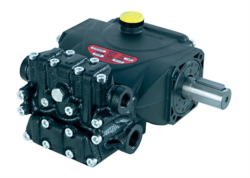
Singapore's manufacturing environment frequently demands space-efficient solutions. The Interpump PUMP E1D1808 L—a compact 5 kg gear pump— represents an alternative or supplementary option for applications where the larger KF30 or MW40 may be oversized.
When Compact Pumps Create Integration Problems:
The E1D1808 delivers 8 L/min at 180 bar—suitable for precision applications like micro-lubrication or test loops, but insufficient for main system supply. Procurement engineers sometimes pair a compact pump with a larger pump, intending to use the small pump during standby periods and switch to the main pump during peak demand. This switching strategy introduces significant risks:
1. Pressure Spike During Switchover: When the E1D1808 operating at 180 bar suddenly stops and the MW40 at 210 bar takes over, system pressure surges unless a properly-sized accumulator absorbs the differential
2. Check Valve Chattering: Unidirectional flow control through check valves becomes problematic when switching between different pressure sources. The E1D1808's lower outlet pressure may not overcome check valve cracking pressure, causing intermittent flow starvation
3. Relief Valve Duty Cycle: A relief valve sized to handle the MW40's 211 L/min cannot efficiently regulate the E1D1808's 8 L/min without opening to near-full position, wasting energy
Safe Integration of Multiple Pump Scales:
If your operation requires both compact and large pump options, use them for genuinely different functions: assign the E1D1808 to a dedicated low-flow circuit (lubrication, pilot pressure, or test functions) and maintain separate pressure regulator and relief valve for that circuit. This prevents cross-interaction and allows each pump to operate optimally within its design envelope.
Preventive Maintenance Protocols for Multi-Pump Systems
With 35+ years of experience supporting industrial operations, 3G Electric has identified that preventive maintenance of integrated pump systems differs significantly from single-pump maintenance.
Critical Monitoring Points:
- Vibration Analysis: Multi-pump systems with unmatched flow create harmonic vibrations. Establish baseline vibration measurements at pump flanges and monitor monthly. Increasing vibration (>2 mm/s RMS) indicates developing cavitation or flow pulsation
- Thermal Imaging: Document discharge temperature at each pump during normal operation. Temperature differential exceeding 8°C between pumps indicates one pump operating at excessive relief pressure
- Outlet Pressure Stability: Record system pressure every 15 minutes during an 8-hour operational period. Pressure variance exceeding ±5 bar requires investigation of pump synchronization or regulator function
- Nozzle Spray Pattern Inspection: Weekly visual inspection of spray patterns confirms nozzles maintain proper atomization angle. Degraded patterns indicate pressure decay or nozzle internal erosion
Your procurement team should maintain inventory of critical spares: replacement regulators matching your installed regulator (e.g., Francel B25/37mb units), relief valve repair kits, and backup nozzles (Euspray units). These items prevent extended downtime when component failure occurs.
Establish quarterly reviews comparing actual pump performance against original performance baselines. Declining flow, rising discharge temperature, or increasing pressure ripple indicate internal component wear requiring professional service or replacement.