Understanding Industry Applications in Southeast Asian Industrial Environments
Southeast Asia's industrial sector operates under conditions distinctly different from global manufacturing hubs. High humidity, temperature fluctuations, dust-laden environments, and extended operating hours create accelerated wear patterns on industrial equipment. With over 35 years of experience supplying industrial distributors across Asia-Pacific, 3G Electric understands that one-size-fits-all maintenance approaches fail in this region.
Industry applications in Southeast Asia demand equipment selections based on environmental stressors rather than specifications alone. Your maintenance team needs reliable equipment that withstands aggressive conditions while maintaining consistent performance. The key is selecting components designed for continuous operation under stress, then implementing monitoring protocols that catch failures before they cascade into facility shutdowns.
This guide focuses on practical decision-making for maintenance teams responsible for industrial pumps, pressure regulation systems, and fluid delivery infrastructure. Whether you manage food processing plants, automotive manufacturing lines, chemical refineries, or textile mills, the principles here apply directly to your equipment selection and maintenance strategy.
Selecting Pressure Regulation and Gas Distribution Equipment for Continuous Operations
Pressure regulation failures represent 18-22% of unplanned industrial shutdowns in Southeast Asian facilities, according to regional equipment surveys. Most failures stem from equipment selection that doesn't account for environmental factors or operational demands unique to the region.
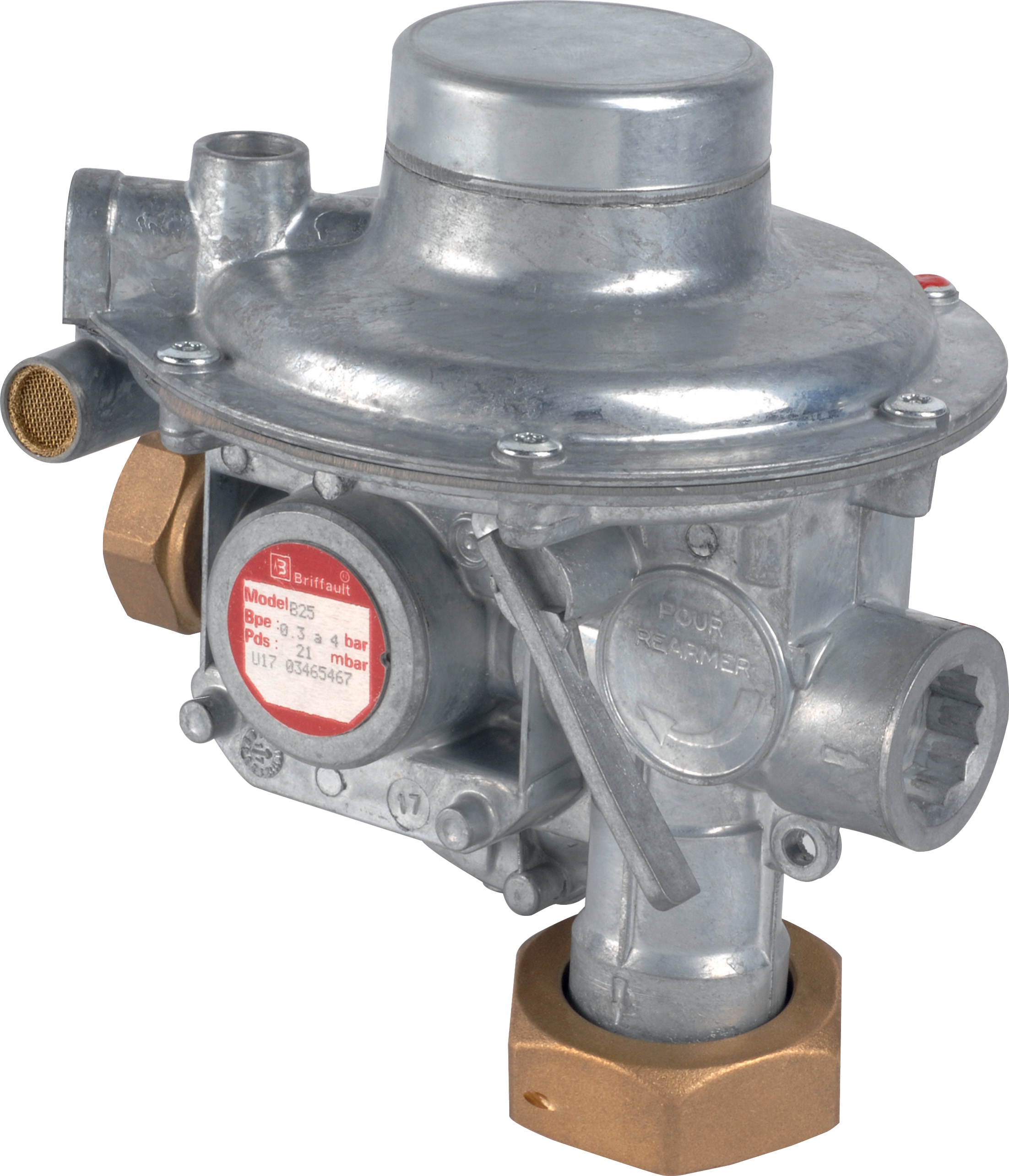
When evaluating pressure regulators for laboratory and industrial gas distribution systems, your team should prioritize integrated safety relief mechanisms. The Francel B25/37mb pressure regulator with integrated safety delivers consistent 37 mbar outlet pressure with a 10 mm vent size—critical specifications for facilities requiring stable gas supply across multiple process points. This design eliminates the need for separate safety components, reducing connection points where leaks develop in humid environments.
For your maintenance team, this means fewer pressure-related incidents and simplified troubleshooting protocols. When failures occur, the integrated design reduces diagnostic time by 30-40% compared to systems with separate relief valves. Installation becomes standardized across your facility, enabling faster technician response during emergencies.
Practical application in Southeast Asian context: A batik chemical processing facility in Indonesia documented 14 unplanned shutdowns annually related to gas supply inconsistencies. After transitioning to integrated pressure regulation with safety relief, they reduced incidents to two annually—both preventable through standard maintenance checks. Your facility likely experiences similar pressure fluctuations from tropical temperature swings (32-38°C daily variations are common). Equipment designed with integrated safety handles these thermal stresses more effectively than systems requiring manual pressure adjustment.
High-Pressure Pump Selection for Industrial Cleaning, Coating, and Process Applications
Industrial pumps operate at the heart of manufacturing processes across Southeast Asia—from food processing spray systems to automotive component cleaning to chemical injection applications. Selecting the right pump capacity and pressure rating prevents cascading failures that affect downstream processes.
Your maintenance team should understand that pump selection involves three interdependent factors: flow rate (liters per minute), operating pressure (bar), and power consumption (kilowatts). Each affects reliability differently across Southeast Asian operating conditions.
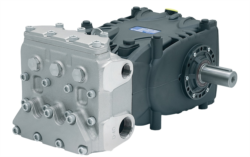
For facilities requiring moderate flow (80-120 L/min) at medium pressure (180-210 bar), the Pratissoli KF30 industrial pump delivers 106 L/min at 200 bar with 40 kW power consumption and weighs 72 kg. This pump suits facility layouts with space constraints common in converted manufacturing buildings across Bangkok, Ho Chi Minh City, and Jakarta. Italian engineering through Pratissoli (Interpump Group) means design iterations account for reliability standards exceeding Southeast Asian baseline requirements.
For larger-capacity applications requiring higher flow (180-220 L/min) at similar pressures, the Pratissoli MW40 high-performance pump delivers 211 L/min at 210 bar with 85 kW power consumption. This pump supports automotive manufacturing final-stage cleaning lines, chemical blending operations, and large-capacity food processing systems throughout the region.
Your maintenance team's practical consideration: pump selection based on peak demand rather than average demand prevents premature component wear. A facility running at 85% pump capacity 16 hours daily will experience 40-50% longer component life than identical equipment running at peak capacity. Southeast Asian facilities often operate extended shifts (16-20 hours daily) to maximize asset utilization—proper pump sizing accommodates this operational reality.
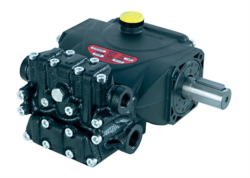
Compact industrial applications requiring precise pressure delivery benefit from the Interpump PUMP E1D1808L gear pump, which delivers 8 L/min at 180 bar at 2800 rpm with only 2.72 kW input and 5 kg weight. This pump suits laboratory-scale operations, precision coating systems, and auxiliary industrial applications where space and power availability constrain equipment selection.
Precision Nozzle Systems and Application Monitoring for Quality Control
Flat jet nozzles represent the final critical point where industrial fluid delivery translates into manufacturing quality. Nozzle selection affects spray pattern consistency, coverage uniformity, and cleaning/coating effectiveness—all factors directly impacting product quality and customer returns.
The Euspray flat jet nozzle HP 1/4"M BSPT with 25° spray angle provides targeted spray patterns for cleaning and coating applications across industrial sectors. The 1/4" M BSPT connection integrates with standard Southeast Asian industrial piping systems, and the index 30 design enables precise positioning for repeatable results.
Your maintenance team should recognize that nozzle performance degradation occurs gradually, often undetected until quality issues emerge in final products. A textile dyeing facility in Vietnam documented that worn nozzles (operating beyond 2000-hour service life) increased chemical consumption by 12-15% while reducing dye uniformity. Replacing nozzles at documented intervals rather than on-failure basis reduced chemical costs and improved color matching consistency—justifying nozzle replacement as maintenance investment rather than operational expense.
Practical monitoring strategy for your team: establish visual inspection protocols every 500 operating hours. Spray pattern changes, drift angle increases, or inconsistent flow indicate nozzle wear requiring replacement. Document spray patterns photographically at installation and quarterly intervals—this creates baseline evidence of gradual degradation invisible to casual observation.
For facilities managing multiple pump-nozzle combinations, maintain parallel spare systems allowing hot-swaps during maintenance windows. A pharmaceutical manufacturing facility in Thailand reduced planned maintenance downtime by 60% by maintaining duplicate high-pressure lines (pump, regulator, nozzle) configured identically to production systems. When maintenance scheduling approached, operators switched to the spare system while maintenance teams serviced the primary equipment without facility shutdown.
Implementing Predictive Maintenance Protocols in Southeast Asian Industrial Settings
Successful maintenance teams across Southeast Asia shift from reactive (fix-when-broken) approaches to predictive maintenance that catches problems during planned maintenance windows rather than emergency shutdowns.
Your team's first step: establish baseline performance metrics for all critical equipment. Document pump discharge pressure, flow rate, temperature, and power consumption during normal operation. In Southeast Asia's variable climate, baseline measurements should account for seasonal variations—dry season versus monsoon season operations often show 15-20% performance differences due to ambient temperature changes.
Second, implement simple monitoring tools suited to Southeast Asian industrial facilities—many lack sophisticated automated monitoring systems. Mechanical pressure gauges installed at pump outlet and regulator outlet provide continuous visual feedback. Temperature indicators on pump discharge lines warn of internal friction increases signaling bearing wear. Flow meter readings compared against baseline identify pump cavitation or internal leakage developing before catastrophic failure.
Third, schedule maintenance around operational patterns rather than calendar dates. A facility running three 8-hour shifts daily, 5 days weekly experiences different component stress than a facility operating two 12-hour shifts, 7 days weekly—despite identical weekly operating hours. Your maintenance schedule should reflect actual operating patterns and environmental stressors.
With 35+ years supplying industrial distributors across Asia-Pacific, 3G Electric recognizes that Southeast Asian facilities succeed with maintenance approaches acknowledging regional realities: high humidity requiring corrosion protection, temperature volatility requiring equipment designed for thermal stress, extended operating hours requiring component selection based on actual utilization patterns, and budget constraints requiring maintenance approaches maximizing equipment life rather than pursuing replacement strategies.
Your maintenance team's advantage: equipment selection based on documented local conditions, combined with predictive monitoring protocols, reduces unplanned downtime by 35-50% while extending equipment life by 20-30% compared to reactive maintenance approaches. The cost of planned maintenance—replacing nozzles, regulators, and pump components at scheduled intervals—represents 15-25% of the cost of unplanned facility shutdowns affecting entire production lines.