Understanding Industry Applications: A Holistic Equipment Strategy for Singapore Plants
Industry applications in Singapore's manufacturing sector demand equipment that balances precision, reliability, and cost-effectiveness. Whether you're managing a food processing facility, automotive component manufacturer, or chemical distribution operation, the equipment you select directly impacts production efficiency, maintenance costs, and worker safety.
With over 35 years of distribution experience in Asia-Pacific markets, 3G Electric has supported hundreds of plant operations in Singapore by helping managers understand how different equipment categories serve distinct—yet interconnected—roles in modern industrial systems. This article examines four critical equipment categories and how they apply across real-world manufacturing scenarios.
The key to successful equipment selection lies in understanding not just individual product specifications, but how components integrate within your operational workflow. A pressure regulator protects your system; a high-performance pump drives your process; a precision nozzle delivers your application. Each serves a purpose, and selecting the right combination determines your operational success.
Pressure Regulation vs. High-Volume Fluid Delivery: Matching Industry Applications to Equipment Type
When Pressure Regulation Becomes Your Priority
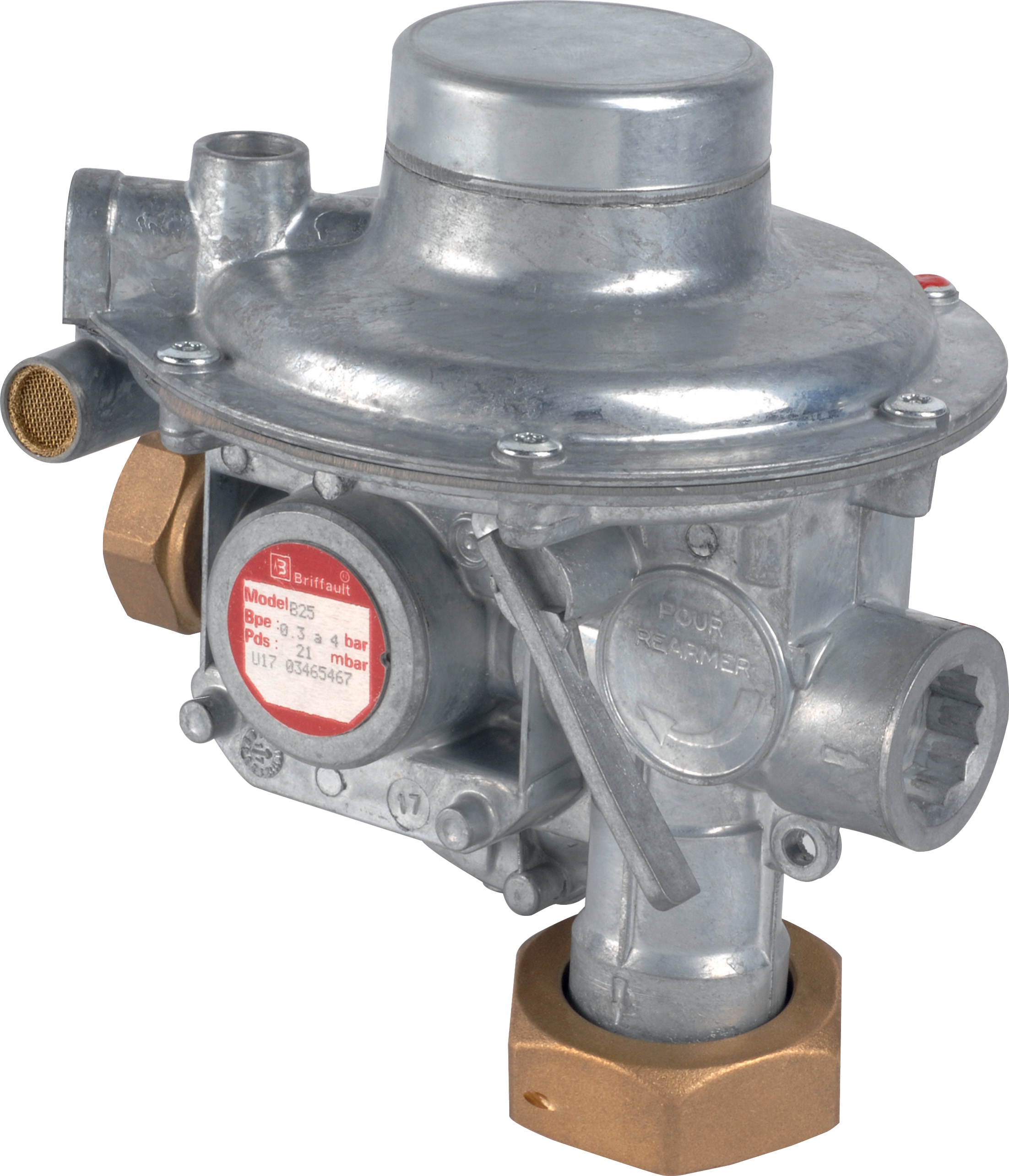
Pressure regulation represents a foundational safety and control layer in industrial operations. The Francel B25/37mb pressure regulator with integrated safety relief exemplifies this category—designed specifically for applications where you need consistent outlet pressure (37 mbar in this case) with built-in protection against overpressure conditions.
Industry applications for pressure regulators in Singapore plants include:
- Laboratory gas distribution systems where precision and safety are non-negotiable
- Medical gas delivery in pharmaceutical manufacturing facilities
- Calibration gas distribution for quality assurance departments
- Pilot control systems feeding larger industrial processes
- Safety-critical applications where pressure spikes could damage sensitive equipment or create hazardous conditions
The 10 mm vent size on the Francel B25/37mb ensures adequate safety relief capacity. Plant managers selecting this regulator typically prioritize consistent low-pressure delivery (under 50 mbar) rather than high-volume throughput. The integrated safety design eliminates the need for separate relief valve installation, simplifying maintenance and reducing leak points.
When Fluid Volume and Pressure Become Your Challenge
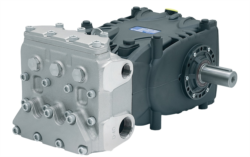
Contrast this with applications requiring substantial fluid movement under moderate-to-high pressure. The Pratissoli KF30 industrial pump delivers 106 L/min at 200 bar—a dramatic difference from pressure regulator duty. This pump category serves industry applications like:
- Water-jet cutting operations in automotive and precision metalworking
- High-pressure cleaning systems for facility maintenance
- Hydraulic power supply for industrial presses and assembly equipment
- Continuous-duty circulation in cooling or lubrication systems
- Mobile equipment where compact footprint (72 kg) matters alongside performance
The KF30's 40 kW power requirement represents a significant operational consideration. Plant managers evaluating this pump must confirm adequate electrical infrastructure, coolant capacity, and maintenance scheduling. At 106 L/min, this pump moves material continuously—appropriate for processes running 8+ hours daily.
For higher-volume operations, the Pratissoli MW40 pump offers 211 L/min at 210 bar—exactly double the KF30's throughput. The MW40 requires 85 kW and weighs 264 kg, indicating this equipment demands dedicated installation space, three-phase power, and substantial foundation support.
Nozzle Selection for Precision Industry Applications: Where Spray Pattern Becomes Critical
Industrial nozzles represent an often-overlooked decision point that dramatically affects application quality and material consumption. The Euspray flat jet nozzle (1/4" M BSPT, 25° angle, index 30) serves specialized industry applications requiring consistent spray distribution.
Flatjet nozzles excel in applications including:
- Industrial coating systems where uniform coverage directly impacts product quality
- Cooling tower water distribution requiring even coverage across large surface areas
- Food processing wash-down where the flat pattern prevents splashing contamination
- Chemical application in textile or paper manufacturing where pattern consistency affects efficiency
- Dust suppression in aggregate handling or milling operations
The 25° spray angle on the Euspray nozzle represents a balanced choice—wider than concentrated jet patterns (typically 0-10°) but tighter than wide-mist patterns (45°+). This geometry suits most general industrial cleaning and coating applications.
Plant managers must understand that nozzle selection directly impacts three operational variables:
1. Material consumption – Inefficient spray patterns waste expensive liquids (cleaning agents, coatings, coolants)
2. Application quality – Poor coverage creates rework, product rejects, or shortened equipment life
3. System pressure requirements – Wrong nozzle size forces excessive pump pressure, increasing energy costs and component wear
The index 30 designation indicates flow rate—this nozzle operates efficiently within a specific pressure range. Selecting the wrong nozzle index for your pump's operating pressure creates either inadequate spray pattern (pressure too low) or excessive turbulence and material waste (pressure too high).
System Integration: Compact Pump Solutions for Space-Constrained Industry Applications
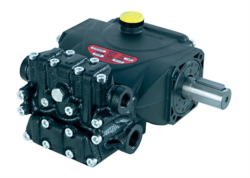
Not all Singapore manufacturing facilities have unlimited installation space. The Interpump E1D1808 gear pump addresses compact industry applications requiring modest flow at high pressure.
This pump's specifications (8 L/min at 180 bar, 2800 rpm, 2.72 kW, 5 kg) position it for:
- Integrated machine tool cooling where space within the equipment is extremely limited
- Mobile equipment pressure supply on construction or maintenance vehicles
- Subsidiary hydraulic circuits providing pilot pressure or actuation for larger systems
- Laboratory-scale testing of hydraulic systems before full-scale implementation
- Low-flow, high-pressure applications like proportional valve pilot pressure or gauge calibration circuits
The 5 kg weight allows mounting on equipment frames without substantial structural reinforcement. The 2.72 kW power draw represents minimal electrical demand—this pump can operate on standard single-phase power in many Asian facilities.
Plant managers overseeing multi-machine operations find these compact pumps valuable for:
- Reducing central pump room size when individual machines receive dedicated pump duty
- Improving equipment portability for maintenance or relocation
- Simplifying fluid management by reducing the volume of hydraulic oil requiring monitoring and disposal
- Enabling retrofit projects where existing equipment lacks space for standard pump installations
Practical Selection Framework: Matching Industry Applications to Equipment Categories
Successful equipment selection in Singapore manufacturing requires a systematic approach. Use this framework when evaluating purchases:
Step 1: Define Your Primary Function
- Pressure control = Regulator (Francel B25/37mb category)
- Continuous fluid movement = Industrial pump (KF30, MW40, or E1D1808 categories)
- Application precision = Nozzle selection (Euspray category)
- Required flow rate (liters per minute or gallons per minute)
- Required pressure (bar or psi)
- Operating duty cycle (hours per day, days per week)
- Environmental conditions (temperature, humidity, corrosive exposure)
- A 211 L/min pump (MW40) oversized for 10 L/min applications wastes 19 times the energy
- A 5 kg pump (E1D1808) undersized for 100 L/min applications cannot deliver required flow
- A 25° nozzle angle incompatible with your pressure regulator setting creates poor spray pattern
- Does your facility have three-phase power for large pumps (MW40)?
- Can your maintenance team support Italian-engineered equipment (Pratissoli products) with adequate spare parts inventory?
- Is 3G Electric's 35-year Asia-Pacific distribution network supporting your geographic location with local service capability?
- Equipment purchase price is only one component
- Operating energy costs accumulate over months and years
- Maintenance frequency and spare parts availability affect long-term expenses
- Equipment reliability determines production continuity and avoids costly downtime
Industry Applications in Singapore: Real-World Equipment Selection Examples
Example 1: Automotive Component Manufacturer
A Singapore-based automotive supplier performs precision machining with integrated cooling systems. They require continuous coolant circulation (90 L/min, 150 bar) with automatic pressure relief protecting CNC spindle bearings.
Recommended approach: The Pratissoli KF30 pump (106 L/min at 200 bar) provides adequate throughput with 6% capacity margin. Add the Francel B25/37mb regulator as a secondary control stage, reducing system pressure to bearing-safe levels (37 mbar above resting pressure). Total system cost remains manageable while ensuring CNC machine protection.
Example 2: Food Processing Facility
A beverage bottling operation requires uniform water spray across 4-meter-wide cooling tunnels. They need consistent moisture control without excessive splashing that contaminates product.
Recommended approach: The Pratissoli MW40 pump (211 L/min at 210 bar) drives multiple Euspray flat jet nozzles. The MW40's substantial capacity allows parallel nozzle circuits—if one nozzle requires maintenance, others continue operation. Flatjet geometry prevents aggressive splashing while ensuring coverage uniformity.
Example 3: Equipment Maintenance Workshop
A multinational manufacturing company maintains a workshop supporting 15 production facilities. Maintenance technicians need portable high-pressure equipment for machine cleaning, hydraulic circuit testing, and emergency repairs.
Recommended approach: Deploy multiple Interpump E1D1808 compact pumps on mobile carts. Each pump's 5 kg weight allows single-technician deployment. The 8 L/min output suits typical bearing cleaning and gauge calibration. Multiple portable units eliminate scheduling conflicts when several facilities require simultaneous service.
Conclusion: Industry Applications Demand Holistic Equipment Strategy
Industry applications in Singapore's competitive manufacturing environment reward plant managers who understand equipment roles beyond individual product specifications. A pressure regulator protects investment. A well-selected pump enables your process. A precision nozzle determines quality and efficiency.
3G Electric's 35+ years supporting industrial operations across Asia-Pacific have demonstrated that successful equipment selection combines technical knowledge with practical operational understanding. We help plant managers navigate complex decisions by providing equipment information, comparative analysis, and access to products that have proven performance in similar Singapore manufacturing environments.
Your next equipment purchase should reflect both current requirements and future flexibility. A slightly oversized pump (MW40 vs. KF30) enables future production expansion. A modular nozzle system (index 30 standard) simplifies maintenance and parts inventory. Equipment selected with holistic industry applications perspective delivers value extending years beyond installation.
When evaluating Francel regulators, Pratissoli KF30 pumps, Pratissoli MW40 pumps, Euspray nozzles, or Interpump compact pumps, consider not just individual specifications but how each component serves your broader manufacturing objectives.