Understanding Multi-Stage Fluid System Architecture in HVAC Applications
The cooling infrastructure supporting Southeast Asia's rapid industrial expansion requires HVAC contractors to move beyond single-component thinking toward integrated fluid system design. Over 35 years of global industrial equipment distribution experience has shown that system failures typically originate not in individual components, but at integration points where pressure regulation, flow delivery, and spray atomization must coordinate seamlessly.
Multi-stage fluid systems in HVAC applications operate across three critical zones: (1) inlet pressure regulation and safety management, (2) primary fluid delivery and circulation, and (3) evaporative cooling or spray application. Each stage demands different technical specifications, and component mismatch across stages creates cascading performance degradation—reduced cooling efficiency, premature seal wear, and inconsistent spray patterns that compromise heat rejection.
In tropical Southeast Asian environments where ambient temperatures regularly exceed 35°C and humidity reaches 80%+, this multi-stage coordination becomes operationally critical. A regulator that can maintain stable outlet pressure, a pump capable of sustained delivery against system backpressure, and precision nozzles that atomize fluid at exact angles determine whether your cooling system maintains design capacity during peak load conditions.
Stage One: Inlet Pressure Regulation and Safety Integration
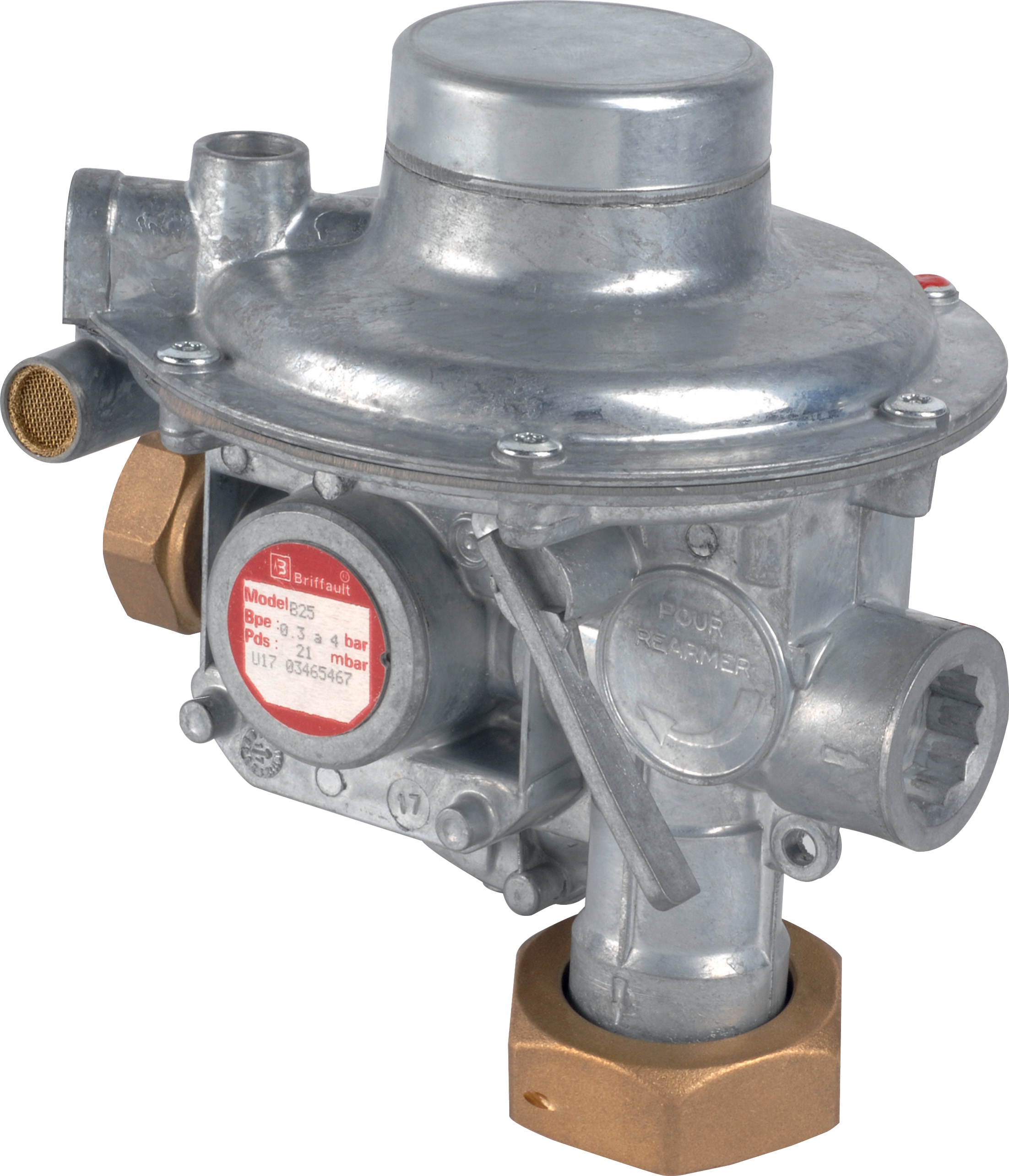
The Francel B25/37mb pressure regulator with integrated safety relief represents the foundational control point in modern HVAC fluid systems. Rather than viewing this component as a simple pressure limiter, recognize it as a system gatekeeper that protects downstream components while maintaining consistent inlet conditions for your primary circulation pump.
The B25/37mb delivers stable 37 mbar outlet pressure with a 10 mm vent line—specifications designed for systems where pressure fluctuation directly degrades atomization consistency. In Southeast Asian applications, this becomes critical because:
Ambient temperature sensitivity: Tropical climates introduce 15-20°C intra-day temperature swings. A regulator with tight outlet pressure tolerance (±5% around setpoint) prevents your circulation pump from experiencing pressure spikes that accelerate seal degradation and cavitation risk.
Safety integration advantage: The integrated relief valve means technicians don't specify, install, and maintain separate relief components. This unified design reduces leak points and simplifies commissioning—particularly valuable in remote installations where follow-up service takes days rather than hours.
Vent line design: The 10 mm vent provides proportional bleed capacity, preventing the regulator diaphragm from hanging up under micro-pressure variations common in continuous-duty HVAC systems. This prevents the "hunting" effect where outlet pressure oscillates ±10 mbar, which manifests downstream as pulsed spray patterns and inconsistent cooling.
Practical installation: Mount the B25/37mb within 1 meter of your primary circulation pump inlet, using rigid piping to minimize vibration transmission. Include a secondary strainer (100 micron minimum) downstream of the regulator but upstream of the pump to capture any regulator diaphragm particles before they damage pump seals.
Stage Two: Primary Circulation and High-Pressure Delivery
Once inlet pressure is stabilized, your primary circulation pump must deliver consistent flow volume against system backpressure—typically 150-210 bar in modern HVAC cooling loops. Component selection here directly determines whether your system can handle simultaneous spray cooling demand across multiple evaporator coils.
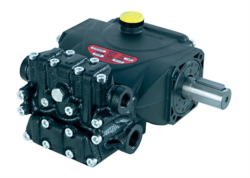
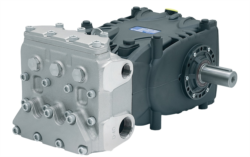
The Pratissoli KF30 high-performance industrial pump (106 L/min flow, 200 bar maximum pressure, 40 kW) operates as the workhorse for mid-capacity HVAC networks serving 15-30 ton cooling loads. The Pratissoli engineering (part of Interpump Group's 50+ year manufacturing heritage) ensures:
Displacement consistency: 106 L/min displacement at 2800 rpm creates predictable flow regardless of system temperature. In Southeast Asia's constant-load cooling environments (commercial buildings, data centers, manufacturing facilities maintain ≤2°C setpoint tolerance), this predictability means your cooling capacity remains stable throughout the day.
Pressure curve stability: The KF30 maintains full displacement up to 200 bar, then reduces flow on a controlled curve rather than abrupt cutoff. This prevents the "surge" effect where sudden pressure rise creates momentary flow collapse that disrupts spray cooling patterns across distributed nozzles.
Thermal management: The 40 kW power input at continuous duty generates manageable heat signature. In tropical installations, you'll integrate a fluid cooler alongside your primary circulation—the KF30's consistent power demand makes thermal load predictable, simplifying cooler sizing and fluid temperature stability (±3°C target for optimum spray performance).
For larger systems—50+ ton installations common in Southeast Asian industrial parks and medical facilities—the Pratissoli MW40 pump (211 L/min flow, 210 bar, 85 kW) provides double the circulation capacity while maintaining identical pressure stability characteristics. The MW40's 264 kg weight requires proper motor coupling and foundation design, but its higher displacement eliminates the need for parallel pump configurations that introduce flow-balancing complexity.
Component integration strategy: Specify both the KF30 or MW40 with integral pressure-relieving cartridge and optional pulsation dampener. The dampener (typically 2-3 L accumulator) absorbs pump discharge pulsation, protecting downstream nozzle assemblies and reducing audible noise that affects occupant comfort in occupied buildings.
Stage Three: Precision Spray Cooling and Evaporative Delivery
The final stage—converting pressurized fluid into precision spray patterns that maximize evaporative cooling—demands attention to nozzle geometry, angle selection, and spray angle consistency across the nozzle array.
The Euspray flat jet nozzle (1/4" M BSPT, 25° spray angle, index 30 design) represents the production-standard nozzle specification for distributed HVAC spray cooling systems across Southeast Asia. The 25° spray angle and index 30 design combine to:
Optimal coverage geometry: A 25° angle provides balanced droplet distribution—wide enough to cover 400-600 mm² per nozzle from typical 0.5 meter mounting height, but narrow enough that droplet velocity remains >3 m/s at the furthest coverage edge. This velocity sustains evaporative cooling efficiency even in high-humidity conditions (>75% RH) common in coastal Southeast Asian facilities.
Index 30 precision: The index 30 design (30 different nozzle positions within a 360° rotation) allows micro-adjustments to spray pattern overlap and coverage density. In retrofits where existing piping positions constrain nozzle placement, this feature prevents coverage gaps that leave portions of the cooling coil or heat exchanger undersaturated.
Material compatibility: The 1/4" M BSPT connection integrates with standard ISO 7241 quick-disconnect couplers—critical in Southeast Asian service environments where nozzle replacement occurs 2-3 times annually due to mineral buildup from local water sources. The flat jet design (vs. full cone) minimizes internal geometry where scale accumulates, extending service intervals from 120 days to 180+ days between cleaning.
System redundancy planning: Specify 3-5 nozzles for every 1 ton of cooling capacity, with independent solenoid shutoff per nozzle zone. This means your 30-ton system operates with 90-150 individual nozzles across multiple circuit zones. When maintenance requires nozzle cleaning, you can isolate individual zones without losing system capacity.
Integration and Commissioning Procedures for Southeast Asian Installations
Successful multi-stage fluid system integration requires systematic commissioning that accounts for tropical operating conditions and distributed component geometry:
Fluid specification and conditioning: Specify ISO VG 32 anti-wear hydraulic fluid with anti-corrosion additives (critical in high-humidity coastal regions). Fluid conditioning via 10 micron offline cart filtration before system startup prevents microscopic scale and oxidation particles from damaging pump displacement tolerances. Schedule offline conditioning again after 250 operating hours to capture wear particles before they reach equilibrium concentration.
Pressure sequence testing: After system fill, verify inlet pressure at the regulator (should read 0 bar under zero-flow condition), then gradually increase circulation pump speed while monitoring outlet pressure. Document the pressure response curve—it should be flat (±2 mbar variation) from 20% to 100% pump speed. Deviation indicates either regulator diaphragm stiction or system leakage requiring immediate investigation.
Flow distribution verification: With the circulation pump at steady-state operation, measure actual flow at each nozzle zone outlet using timed collection. Flow variance between zones should not exceed ±8% (±8 L/min on a 100 L/min system). Greater variance indicates pipe routing problems (excessive length in one circuit) or nozzle clogging requiring immediate attention before commissioning.
Thermal stability confirmation: Monitor fluid temperature for 4 continuous hours under full cooling load. Temperature rise should not exceed 8°C from inlet to outlet (indicating 10-15% system efficiency loss acceptable for HVAC duty). If rise exceeds 12°C, the circulation pump may be cavitating due to inlet strainer blockage—stop immediately and inspect strainers.
Noise baseline documentation: Record sound pressure level at the pump discharge during commissioning. This baseline (typically 82-86 dB at 1 meter) allows future detection of pulsation dampener degradation or developing cavitation, which manifest as 4-6 dB sound increase before component failure occurs.
Maintenance and Longevity Strategies for Tropical Operations
With 35+ years of global industrial distribution experience, 3G Electric has documented that Southeast Asian HVAC systems require aggressive preventive maintenance due to environmental stressors:
Fluid analysis scheduling: Every 500 operating hours, extract 50 mL fluid samples for laboratory particle count (ISO 4406) and elemental analysis. Tropical facilities commonly show iron content rise (indicating pump wear) 25-30% faster than temperate climate systems due to higher operating temperatures. Early detection allows planned component replacement before failure cascades through the system.
Regulator maintenance interval: The B25/37mb diaphragm assembly should be replaced every 18 months in continuous-duty tropical service (vs. 24-30 months in temperate climates). The diaphragm material experiences accelerated stress relaxation above 45°C fluid temperature, causing micro-leakage that degrades outlet pressure stability.
Nozzle replacement strategy: Rather than waiting for clogging-driven failure, establish a rotating replacement schedule—replace 20% of active nozzles every 6 months. This staggered approach prevents system shutdown when multiple nozzles simultaneously clog due to seasonal mineral buildup spikes.
Pump inspection protocol: After 2000 operating hours, measure actual pump flow at no-load condition (pressure relief held open). Flow loss exceeding 10% from original displacement indicates seal wear requiring pump reconditioning. This preventive approach costs 40-50% less than emergency replacement after complete pump failure.