Understanding Integrated Pressure Management in Modern Singapore Industry
Industry Applications of pressure management extend far beyond traditional gas distribution. In Singapore's densely integrated industrial ecosystem—spanning petrochemicals, precision manufacturing, marine operations, and food processing—pressure regulation represents a fundamental control layer that impacts product quality, operational safety, and capital efficiency.
With over 35 years of experience distributing industrial equipment across Asia-Pacific facilities, 3G Electric has observed that procurement engineers increasingly face complexity when specifying pressure control systems that must serve multiple process streams simultaneously. The challenge intensifies when systems require both safety compliance and precision performance across variable operating conditions.
Integrated pressure management systems combine regulation, relief, monitoring, and distribution functions into coordinated solutions. Unlike standalone regulators, these systems require careful specification of outlet pressure, flow capacity, vent sizing, and connection compatibility—each variable directly affecting downstream equipment performance and process economics.
Sector-Specific Pressure Management Applications in Singapore
Semiconductor and Precision Manufacturing
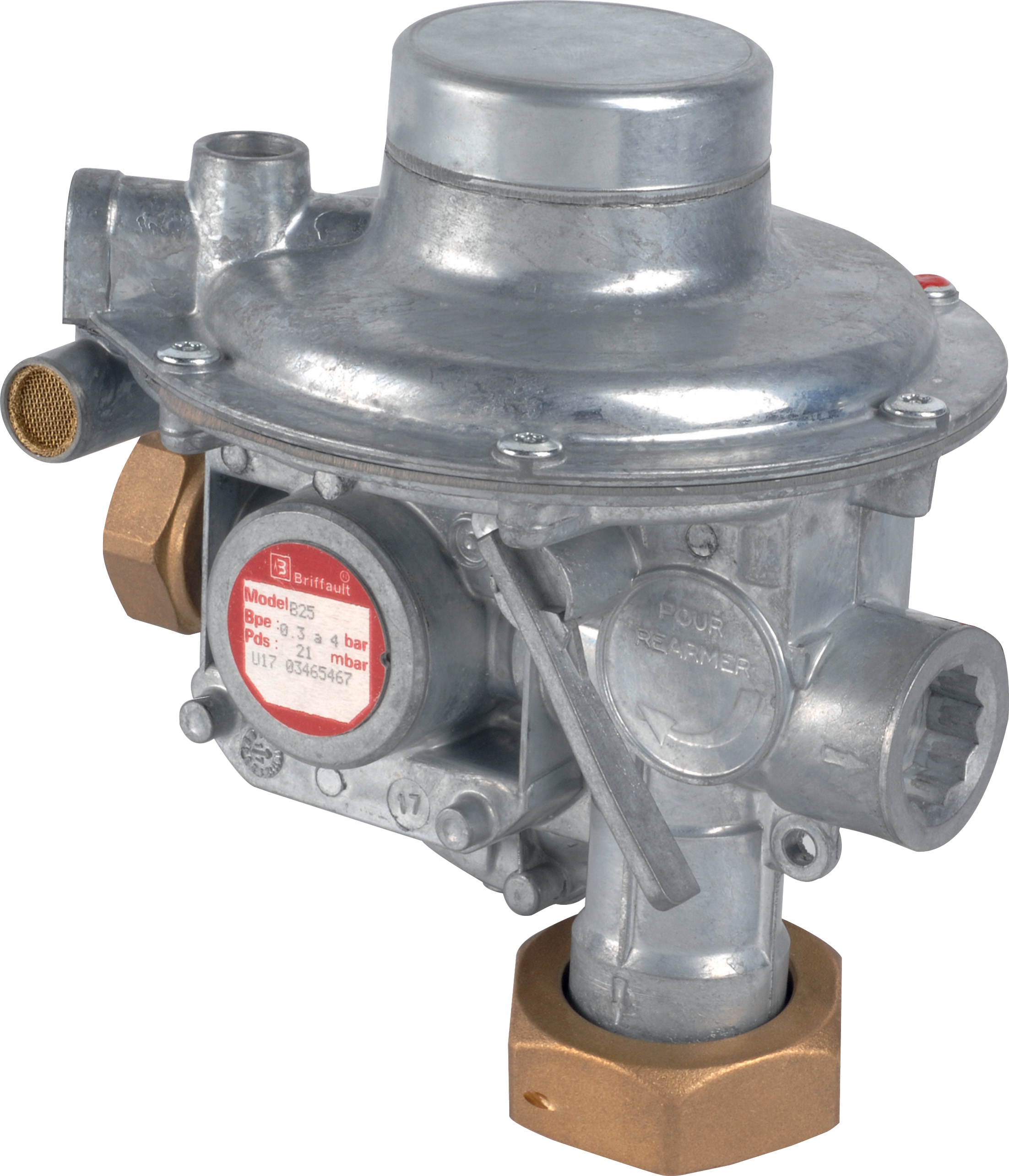
Singapore's semiconductor sector demands ultra-precise gas pressure control for process chambers, lithography systems, and analytical equipment. The Francel B25/37mb pressure regulator with integrated safety relief delivers 37 mbar outlet pressure with a 10 mm vent size, making it well-suited for laboratory-grade applications requiring stable, low-pressure environments.
For procurement engineers specifying equipment in this sector:
- Pressure stability is non-negotiable: Even 2-3% pressure drift can compromise wafer quality and yield
- Safety relief integration eliminates the need for separate downstream protection devices, reducing system complexity
- Vent sizing (10 mm in this case) must accommodate maximum relief flow without backpressure
- Connection compatibility requires verification against existing gas distribution manifolds—BSPT, NPT, and SAE variants are common in Singapore facilities
The integrated design of the Francel B25/37mb means procurement teams can specify a single, certified component rather than sourcing regulator + relief valve combinations, streamlining spare parts inventory and reducing qualification documentation.
Petrochemical Processing and Refinery Operations
Petrochemical facilities across Singapore's Jurong and Bukom industrial parks require robust pressure management for crude processing, catalytic cracking, and product handling. These environments demand equipment rated for sustained high-pressure operation, corrosive media exposure, and emergency shutdown scenarios.
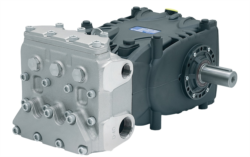
High-flow pressure control in these applications requires industrial-grade pumping systems that maintain consistent outlet pressure across variable feedstock conditions. The Pratissoli MW40 high-performance industrial pump delivers 211 L/min at 210 bar pressure with 85 kW power input, providing the flow capacity and pressure margin necessary for large-scale petrochemical operations.
Procurement considerations for refinery applications include:
- Pressure headroom: The 210 bar capability provides 15-20% safety margin above typical process pressures, accommodating fouling and seasonal viscosity variations
- Flow consistency: 211 L/min enables feeding multiple process streams or large-diameter transfer lines without pressure degradation
- Material certification: Petrochem operators require third-party material certs and pressure equipment directive (PED) compliance—essential documentation for Singapore's Ministry of Manpower (MOM) industrial safety approvals
- Thermal management: High-power equipment (85 kW) necessitates cooling system integration; procurement engineers must account for glycol or water-based cooling loops in budget and lead time planning
Marine and Shipboard Systems
Singapore's strategic port position creates demand for marine-grade pressure systems in ballast handling, fuel transfer, firefighting, and cargo operations. Maritime equipment must withstand salt air, vibration, and rapid pressure cycling unique to vessel operations.
For marine spray and cleaning applications, Euspray flat jet nozzles with 25° spray angle and 1/4" BSPT connection integrate with pressure systems to deliver controlled spray patterns for deck washing, engine compartment decontamination, and paint stripping without damaging underlying structures.
Marine procurement requirements:
- Corrosion resistance: Stainless steel nozzles (index 30 design) withstand saltwater exposure; zinc-plated alternatives are insufficient
- Pressure rating alignment: 1/4" BSPT connections must match ship system manifolds; adapter inventory can grow rapidly without careful specification
- Spray angle optimization: The 25° geometry balances coverage area with impact force; wider angles (40°+) reduce cleaning effectiveness; narrower angles (<15°) create pressure peaks that damage surfaces
- Spare parts accessibility: Singapore's maritime repair yards require rapid nozzle replacement; procurement teams should maintain forward stock of high-wear components
Food & Beverage Processing
Singapore's food export sector—including aquaculture processing, beverage production, and ingredient manufacturing—requires FDA/FSSC 22000-compliant pressure systems with hygienic design principles.
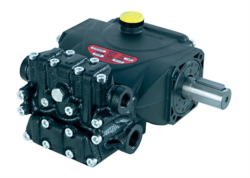
Smaller-scale fluid control in food applications often employs compact gear pumps like the Interpump PUMP E1D1808 L, which delivers 8 L/min at 180 bar with minimal footprint (5 kg, 2.72 kW). This compact form factor simplifies integration into modular processing equipment and reduces cleaning time—critical in facilities running multiple product SKUs per shift.
Food industry procurement factors:
- Hygienic design: All wetted surfaces must be stainless steel; FDA Title 21 compliance documentation required
- Cleanability: Compact pump housings enable rapid disassembly for hot water sanitization between production runs
- Power efficiency: 2.72 kW operates within typical food facility electrical capacity limits; larger pumps may require panel upgrades
- Flow vs. pressure trade-off: 8 L/min at 180 bar suits sauces, oils, and slurries; procurement teams must verify compatibility with specific product viscosity ranges
Specifying Integrated Pressure Systems: Technical Decision Framework
Step 1: Process Demand Quantification
Procurement engineers must establish three baseline parameters before equipment evaluation:
Flow requirement: Document both nominal and peak flow rates. The Pratissoli KF30 pump (106 L/min) suits medium-duty applications, while MW40 systems (211 L/min) serve high-flow operations. Undersizing creates pressure loss and system hunting; oversizing wastes energy and capital.
Pressure requirement: Differentiate between steady-state and transient pressures. Specify relief valve settings at 110% of maximum expected process pressure to prevent nuisance activation while maintaining safety margins.
Operating duty cycle: Batch processes with extended idle periods favor smaller equipment; continuous operations justify larger capacity installations with superior energy efficiency over extended run times.
Step 2: System Integration Mapping
Document all connection points:
- Inlet/outlet sizing: Nozzles like the Euspray flat jet specify 1/4" BSPT threading; mismatched ports require adapters that introduce pressure drop and leak points
- Relief valve integration: The Francel B25/37mb incorporates safety relief; systems without integrated relief require separate valve sizing and manifold space allocation
- Pressure sensing points: Identify where pressure monitoring is required (inlet, outlet, tank, filter differential); each sensor demands tapped ports and potential instrumentation budget
- Cooling circuits: High-power pumps require thermal management; verify facility cooling capacity before equipment arrival
Step 3: Compliance and Certification Verification
Singapore's regulatory environment requires:
- Pressure Equipment Directive (PED) compliance for any system exceeding 0.5 L vessel volume at >25 bar
- Ministry of Manpower (MOM) certification for equipment in classified hazardous areas
- ISO 4414 (Fluid Power Systems) compliance for pneumatic/hydraulic integration
- Industry-specific standards: ASME for petrochemical, ABS/DNV for marine, FDA for food contact materials
3G Electric's 35+ years of distribution experience ensures all specified equipment carries appropriate third-party documentation and regional certification.
Step 4: Total Cost of Ownership Analysis
Procurement decisions should balance capital cost against operational economics:
- Energy consumption: A Pratissoli MW40 at 85 kW operating 8,000 hours annually consumes ~680 MWh at Singapore's typical industrial rate (S$0.18/kWh) = S$122,400 annual cost. Efficiency gains of just 5-8% through proper equipment sizing justify premium specifications.
- Maintenance intervals: Italian-engineered Pratissoli systems typically require service at 2,000-4,000 operating hours; budget annual maintenance at 3-5% of equipment cost
- Spare parts availability: Equipment with regional service networks (such as 3G Electric's established distribution channels) reduces downtime and total cost of ownership
- System lifespan: Industrial pumps and regulators typically deliver 10-15 year service life; spread capital costs across this period when comparing initial purchase price
Emerging Applications and Future-Ready Specifications
Digital Pressure Monitoring and Predictive Maintenance
Modern procurement strategies increasingly incorporate IoT-enabled pressure sensors that feed facility management systems. While individual equipment like the Francel B25/37mb provides baseline regulation, digital overlays enable:
- Real-time pressure trending to detect fouling or component wear
- Automated alerts for out-of-range conditions
- Historical data logging for process optimization
- Remote monitoring for distributed facility operations
Singapore's advanced manufacturing facilities increasingly mandate digital connectivity; procurement engineers should verify that specified equipment accommodates future sensor integration without requiring system redesign.
Modular System Architecture
As manufacturing becomes more flexible and product changeover accelerates, integrated pressure systems benefit from modular design. Compact pumps like the Interpump E1D1808 L and standardized nozzle connections (1/4" BSPT) enable rapid reconfiguration for new process requirements.
Procurement teams should document quick-connect capability and manifold compatibility when specifying equipment, allowing future system modifications without full replacement.
Sustainability and Energy Efficiency
Singapore's green building standards (BCA Green Mark) and energy management requirements (ISO 50001) increasingly influence procurement decisions. Specifying variable-displacement pumps or frequency-drive-compatible equipment reduces parasitic energy consumption during low-demand periods.
While the Pratissoli MW40 operates at fixed displacement, it may be integrated with VFD-compatible motors to match flow output with actual demand, reducing energy waste in batch or variable-load operations.
Conclusion: Procurement Excellence in Integrated Pressure Management
Successful specification of Industry Applications equipment requires procurement engineers to move beyond component selection toward systems thinking. Pressure regulators, high-flow pumps, precision nozzles, and relief valves function as interdependent elements in larger operational ecosystems.
With 35+ years of experience supporting Singapore's industrial operations, 3G Electric understands that optimal equipment selection requires:
- Thorough process characterization to establish realistic performance baselines
- Comprehensive integration planning to minimize adapter complexity and leak points
- Rigorous compliance verification to align with Singapore's regulatory frameworks
- Total cost of ownership analysis to balance capital efficiency with operational reliability
- Future-ready architecture to accommodate digital integration and process evolution
By applying this structured approach to equipment specification, procurement engineers can deliver systems that operate reliably, efficiently, and safely across Singapore's diverse industrial landscape while positioning facilities for sustainable growth and technology adoption.