Understanding Energy Efficiency in Southeast Asian Industrial Operations
Southeast Asian manufacturing facilities operate in distinctly challenging conditions: high ambient temperatures, humidity, and power supply fluctuations that directly impact equipment efficiency. Over 35 years of distributing industrial equipment throughout the region, 3G Electric has observed that procurement teams often underestimate how environmental factors affect pump performance and energy consumption.
Energy efficiency in fluid systems extends beyond motor nameplate ratings. It encompasses pump displacement, pressure regulation accuracy, nozzle spray pattern optimization, and system integration architecture. For procurement engineers specifying equipment across multiple facilities in Thailand, Vietnam, Malaysia, and Singapore, understanding these interdependencies becomes critical for achieving 15-25% energy savings compared to poorly optimized installations.
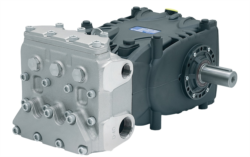
The Pratissoli MW40 high-performance industrial pump exemplifies this principle. Operating at 211 L/min and 210 bar, it delivers 85 kW efficiency in a 264 kg footprint—crucial when space and power budgets are constrained in dense industrial parks. Its Italian engineering optimizes pressure stability, reducing energy waste from pressure fluctuations common in regions with unstable electrical infrastructure.
Pressure Regulation: Critical for Energy Conservation
Industrial gas and fluid distribution systems lose significant energy through pressure regulation waste. In Southeast Asian facilities, where cooling costs already consume 30-40% of operational budgets, uncontrolled pressure relief creates both energy loss and system noise.
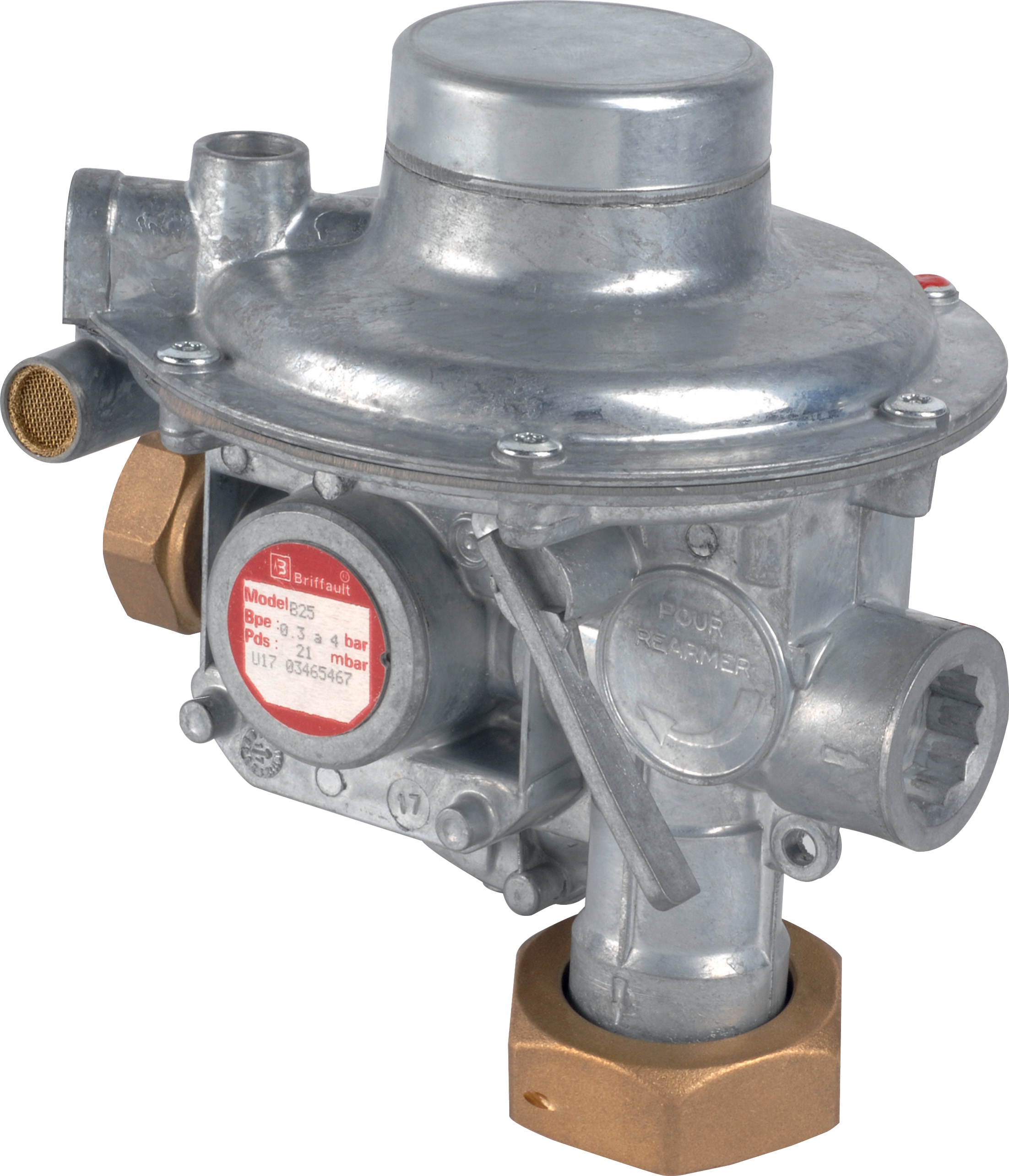
The Francel B25/37mb pressure regulator with integrated safety relief addresses this through precision outlet control. By maintaining consistent 37 mbar outlet pressure with a 10 mm vent design, it eliminates pressure spikes that trigger secondary relief devices and waste compressed gas. For procurement teams managing laboratory gas distribution, calibration stations, or welding operations, this translates to measurable cost reduction.
Pressure regulation strategy varies by facility type:
- Petrochemical and gas distribution: Requires tight pressure tolerances (±2% variation) across long piping runs in humid coastal environments
- Manufacturing and coating operations: Needs rapid response to load changes without pressure overshooting
- Medical and laboratory gases: Demands fail-safe regulation with redundant safety mechanisms
When specifying regulators for Southeast Asian conditions, procurement engineers should prioritize:
- Corrosion-resistant materials (stainless steel internals for salt-air environments)
- Temperature compensation features (essential in +35-40°C ambient conditions)
- Modular design allowing field repair without complete unit replacement
- Integration with monitoring systems for predictive maintenance
The 10 mm vent size on the Francel unit prevents icing and blockage issues common in tropical climates where humidity-laden compressed air can carry contaminants.
Spray System Optimization for Coating and Cleaning Applications
Industrial spray systems in Southeast Asia serve critical functions: precision coating in automotive plants, cooling systems in semiconductor manufacturing, and cleaning in food processing facilities. Procurement engineers often overlook how nozzle geometry directly impacts both application quality and energy efficiency.
The Euspray flat jet nozzle with 25° spray angle and 1/4" BSPT connection represents a precision spray solution for high-pressure applications (typically 50-200 bar). The 25° angle creates optimal coverage patterns for:
- Automotive painting: Consistent film thickness with minimal overspray waste
- Industrial cooling: Efficient evaporative cooling in metal cutting and plastic molding
- Precision cleaning: Targeted removal of contaminants without substrate damage
Problems procurement teams encounter with improper nozzle selection:
- Excess pressure drop: Undersized nozzles create 15-20% energy loss as heat
- Inconsistent spray patterns: Worn nozzles or incorrect angle specifications reduce application efficiency by 25-35%
- Overspray and material waste: Poor atomization in tropical humidity causes product waste rates above 12%
The index 30 design on this Euspray unit ensures interchangeability across manifold systems, simplifying procurement and maintenance across multi-facility operations. When combined with properly sized pump systems—such as the Pratissoli KF30 pump at 106 L/min—facilities achieve consistent spray delivery without pressure compensation adjustments.
For Southeast Asian facilities operating in high-humidity environments, stainless steel nozzle construction prevents corrosion and extends service life to 18-24 months versus 6-8 months with standard materials.
Pump Selection for Varying Industrial Demands
Southeast Asian industrial operations span vastly different scales and duty cycles. Procurement engineers need frameworks for selecting among compact, mid-range, and high-capacity pump systems based on actual facility requirements rather than rule-of-thumb specifications.
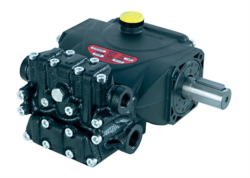
Compact Systems: The Interpump E1D1808 gear pump delivers 8 L/min at 180 bar with 2.72 kW input. At 5 kg, it suits:
- Portable high-pressure cleaning systems in small manufacturing shops
- Mobile washdown equipment for food processing plants
- Emergency standby systems in industrial maintenance operations
- Decentralized lubrication systems in machinery
Gear pump technology provides advantages in dusty, temperature-variable Southeast Asian environments: simpler filtration requirements, tolerance for fluid contamination, and consistent flow regardless of load pressure variance.
Mid-Range Systems: The Pratissoli KF30 at 106 L/min / 200 bar / 40 kW serves facilities with 20-50 piece machinery requiring coordinated pressure delivery:
- Metal stamping operations (10-15 presses per line)
- Injection molding clusters (5-8 units per line)
- Brewery and beverage bottling (fluid transfer and capping systems)
- Textile dyeing vats (pressure circulation)
At 72 kg, the KF30 fits standard equipment footprints in crowded industrial zones common throughout Southeast Asia, eliminating expensive facility modifications.
High-Capacity Systems: The Pratissoli MW40 at 211 L/min / 210 bar / 85 kW serves large-scale operations:
- Automotive stamping lines (20+ presses with simultaneous actuation)
- Rubber extrusion facilities (continuous pressure demand 8-16 hours/day)
- Industrial cooling loops (central chilled water circulation)
- Multi-station assembly lines with distributed workstations
Procurement teams should evaluate pump selection against actual duty cycle data. Many Southeast Asian facilities operate at 60-70% system demand due to unbalanced production schedules or legacy equipment sizing. Right-sizing pumps to actual needs reduces energy consumption by 25-30% and extends equipment lifespan.
Integration Strategy: From Component Selection to System Performance
Successful fluid system implementation in Southeast Asia requires integrating pressure regulation, pump selection, and spray delivery into coherent system architecture. Procurement engineers should follow this sequence:
Step 1: Audit Current System Performance
Measure actual flow requirements, pressure profiles during peak demand, and energy consumption patterns. Many facilities discover that peak demand occurs only 15-20% of operating time.
Step 2: Specify Equipment for Peak Demand, Not Average
Select pump capacity to handle simultaneous maximum load across all circuits. Supplement with pressure-reducing valves on low-demand circuits. The Francel regulator excels here, preventing oversizing while maintaining safety margins.
Step 3: Validate Pressure Stability Across Distribution
Unstable supply pressure wastes energy and reduces application quality. Ensure pump system maintains ±5% pressure at all utilization points. For long piping runs (>50 meters), consider intermediate pressure regulation.
Step 4: Optimize Nozzle Selection for Specific Applications
Match nozzle spray patterns to actual application requirements. Oversized nozzles (common in conservative procurement) waste fluid and energy. Undersized nozzles create backpressure and reduce flow capacity. The 25° Euspray angle suits most industrial coating and cooling applications; validate through small-scale trial.
Step 5: Establish Monitoring and Maintenance Protocols
Implement quarterly pressure checks, nozzle inspection, and pump flow verification. Energy consumption trending reveals degradation patterns requiring intervention before catastrophic failure.
Regional Considerations for Southeast Asian Procurement
Three environmental and operational factors specific to Southeast Asia merit explicit attention:
Tropical Climate Management: High ambient temperatures (+32-40°C) reduce pump efficiency and increase cooling requirements. Specify equipment with integral cooling capacity or plan for external cooler integration. The MW40 and KF30 perform adequately at these temperatures when mounted with 0.5-1 meter clearance from heat sources.
Power Supply Reliability: Many Southeast Asian facilities experience voltage fluctuations (±10% variation) and occasional outages. Pump motors should feature voltage tolerance ratings of ±10-15%. Specify soft-start or variable frequency drive (VFD) integration to reduce inrush current and protect electrical infrastructure.
Spare Parts Availability: Ensure selected equipment has regional service networks. 3G Electric maintains supply chains throughout Southeast Asia for Pratissoli, Interpump, Francel, and Euspray components, enabling next-day delivery to major industrial zones in Singapore, Malaysia, Thailand, and Vietnam.
Calculating ROI for Energy-Efficient Upgrades
Procurement teams can justify equipment investment through energy consumption analysis:
Example Calculation: A facility currently operates oversized pump system (55 kW) delivering average 140 L/min at 200 bar. Right-sizing to the KF30 (40 kW) while maintaining peak capacity reduces energy consumption by 27%.
At regional electricity rates of $0.08-0.12 per kWh, operating 16 hours/day, 25 days/month:
- Current annual cost: 55 kW × 16 h × 25 d × 12 months × $0.10 = $52,800
- Optimized annual cost: 40 kW × 16 h × 25 d × 12 months × $0.10 = $38,400
- Annual savings: $14,400
- KF30 incremental investment vs. current system: ~$8,000-12,000
- Payback period: 6-8 months
- 5-year net benefit: $59,000+
This calculation excludes secondary benefits: reduced cooling costs (15-20%), extended equipment lifespan (2-3 additional years), improved product quality, and reduced maintenance labor.
Conclusion and Next Steps
Southeast Asian industrial operations demand equipment selection strategies that account for environmental challenges, power limitations, and multi-facility coordination. By right-sizing pump systems, implementing precision pressure regulation, and optimizing spray delivery, procurement engineers achieve measurable energy savings alongside reliability improvements.
The product combination of Pratissoli pumps, Francel regulators, Interpump compact systems, and Euspray nozzles addresses the specific needs of Southeast Asian manufacturing across scales from small job shops to multinational automotive suppliers. With 35+ years of regional experience, 3G Electric understands the nuances of equipment specification and deployment in Southeast Asian industrial environments.
Procurement teams should initiate engagement by conducting a current system audit—measuring actual flow, pressure, and energy consumption. This data-driven approach replaces guesswork with engineering precision, enabling confident investment decisions that deliver quantifiable operational improvements.