Understanding Industry Applications Power Requirements in Southeast Asia
Industrial professionals across Southeast Asia face a critical decision when sourcing equipment: determining the right power level for their specific operations. Whether you're running a manufacturing facility in Thailand, a processing plant in Vietnam, or a maintenance operation in Singapore, equipment capacity directly impacts productivity, operating costs, and equipment lifespan.
With 35+ years of experience as an industrial equipment distributor, 3G Electric has guided countless facilities through this selection process. The key insight isn't about finding the largest or smallest option—it's about matching equipment performance specifications to your actual operational demands.
This comparison explores how different power ratings and performance specifications serve distinct Southeast Asian industry applications, helping you make an informed decision based on practical operational requirements.
Compact Systems vs. High-Power Industrial Solutions: Where Each Excels
Entry-Level and Maintenance Operations
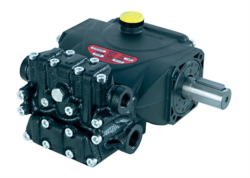
For smaller facilities, maintenance departments, or specialized applications requiring precision over volume, compact equipment delivers excellent value. The Interpump PUMP E1D1808 L exemplifies this category—a gear pump producing 8 L/min at 180 bar with just 2.72 kW power input.
This compact solution works well for:
- Hydraulic maintenance and testing in manufacturing facilities where technicians need portable pressure testing equipment
- Lubrication systems in smaller processing plants that operate episodically rather than continuously
- Laboratory pressure applications where controlled, lower-volume delivery is essential
- Remote site operations in rural Southeast Asian locations where equipment must be transported to multiple facilities
The 5 kg weight means one technician can deploy this equipment without mechanical assistance. Operating at 2800 rpm, it generates minimal heat, reducing cooling requirements in tropical Southeast Asian environments where ambient temperatures already challenge equipment reliability.
Mid-Range Operations: Scaling to Facility Demand
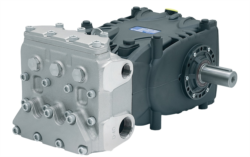
Most medium-sized Southeast Asian manufacturing operations fall into the mid-range category, where equipment must balance continuous operation against reasonable power consumption. The Pratissoli KF30 represents this tier—delivering 106 L/min at 200 bar with 40 kW power consumption.
This mid-level capacity serves:
- Standard manufacturing processes including pressing, forming, and assembly operations in factories across the region
- Continuous cleaning and coating applications where production lines run 8-16 hours daily
- Automated spray systems for surface treatment operations common in automotive and industrial component facilities
- Multi-station operations where one pump supplies pressure to several workstations simultaneously
The 72 kg weight requires proper mounting infrastructure but remains transportable with standard industrial equipment. Its 106 L/min flow provides sustained productivity without excessive energy draw, an important consideration across Southeast Asia where electricity costs significantly impact operational margins.
High-Capacity Operations: Maximum Production Throughput
Large manufacturing complexes, integrated production facilities, and high-volume processing plants require maximum system capacity. The Pratissoli MW40 delivers exactly this—211 L/min at 210 bar with 85 kW power output.
High-capacity systems address:
- Large-scale manufacturing processes in integrated facilities where multiple production lines draw from a single pressure source
- Continuous industrial operations running 24/7 shifts with no downtime allowance
- Heavy pressing and forming operations requiring sustained high pressure across extended production cycles
- Complex multi-stage processes where pressure demands fluctuate and the system must accommodate peak loads without performance degradation
At 264 kg, the MW40 requires permanent installation with structural engineering consideration. However, its Italian engineering (Pratissoli, part of Interpump Group) ensures reliability in demanding tropical environments where equipment faces high ambient temperatures, humidity, and consistent heavy use.
Complementary Components: Selecting Supporting Equipment for Your Industry Applications
Pressure Regulation: Foundation for System Stability
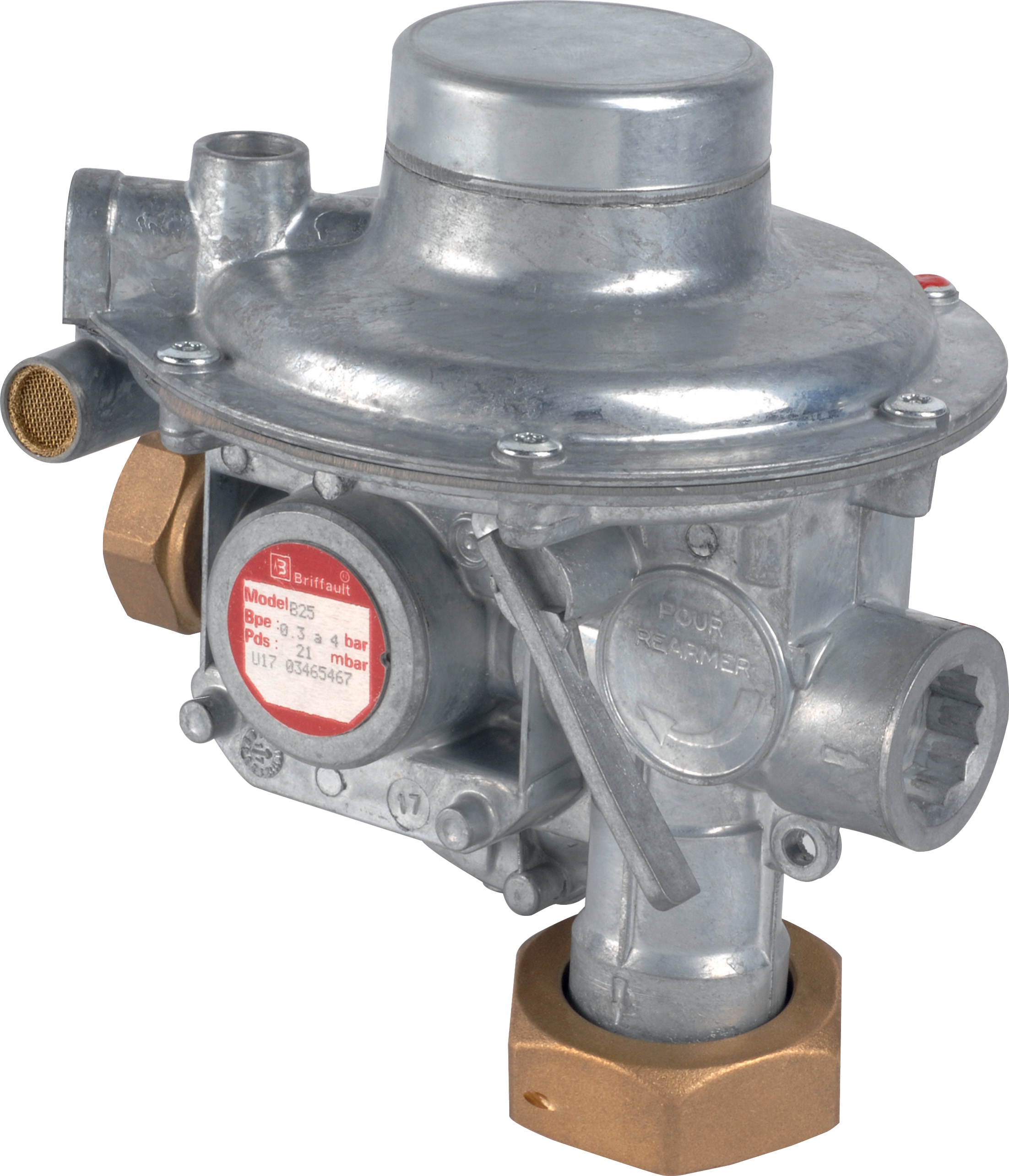
Regardless of pump capacity, pressure regulation protects your investment and ensures process consistency. The Francel Pressure Regulator B25/37mb with Safety provides integrated pressure control and safety relief—critical for facilities where uncontrolled pressure spikes risk equipment damage or worker safety.
This regulator suits:
- Gas distribution systems in laboratories, manufacturing quality-control departments, and research facilities
- Integrated safety protocols where regulatory compliance demands automatic pressure relief mechanisms
- Multi-stage pressure applications where initial system pressure exceeds process requirements by significant margins
The 10 mm vent size and 37 mbar outlet specification makes this particularly valuable for Southeast Asian laboratories and precision manufacturing operations where process gases must maintain strict pressure tolerances.
Spray Nozzles: Precision Application for Industry Applications
Once you've selected your pump capacity, spray nozzles determine whether that pressure translates to effective industrial cleaning, coating, or processing. The Euspray Flat Jet Nozzle HP 1/4" M BSPT Index 30 delivers targeted spray patterns essential for:
- Industrial cleaning operations where water or solvent spray removes contaminants from machinery, components, or production surfaces
- Surface coating applications in automotive, electronics, and manufacturing facilities where consistent spray patterns ensure uniform coverage
- High-pressure spray systems where the 25° spray angle and index 30 design provide precise directional control
The 1/4" M BSPT connection integrates with standard industrial piping found throughout Southeast Asian facilities, simplifying installation and maintenance.
Practical Selection Framework for Southeast Asian Facilities
Step 1: Define Your Operational Profile
First, characterize your operation:
- Flow requirement: How many liters per minute do your processes demand during peak operation?
- Pressure need: What bar pressure does your application require for effective operation?
- Duty cycle: Do you operate continuously (24/7), standard shifts (8-16 hours), or episodically?
- Environmental constraints: Will equipment operate in harsh tropical conditions requiring extra cooling or corrosion protection?
Step 2: Calculate True Operational Cost
Power consumption drives operating expenses across Southeast Asia. Compare equipment not just on purchase price but on total cost of ownership:
- The 2.72 kW compact system costs less to operate than a 40 kW mid-range pump
- However, if your process demands 100+ L/min, the compact system cannot deliver sufficient throughput, forcing constant full-load operation at inefficient pressure levels
- Selecting the right capacity ensures you operate equipment near its designed efficiency point, minimizing energy waste
Step 3: Plan for Growth and Maintenance
Southeast Asian manufacturing grows rapidly. Consider whether your facility may expand operations within 3-5 years:
- Starting with oversized capacity (like the MW40) adds significant upfront cost but provides future flexibility
- Mid-range equipment (KF30) offers compromise—it handles most current operations with room for modest expansion
- Undersized equipment forces eventual replacement, making it false economy
Step 4: Verify Integration Compatibility
3G Electric's 35+ years experience emphasizes that the best equipment performs poorly when incompatible with existing infrastructure. Verify:
- Electrical supply: Does your facility provide adequate three-phase power for your selected equipment?
- Fluid handling: Do your existing tanks, filters, and piping handle the flow rate and pressure of your chosen equipment?
- Mounting infrastructure: Can your facility structure support the weight and vibration of your selected pump?
Real-World Southeast Asian Application Examples
Small Electronics Component Facility (Thailand)
A 20-person contract manufacturer producing precision components for automotive sensors selected the Interpump E1D1808 for hydraulic testing of finished components. The compact, portable design allowed technicians to test components at the assembly station without dedicated test infrastructure. Annual energy cost: minimal; equipment mobility: high; capital investment: low.
Medium Manufacturing Complex (Vietnam)
A 200-person automotive parts supplier operates multiple assembly and pressing stations from a centralized pressure system. The Pratissoli KF30 provides sufficient capacity for three simultaneous high-pressure operations with reasonable energy consumption. The facility added the Euspray Flat Jet Nozzle for automated cleaning between production runs. Annual energy cost: moderate; throughput capacity: medium-high; equipment reliability: excellent.
Large Integrated Manufacturing Facility (Singapore)
A 500-person industrial manufacturing operation runs continuous multi-stage pressing operations requiring sustained 210+ bar pressure across multiple workstations. The Pratissoli MW40 supplies this demand with Italian engineering reliability in Singapore's tropical environment. Complementary Francel pressure regulation ensures safety across multi-stage systems. Annual energy cost: highest but justified by production volume; throughput capacity: maximum; operational continuity: critical.
Making Your Final Selection
Your industry applications determine equipment selection—not the reverse. Too many facilities purchase equipment based on price or availability, then struggle with inadequate capacity or excessive operating costs.
With 3G Electric's experience distributing industrial equipment across Southeast Asia since 1990, we've seen which selection approaches produce satisfied, productive facilities:
1. Match capacity to actual demand, not theoretical maximums
2. Calculate total cost of ownership, not just purchase price
3. Plan integration carefully with existing infrastructure
4. Consider environmental factors specific to tropical Southeast Asian operations
5. Invest in complementary components that maximize your primary equipment investment
The right equipment investment today supports reliable, profitable operations for years to come.