Understanding Southeast Asian Industrial Fluid Transfer Challenges
Industrial operations across Southeast Asia—from automotive manufacturing in Thailand to semiconductor production in Malaysia and food processing in Vietnam—require fluid transfer systems engineered for reliability in high-humidity, high-temperature environments. Unlike temperate-climate facilities, SE Asian plants operate under constant thermal stress, which accelerates equipment degradation and demands proactive system design.
Fluid transfer systems form the backbone of numerous industrial processes: hydraulic power distribution, precision cleaning operations, coating applications, and gas delivery. With 35+ years of experience supplying industrial equipment across Asia-Pacific, 3G Electric has witnessed how system failures cascade through production lines, creating downtime that compounds operational costs.
The critical design consideration for Southeast Asian applications is component integration—ensuring pressure regulators, pumps, nozzles, and connecting systems function as a cohesive unit rather than isolated components. A regulator that maintains 37 mbar outlet pressure is only effective when paired with appropriately sized distribution piping and calibrated spray nozzles.
Section 1: Pressure Regulation and Safety in Tropical Environments
Selecting Gas Pressure Regulators for SE Asian Facilities
Gas pressure regulation represents the foundation of safe fluid transfer systems. In laboratory environments, manufacturing facilities, and industrial gas distribution networks, consistent outlet pressure prevents equipment damage, product defects, and safety incidents.
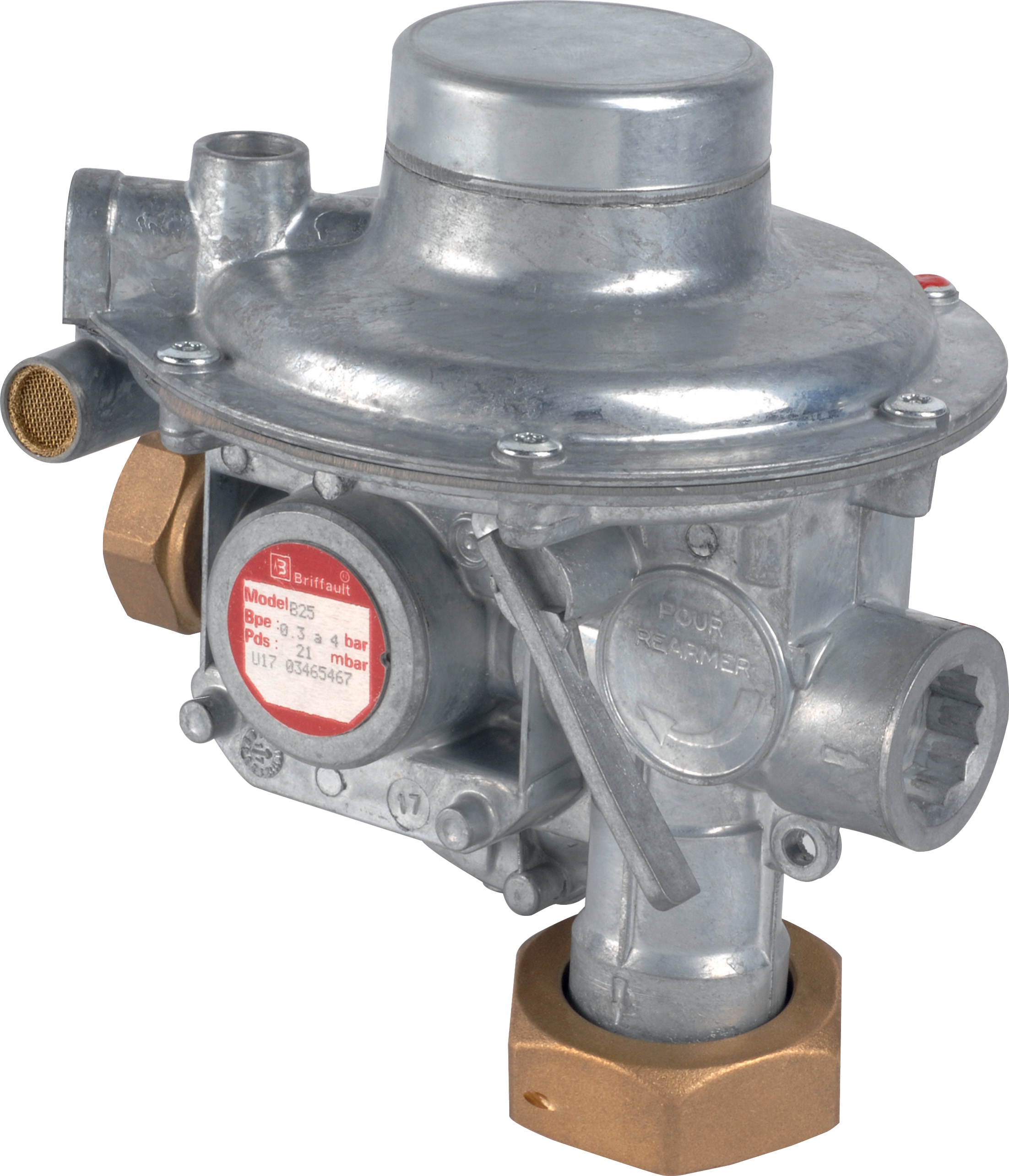
The Francel B25/37mb pressure regulator delivers 37 mbar outlet pressure with integrated safety relief—essential for systems where fluctuating inlet pressures are common. The 10 mm vent size accommodates ambient pressure variations typical in Southeast Asian climates where temperature swings create micro-pressure changes throughout the day.
Critical integration points for SE Asian deployment:
- Inlet pressure monitoring: Install digital pressure gauges upstream of the regulator to detect supply-side fluctuations caused by compressor cycling or supply tank depletion
- Condensation management: Tropical humidity creates condensation in gas lines; specify moisture traps upstream of regulators to prevent internal corrosion
- Thermal expansion accommodation: Mount regulators away from direct sunlight and establish clearance for thermal growth; a regulator experiencing 15°C ambient temperature variation requires ±2% outlet pressure compensation
- Safety relief verification: Test integrated relief mechanisms quarterly—Southeast Asian salt air and humidity accelerate valve seal degradation
The Francel regulator's integrated safety relief prevents catastrophic pressure spikes if downstream blockages occur. In industrial cleaning systems, nozzle orifice blockage can create sudden pressure surges; the relief valve responds faster than manual operator intervention.
Calculating Outlet Pressure Requirements
Determine required outlet pressure by reverse-engineering from your process specifications:
1. Identify terminal device requirements: Spray nozzles typically operate 80-90% of rated pressure; cleaning jets operate 95-100% of rated pressure
2. Account for line losses: Calculate pressure drop across piping using friction loss tables—typically 0.5-1.0 bar per 100 meters of standard industrial hose
3. Add safety margin: Specify regulator outlet pressure 5-10% above calculated requirement to accommodate seasonal inlet pressure variations
4. Verify relief setting: Confirm regulator relief pressure exceeds maximum operating pressure by 10-15% to prevent nuisance venting
For a cleaning system requiring 30 mbar at the spray nozzle with 0.3 bar line loss, specify regulator outlet pressure of 37 mbar—precisely what the Francel B25/37mb delivers.
Section 2: High-Flow Pump Selection and System Capacity Planning
Matching Pump Displacement to Process Requirements
Southeast Asian manufacturing often operates continuous production cycles—24-hour shifts in automotive and electronics facilities demand pumps rated for sustained high-flow delivery without thermal degradation. Intermittent duty cycles common in temperate climates don't apply here.
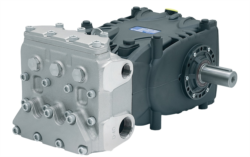
The Pratissoli KF30 pump delivers 106 L/min at 200 bar pressure with 40 kW power input—engineered for sustained industrial duty. The Italian-manufactured design emphasizes reliability through robust component tolerances, essential when replacement lead times exceed 6-8 weeks in Southeast Asian sourcing chains.
Pump selection methodology for SE Asian applications:
- Flow requirement calculation: Determine total system flow by summing all simultaneous demand points (spray nozzles typically consume 15-50 L/min; cleaning jets require 40-120 L/min)
- Pressure rating selection: Choose pump pressure rating 10-20% above maximum system pressure; the KF30's 200 bar rating provides headroom for pressure spikes during nozzle blockages or sudden directional changes
- Thermal management: Southeast Asian ambient temperatures (28-35°C) degrade pump efficiency; specify cooling systems sized for heat rejection 15-20% above calculated dissipation
- Noise considerations: Industrial facilities increasingly enforce 85 dB(A) limits; the KF30's 40 kW rating optimizes efficiency-to-noise ratios
For larger operations requiring sustained 150+ bar pressure with 200+ L/min flow, the Pratissoli MW40 pump delivers 211 L/min at 210 bar with 85 kW power—suitable for automotive finishing lines and heavy-duty cleaning operations.
Compact Solutions for Space-Constrained Facilities
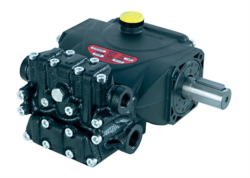
Southeast Asian manufacturing facilities often operate within confined spaces—multi-story industrial parks in Singapore, Jakarta, and Bangkok feature limited floor area. The Interpump E1D1808 L gear pump provides compact high-pressure capability: 8 L/min at 180 bar in a 5 kg package.
While lower flow than the KF or MW series, the E1D1808 excels in:
- Modular hydraulic systems: Multiple compact pumps deliver distributed pressure rather than centralized high-flow systems
- Equipment retrofit applications: Upgrading legacy machinery without structural modifications
- Secondary pressure circuits: Lubrication lines, pilot pressure systems, and auxiliary equipment requiring isolated pressure loops
- Mobile applications: Equipment requiring portable hydraulic power where weight constraints exist
Section 3: Spray Nozzle Configuration and Process Optimization
Precision Spray Pattern Matching
Industrial spray applications span coating, cleaning, humidification, and cooling. Each requires specific spray geometry to achieve process objectives while minimizing material waste and environmental impact—critical considerations for Southeast Asian facilities subject to increasingly stringent environmental regulations.
The Euspray flat jet nozzle HP 1/4" M BSPT features a 25° spray angle with index 30 design—delivering concentrated spray for targeted surface treatment. The flat jet pattern differs significantly from full-cone or hollow-cone patterns:
- Flat jet: Delivers rectangular spray envelope, concentrating flow across target surface; optimal for precision cleaning, coating application, and surface treatment
- Full-cone: Distributes flow in complete circumference; ideal for cooling and dust suppression requiring broad coverage
- Hollow-cone: Creates ring-shaped spray with dry center; suitable for humidification and mist generation
| Process Type | Spray Pattern | Pressure Range | Flow Requirement | SE Asia Consideration |
|---|---|---|---|---|
| Automotive coating | Flat jet 25-30° | 120-180 bar | 25-40 L/min | High-humidity cure rooms require enhanced air circulation |
| Precision cleaning | Flat jet 15-25° | 100-200 bar | 15-50 L/min | Salt-air environments accelerate equipment corrosion; use stainless nozzles |
| Surface humidification | Full-cone 60-90° | 40-80 bar | 50-150 L/min | Tropical humidity already 70-90%; verify cooling/dehumidification balance |
| Dust suppression | Hollow-cone 45-60° | 50-100 bar | 100-200 L/min | PM2.5 regulations in major cities demand effective dust control |
Calculating Spray Coverage and Process Parameters
Optimal spray results require matching nozzle flow (L/min), pressure (bar), spray angle (degrees), and distance-to-target (mm) to process requirements:
Step 1: Determine target coverage area
- For coating applications: measure surface length × width requiring simultaneous spray coverage
- For cleaning: identify accumulated contaminant type (mineral deposits, oil residue, salt spray) and specify impact pressure required for removal
- For concentrated treatment: 15-25° angles (like the Euspray 25° nozzle) direct 80-90% of flow within tight spray envelope
- For distributed coverage: 40-60° angles spread flow across broader surface
- The Euspray nozzle operates across HP (high-pressure) rated pressures; confirm pump selection delivers required flow at operating pressure
- Account for pressure drop across nozzle: flat jet nozzles typically exhibit 15-25 bar pressure loss at rated flow
- Optimal distance = spray width ÷ tan(spray angle ÷ 2)
- For 25° nozzle creating 100 mm width: optimal distance = 100 ÷ tan(12.5°) ≈ 450 mm
- Excessive distance reduces impact pressure; closer positioning risks surface damage
Integration with Pump and Regulator Systems
The complete fluid transfer system requires coordinated pressure, flow, and control:
System layout example for SE Asian coating operation:
1. Primary pump: KF30 delivers 106 L/min at 200 bar—sized for simultaneous operation of multiple spray guns
2. Pressure regulation: Reduce primary pump pressure to process requirement (120-150 bar for most coating applications) using pressure-reducing valve upstream of spray distribution manifold
3. Flow distribution: Multiple Euspray flat jet nozzles connect to manifold with individual ball valves enabling selective spray gun activation
4. Return circulation: Excess pump flow returns to reservoir through cooler and filtration system; tropical ambient temperatures demand oversized cooler (15-20% larger than calculated dissipation)
5. Accumulator buffering (optional): For pulsating spray requirements or pressure stabilization, 10-20 liter accumulator smooths pressure fluctuations caused by directional valve cycling
Section 4: Thermal Management and Reliability in Southeast Asian Climate
Understanding Thermal Load in Tropical Environments
Southeast Asian ambient temperatures (28-35°C) versus temperate climate reference conditions (15-20°C) increase system thermal loads by 30-50%. Every degree of ambient temperature rise reduces pump efficiency by approximately 0.5%—a facility operating at 32°C ambient experiences 6-9% efficiency loss versus 20°C design baseline.
Calculate total system heat generation:
- Pump losses (typically 15-20% of input power): KF30 at 40 kW input generates 6-8 kW waste heat
- Friction losses in piping: proportional to flow rate and line pressure; 106 L/min through 100 meters of hose at 200 bar generates 2-3 kW additional heat
- Nozzle pressure drop: Euspray nozzle pressure loss of 20 bar across 106 L/min flow generates 3.5 kW heat
- Total dissipation requirement: 11-15 kW for this example system
Standard calculation assumes 20°C ambient; SE Asian deployment requires oversized cooler selecting unit capacity for 35°C ambient:
Cooler capacity requirement = (calculated dissipation × 1.5) ÷ (ambient temperature − target fluid temperature)
For 12 kW dissipation, 35°C ambient, targeting 45°C fluid temperature:
Cooler capacity = (12 × 1.5) ÷ (35 − 45) = 1.8 kW (clearly impossible with negative denominator)
This illustrates why SE Asian systems target higher operating temperatures (50-55°C) than temperate facilities (40-45°C):
Revised calculation = (12 × 1.5) ÷ (35 − 50) = 1.2 kW cooler capacity
Select cooler rated 1.5 kW minimum (with 20% safety margin), rather than calculated 1.2 kW.
Maintenance Protocols for High-Temperature Operation
Thermal cycling in Southeast Asian facilities creates accelerated equipment degradation:
- Daily temperature swings: 28°C overnight to 35°C daytime creates 7°C thermal variation; seals and gaskets experience repeated expansion-contraction cycling
- Humidity exposure: 70-90% relative humidity causes condensation during equipment shutdown; dissolved water attacks internal bearing surfaces and valve seats
- Corrosion acceleration: Salt-air environments (coastal facilities) and industrial pollutants accelerate corrosion of steel components
| Maintenance Task | Standard Interval | SE Asia Interval | Rationale |
|---|---|---|---|
| Fluid sampling and analysis | 500 hours | 250 hours | Thermal degradation and contamination accelerated |
| Filter element replacement | 1000 hours | 500 hours | Increased moisture and particulate ingestion |
| Seal and gasket inspection | 2000 hours | 1000 hours | Thermal cycling and humidity damage |
| Cooler cleaning | Quarterly | Monthly | Algae growth and salt-air deposits in tropical humidity |
| System flushing | Annual | Semi-annual | Fluid oxidation rate doubles at 10°C temperature increase |
Practical Implementation Checklist for Southeast Asian Facilities
Design Phase
- [ ] Audit ambient temperature and humidity conditions at facility (minimum 30-day continuous monitoring)
- [ ] Calculate total system flow requirement by summing simultaneous demand points with 15% safety margin
- [ ] Specify pump pressure rating 20% above maximum operating pressure to accommodate spikes
- [ ] Size cooler for 35°C ambient temperature using 1.5× calculated dissipation factor
- [ ] Select pressure regulator (like Francel B25/37mb) matched to outlet pressure requirements
- [ ] Specify stainless steel or corrosion-resistant nozzles (Euspray flat jet nozzles available in SS material)
- [ ] Design piping with oversized diameter to minimize friction losses (target <0.5 bar loss per 100 meters)
- [ ] Establish condensation traps in gas delivery lines upstream of regulators
Installation Phase
- [ ] Mount pump and motor on vibration-isolating foundation to minimize facility noise transmission
- [ ] Install cooler in ventilated location with minimum 500 mm clearance around air inlet/outlet
- [ ] Connect pressure gauges at pump outlet, regulator outlet, and upstream of spray manifold for troubleshooting
- [ ] Implement check valves on pump discharge to prevent backflow during shutdown
- [ ] Establish return line filtration with 25 µm absolute minimum (10 µm preferred for precision applications)
- [ ] Tag all system components with pressure ratings and operational limits visible to operators
Commissioning Phase
- [ ] Run system at 50% flow for 4 hours; verify fluid temperature stabilizes below 55°C
- [ ] Activate each spray nozzle individually; confirm spray pattern matches specifications
- [ ] Test pressure regulator relief valve by gradually increasing inlet pressure; verify relief opening within ±5% of rated setting
- [ ] Measure actual pump flow and pressure; confirm within ±5% of nameplate specifications
- [ ] Document baseline vibration, noise, and temperature readings for future comparison
- [ ] Establish operator training covering pressure regulation, nozzle selection, and emergency shutdown procedures
Ongoing Operations
- [ ] Monitor fluid temperature continuously; establish alarm at 60°C indicating cooler undersizing or fouling
- [ ] Perform monthly cooler cleaning in salt-air or high-dust environments
- [ ] Replace return-line filter elements every 500 operating hours (quarterly in SE Asia)
- [ ] Conduct quarterly pressure regulator relief valve testing
- [ ] Analyze fluid samples every 250 hours for moisture content and oxidation indicators
- [ ] Maintain spare pump, motor coupling, and nozzle inventory given extended Southeast Asian lead times
Conclusion: Building Resilient Fluid Transfer Systems
Southeast Asian industrial operations demand fluid transfer systems engineered explicitly for tropical climate challenges—not adapted from temperate-climate designs. Coordinated selection of pressure regulators (like the Francel B25/37mb), high-performance pumps (KF30 or MW40), and precision spray nozzles (Euspray flat jet nozzles), combined with aggressive thermal management and maintenance protocols, creates reliable systems supporting continuous production cycles.
3G Electric's 35+ years supplying industrial equipment across Asia-Pacific provides proven component sourcing and technical support for Southeast Asian facilities. Whether specifying baseline systems for new facilities or upgrading legacy installations, proper system integration—not individual component selection—determines reliability and operational longevity in high-temperature, high-humidity environments.