Understanding Industry Applications: ATEX vs. Standard Pump Selection
With 35+ years of industrial equipment distribution experience, 3G Electric has guided maintenance teams across Singapore through countless pump selection decisions. The choice between ATEX-compliant and standard industrial pumps fundamentally shapes your facility's safety profile, operating costs, and regulatory standing.
Industry Applications for pumping equipment in Singapore span petrochemical plants, pharmaceutical manufacturing, food processing, marine operations, and general industrial facilities. Each environment presents distinct hazard profiles. Some require strict explosion-proof certification; others demand reliability and cost efficiency in non-hazardous settings.
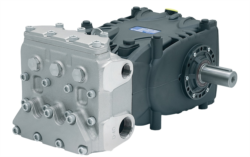
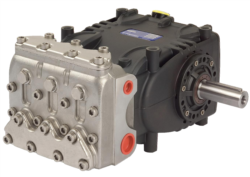
The Interpump PUMP W2035 L ATEX delivers 35 L/min at 200 bar with full ATEX compliance—mandatory for facilities processing flammable liquids or operating in explosive atmospheres. Compare this against the Pratissoli KF30, which provides 106 L/min at 200 bar for 40 kW—purpose-built for high-throughput, non-hazardous industrial environments. Understanding where each excels prevents costly mistakes.
ATEX-Compliant Pumps: When Regulatory Compliance Becomes Non-Negotiable
Operational Context for Maintenance Teams
If your facility handles flammable materials, operates in explosive atmospheres, or requires certification under Singapore's safety standards (aligned with international ATEX directives), pump selection isn't optional—it's regulatory. The Interpump W2035 L ATEX is engineered specifically for this reality.
Key characteristics of ATEX compliance:
- Certification documentation: Every unit includes full ATEX certification, eliminating compliance audits on pump certification
- Temperature class ratings: The W2035 ATEX operates within defined temperature boundaries, preventing ignition sources in explosive atmospheres
- Material specifications: Internal components use materials certified for hazardous environments, preventing static buildup and sparking
- Pressure containment: Sealed housing design ensures no pressure-driven leakage into explosive atmospheres
Practical Maintenance Implications
ATEX pumps require trained personnel for maintenance. Your team must follow documented procedures—spare parts must be ATEX-certified equivalents. Downtime for repairs typically extends 2–3 weeks due to parts sourcing. However, the alternative—operating non-certified equipment in hazardous zones—invites regulatory fines (SGD 100,000–500,000+), facility shutdowns, and insurance liability.
Real-world example: A petrochemical facility in Jurong Island discovered its ageing pump lacked ATEX certification during an audit. Replacement cost: SGD 85,000 for equipment plus SGD 200,000+ in remediation compliance. A maintenance team using the W2035 ATEX from the start would have avoided this entirely.
Flow rate (35 L/min) suits medium-volume hazardous operations. If your application demands higher throughput in non-hazardous zones, ATEX certification becomes an unnecessary cost multiplier.
Standard Industrial Pumps: Cost-Effective Power for Non-Hazardous Applications
Why Maintenance Teams Choose Standard Pumps
The Pratissoli KF30 and Pratissoli SN7045 L represent the backbone of Singapore's general industrial maintenance ecosystem. Both deliver high-pressure hydraulic performance without ATEX overhead.
Performance specifications that matter to maintenance teams:
- KF30: 106 L/min, 200 bar, 40 kW, 72 kg—compact, transportable, ideal for mobile hydraulic applications
- SN7045 L: 45 L/min, 210 bar, 18.4 kW, 1450 rpm—optimized for direct motor coupling with excellent pressure stability
Both pumps are Italian-engineered by Pratissoli (Interpump Group), meaning parts availability through distributors like 3G Electric is reliable and cost-effective. A KF30 replacement seal costs SGD 45; a W2035 ATEX equivalent costs SGD 280+ due to certification requirements.
Cost-of-Ownership Reality Check
Initial investment: Standard pumps run 25–35% cheaper than ATEX-certified equivalents.
Parts and maintenance: Generic suppliers stock standard pump components. Your team can order, receive, and install within 3–5 days.
Training: Maintenance personnel don't require specialized ATEX certification courses (cost: SGD 2,000–4,000 per technician).
Downtime recovery: A non-ATEX pump failure typically resolves within 48 hours. ATEX equipment may idle for weeks.
For food processing plants, electronics manufacturing, water treatment facilities, and general metalworking shops, standard industrial pumps deliver exceptional value. Your maintenance budget stretches further, and operational flexibility increases.
System Integration: Pairing Pumps with Supporting Components
Beyond the Pump: Gearboxes, Relays, and Nozzles
Maintenance teams often overlook the critical role of system components. The Interpump GEARBOX RS500 demonstrates how transmission accessories multiply pump capability. At 2.2 transmission ratio and 18.5 kW max power, this gearbox integrates seamlessly with high-pressure pump systems.
Why this matters for maintenance operations:
- Pressure multiplication: Gearbox-amplified systems reach 400+ bar with lower motor RPM, reducing vibration and component wear
- Thermal management: Lower rotational speed = reduced heat generation, extending seal and bearing life by 40–60%
- Noise reduction: Your maintenance facility operates with better acoustic environment (critical in shift-work environments)
Pairing a standard pump with the RS500 gearbox often outperforms a raw ATEX pump for non-hazardous high-pressure applications, at significantly lower cost.
Safety Systems Integration: The Flame Relay Consideration
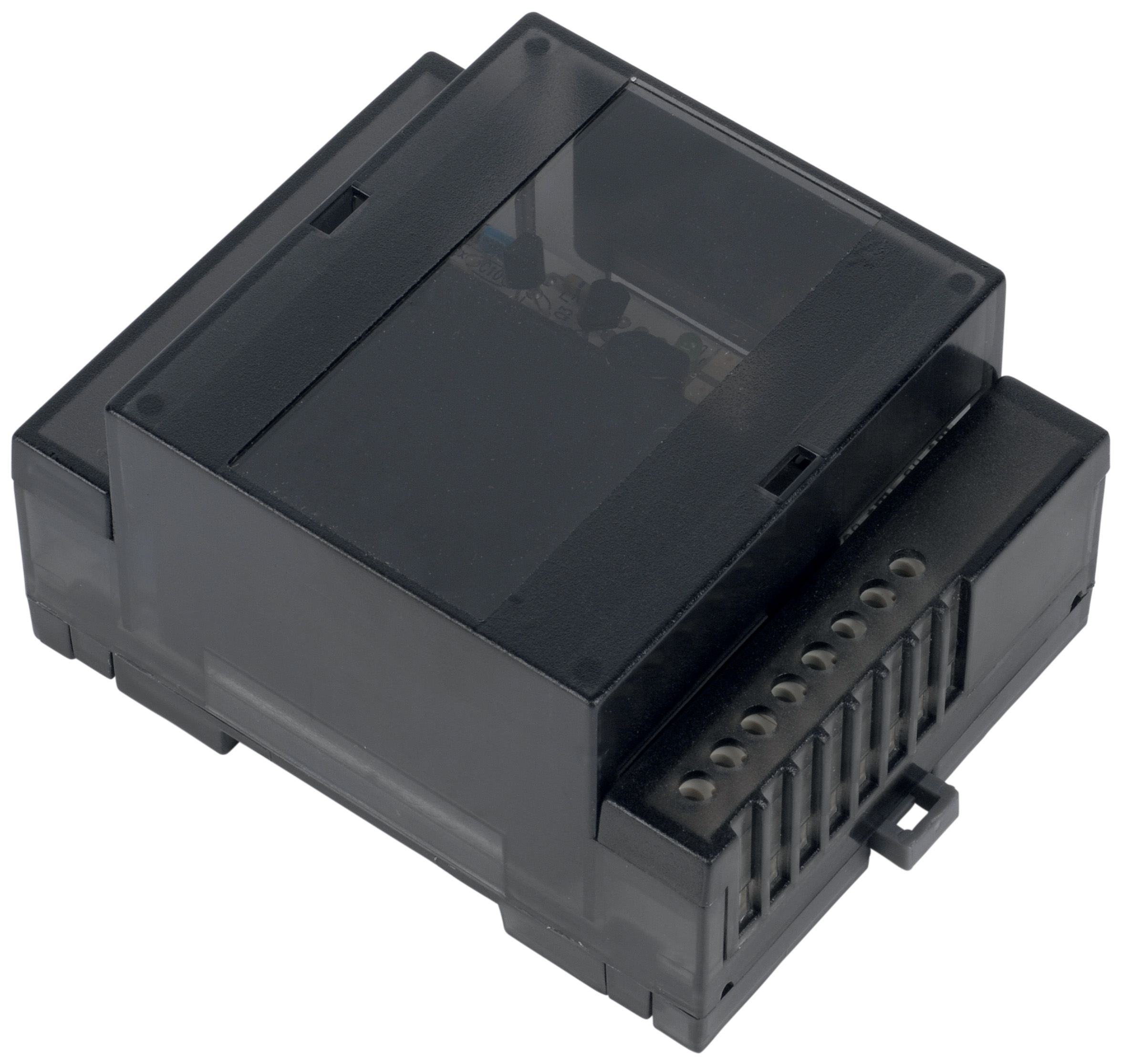
If your facility uses combustion-based processes (industrial burners, drying systems, coating operations), the Combutech Flame relay CF1 becomes essential. This combustion detection module (1 A @ 250 VAC, IP40 protection) integrates with pump control systems to automate shutdown during flame loss.
Maintenance relevance:
- Prevents catastrophic failure: Automatic cutoff stops hydraulic flow if burner flame extinguishes, preventing system overpressure
- Reduces manual intervention: Your team doesn't need to manually monitor burner status—the CF1 handles it
- Supports up to 10 UV detectors: Complex multi-burner systems can use a single relay, simplifying control architecture
This component matters less for pure pumping operations but becomes critical in integrated heating, coating, or spray systems.
Practical Decision Framework for Maintenance Teams
Ask These Questions First
1. Does your facility operate in a classified hazardous area?
- Yes → ATEX compliance is non-negotiable. Budget accordingly and plan for extended lead times.
- No → Standard industrial pumps offer superior value and operational flexibility.
2. What's your facility's monthly maintenance budget?
- SGD 5,000+ → ATEX systems are sustainable; specialized training and parts fit your budget.
- SGD 2,000–5,000 → Standard pumps maximize your maintenance purchasing power.
3. How frequently does pump downtime impact production revenue?
- Critical (impacts revenue within hours) → Choose ATEX if required, or invest in redundant standard pump systems for non-hazardous facilities.
- Moderate (24–48 hour tolerance) → Standard pumps with local parts backup are ideal.
4. What's your team's technical depth?
- Specialized technicians on staff → ATEX systems manageable; team can handle certification compliance.
- General maintenance crew → Standard pumps reduce training burden and simplify troubleshooting.
Flow Rate Alignment with Facility Needs
Never select a pump based solely on certification status. Match flow requirements:
- Low-throughput hazardous operations (petrochemical transfer, solvent circulation): W2035 ATEX at 35 L/min
- Medium-throughput non-hazardous (general metalworking, food processing): SN7045 L at 45 L/min
- High-throughput non-hazardous (large-scale hydraulic systems, cooling circuits): KF30 at 106 L/min
Oversizing wastes energy; undersizing creates bottlenecks. 3G Electric's 35+ years of supplier experience shows that improper sizing causes 40% of pump failures within the first two years.
Summary: Making Your Final Selection
Industry Applications in Singapore demand context-specific thinking. ATEX-compliant pumps like the Interpump W2035 L ATEX protect your facility legally and operationally in hazardous environments—the cost premium is insurance against catastrophic failure and regulatory action. Standard industrial pumps—the Pratissoli KF30 and SN7045 L—deliver exceptional reliability, parts availability, and cost efficiency for non-hazardous operations.
Your maintenance team's expertise, facility risk profile, and budget constraints should drive the decision. When in doubt, consult with experienced distributors like 3G Electric who understand both regulatory frameworks and practical operational constraints across Singapore's diverse industrial landscape.
The right pump isn't always the most advanced or certified—it's the one that aligns with your facility's actual requirements and your team's capacity to maintain it effectively.