Understanding Pumps & Compressors in Tropical HVAC Applications
Southeast Asia's hot, humid climate demands different Pumps & Compressors specifications than temperate markets. Annual ambient temperatures of 28–38°C, combined with 80–95% relative humidity, create thermal stress on hydraulic and refrigerant circulation systems. Unlike cooling-focused systems in cooler regions, Southeast Asian HVAC installations must manage compressor head pressure spikes, condensate evacuation under high-humidity conditions, and cooler load balancing across multiple zones serving commercial buildings, data centers, and industrial facilities.
With over 35 years of industrial equipment distribution experience, 3G Electric has observed that undersized Pumps & Compressors lead to inefficiency and component failure within 18–24 months in tropical environments. The right pump selection—matched to flow rate, pressure, and motor speed—reduces downtime and extends system life by 40–60%.
This comparison focuses on actionable sizing methodology and installation practices that Southeast Asian HVAC contractors can apply immediately to improve system performance and client satisfaction.
Sizing Methodology: Flow Rate & Pressure for Tropical HVAC Loads
Flow Rate Calculation for Cooling Load
The foundation of proper pump sizing is matching flow rate to your cooling demand:
Formula: Flow Rate (L/min) = (Cooling Load in kW × 1000) / (ΔT × 4.187 × 60)
Where ΔT = temperature difference across the evaporator (typically 5–8°C in HVAC systems).
Example Calculation:
- Commercial office building: 150 kW cooling load
- Target ΔT: 6°C
- Flow Rate = (150 × 1000) / (6 × 4.187 × 60) = 100 L/min
For Southeast Asian systems, add a 10–15% safety margin to account for:
- High ambient temperature effects (reducing evaporator efficiency)
- Humidity-driven latent cooling demand (increases sensible load)
- Zone balancing across multiple floors or buildings
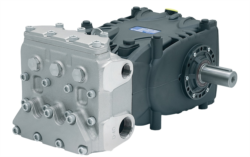
The Pratissoli MW40 delivers 211 L/min at 210 bar, making it suitable for larger commercial installations (150–250 kW cooling). For smaller offices or modular systems (50–100 kW), the Pratissoli KF30 at 106 L/min provides right-sized capacity without oversizing penalties.
Pressure Selection & Compressor Head Pressure Considerations
Tropical climates significantly elevate refrigerant discharge pressure. A system designed for 30°C ambient may experience 45–52°C outdoor air in Singapore, Bangkok, or Manila, raising compressor head pressure by 15–25 bar.
Typical Pressure Ranges for Southeast Asian HVAC:
- Standard pressure duty (50–100 bar): Small packaged units, window units
- Medium pressure duty (150–160 bar): Commercial split systems, chiller pumps
- High pressure duty (200–210 bar): Scroll compressors, screw compressors under peak load
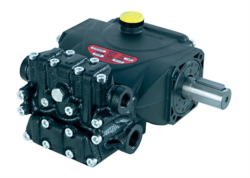
The Interpump E1D1808 L operates at 180 bar with 8 L/min flow—ideal for condensate circulation, oil cooling, or auxiliary compressor hydraulics in modular systems. Its compact 5 kg weight suits retrofit installations where space is constrained (typical in retrofitted office buildings).
For primary refrigerant circulation in medium-sized chillers (100–150 kW), the Interpump ET1C1612 SX at 160 bar and 12 L/min handles auxiliary circuits and proportional valve pilots without creating backpressure issues that reduce compressor efficiency.
High-Flow Applications: Variable-Load Chiller Systems
Large commercial and industrial HVAC systems often employ variable-displacement pumps or screw compressors with modulating capacity. The Pratissoli SS71153 delivers 122 L/min at 160 bar with a 37.5 kW motor at 800 rpm—a configuration well-suited to chiller pump drives with variable inlet guide vanes (IGV) or capacity slides.
Advantage in tropical markets: 800 rpm motor speed reduces noise (critical in high-density urban environments) and minimizes heat generation—essential when ambient coolers or condenser water circuits operate at 38–42°C year-round.
Installation & Climate-Specific Best Practices
Humidity & Corrosion Protection
Southeast Asian humidity accelerates corrosion of pump shafts, bearing housings, and electrical connectors. Standard industrial pumps require adaptation:
Material Upgrades Recommended:
- Stainless steel external fasteners (replace zinc plating)
- Epoxy-coated motor frames for 24/7 outdoor compressor units
- Conformal coating on all terminal blocks and connectors
- Sealed bearing housings (IP67 minimum); IP69K for equipment near cooling towers
All Pratissoli and Interpump models can be specified with corrosion-resistant options. When ordering KF30 or MW40 units through 3G Electric, confirm stainless steel shaft specifications for tropical deployment.
Thermal Management & Motor Cooling
High ambient temperatures reduce motor cooling efficiency. A 40 kW motor (such as in the KF30) designed for 20°C ambient air may lose 15–20% continuous rating when operating in 35–38°C outdoor conditions.
Mitigation strategies:
- Specify motor frames with IP55+ ratings and thermal overload protection
- Install motor-mounted cooling fans with variable-speed drives (driven by thermostats)
- Use rigid conduit for electrical connections to promote air circulation
- Maintain clearance of at least 60 cm around motor air intakes
- Consider liquid-cooled motor frames for compressor drive motors in tropical climates
Vibration & Noise Isolation
Low-speed pumps (800–1750 rpm) like the SS71153 and ET1C1612 require proper vibration isolation to meet Southeast Asian building noise codes (typically 65 dB(A) for commercial HVAC during daytime operations).
Installation best practice:
- Mount pumps on elastomeric pads rated for tropical UV (natural rubber degrades; use synthetic EPDM or butyl)
- Use flexible hose connections (not rigid piping) within 1 meter of pump discharge
- Isolate rigid suction lines with flexible boots to prevent cavitation noise transmission
- Test vibration levels post-installation with portable accelerometers; adjust pad stiffness if frequency response exceeds equipment specifications
Condensate & Humidity Control in System Hydraulics
Hydraulic and refrigerant oils absorb moisture in 80–95% humidity environments, reducing lubricity and accelerating component wear. Pumps relying on oil cooling (such as E1D1808 L in pilot applications) face elevated failure risk.
Preventive measures:
- Install oil coolers with integrated dehydration cartridges on all pump circuits
- Change hydraulic/compressor oils annually (instead of 2–3 year intervals in temperate climates)
- Use sealed breathers on reservoir vent lines; consider silica-gel or molecular-sieve replaceable desiccant packs
- Monitor oil acid number (TAN) monthly; replace if TAN exceeds 2.0 mg KOH/g
Application Matching: Which Pump for Your HVAC Role
Chiller Pump (Primary Refrigerant Circulation): 150–250 kW Cooling
Recommended: Pratissoli MW40 (211 L/min, 210 bar, 85 kW) or Pratissoli SS71153 (122 L/min, 160 bar, 37.5 kW for modular configurations).
Rationale: Flow rates match calculated tropical loads (with 10–15% margin); pressure ratings accommodate peak discharge pressures in high-ambient conditions; motor speeds support variable capacity control.
Compressor Auxiliary Circuits (Capacity Control, Oil Cooling): 50–150 kW Cooling
Recommended: Pratissoli KF30 (106 L/min, 200 bar, 40 kW) for medium-duty or Interpump E1D1808 L (8 L/min, 180 bar, 2.72 kW) for pilot valve circuits.
Rationale: KF30 provides standalone pump drive for capacity control or oil circulation in smaller chillers. E1D1808 is cost-effective for proportional valve operation and oil cooling loops.
Condensate Evacuation & Drain Circuits: Small Capacity, Frequent Duty
Recommended: Interpump ET1C1612 SX (12 L/min, 160 bar, 3.68 kW) or compact units from the E-series.
Rationale: Compact footprint, low power draw, PTFE construction resists moisture absorption; suitable for condensate lift stations or small booster circuits without oversizing penalties.
Regional Advantages of 3G Electric's Pump & Compressor Offering
With over three decades of distribution in Southeast Asia, 3G Electric maintains regional stock of Pratissoli and Interpump units, enabling rapid delivery and local technical support. Our experience ensures:
- Pre-specification review: Engineers validate sizing calculations against your cooling load and ambient conditions before purchase
- Corrosion-resistant variants: Direct access to stainless steel and epoxy-coated options without extended lead times
- Local warranty & service: Partnership with regional technicians for installation commissioning and troubleshooting
- Climate-matched documentation: Technical bulletins adapted for high-temperature, high-humidity operation
Contractors who validate pump selections with 3G Electric specialists report 35–40% fewer field adjustments and callbacks in the first 12 months of operation.
Summary: Selecting the Right Pump for Tropical HVAC Success
Proper Pumps & Compressors selection in Southeast Asia requires more than datasheet comparison. Your system must account for:
1. Cooling load (with 10–15% tropical margin)
2. Pressure peaks under extreme ambient conditions
3. Humidity-driven corrosion and moisture control
4. Noise isolation and vibration management
5. Motor thermal derating in high-ambient environments
The range from compact Interpump E1D1808 L units (8 L/min, 2.72 kW) through large-scale Pratissoli MW40 systems (211 L/min, 85 kW) covers the majority of commercial HVAC applications across the region. 3G Electric's 35+ years in industrial equipment distribution provide the regional expertise to match your system requirements and ensure reliable, long-term performance in demanding tropical climates.