Understanding Energy Consumption in Industrial Pumps & Compressors
Pumps and compressors are the workhorses of industrial operations, yet they frequently operate inefficiently due to aging equipment, improper sizing, or poor maintenance practices. In Singapore's humid tropical climate with high electricity costs, energy efficiency directly impacts your bottom line. With over 35 years of experience supplying industrial equipment across Asia-Pacific, 3G Electric has observed that many plant managers overlook optimization opportunities that could reduce energy consumption by 15-30%.
The energy profile of a typical industrial facility shows pumps and compressors accounting for substantial portions of the total electrical load. A 37.5 kW pump running continuously at partial load—common in many operations—consumes approximately 328,000 kWh annually, costing over SGD 49,000 at current tariffs. Multiply this across multiple units, and the financial impact becomes clear.
The challenge intensifies when equipment operates beyond its design specifications. An oversized pump delivering more flow than required, or a compressor running at maximum pressure when lower pressure would suffice, both waste energy while generating heat that accelerates component wear. Understanding these inefficiencies is the first step toward optimization.
Matching Equipment Specifications to Actual Operational Demands
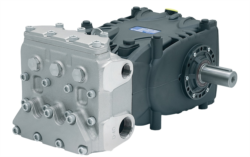
One of the most common causes of energy waste is equipment oversizing. Plant managers often specify pumps and compressors with excess capacity "just in case," leading to equipment that rarely operates at design efficiency points. Modern high-performance units like the Pratissoli KF30 deliver 106 L/min at 200 bar with 40 kW input, but if your application requires only 80 L/min at 150 bar, you're paying for unused capacity.
Accurate demand assessment requires documenting actual flow rates and pressures across your operating cycle. Many plants discover through audits that peak demands occur for only brief periods, while average demand is significantly lower. This insight justifies investing in smaller primary units supplemented by variable-speed equipment for peak demand management.
For medium-duty industrial applications, the Pratissoli MW40 offers 211 L/min at 210 bar with 85 kW power, suitable for operations requiring sustained high-pressure flow. However, even this specification benefits from demand-side analysis. Does your process genuinely require 210 bar continuously, or could 160-180 bar pressure meet functional requirements? Reducing pressure by just 10% can reduce compressor energy consumption by 7-8%.
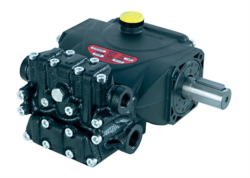
Compact, specialized units like the Interpump E1D1808 L, delivering 8 L/min at 180 bar with only 2.72 kW input, excel in right-sized applications. This 5 kg unit consumes 70% less energy than oversized alternatives while occupying minimal space—ideal for decentralized hydraulic circuits in multi-station facilities.
The Interpump ET1C1612 SX*D20 represents another right-sizing opportunity at 12 L/min, 160 bar, and 3.68 kW input. For low-flow, high-pressure applications common in precision manufacturing, this specification eliminates energy waste from oversized equipment. Similarly, the Pratissoli SS71153 provides 122 L/min at 160 bar, powered by a 37.5 kW motor—a sweet spot for many mid-range industrial operations.
Variable Speed Drive Implementation and Load Matching
Variable frequency drives (VFDs) represent the single most impactful efficiency upgrade for centrifugal and positive displacement pump applications. VFDs allow equipment speed—and consequently flow output—to vary with actual demand rather than running constantly at full speed. The energy savings scale exponentially: reducing speed by just 20% decreases energy consumption by approximately 50%, since pump power varies with the cube of speed changes.
In Singapore's industrial context, implementing VFDs on your primary circulation pumps typically pays back capital investment within 18-36 months through electricity savings alone. This timeline improves further when accounting for reduced maintenance costs from lower operating speeds and temperatures.
Practical implementation requires understanding your load profile. Operations with constant demand—such as continuous production lines—benefit most from right-sizing without VFDs. However, batch operations, assembly lines with variable demand, and processes with seasonal fluctuations justify VFD investment.
For compressor applications, many older systems run at constant pressure regardless of actual air demand. Modern variable displacement compressors and VFD-equipped units maintain minimum required pressure only when flow is needed, reducing idle-load energy waste. This approach is particularly valuable in Singapore's humid environment, where compressed air dehumidification consumes additional energy.
Maintenance Excellence: The Efficiency Multiplier
Equipment efficiency degrades with operational time. Worn impeller vanes, leaking seals, and accumulated deposits all reduce performance and increase energy requirements. A well-maintained pump operates at design efficiency (typically 85-92% for quality units); a neglected pump's efficiency may decline to 70-75% within 3-5 years.
Implement condition-based maintenance protocols that monitor discharge pressure, flow rate, and temperature trends. Increasing discharge pressure at constant flow indicates rising internal leakage or impeller wear. Gradual temperature rise signals seal degradation or vane wear. Capturing these early indicators allows planned replacement before catastrophic failure and efficiency collapse.
For operations running Pratissoli or Interpump equipment, documented maintenance schedules are available through 3G Electric. Establishing preventive maintenance routines—quarterly seal inspection, annual filter analysis, biennial pump disassembly inspection—maintains efficiency and extends equipment life by 40-60%.
Seal maintenance deserves particular attention in Singapore's tropical environment. High humidity and temperature create conditions where standard seals degrade faster. The Interpump ET1C1612's PTFE construction specifically addresses this challenge through superior material selection, reducing seal failure rates and associated efficiency loss.
Financial Analysis and ROI Calculation Framework
Optimizing pump and compressor efficiency generates multiple financial benefits beyond electricity savings. Reduced energy consumption decreases cooling requirements, lowering secondary facility costs. Lower operating temperatures extend equipment life, reducing capital replacement frequency. Improved reliability minimizes production interruptions and associated losses.
Develop a total cost of ownership (TCO) analysis comparing your current fleet against optimized alternatives. Include:
- Annual electricity cost: Current consumption (kW) × operating hours × tariff rate
- Maintenance expenses: Current annual maintenance spend plus projected wear-related downtime costs
- Capital replacement timeline: Expected remaining life of current equipment versus lifecycle of replacement units
- Production loss value: Impact of equipment failures or performance degradation on output
- Environmental compliance: Reduced carbon footprint value if applicable to your operations
For a typical Singapore manufacturing facility, this analysis often reveals that investing SGD 50,000-150,000 in efficiency upgrades generates SGD 200,000-400,000 in cumulative savings over 10 years. The investment case strengthens further when considering regulatory trends—Singapore's Energy Efficiency Programme increasingly incentivizes industrial energy reduction through audits and standards.
Implementation Roadmap for Plant Managers
Begin your efficiency optimization journey with a systematic approach:
Phase 1: Audit and Assessment (Weeks 1-4)
Document all pump and compressor applications, including model, age, operating parameters, and energy consumption. Identify major energy consumers representing 80% of your pump/compressor load. Establish baseline metrics—flow rates, pressures, temperatures, and electricity consumption.
Phase 2: Analysis and Planning (Weeks 5-8)
Analyze audit data to identify oversizing, inefficient operating practices, and maintenance gaps. Develop efficiency upgrade priorities based on energy savings potential and implementation difficulty. Calculate ROI for each opportunity.
Phase 3: Targeted Implementation (Weeks 9-20)
Begin with quick wins—maintenance improvements, pressure optimization, and operational practice changes requiring minimal capital. Parallel-plan major upgrades such as VFD installation or equipment replacement. 3G Electric's technical team can support specification and implementation for replacement units.
Phase 4: Monitoring and Optimization (Ongoing)
Establish continuous monitoring of key performance indicators. Track actual energy savings against projections. Identify further optimization opportunities as operational patterns become clear.
Working with 3G Electric throughout this process provides access to 35 years of experience optimizing industrial equipment performance. Our distributorship of quality brands like Pratissoli and Interpump ensures access to efficiently designed equipment with proven reliability in tropical Asian environments.