Understanding Industry Applications in HVAC Equipment Selection
Industry applications represent the specific use cases and operational conditions where HVAC equipment performs under real-world stress. For Singapore's tropical climate and high-density urban environments, understanding these applications helps contractors avoid expensive mistakes and optimize capital investments.
When evaluating equipment upgrades, contractors must compare three critical factors: operational requirements, equipment specifications, and total cost of ownership. Many contractors focus solely on purchase price, overlooking how application-specific features impact long-term performance and maintenance costs.
With 35+ years of experience distributing industrial equipment across Southeast Asia, 3G Electric has observed that successful HVAC contractors in Singapore segment their equipment decisions by application type—commercial cooling systems, industrial refrigeration, high-pressure cleaning for maintenance, and fuel-based heating systems. Each application demands different pump specifications, pressure ratings, and control mechanisms.
This guide compares industry applications side-by-side, helping you identify which equipment best matches your operational environment and client requirements.
Comparing Pump Specifications Across High-Pressure HVAC Applications
Understanding Flow Rate and Pressure Trade-offs
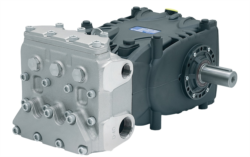
HVAC contractors regularly encounter situations where high flow capacity conflicts with high-pressure requirements. The Pratissoli KF30 pump delivers 106 L/min at 200 bar with 40 kW power consumption, while the Pratissoli MW40 pump provides 211 L/min at 210 bar with 85 kW power input.
At first glance, the MW40 appears superior—it delivers nearly double the flow. However, this comparison shifts dramatically when you examine specific industry applications:
Large commercial cooling towers and chilled water distribution systems benefit from the MW40's high flow capacity. In Singapore's high-rise office buildings and data centers, maintaining consistent chilled water flow across multiple zones justifies the increased power consumption and equipment weight (264 kg vs. 72 kg).
Smaller multi-tenant commercial complexes and retrofit installations often present space constraints and electrical infrastructure limitations. The KF30's compact footprint (72 kg) and lower power demand (40 kW) fit existing mechanical rooms without expensive electrical panel upgrades. Many contractors overlook this application match, instead over-specifying equipment that drives unnecessary operational costs.
Industrial manufacturing facilities with integrated cooling and hydraulic systems frequently require flexible equipment that handles variable loads. Here, the KF30's efficient 106 L/min rating serves multiple independent circuits without excess capacity waste.
The key comparison metric isn't "which pump is better," but rather "which pump matches your specific application's demand profile."
Compact vs. Full-Scale Equipment for Specialized Applications
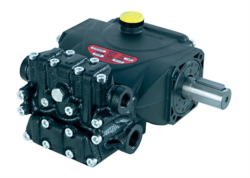
The Interpump E1D1808 L pump represents a distinct application category: high-pressure, low-volume systems requiring precision control. At 8 L/min and 180 bar with only 2.72 kW input power, this compact unit serves applications where contractors traditionally oversized equipment.
Industry applications for this specification include:
- Precision spray coating systems in manufacturing facilities requiring exact pressure maintenance and minimal fluid waste
- Hydraulic control circuits in building management systems where space constraints demand ultra-compact solutions
- High-pressure testing equipment for HVAC system commissioning and diagnostics
When contractors compare this unit against mid-range pumps, they frequently discover the E1D1808 L eliminates 3-4 larger components, reducing installation labor by 15-20% and electrical infrastructure costs by similar margins.
Gas Pressure Regulation and Safety Applications in HVAC Systems
Selecting Pressure Regulators for Laboratory and Industrial Gas Distribution
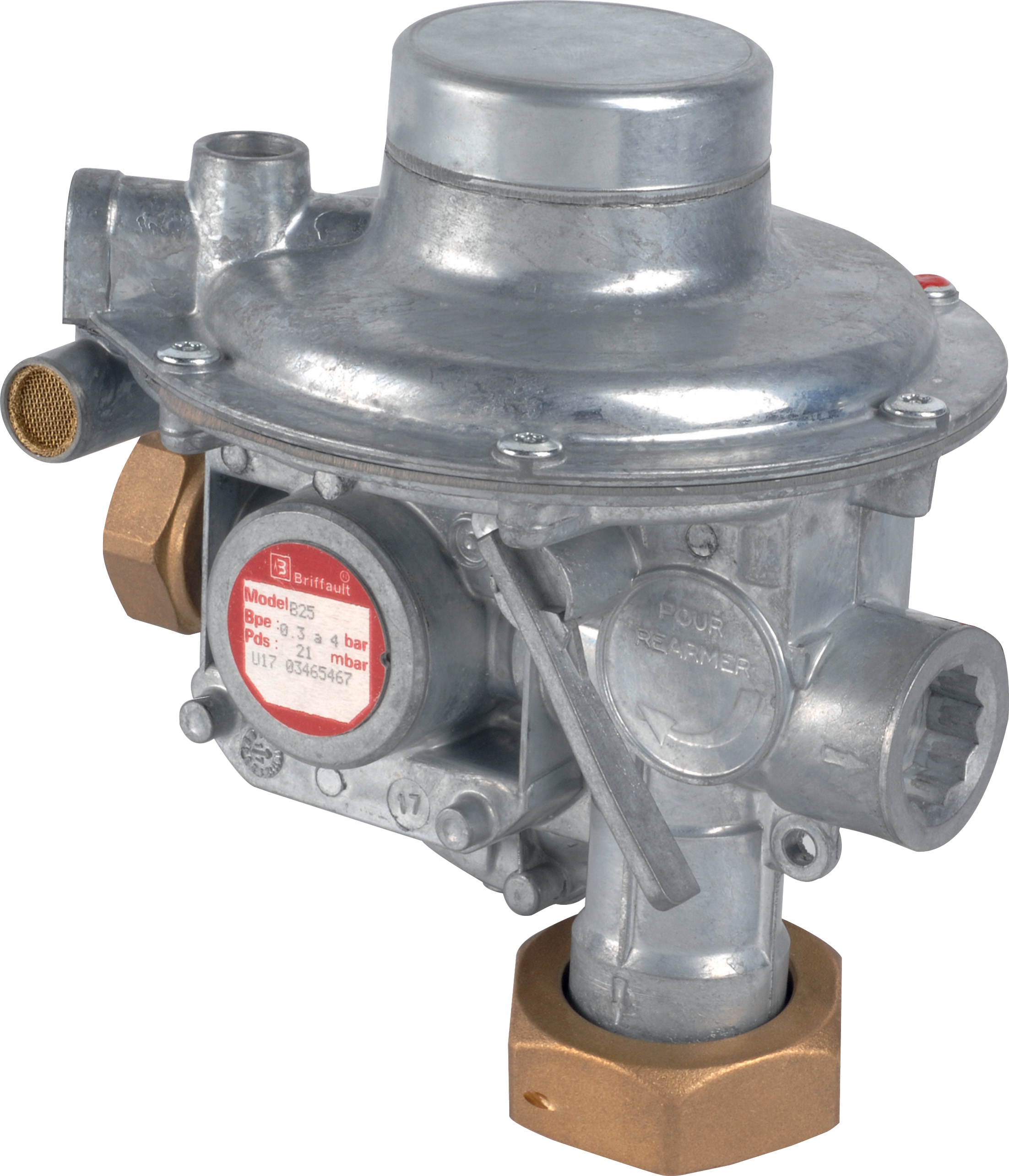
The Francel B25/37mb pressure regulator serves critical applications in gas-fired HVAC systems, particularly in Singapore's commercial and industrial sectors where precise gas pressure management directly impacts burner efficiency and safety compliance.
This regulator delivers consistent 37 mbar outlet pressure with integrated safety relief and 10 mm vent design. Industry applications that benefit from this specification include:
Commercial gas heating systems requiring stable pressure despite fluctuating inlet conditions. Singapore's high-humidity environment causes condensation in gas lines—the Francel B25/37mb's pressure stability compensates for moisture-related pressure drops.
Laboratory and research facilities with demanding burner equipment that requires precision gas delivery. Educational institutions, pharmaceutical manufacturing, and food processing facilities all operate gas-fired systems where ±2 mbar pressure variance impacts flame characteristics and emissions.
High-efficiency boiler retrofits where contractors upgrade older systems to modern condensing technology. The integrated safety relief prevents over-pressurization—a critical safety feature that prevents catastrophic equipment failure in retrofit installations where original piping may have unknown pressure histories.
Application Comparison: Integrated Safety vs. Standalone Relief Valves
Contractors often debate whether integrated safety regulators like the Francel B25/37mb justify their higher cost compared to separate regulator and relief valve combinations.
Integrated design advantages for industry applications:
- Fewer connection points reduce leak risk in humid Singapore environments
- Single component simplifies maintenance and troubleshooting
- Guaranteed synchronization between regulation and safety functions
- Smaller footprint for retrofits in existing mechanical rooms
- Individual component replacement without full regulator replacement
- Fine-tuning safety thresholds independent of regulation pressure
- Lower initial cost for non-critical applications
For commercial HVAC installations in Singapore serving critical facilities (hospitals, data centers, manufacturing), the integrated Francel B25/37mb eliminates single points of failure where a faulty standalone relief valve could bypass the entire safety system undetected.
Industrial Cleaning and Spray Systems: Application-Specific Nozzle Selection
Understanding Spray Pattern Angles and Pressure Ratings
The Euspray flat jet nozzle (1/4" M BSPT, 25° angle, index 30) addresses a specific industry application: precision spray coverage for HVAC maintenance and industrial cleaning.
Many contractors treat spray nozzles as commodity items, purchasing lowest-cost options without analyzing application fit. This approach creates three recurring problems:
1. Inadequate cleaning coverage where wrong spray angles miss critical surfaces
2. Pressure mismatch where standard nozzles either clog or provide insufficient impact force
3. Fluid waste from inefficient spray patterns increasing operational costs by 15-25%
The Euspray 25° flat jet design serves specific applications:
Cooling tower maintenance and descaling where contractors need concentrated spray force to remove mineral deposits without damaging fragile fill material. The 25° angle concentrates pressure on target surfaces while the 1/4" BSPT connection integrates with standard high-pressure pump discharge lines.
Condenser coil cleaning in air handling units where 45° or 60° spray angles would spray overmist throughout the mechanical room. The 25° angle maintains precision despite high-pressure operation (up to 210 bar with MW40 pumps).
Precision cleaning of sensitive equipment in commercial kitchens, food processing facilities, and pharmaceutical manufacturing where over-spray damages adjacent systems.
Matching Nozzles to Pump Specifications
Contractors often experience nozzle clogging or poor performance because they fail to verify compatibility between pump flow rates and nozzle design specifications.
The Euspray flat jet (index 30 design) performs optimally with pump systems delivering 100-200 L/min at 180-210 bar pressure. This matches perfectly with:
- KF30 pumps (106 L/min, 200 bar)
- MW40 pumps (211 L/min, 210 bar)
Contractors pairing high-pressure pumps with inappropriately sized nozzles experience premature wear, fluid misting, and reduced cleaning efficiency. The Euspray flat jet's index 30 design specifically accommodates mid-range pump outputs, while higher-index designs serve smaller or larger pump systems.
Practical Decision Framework for HVAC Equipment Upgrades
Step 1: Document Your Current Application Environment
Before evaluating any equipment, contractors should document:
- System pressure requirements (mbar for gas systems, bar for hydraulic systems)
- Required flow rates across all circuits or zones
- Space constraints in existing mechanical rooms
- Electrical infrastructure capacity available for pump motors
- Environmental conditions (Singapore's 85%+ humidity demands corrosion-resistant materials)
- Maintenance accessibility for routine service intervals
Step 2: Compare Equipment Against Defined Applications
Using 3G Electric's 35+ years of experience supporting HVAC contractors, we recommend comparing candidate equipment using a three-column framework:
| Application Type | Optimal Equipment | Why This Match Wins |
|---|---|---|
| Large commercial cooling (>500 kW) | MW40 | High flow handles multiple zones, pressure headroom for system growth |
| Mid-size retrofit cooling (100-300 kW) | KF30 | Compact, lower electrical load, sufficient pressure for modern chillers |
| Precision hydraulic circuits | E1D1808 L | Compact, pressure stable, low power consumption for control systems |
| Gas burner systems | Francel B25/37mb | Integrated safety, precision 37 mbar, compensates for humidity effects |
| Maintenance cleaning systems | MW40 + Euspray nozzle | High-pressure flow for fast descaling, nozzle matches pump output |
Step 3: Calculate Total Cost of Ownership
Beyond purchase price, contractors should evaluate:
- Annual energy costs for motor operation (small differences compound over 10-year system life)
- Installation labor (compact equipment reduces labor, lowering total project cost)
- Maintenance requirements (integrated safety components reduce routine service points)
- Spare parts availability (3G Electric stocks common replacements for quick repairs)
- System lifecycle (right-sized equipment lasts longer with less thermal stress)
Step 4: Validate Environmental Compatibility
Singapore's tropical climate creates unique challenges. All candidate equipment should feature:
- Corrosion-resistant materials or protective coatings for humid environments
- Sealed electrical connections to prevent moisture ingress into motor windings
- Thermal management design preventing overheating in high-ambient-temperature installations
- Vibration isolation mounts reducing mechanical noise in multi-tenant commercial buildings
Conclusion: Making Data-Driven Equipment Decisions
Successful HVAC contractors in Singapore make equipment decisions based on application-specific analysis rather than price comparison or generic specifications. By understanding how industry applications differ—and how equipment specifications address those differences—you eliminate costly over-specifications and under-performing compromises.
The products referenced throughout this guide represent different solutions for different applications: high-capacity industrial pumps for large systems, compact precision units for retrofit installations, integrated safety regulators for gas systems, and specialized nozzles for maintenance operations.
3G Electric's 35+ years distributing industrial equipment across Southeast Asia demonstrates that the right equipment match drives contractor profitability through reduced installation labor, lower customer operating costs, and fewer service callbacks. Start by documenting your actual application requirements, then match equipment specifications against those requirements rather than following generic industry rules.
Your next equipment upgrade decision should be application-driven, not price-driven.