Understanding Pressure Regulation and Spray System Integration in Singapore Manufacturing
Industry Applications for pressure regulation and spray system integration have become increasingly critical in Singapore's competitive manufacturing landscape. Whether operating food processing facilities, electronics manufacturing plants, pharmaceutical production lines, or metal finishing operations, plant managers must ensure precise control over gas and liquid distribution while maintaining safety compliance with local regulations.
With over 35 years of experience as an equipment distributor, 3G Electric has supported Singapore manufacturers in selecting and integrating pressure control and spray delivery systems that meet stringent operational requirements. The convergence of these two system types—pressure regulation and precision spray delivery—creates opportunities to optimize production efficiency, reduce material waste, and improve product quality across multiple industries.
The challenge lies in understanding how pressure regulators maintain consistent outlet pressure while downstream spray nozzles deliver controlled, targeted application patterns. This integration requires careful component selection, proper system design, and thorough commissioning to ensure seamless operation under varying production demands.
Integrated Pressure Regulation for Gas Distribution Systems
Precision gas pressure regulation forms the foundation of safe, efficient laboratory and industrial gas distribution across Singapore manufacturing facilities. Many plant managers overlook the critical role that integrated safety relief mechanisms play in protecting equipment, personnel, and product quality.
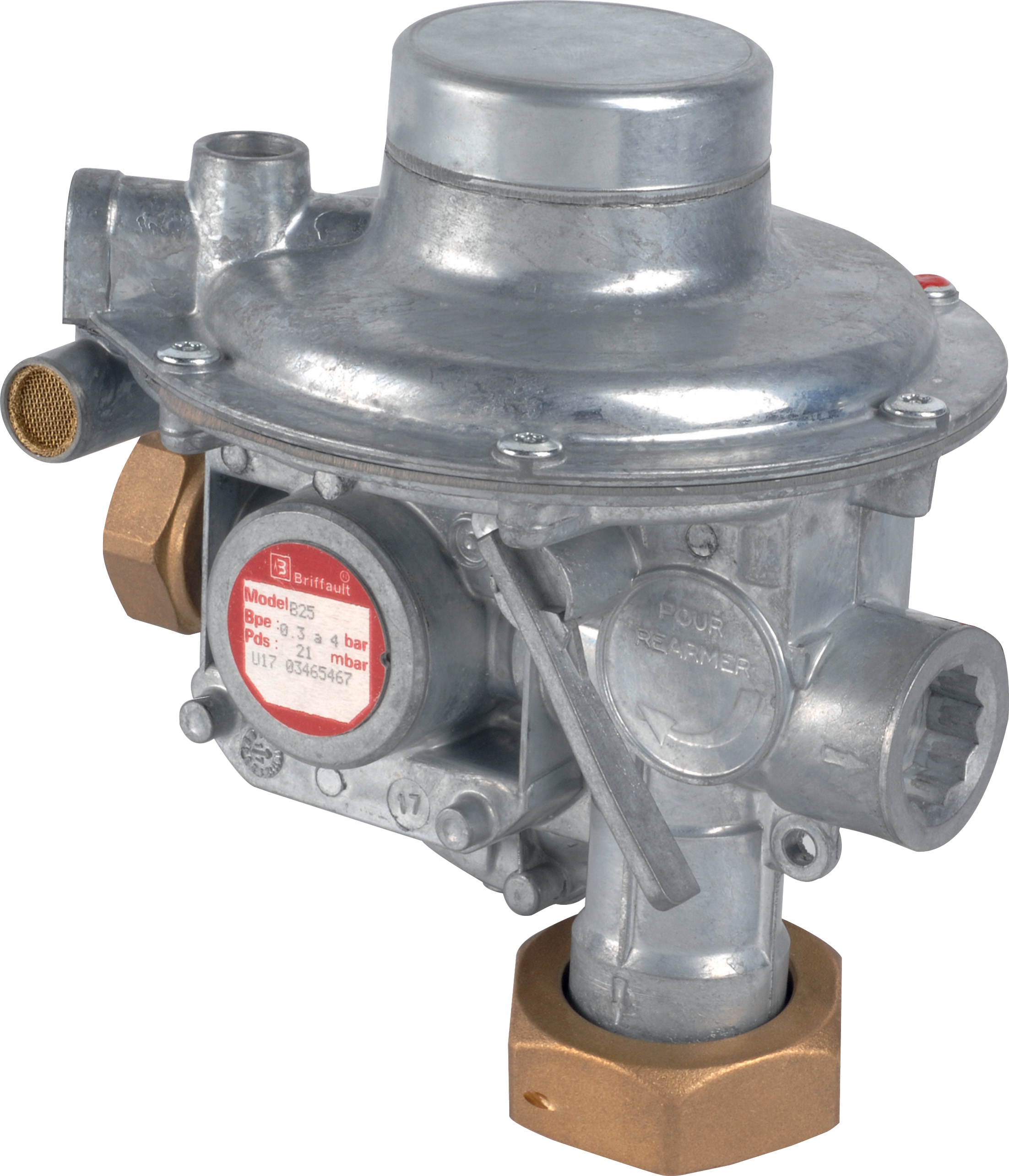
The Francel B25/37mb pressure regulator with safety relief exemplifies modern pressure control design. This regulator delivers a stable 37 mbar outlet pressure—a specification suited to numerous applications from laboratory gas delivery to industrial combustion control systems. The integrated safety relief valve prevents overpressure conditions that could damage downstream equipment or create hazardous situations.
Key operational advantages for Singapore manufacturing include:
- Consistent outlet pressure stability: The 37 mbar delivery maintains uniform gas flow regardless of fluctuating inlet pressures, critical for processes requiring precise combustion control or gas-assisted manufacturing
- Integrated safety design: The 10 mm vent size provides appropriate relief capacity without requiring separate relief valve installation, reducing system complexity and maintenance points
- Compact installation footprint: Suitable for space-constrained facilities common in Singapore's industrial zones, where every square meter of equipment space carries real cost implications
- Minimal maintenance requirements: Fewer external connections reduce potential leak points and simplify operator training across shift teams
For plant managers operating pharmaceutical production lines, food processing facilities, or precision manufacturing operations requiring trace gas distribution, integrated pressure regulation eliminates the coordination challenges of multi-component systems. When gas distribution pressures must remain stable across production shifts with varying consumption patterns, this type of regulator ensures consistent performance.
High-Performance Pump Selection for Pressure-Intensive Applications
Industrial pumps represent significant capital investments in any manufacturing facility. Singapore's competitive manufacturing environment demands that plant managers select pumps offering optimal performance-to-cost ratios while maintaining reliability across extended operating hours.
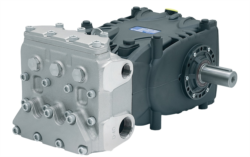
Two-stage pump systems address different operational scales. The Pratissoli KF30 pump delivers 106 L/min at 200 bar, providing suitable capacity for medium-scale pressure applications. With 40 kW input power and Italian engineering from Pratissoli (part of Interpump Group), this pump suits applications including industrial cleaning systems, pressure-fed coating operations, and hydraulic-driven manufacturing processes.
For larger-scale operations, the Pratissoli MW40 pump doubles performance with 211 L/min flow capacity at 210 bar pressure. The 85 kW power rating addresses higher-volume production demands while the 264 kg weight requires proper installation planning in existing facility layouts.
Application-specific considerations for Singapore manufacturers:
- Cooling system integration: Tropical ambient temperatures in Singapore mean pump heat dissipation requires explicit planning; both pump models generate significant thermal load requiring adequate cooling circulation
- Duty cycle optimization: Understanding whether your process runs continuous production shifts (common in petrochemical, electronics manufacturing) versus intermittent batch operations affects pump selection and motor specification
- System pressure requirements: Water-intensive cleaning operations typically operate 150-180 bar; high-precision coating systems may demand 200+ bar; selecting appropriate pump pressure ensures efficiency and component longevity
- Flow rate matching: Oversizing pumps wastes energy and accelerates component wear; undersizing creates production bottlenecks; calculating actual system flow demand prevents costly retrofitting
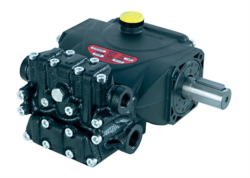
The compact Interpump E1D1808 L gear pump addresses specialized high-pressure applications at smaller scales—8 L/min at 180 bar with 2.72 kW input and only 5 kg weight. This pump suits auxiliary hydraulic circuits, lubrication systems, and pressure-intensifier applications where space and power constraints limit larger pump deployment.
Precision Spray Nozzle Systems and Targeting Applications
Spray nozzle selection directly impacts product quality, material efficiency, and environmental compliance in Singapore manufacturing. The difference between adequate coverage and optimized spray application often represents 5-15% material cost savings while improving surface finish consistency.
The Euspray flat jet nozzle HP 1/4" M BSPT with 25° spray angle delivers targeted spray patterns for industrial cleaning, coating application, and surface treatment operations. The 25° spray angle creates a thin, focused liquid sheet ideal for:
- Industrial equipment cleaning: Removing manufacturing residues from metal components, electronics assemblies, and precision machinery without excessive water consumption
- Coating and finishing applications: Paint application, protective coating spray, and surface treatment where consistent coverage patterns ensure product quality and reduce rework rates
- Washdown and sanitation operations: Critical in food processing and pharmaceutical manufacturing where hygiene standards demand precise liquid delivery without splash or waste
Integration considerations when pairing spray nozzles with pressure pump systems:
- Pressure matching: The 200-210 bar pump systems deliver optimal performance at nozzle operating pressures typically 150-180 bar; system pressure loss calculations through piping and manifolds determine actual nozzle pressure and spray pattern quality
- Flow rate optimization: Spray coverage width and penetration increase with flow rate and pressure; too little flow creates incomplete coverage while excessive flow wastes material and energy
- Connection standardization: The 1/4" M BSPT connection enables straightforward integration into manifold systems; confirming all system components share standardized connections simplifies installation and reduces leakage risks
- Maintenance accessibility: Quick-disconnect spray nozzles reduce changeover time when shifting between different products or application types within a production facility
System Integration and Commissioning for Singapore Operations
Successful pressure regulation and spray system integration requires systematic commissioning and validation before full production deployment. Plant managers must account for Singapore-specific environmental and regulatory factors.
Pressure system validation:
- Conduct pressure testing at 1.5× maximum operating pressure; identify any leakage or component movement that could indicate installation errors or component defects
- Verify pressure gauge calibration quarterly; many regulatory inspection protocols require documented calibration records
- Install isolation valves at component access points, enabling maintenance without full system depressurization
- Test spray patterns against white cardboard at working distance; document coverage area and liquid distribution uniformity before connecting to production processes
- Validate outlet pressure at nozzle location using a direct pressure gauge connection; pressure losses through piping and manifolds typically range 10-20 bar depending on system design
- Establish baseline consumption rates (liters per minute, kilograms per hour) to enable detection of nozzle wear or blockage during routine production monitoring
- Corrosion protection becomes critical; ensure all metal components receive appropriate protective coatings or material selection for high-humidity industrial environments
- Pump cooling systems require verification that ambient operating temperatures remain within safe limits; inadequate cooling shortens seal and bearing life in tropical conditions
- Regular inspection of connection points and seal integrity; temperature cycling and humidity fluctuations accelerate degradation of elastomer seals
- Singapore's Workplace Safety and Health Act requires documented pressure testing for pressurized systems; maintain inspection records showing compliance with required test frequencies
- Equipment specifications must accommodate Singapore's electrical standards (230V/400V three-phase supply) and pressure vessel regulations
- Environmental discharge compliance for cleaning and coating operations requires understanding permitted discharge pressures and material containment requirements
Practical Implementation for Different Manufacturing Sectors
Electronics Manufacturing: Precision cleaning of circuit board assemblies and component manufacturing requires gentle spray patterns at moderate pressures (80-120 bar) to avoid component damage while ensuring effective residue removal. The Euspray flat jet nozzle with 25° angle provides excellent control for targeted cleaning applications.
Food Processing: Sanitation and washdown operations demand rapid equipment cleaning between production runs. Higher pump flow rates (150+ L/min) enable quick system clearing while maintaining consistent spray patterns throughout production shifts. Integrated safety relief in regulators prevents pressure spikes that could damage food contact surfaces.
Metal Finishing and Coating: High-precision paint or protective coating application requires consistent pressure (180-210 bar) and uniform spray patterns. Matching Pratissoli pump capacity to application flow requirements prevents wasteful overspray while ensuring complete part coverage.
Pharmaceutical Manufacturing: Laboratory gas distribution for controlled atmospheres and process support requires precision pressure regulation (37 mbar typical) with integrated safety features meeting stringent facility compliance standards. The Francel regulator's safety relief prevents contamination risks from overpressure conditions.
Maintenance and Performance Optimization
Proactive maintenance extends equipment life and prevents unexpected production interruptions. Establish monthly inspection routines including:
- Visual inspection of all hose connections for weeping or active leakage
- Pressure gauge verification against known reference standard
- Pump motor current draw trending to detect developing mechanical issues
- Nozzle visual inspection for crystal deposits, corrosion, or damage affecting spray pattern
Performance optimization involves seasonal adjustments for Singapore's monsoon seasons when ambient humidity and temperature fluctuations affect equipment operation. Many plant managers discover 10-15% energy savings through systematic pressure optimization—reducing system pressure 10 bar (from 200 to 190 bar, for example) maintains spray quality while lowering energy consumption.
With 35 years of distributor experience supporting Singapore manufacturing, 3G Electric understands the specific challenges plant managers face integrating precision pressure control with targeted spray delivery. Proper component selection, systematic commissioning, and proactive maintenance ensure these integrated systems deliver consistent performance across extended production campaigns.