Understanding Industry-Specific Fluid System Demands
Singapore's maintenance professionals operate across a fragmented industrial landscape—from food and beverage processing to precision pharmaceutical manufacturing to petrochemical operations. Each sector demands fundamentally different approaches to pressure regulation, flow control, and component durability.
With over 35 years of experience distributing industrial equipment across Asia-Pacific markets, 3G Electric has observed that maintenance teams typically struggle with one core problem: component selection criteria differ dramatically between industries, yet many teams default to "one-size-fits-all" specifications. A regulator suitable for clean laboratory gas distribution performs poorly in dusty manufacturing environments. A pump optimized for continuous food processing fails rapidly in high-pressure intermittent chemical injection applications.
This article examines how maintenance teams should evaluate fluid components across three representative Singapore industries, using real product comparisons to illustrate decision-making frameworks your team can immediately apply.
Food and Beverage Processing: Flow Consistency vs. Pressure Stability
The Core Challenge
Food processing facilities in Singapore prioritize two competing objectives: maintaining consistent product quality through stable flow rates, while protecting sensitive equipment from pressure spikes that damage seals and contaminate product lines. Your maintenance team faces daily tensions between these demands.
Pressure Regulation Approach
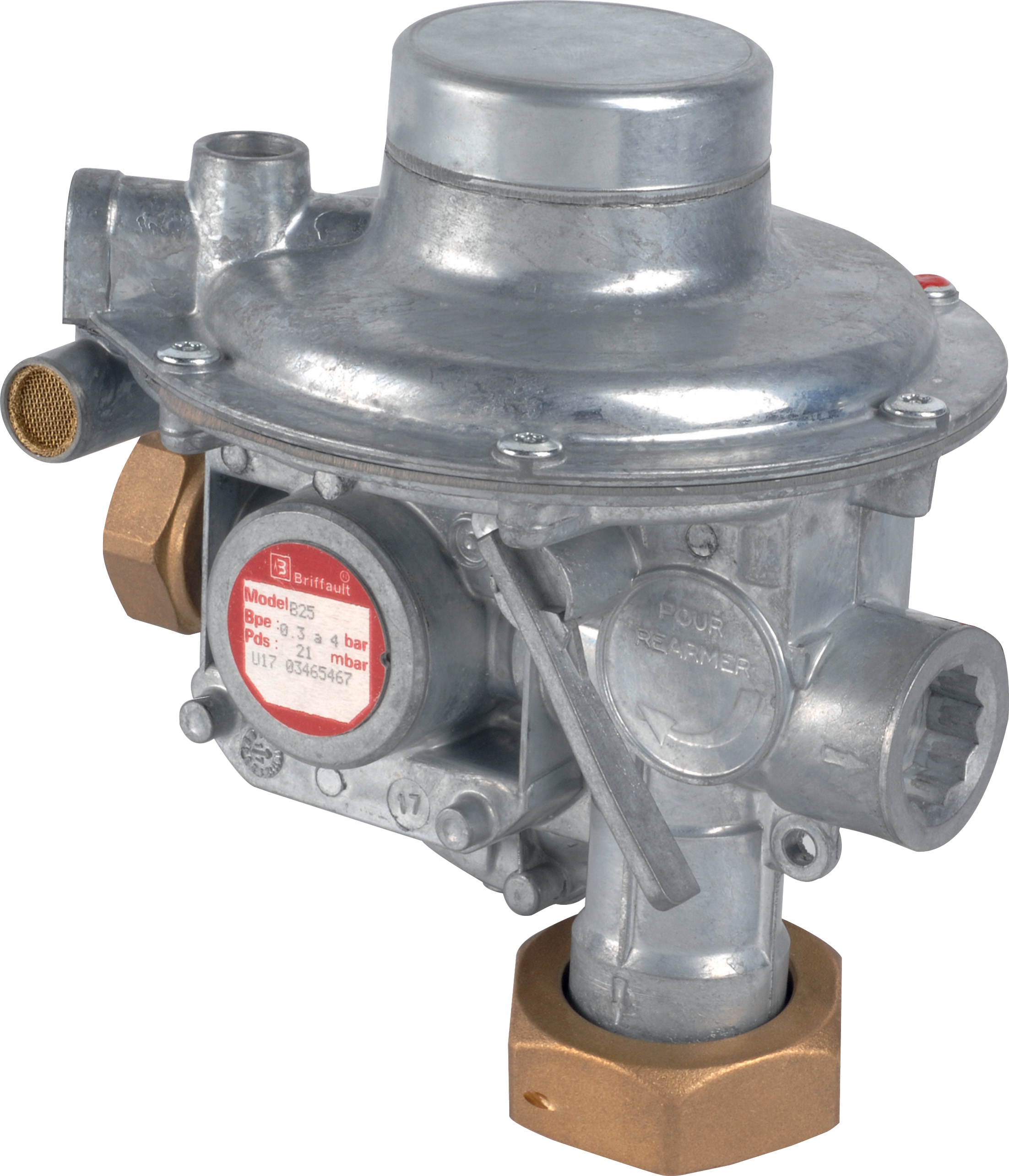
The Francel B25/37mb pressure regulator with safety relief addresses this through integrated safety design—delivering a fixed 37 mbar outlet pressure with built-in relief protection. For food processing applications, this dual-function design eliminates the need for separate safety valves, reducing connection points where contamination enters the system and simplifying maintenance protocols.
Compare this to traditional stacked-component approaches: separate regulator + separate relief valve = three potential leak points and two different supplier schedules. Your maintenance team manages two different replacement cycles, two different calibration certificates, and twice the troubleshooting complexity when performance drifts.
The integrated B25/37mb reduces this to single-point maintenance. Your team clears one calendar reminder, not two. This matters in food environments where regulatory audits demand documented maintenance histories.
Pump Selection for Gentle Circulation
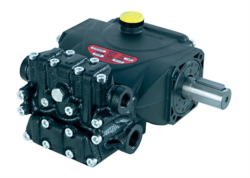
Food processing typically demands lower-pressure, high-volume flow at gentle acceleration rates—protecting both product integrity and equipment seals. The Interpump E1D1808 L compact gear pump at 8 L/min and 180 bar pressure suits auxiliary circulation, cooling loops, and ingredient transfer systems where continuous, smooth delivery matters more than peak pressure.
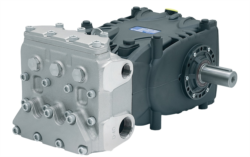
Contrast this against the Pratissoli KF30 industrial pump delivering 106 L/min at 200 bar—designed for sporadic, high-demand applications. Food processing teams would misapply KF30 capacity in routine circulation, creating oversized systems that waste energy, generate unnecessary heat, and complicate flow control.
Nozzle Selection for Product Protection
The Euspray flat jet nozzle (1/4" M BSPT, 25° angle) delivers precise spray patterns essential for sanitation systems—cleaning production lines without excessive water pressure that damages product residue or disturbs line calibration. The 25° angle provides controlled wetting across surfaces without the broad mist patterns that create slip hazards on food plant floors.
Your maintenance team's decision: flat jet nozzles preserve product contact surfaces better than hollow cone alternatives, reducing downstream contamination claims.
Chemical and Petrochemical Processing: Pressure Endurance and Material Compatibility
The Core Challenge
Chemical sector maintenance requires radically different thinking. Corrosive fluids, extreme pressures (often 200+ bar), intermittent duty cycles, and regulatory documentation demands create an entirely different component selection environment. Your team manages safety-critical systems where equipment failure triggers environmental incidents, not just production delays.
Pump Selection for High-Pressure Intermittent Duty
The Pratissoli MW40 industrial pump at 211 L/min and 210 bar pressure represents the chemical sector's workhorse design. Its 85 kW motor and 264 kg robust construction handle the demanding acceleration patterns characteristic of injection, transfer, and pressurization systems.
Compare this selection logic against food processing: chemical applications demand sustained pressure reliability more than flow gentleness. The MW40's higher power envelope and heavier construction tolerate repeated pressure cycling, temperature fluctuations, and occasional cavitation events that would rapidly degrade lighter pump designs.
Your maintenance team's consideration: when chemical injections occur on 2-3 minute cycles (not continuous), the MW40's thermal capacity absorbs start-stop duty without overheating—critical in outdoor tropical installations common in Singapore petrochemical facilities.
Regulator Behavior Under Aggressive Fluids
The Francel B25/37mb regulator specifications matter differently in chemical environments. The 10 mm vent size becomes critical: aggressive vapors need robust evacuation channels. Smaller vent diameters create backpressure accumulation, degrading regulator response time and creating safety hazards during emergency shutdown.
Your maintenance team should verify: does your pressure regulator's vent design handle the vapor density of your specific chemical? A regulator optimized for inert nitrogen performs poorly with heavier hydrocarbon vapors that need larger escape paths.
Nozzle Selection for Containment Spraying
The Euspray flat jet nozzle serves different purposes in chemical plants—not product application but equipment decontamination and spill containment systems. The 25° angle creates concentrated directional spray useful for chemical washdown without dispersing contaminant clouds that exceed worker exposure limits.
Your maintenance team considers: in food processing, nozzle selection optimizes product quality. In chemicals, nozzle selection optimizes worker safety and environmental compliance.
Precision Manufacturing: Repeatability and Thermal Stability
The Core Challenge
Precision sectors—aerospace component machining, semiconductor equipment cooling, optical component polishing—demand something neither food nor chemical sectors prioritize equally: component performance consistency across temperature ranges and equipment aging.
Singapore's tropical climate creates unique challenges: ambient temperatures ranging 25-35°C, with indoor facilities varying 18-28°C depending on climate control investment. Precision operations demand pump flow variance under 2% across these ranges. Maintenance teams must select components that maintain specification throughout equipment lifecycle—not just at installation.
Pump Selection for Thermal Stability
The Pratissoli KF30 pump delivers 106 L/min at 200 bar with 40 kW power input and 72 kg construction. This specification matters because:
- Power-to-weight ratio: Lighter construction reduces thermal mass, allowing faster thermal response when system loads change
- Design heritage: Pratissoli's (Interpamp Group) 50+ year manufacturing history in Italian industrial pump design emphasizes precision over brute force
- Flow consistency: 106 L/min operates at sweet-spot efficiency for auxiliary cooling loops and precision hydraulic systems—avoiding oversizing losses
Your maintenance team's evaluation: does the pump design prioritize precision, or does it trade precision for raw capacity? KF30 specifications suit precision better than MW40 in this context, despite MW40's higher absolute pressure rating.
Regulator Response Speed for Dynamic Systems
Precision manufacturing often runs equipment under variable loads—machinists adjust feeds and speeds throughout production runs. Pressure regulators must respond rapidly to load changes without overshoot that damages precision servo components.
The Francel B25/37mb provides fixed-output regulation—suitable for stable supply conditioning but less responsive to dynamic load swings. Your maintenance team needs different regulator characteristics for precision dynamic systems: proportional or pilot-operated designs that track load changes in milliseconds, not seconds.
Nozzle Precision for Cooling and Lubrication
The Euspray flat jet nozzle in precision manufacturing serves cooling and lubrication delivery—not contamination removal. The 25° angle and index 30 design deliver consistent spray geometry critical for repeatable cooling patterns across identical workpieces.
Your maintenance team's advantage: specified spray angle means predictable cooling behavior. Precision manufacturers can validate that nozzle maintenance schedules preserve spray pattern consistency within 2-3% variation—meeting tolerance requirements.
Practical Component Selection Framework for Your Maintenance Team
Across these three sectors, 3G Electric's 35 years distributing equipment across Asian markets reveals a consistent pattern: maintenance teams succeed by matching component selection priorities to industry demands rather than applying universal specifications.
Decision Framework
1. Identify your primary performance priority: Flow consistency (food), Pressure reliability (chemical), Thermal stability (precision)
2. Map component requirements to priority: Food teams optimize regulator integration and nozzle spray patterns. Chemical teams optimize pump pressure endurance and vent capacity. Precision teams optimize thermal response and flow consistency.
3. Verify component specifications against your actual duty cycle: Not manufacturer ratings, but your facility's specific pressure range, flow demands, temperature swings, and maintenance access constraints.
4. Plan maintenance documentation around component life: Different components need different replacement intervals. Chemical duty cycles shorten regulator service life. Precision applications extend pump life through consistent operating conditions.
Your maintenance team's competitive advantage emerges not from component cost optimization—that race always loses to larger operators with better purchasing power—but from maintenance protocol optimization. Selecting the right component reduces troubleshooting time, extends service intervals, and builds predictable maintenance budgets.
3G Electric's experience helping Singapore maintenance teams across these sectors demonstrates that component selection success depends less on technical specifications and more on asking the right questions about your industry's specific operating environment.