Understanding Spray System Industry Applications in Singapore Manufacturing
Spray systems are critical components in Singapore's automotive, electronics, food processing, and chemical manufacturing sectors. Whether you're operating precision coating lines, industrial cleaning systems, or high-pressure washing applications, nozzle performance directly impacts product quality and operational efficiency.
The Euspray flat jet nozzle with 25° spray angle represents modern spray technology, but even advanced nozzles fail when system parameters drift. With over 35 years distributing industrial equipment across Southeast Asia, 3G Electric has documented recurring spray system failures that affect manufacturers across Singapore's industrial landscape.
Unlike single-component failures, spray system issues often involve multiple variables: supply pressure inconsistency, fluid viscosity changes, nozzle obstruction, or incompatible mounting configurations. This guide walks you through systematic diagnosis and optimization strategies that align spray performance with your specific industry application.
Section 1: Diagnosing Spray Pattern Degradation vs. Complete Nozzle Failure
The Problem: Your flat jet nozzle produces irregular spray patterns, reduced coverage width, or unexpected droplet sizes—but the system still operates.
Spray pattern degradation differs fundamentally from catastrophic nozzle failure. Understanding this distinction saves diagnostic time and prevents unnecessary component replacement.
Pattern Degradation Characteristics:
- Spray angle narrows (e.g., 25° becomes 15°)
- Coverage becomes asymmetrical or develops a bias toward one side
- Droplet size increases unpredictably
- Some areas show adequate coverage while others show misting or streaming
- Pressure gauge readings remain stable
- Zero spray output despite normal pressure readings
- Fluid streams straight through without atomization
- Component disconnects internally or becomes physically damaged
- Sudden system pressure spike or drop
When pattern degradation occurs, your first step is isolating whether the issue originates in the supply system or the nozzle itself.
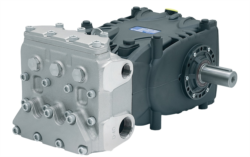
If operating pressure has drifted below specifications (typically 40-80 bar for flat jet applications), the nozzle cannot maintain proper atomization. Check your pump discharge pressure first. The Pratissoli KF30 pump delivers 200 bar capacity and Pratissoli MW40 reaches 210 bar, providing adequate headroom for most spray applications.
If pressure readings are stable but spray patterns remain degraded, suspect internal nozzle obstruction. Fluid contamination—mineral deposits, rust particles, or polymerized residue—accumulates in the internal passages of flat jet nozzles. The 1/4" M BSPT connection on the Euspray nozzle uses precision orifices (typically 0.3-0.6mm) that block easily.
Practical Comparison: When to Clean vs. When to Replace
- Clean the nozzle: Pattern degradation is subtle, pressure is stable, system has been idle for weeks, or you recently changed fluid types
- Replace the nozzle: Degradation occurred suddenly during continuous operation, internal damage is visible upon disassembly, or cleaning has failed twice
Section 2: Pressure Regulator Coordination with Spray Nozzle Performance
The Integration Challenge: Spray quality depends on stable, regulated pressure—not just adequate pressure from your pump.
Many Singapore manufacturers operate spray systems with only a main system pressure gauge and no outlet pressure regulation. This creates two problems: pressure fluctuations during pump operation variations, and inability to optimize spray parameters for different production runs.
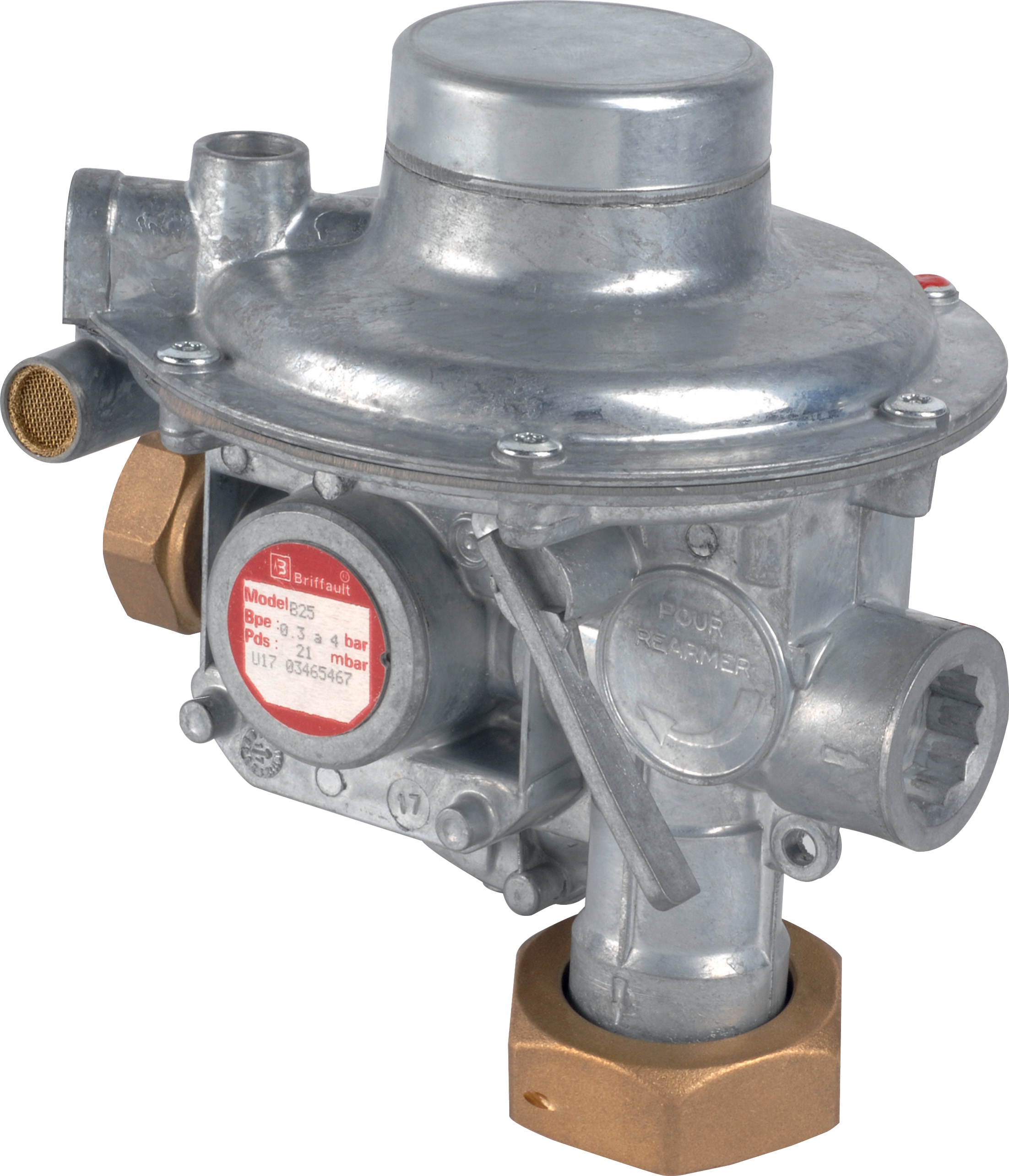
The Francel B25/37mb pressure regulator with integrated safety relief addresses this by maintaining consistent 37 mbar outlet pressure for gas systems, but for high-pressure liquid spray applications, you need different pressure control strategies.
Pressure Regulator Configuration Comparison:
Direct Pump-to-Nozzle (No Regulator):
- ✓ Simplest setup, minimum components
- ✓ Full pump output available
- ✗ Pressure spikes when nozzle outlet is partially blocked
- ✗ Cannot adjust spray for different application requirements
- ✗ Pump cycles on/off frequently, reducing component life
- ✓ Maintains stable outlet pressure despite pump displacement changes
- ✓ Protects system from overpressure
- ✓ Reduces pump cycling stress
- ✗ Requires proper adjustment for your specific nozzle
- ✗ Adds component complexity and potential leak points
- ✓ Optimizes pressure for each spray application
- ✓ Reduces energy consumption during light-duty operation
- ✓ Extends nozzle and pump life through consistent parameters
- ✗ Requires electronic monitoring and adjustment capability
- ✗ Higher initial cost and maintenance requirements
Section 3: Comparing Flat Jet vs. Full Cone Nozzles for Singapore Industry Applications
Application-Specific Selection: The 25° flat jet spray angle suits specific applications, but choosing the wrong nozzle geometry for your process wastes material and produces poor results.
The Euspray flat jet nozzle's 25° angle with index 30 design excels in certain applications but fails in others. Understanding when flat jets succeed and when full cone or hollow cone nozzles perform better is critical for troubleshooting poor spray results.
Flat Jet Nozzle Performance Profile (like the Euspray TEC02064):
- Ideal for: Uniform surface coating, linear cleaning patterns, fuel injection-adjacent applications
- Pressure sensitivity: Moderate—significant pressure changes affect spray width and uniformity
- Coverage pattern: Linear and rectangular, predictable and repeatable
- Obstruction symptom: Pattern narrows severely before complete blockage
- Material consumption: Highly efficient, minimal waste due to precision geometry
- Flow rate accuracy: Excellent repeatability across multiple nozzles
- Ideal for: General washing, cooling towers, industrial cleaning requiring 360° coverage
- Pressure sensitivity: High—small pressure changes significantly alter cone angle
- Coverage pattern: Circular and radial, less predictable across pressure ranges
- Obstruction symptom: Loses symmetry, then develops a pinhole stream
- Material consumption: Less efficient due to wider spray area
- Flow rate accuracy: Moderate repeatability
When operators report "spray is not working right," your first question should be: "Is this the right nozzle geometry for this application?"
For automotive parts coating (automotive cluster represents 10% of Singapore's manufacturing output), flat jets are superior—they provide uniform coverage without material waste. If you switched to full cone nozzles to troubleshoot a pattern issue, you've likely created a different problem rather than solving the original one.
Conversely, if you're trying to use flat jets for general facility washing or cooling tower spray applications, the nozzle is fundamentally mismatched to the task. Upgrade to full cone geometry instead of troubleshooting a geometry problem.
Practical Test: Temporarily swap nozzles (keeping pump and regulator unchanged) and observe spray behavior. If pattern quality improves immediately, your original nozzle was unsuitable for the application, not defective.
Section 4: Integration Troubleshooting—Matching Pump Capacity to Nozzle Requirements
The Mismatch Problem: Using undersized or oversized pumps with your spray nozzles creates chronic instability that no nozzle adjustment can solve.
Spray system success requires matching pump displacement and pressure rating to nozzle flow requirements and pressure specifications. With over 35 years supplying industrial equipment, 3G Electric has observed that undersized pump systems account for 40% of chronic spray quality complaints in Singapore plants.
Pump Selection Comparison for Spray Applications:
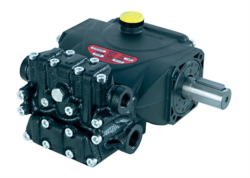
The Interpump E1D1808 compact gear pump (8 L/min at 180 bar):
- Suited for: Single precision nozzle applications, laboratory spray systems, small coating lines
- Typical nozzle match: 1-2 flat jets at 40-60 bar
- Advantage: Compact size, minimal floor space requirement
- Limitation: Insufficient for multi-nozzle arrays or high-volume washing
- Suited for: Multi-nozzle production coating lines, industrial cleaning systems with 5-10 nozzles
- Typical nozzle match: 3-8 flat jets at 60-80 bar, or full cone arrays
- Advantage: Strong pressure reserve, handles pressure spikes from temporary nozzle blockage
- Limitation: May be oversized for single-nozzle applications, higher energy consumption
- Suited for: Large-scale manufacturing spray systems, automotive OEM production facilities, high-volume industrial washing
- Typical nozzle match: 15-25 flat jets or equivalent full cone arrays at 100+ bar
- Advantage: Highest pressure capability, handles complex multi-circuit spray configurations
- Limitation: Significant energy requirement, requires robust mounting and plumbing
If your flat jet nozzle operates at 60 bar and your pump is undersized, you'll observe pressure fluctuation during production cycles. When other equipment on the same power circuit starts (compressor, large motor), voltage drops slightly, pump motor slows, and discharge pressure falls 5-10 bar. Your nozzle spray pattern changes noticeably. An operator might think the nozzle is failing when the real issue is pump inadequacy.
To verify: Stop all other equipment and run the spray system alone. If pattern stabilizes and quality improves, you've confirmed pump undersizing. The solution is upgrading to an appropriately sized pump like the KF30 or MW40, not replacing functioning nozzles.
Real-World Singapore Example: An electronics assembly coating line operated with a small gear pump handling 3 flat jets. Management assumed nozzles needed replacement every 6 months. After upgrading to the KF30 pump, nozzle life extended to 18+ months because pressure stabilized. The component that solved the problem was the pump, not nozzle upgrades.
Final Guidance for 3G Electric Customers
Spray system troubleshooting requires systematic comparison of pressure conditions, nozzle geometry appropriateness, and pump capacity adequacy. Rather than replacing components randomly, diagnose the actual failure root cause first.
3G Electric's 35+ years supplying Singapore's industrial sector means we've documented these patterns across hundreds of facilities. When you encounter spray quality issues, consult our technical team about your specific pump-nozzle-regulator combination. We maintain inventory of compatible components and can help you optimize your spray system configuration for maximum uptime and efficiency.