Understanding Gas Valves & Regulation in Your Maintenance Operations
With over 35 years of experience as an global industrial equipment distributor, 3G Electric has guided thousands of maintenance teams through the complex decision of selecting appropriate Gas Valves & Regulation systems. The challenge isn't simply choosing a regulator—it's understanding how pressure regulation capacity, connection type, and integrated filtration align with your facility's gas flow demands and safety protocols.
Many maintenance teams make the mistake of treating all pressure regulators as interchangeable components. In reality, your choice between compact systems and full-scale installations directly impacts downtime frequency, spare parts inventory costs, and regulatory compliance. This article breaks down the practical differences to help you make informed decisions for your specific operational context.
Compact Threaded Regulators: Right-Sizing for Secondary Applications
When Compact Systems Make Economic Sense
Compact threaded pressure regulators represent the entry point for many industrial gas systems. The CBM Pressure regulator threaded D1"1/2 500 Mbar PS 5/300 Mbar exemplifies this category—a straightforward solution for facilities with moderate gas consumption or distributed secondary control points.
These systems excel in three specific scenarios:
- Modular system architecture: When your facility runs multiple independent gas circuits (laboratory burners, small boilers, backup heating systems), compact regulators at each point eliminate single-point failure risks.
- Space-constrained installations: Laboratory environments, retrofit projects, and facilities with existing piping limitations often cannot accommodate larger flanged units. Threaded connections integrate into tight mechanical spaces.
- Lower flow requirements: Systems handling 5–50 m³/h gas flow operate efficiently at threaded regulator capacities. Beyond this range, pressure drop becomes measurable and maintenance overhead increases.
Maintenance Reality: Parts Availability and Troubleshooting
From the maintenance perspective, compact regulators present both advantages and complications. The threaded D1"1/2 connection (approximately 1.5 inches) appears standardized, but seal materials, internal trim designs, and pressure spring configurations vary significantly between manufacturers. When the FAG10016 requires a diaphragm replacement, you need CBM-specific components—not generic industrial regulators.
Maintenance teams report faster installation times with threaded models (typically 20–30 minutes versus 2+ hours for flanged systems requiring gasket matching and bolt sequencing). However, this speed advantage diminishes if emergency repairs occur at 2 a.m. and you lack proper SAE flare wrenches or backup sealing kits in your maintenance truck.
Full-Scale Flanged Systems: Capacity and Reliability Trade-offs
Selecting Between DN40 and DN65 Flanged Regulators
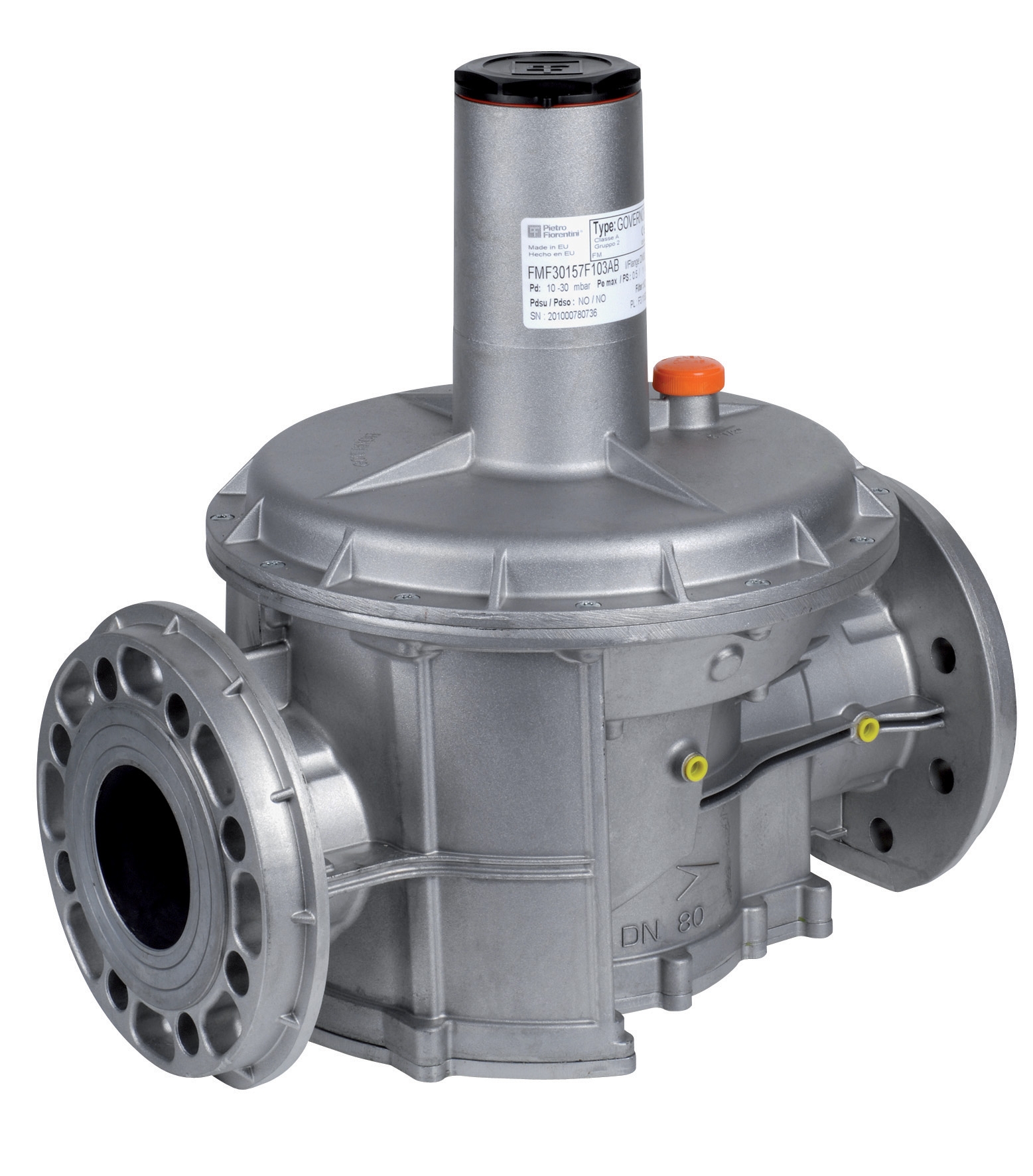
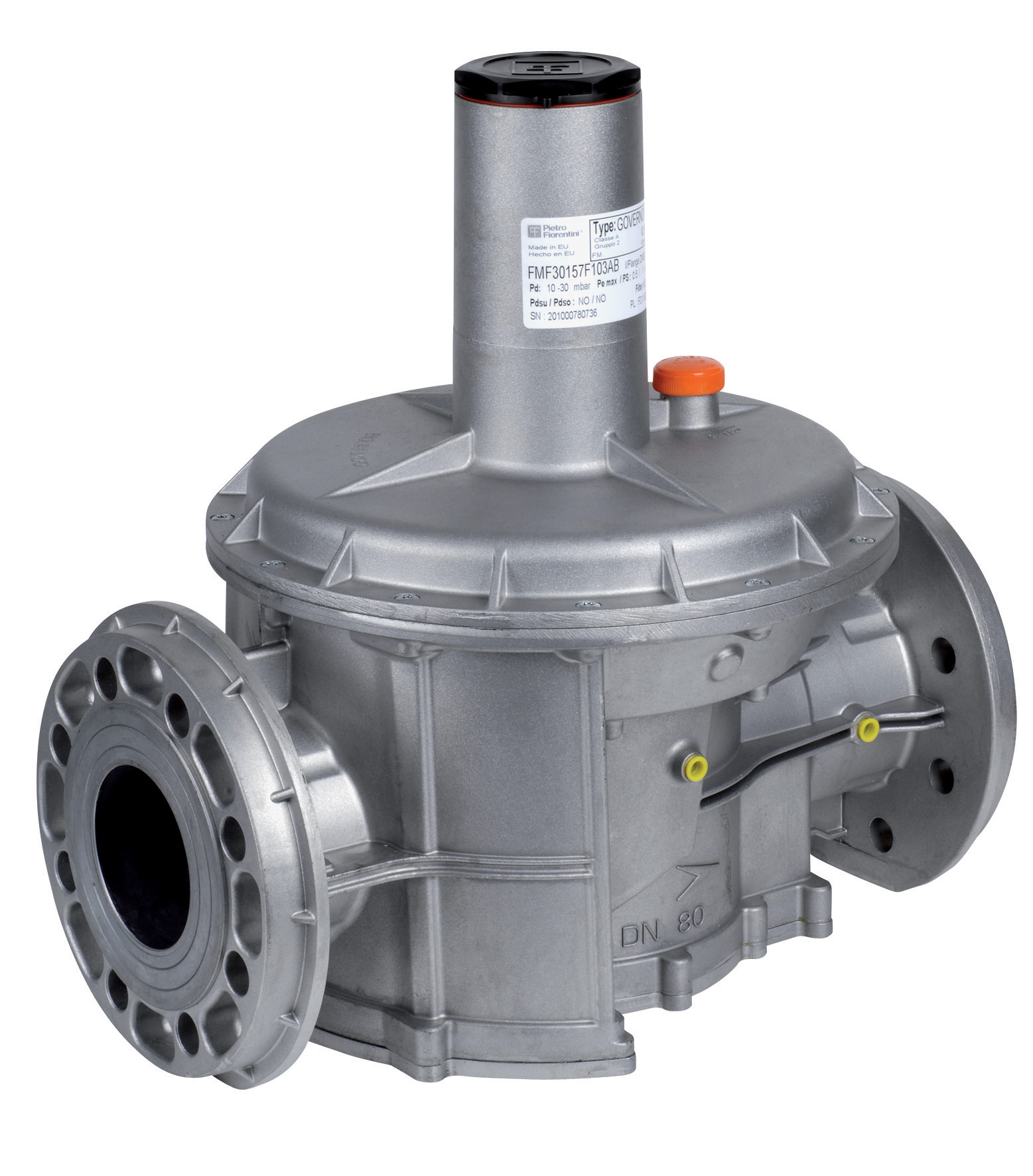
Full-scale flanged pressure regulators address higher-capacity installations and applications requiring robust performance data for regulatory audits. The choice between CBM Pressure regulator with flanges DN40 500 Mbar PS 5/300 Mbar and CBM Pressure regulator with flanges DN65 500 Mbar PS 5/300 Mbar represents a critical decision point for most maintenance teams.
DN40 Flanged Systems (nominal diameter 40 mm):
- Flow capacity: approximately 100–150 m³/h depending on inlet pressure
- Common in: mid-sized manufacturing facilities, hospital oxygen/medical gas systems, industrial kitchens
- Installation complexity: requires ISO 6162 or SAE flange bolt patterns, gasket compatibility verification
- Footprint: 45–60 cm² floor/wall space with connection piping
- Flow capacity: approximately 250–400 m³/h
- Common in: large-scale industrial sites, district heating plants, compressed natural gas distribution centers
- Installation complexity: full engineering review typically required; vibration isolation often needed
- Footprint: 80–120 cm² floor/wall space
Performance Under Real Operating Conditions
Maintenance data from 3G Electric customers reveals important nuances absent from specification sheets. Both DN40 and DN65 units maintain the same pressure range (PS 5–300 mbar regulation), but real-world behavior differs significantly:
- DN40 regulators achieve more precise regulation at lower flow rates (under 50 m³/h), making them superior for applications requiring stable downstream pressure. However, as flow approaches maximum capacity, pressure oscillation increases measurably—sometimes 10–15 mbar swing versus the stated ±5 mbar.
- DN65 regulators operate with greater stability across their full flow range but introduce slightly higher pressure drop at minimal flow conditions. A DN65 unit regulating 30 m³/h gas flow operates essentially "open" with minimal internal restriction, potentially increasing sensitivity to upstream pressure fluctuations.
For maintenance teams, this means: DN40 suits facilities with predictable, consistent demand profiles; DN65 is your choice when demand varies dramatically throughout operating hours (batch processing, intermittent combustion loads).
Integrated Regulator-Filter Systems: The Maintenance Team's Perspective
Why Combining Functions Simplifies Operations
One of the most underutilized advantages in industrial gas systems involves integrated regulator-filter combinations. Rather than maintaining separate regulation and filtration units, the CBM Regulator + filter DN100 500 Mbar PS 5/300 Mbar and CBM Regulator + compact filter TAR D3/4" 500 Mbar PS 5/150 Mbar consolidate critical functions into single assemblies.
Maintenance teams immediately recognize the operational benefit: one unit to calibrate, one set of seals to stock, one cleaning protocol to follow. However, integrated systems introduce a critical trade-off that many procurement departments overlook.
The Service Interval Complexity
When a filter element clogs in a standalone system, you replace the cartridge in 10 minutes—the regulator continues functioning. In an integrated unit, you often must shut down the entire gas circuit, depressurize the assembly, and perform a 45-minute service interval. For facilities running continuous processes, this difference translates directly into production loss.
When integrated systems pay dividends:
- Low-volume gas consumption (under 50 m³/h): filter change intervals extend to 6–12 months
- Closed-loop industrial systems: predictable contaminant loads enable accurate interval planning
- Facilities with dedicated maintenance windows: planned downtime already scheduled
- High-flow, variable-demand applications: frequent filter servicing forces process interruptions
- Ambient air intake systems: unpredictable contamination makes service planning difficult
- Facilities with limited trained personnel: complexity of integrated service exceeds typical technician capability
The DN100 integrated regulator-filter suits large-scale facilities with planned maintenance programs. The compact threaded regulator-filter serves smaller operations where simplicity outweighs service frequency considerations.
Practical Selection Framework for Maintenance Teams
Decision Matrix: Matching Regulation Systems to Your Facility
Select Compact Threaded Regulators (FAG10016) if:
- Gas consumption under 75 m³/h
- Multiple independent circuits requiring individual regulation points
- Space limitations prevent flanged system installation
- Existing piping uses NPT or BSP threads
- Budget constraints require minimum upfront capital investment
- Maintenance team prefers quick-change components
- Gas consumption 100–150 m³/h with consistent demand
- Single primary regulation point serving facility-wide distribution
- Regulatory audits require documented pressure regulation data
- Piping system already features ISO flanges
- Moderate pressure stability requirements (±10 mbar acceptable)
- Long-term cost of ownership favors durability over flexibility
- Gas consumption 200–400 m³/h
- Demand profile varies significantly throughout operating hours
- Pressure stability critical (±5 mbar or better required)
- Future facility expansion anticipated
- Existing infrastructure supports larger flange systems
- Budget allows premium equipment for enhanced reliability
- Planned maintenance windows accommodate service intervals
- Supply gas exhibits minimal contamination
- Operational budget includes consumable filter elements
- Technicians trained specifically for integrated system service
- Space efficiency represents priority over service accessibility
Implementation Checklist for Your Maintenance Team
Before purchasing any Gas Valves & Regulation system:
1. Document actual gas consumption: measure flow rates across all operating scenarios. Don't estimate—rent portable flow meters for 1–2 weeks. Undersizing creates excessive maintenance; oversizing wastes capital.
2. Verify piping connections: confirm whether existing infrastructure uses NPT threads, SAE flanges, or ISO flanges. Adapter fittings add cost and leak points.
3. Check pressure requirements: downstream equipment specifies minimum operating pressure and tolerance bands. Regulation capability must exceed these demands with margin for future modifications.
4. Evaluate supply pressure consistency: if upstream pressure fluctuates beyond ±20 mbar, larger regulators with greater internal authority improve stability.
5. Plan maintenance frequency: calculate annual filter changes, seal replacements, and calibration checks. Include labor costs in total cost of ownership, not just equipment purchase price.
6. Review regulatory requirements: compressed gas codes, pressure equipment directives, and safety standards may mandate flanged systems in certain jurisdictions. Verify before committing to compact threaded designs.
Partnering with 3G Electric for Long-Term Gas System Success
For over 35 years, 3G Electric has supported maintenance teams through equipment selection, installation coordination, and ongoing technical support. Our experience across global industrial sectors—from Southeast Asian manufacturing to European district heating—informs every product comparison we provide.
When selecting Gas Valves & Regulation systems, you're not simply choosing equipment; you're committing to years of maintenance protocols, spare parts sourcing, and technical troubleshooting. Working with experienced distributors ensures your selection aligns with both immediate operational needs and long-term maintenance reality.
Contact 3G Electric's technical team to discuss your specific facility requirements, obtain pressure regulation sizing calculations, and explore customized solutions that match your maintenance team's capabilities and budget constraints.