Understanding Gas Valves & Regulation System Architecture
Gas Valves & Regulation systems operate as integrated networks rather than isolated components. Procurement engineers must recognize that pressure regulation effectiveness depends on how individual valves, regulators, filters, and control mechanisms communicate within your facility's infrastructure. At 3G Electric, we've spent over 35 years helping industrial operations source and integrate these systems across diverse applications—from manufacturing plants to utility installations.
The fundamental challenge in system design involves balancing multiple competing demands: maintaining stable outlet pressure despite inlet fluctuations, filtering contaminants that damage downstream equipment, controlling flow rates for process requirements, and ensuring rapid response to demand changes. A regulator paired with an incompatible filter, for example, may create pressure drop cascades that affect your entire gas distribution network.
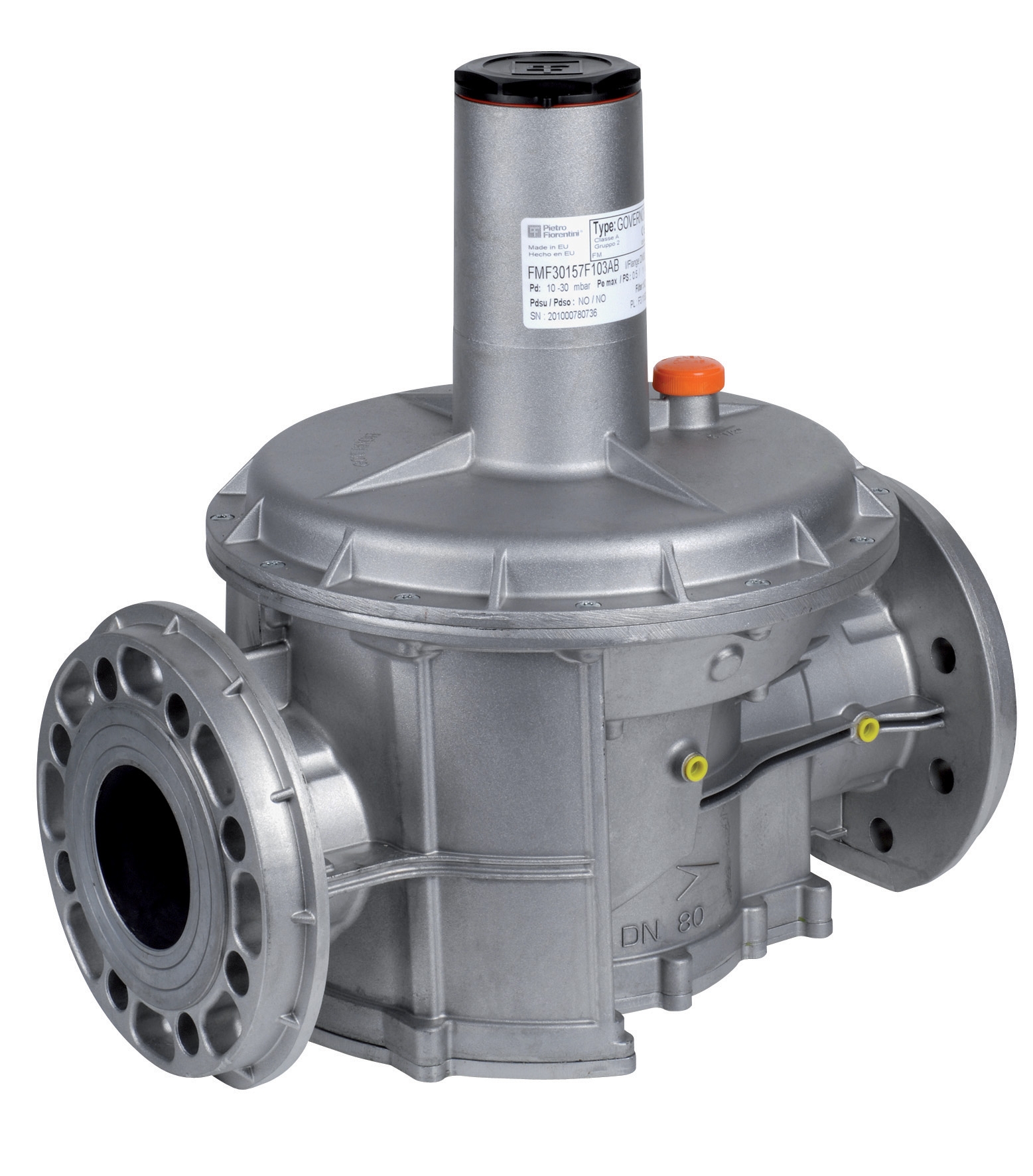
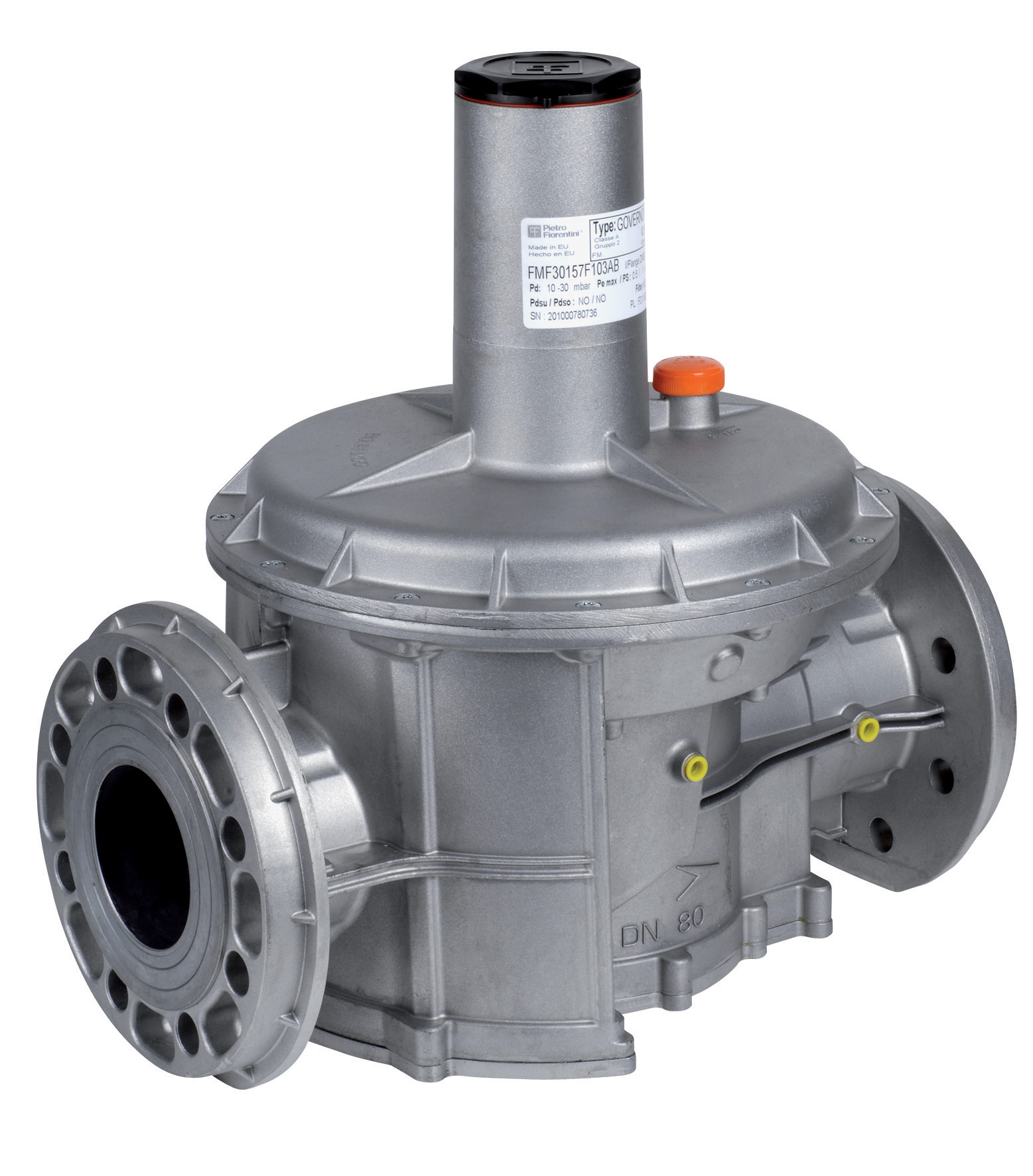
System architecture begins with pressure classification. Your inlet supply pressure establishes the foundation for component selection. If your facility receives gas at 500 mbar inlet pressure with requirements to deliver stable 5-300 mbar outlet pressure, every component must accommodate this range. The CBM Pressure regulator with flanges DN40 handles exactly this specification, making it suitable for medium-flow applications where you need DN40 flange connections. Similarly, operations requiring larger flow capacity should evaluate the CBM Pressure regulator with DN65 flanges 500 Mbar PS 5/300 Mbar, which scales the same pressure range to DN65 dimensions.
Threaded connections versus flanged connections represent another architectural decision. Threaded designs like the CBM Pressure regulator threaded D1"1/2 500 Mbar PS 5/300 Mbar offer faster installation and lower connection costs but require careful sealant application and may suffer vibration-related loosening over time. Flanged connections ensure permanent, reliable sealing but add installation complexity and cost. Your procurement decision should reflect facility maintenance capabilities and vibration environment.
Regulation Performance Metrics and Selection Framework
Procurement engineers often focus on pressure ratings while overlooking the dynamic performance characteristics that determine real-world system reliability. Your regulation system must address four critical performance dimensions: accuracy, response speed, stability under varying loads, and hysteresis behavior.
Accuracy measures how closely outlet pressure remains at your setpoint despite inlet pressure or flow rate changes. Industrial gas applications typically require ±5% to ±10% accuracy at the point of use. When you specify a regulator, manufacturers provide accuracy curves showing performance across the operating range. A regulator maintaining 50 mbar setpoint might drift to 52-53 mbar when inlet pressure increases from 400 to 500 mbar—a seemingly small deviation that compounds across multiple regulation stages in complex facilities.
Response speed determines how quickly your system adapts to sudden demand changes. When a burner rapidly opens its solenoid valve, downstream pressure momentarily spikes or dips until the regulator compensates. Slow-responding regulators create transient conditions that may trigger safety interlocks or cause flame instability in combustion applications. Faster-responding designs achieve this through pilot-operated mechanisms that amplify small pressure signals into large control forces.
Load stability describes regulator performance as flow demand varies. Some regulators maintain constant outlet pressure across a wide flow range (ideal for consistent process requirements), while others show load-dependent drift (acceptable for simple on-off applications). Your process requirements determine acceptable stability. A brazing operation demanding consistent gas pressure needs tighter load stability than a simple heating application.
Hysteresis—the difference between rising and falling pressure response—reflects the internal friction and mechanical design of your regulator. High-hysteresis designs settle at different pressures depending on whether demand is increasing or decreasing, creating process variability. Premium regulators minimize hysteresis through precision-manufactured components and low-friction seals.
Integrated regulator-filter combinations like the CBM Regulator + compact filter TAR D3/4" 500 Mbar PS 5/150 Mbar address a critical procurement reality: filtering and regulation interact inseparably. A filter creating excessive pressure drop changes your effective inlet pressure to the regulator, degrading its accuracy. Conversely, a regulator unable to handle the filter's outlet characteristics produces unstable flow. Compact integrated designs ensure filter-regulator compatibility and simplify installation. For larger flows, the CBM Regulator + filter DN100 500 Mbar PS 5/300 Mbar provides integrated performance at higher flow capacities.
System Configuration: Topology Decisions for Facility Integration
Your regulation architecture determines how effectively you distribute controlled gas across your facility. Procurement engineers must choose between series, parallel, and distributed regulation strategies, each with distinct advantages and failure modes.
Single-stage series regulation (single regulator supplying the entire facility) offers simplicity and lower capital cost but creates single-point failure risk and difficulty balancing pressure requirements across geographically distant endpoints. If your regulator fails, all downstream operations stop. If your facility has both high-pressure and low-pressure equipment, series regulation forces compromise setpoints that satisfy neither fully.
Two-stage regulation (primary regulator reducing high inlet pressure to intermediate level, then secondary regulators delivering final pressure to process areas) improves flexibility and resilience. The primary regulator handles inlet pressure fluctuations while secondary regulators accommodate localized demand variations. This topology suits facilities with diverse pressure requirements or those where equipment outages must be isolated. However, two-stage systems cost more to install and commission, requiring careful pressure sequencing to prevent control instability.
Distributed regulation places independent regulators at or near point-of-use equipment. This topology eliminates long distribution piping with its pressure drop complications, delivers consistent pressure regardless of facility-wide demand patterns, and isolates equipment failures. The tradeoff involves higher component count and more complex overall system monitoring. Distributed regulation works well in large facilities with dispersed equipment or those handling premium gases where pressure consistency directly affects product quality.
Your facility layout influences topology optimization. Compact industrial facilities may optimize toward series regulation with isolated secondary regulators for special loads. Extended facilities with distributed equipment benefit from multiple regulation zones. High-demand equipment running intermittently (like welding operations) might justify dedicated local regulation despite low utilization rates.
Pipe sizing creates invisible regulation challenges. Undersized piping generates excessive pressure drop that mimics poor regulator performance. Engineers often diagnose regulator failures when the actual problem is undersized distribution lines. Similarly, oversized piping in short runs wastes capital without performance benefit. Pressure drop calculation should precede regulator selection: establish your required outlet pressure, add estimated distribution losses, then specify regulators capable of delivering this adjusted pressure from your available inlet supply.
Commissioning, Monitoring, and Long-Term Performance Management
Successful gas regulation extends far beyond component selection. The commissioning phase determines whether your system meets specification in actual facility conditions. Many procurement engineers underestimate commissioning complexity, treating it as a checkbox activity rather than a critical validation phase.
Commissioning begins with pre-startup verification: visual inspection for leaks, mechanical damage, and proper connection orientation; pressure test of all piping and connections at 1.5× maximum operating pressure; verification that all isolation and safety valves function correctly. These steps prevent catastrophic failures during startup.
Initial operation requires establishing setpoints under actual load conditions. Theory and reality diverge: your regulator may perform differently with facility gas quality, ambient temperature, and load profile than laboratory performance specs suggest. Trained technicians should gradually increase system pressure while monitoring downstream performance, making fine adjustments to regulator settings as flows stabilize.
Ongoing monitoring transcends pressure gauge observation. Modern facilities increasingly employ data logging of inlet pressure, outlet pressure, flow rate, and temperature over time. These measurements reveal drift patterns indicating aging regulators, detect incipient filter blockage before pressure drop becomes critical, and identify usage patterns that inform maintenance scheduling. A regulator drifting 5 mbar per month indicates wear that will eventually require replacement, allowing planned maintenance instead of emergency downtime.
Filter maintenance directly impacts regulation reliability. A saturated filter increases pressure drop, forcing your regulator to work harder while delivering less stable outlet pressure. The integrated regulator-filter designs we discussed earlier simplify this relationship: a single cartridge change simultaneously restores regulation performance and filtration efficiency. When you choose products like the CBM Regulator + filter DN100 500 Mbar PS 5/300 Mbar for your facility, maintenance planning becomes straightforward—scheduled filter replacement automatically addresses both filtration and regulation renewal.
Seasonal and load-pattern variations deserve attention. Gas density changes with temperature, affecting flow characteristics; winter operations may require pressure adjustments that summer conditions don't need. Equipment operating under varying loads may benefit from regulator maintenance after establishing new steady-state demand patterns. Your commissioning data informs these seasonal adjustments, preventing reactive troubleshooting.
Failure mode analysis protects your operation. Regulators fail in predictable ways—seals degrading, springs fatiguing, pilot lines clogging—each producing specific pressure symptoms. Understanding these failure signatures allows maintenance teams to predict component life and schedule replacement during planned downtime rather than waiting for catastrophic failure.
With 35+ years supporting industrial operations globally, 3G Electric helps procurement teams source regulation systems engineered for your specific architecture, optimized for your performance requirements, and integrated for long-term reliable operation. Whether you need threaded regulators for compact installations, flanged designs for large flow applications, or integrated regulator-filter units for simplified maintenance, our technical team ensures you acquire components that work together as a cohesive system rather than isolated parts.