Understanding Gas Valves & Regulation in Industrial Systems
Gas valves and regulation systems form the backbone of reliable industrial gas delivery infrastructure. Whether managing natural gas, propane, or specialty gases, the proper selection and integration of regulation components directly impacts operational efficiency, safety compliance, and equipment longevity. For procurement engineers evaluating global sourcing options, understanding the fundamental principles of pressure regulation and valve selection is essential to making informed purchasing decisions.
Pressure regulation serves multiple critical functions in industrial applications: maintaining consistent downstream pressure despite upstream supply fluctuations, protecting downstream equipment from overpressure conditions, and enabling precise control of combustion processes in burner systems. The regulatory landscape varies significantly across regions—European standards (EN), North American codes (ASME), and ISO protocols each impose distinct requirements for valve certification, pressure ratings, and safety margins.
With 35+ years of experience as an global industrial equipment distributor, 3G Electric has observed that procurement decisions around gas regulation systems often focus narrowly on initial cost rather than total system performance and reliability. This short-sighted approach frequently results in costly downtime, safety incidents, and accelerated component degradation. A strategic procurement approach considers system integration requirements, maintenance accessibility, redundancy planning, and long-term supply chain relationships.
System Architecture & Component Integration Strategy
Effective industrial gas regulation requires a layered approach to system design. The typical architecture consists of primary regulation (reducing inlet pressure to working pressure), secondary regulation (fine-tuning for specific equipment), filtration (protecting equipment from contamination), and pressure monitoring (enabling real-time system oversight).
For threaded connection applications requiring flexibility and cost efficiency, the CBM Pressure regulator threaded D1"1/2 500 Mbar PS 5/300 Mbar provides reliable primary regulation with direct inlet pressures up to 500 Mbar and outlet range of 5-300 Mbar. This configuration suits modular installations where space constraints or retrofit applications demand compact solutions. Procurement engineers should specify threaded regulators when system piping employs standard NPT or BSPP connections and when future reconfiguration is anticipated.
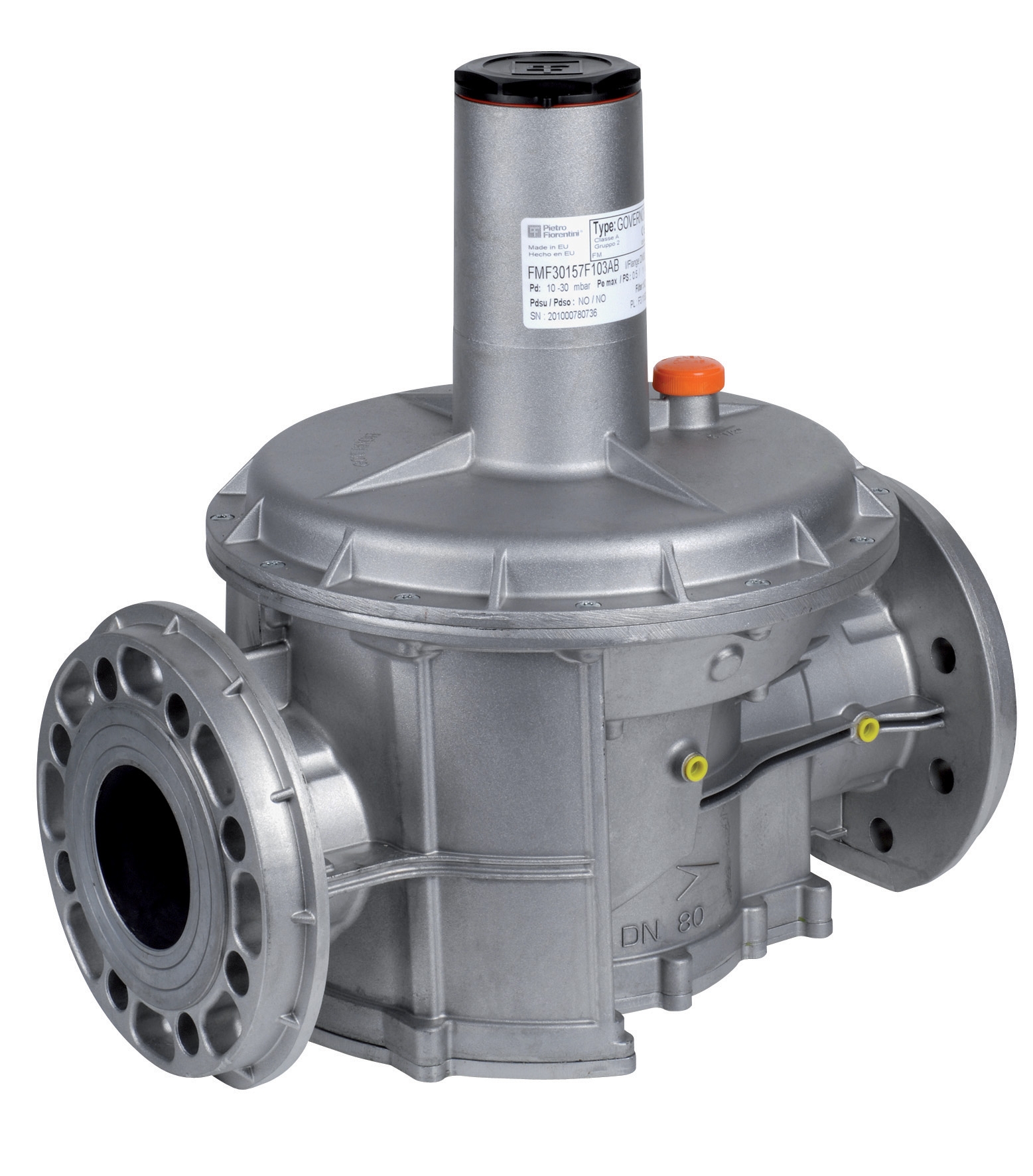
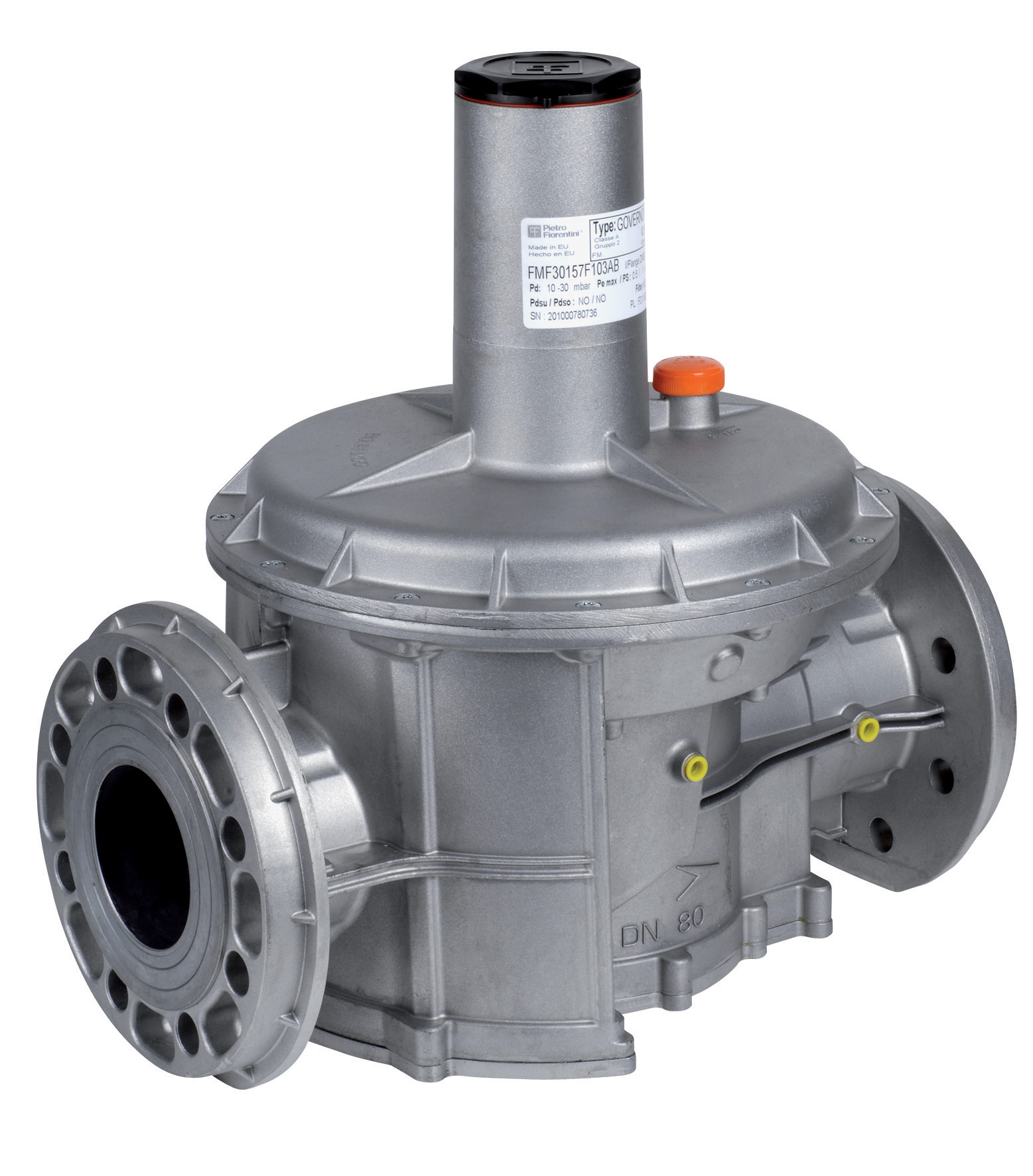
Flange-based integration offers superior rigidity and is preferred for permanent installations handling larger flow volumes. The CBM Pressure regulator with DN65 flanges 500 Mbar PS 5/300 Mbar and CBM Pressure regulator with flanges DN40 500 Mbar PS 5/300 Mbar provide modular scaling options accommodating diverse system sizes. DN65 regulators suit high-volume industrial burner systems and central gas distribution networks, while DN40 configurations serve mid-range applications including multiple burner clusters and process heating systems. The flange connection design simplifies maintenance—regulators can be isolated and replaced without breaking threaded connections, significantly reducing downtime during service intervals.
Critical integration considerations include:
- Pressure Gauge Integration: All regulatory stages require accurate pressure monitoring. Specify regulators with integrated gauge ports or plan secondary instrumentation. Pressure gauges should be sized for the operating range with minimum 1/3 to 2/3 scale reading under normal operation.
- Vent Line Configuration: Regulator vent lines must route safely to atmosphere or controlled exhaust systems. Do not block or restrict vent lines, as pressure chamber feedback depends on free atmospheric reference. In hazardous areas, consult local regulations regarding vent line discharge locations.
- Downstream Equipment Compatibility: Match regulator outlet pressure range to connected equipment specifications. Burners typically require 10-50 mBar, industrial ovens 20-100 mBar, and process heaters 50-200 mBar. Over-pressurization causes flame instability and accelerated component wear.
- Flow Capacity Verification: Regulatory capacity must accommodate peak system demand plus 20% safety margin. An undersized regulator will fail to maintain setpoint during peak demand, compromising process stability.
Integrated Filtration & Regulation Solutions
Industrial gas supplies frequently contain particulate contamination, moisture, and oil vapor originating from transmission pipelines, local distribution networks, or onsite storage tanks. Allowing these contaminants downstream damages regulator internals, clogs burner orifices, and reduces equipment lifespan.
Procurement engineers face a critical decision: specify separate filter and regulator components or integrate combined units. Combined solutions offer space efficiency and simplified installation but sacrifice flexibility if future filter maintenance becomes necessary. Separate components allow independent optimization of filter media and regulators but require additional manifold space and interconnecting piping.
For centralized gas distribution networks serving multiple burners or process equipment, the CBM Regulator + filter DN100 500 Mbar PS 5/300 Mbar provides primary-stage treatment combining regulation and 5-micron particulate filtration in a single flanged body. This configuration suits large-scale industrial facilities where gas volume justifies DN100 capacity and where centralized maintenance protocols are established.
For distributed applications or space-constrained installations, the CBM Regulator + compact filter TAR D3/4" 500 Mbar PS 5/150 Mbar delivers threaded integration with modular filter cartridge design. The compact footprint accommodates retrofit applications, satellite regulation stations, and equipment-mounted installations. The 5/150 Mbar outlet range suits burner applications and low-pressure process systems.
Filtration selection requires attention to:
- Filter Element Sizing: 5-micron absolute filters suit most burner applications. Smaller micronage (3 micron) benefits precision instrumentation but increases pressure drop and filter replacement frequency. Larger ratings (10-20 micron) suit pilot-only applications.
- Filter Housing Pressure Rating: Confirm filter body rating matches upstream supply pressure. Water separation or coalescence stages may be necessary in high-humidity environments or systems prone to condensation.
- Replacement Interval Planning: Establish predictive maintenance schedules based on pressure differential monitoring. Blocked filters create back-pressure, reducing downstream delivery and creating safety hazards. Budget filter cartridge replacement costs (typically 3-5 per year depending on supply quality) into total cost of ownership calculations.
Procurement Strategy & Lifecycle Considerations
Selecting gas valves and regulation systems extends beyond technical specifications to encompass supply chain reliability, spare parts availability, technical support, and regulatory documentation.
As a distributor with 35+ years of global experience, 3G Electric emphasizes that procurement decisions should address:
Regulatory Compliance & Documentation: Different regions impose distinct certification requirements. European Union applications require PED (Pressure Equipment Directive) compliance with appropriate ATEX certification for hazardous area installations. North American applications reference ANSI B16.34 for industrial valve standards and CGA (Compressed Gas Association) guidelines. Australian and Asian markets follow AS/NZS and national standards respectively. Specify products with full technical documentation, material certifications, and third-party test reports to streamline regulatory approval processes.
Supply Chain Resilience: Single-sourced components create vulnerability to supply disruptions. 3G Electric maintains strategic inventory of CBM regulator products across multiple SKU configurations, ensuring procurement engineers can source replacements or additional units within defined lead times. Establish preferred supplier relationships that include technical support, training programs, and emergency stock arrangements.
Total Cost of Ownership Analysis: Initial purchase price represents only 20-30% of true ownership costs for gas regulation systems. Factor in:
- Installation labor and system integration complexity
- Preventive maintenance (filter replacements, calibration verification)
- Unexpected repairs and associated downtime costs
- Energy efficiency impacts (pressure drop across filtration stages)
- Safety compliance documentation and third-party audits
A regulator costing 15-20% more initially but requiring 40% fewer maintenance interventions delivers superior value over a 10-year lifecycle.
Spare Parts & Scalability: Standardize on regulator families offering modular upgrades and compatible spare parts. The CBM FAG regulator series provides threaded and flanged variants across DN40, DN65, and DN100 configurations, simplifying spare parts management and enabling future system expansion without introducing incompatible equipment.
Technical Support & Training: Establish relationships with distributors providing application engineering support, installation commissioning, and technician training programs. Proper setup and tuning of regulation systems reduces field problems and accelerates staff competency development.
Procurement engineers should develop detailed specifications addressing operating pressure requirements, flow capacity needs, connection type preferences, and integrated filtration strategy before engaging suppliers. Performance-based specifications (stating required outcomes without prescribing specific products) enable competitive bidding while maintaining technical standards. Require suppliers to demonstrate that proposed solutions meet specifications through calculation sheets, technical data sheets, and third-party certifications.
Implementation & Performance Validation
Successful system implementation requires rigorous commissioning procedures and ongoing performance monitoring. Upon installation, pressure regulation systems should undergo factory acceptance testing (FAT) and site acceptance testing (SAT) protocols documenting:
- Pressure Setting Verification: Confirm primary and secondary regulator setpoints match design specifications under no-load and full-load conditions.
- Flow Rate Testing: Measure actual system flow rates at design pressure to verify regulator capacity matches application requirements.
- Leak Detection: Perform pressure hold tests and soap bubble inspections at all connections, regulator bodies, and vent lines.
- Gauge Accuracy: Verify pressure gauge accuracy using calibrated test instruments, recording baseline readings for future deviation detection.
Establish quarterly pressure reading programs documenting upstream/downstream pressures, gauge conditions, and any abnormal fluctuations. Trends indicating gradual pressure drop or fluctuation amplitude increases signal internal regulator degradation or filtration cartridge fouling, triggering maintenance before system failures occur.
For industrial applications operating continuously, establish planned maintenance intervals including annual regulator cartridge inspection, biennial gauge calibration verification, and quinquennial regulator internals servicing. This proactive approach prevents unplanned downtime and maintains warranty coverage.
3G Electric provides comprehensive technical documentation, commissioning support, and long-term supply relationships supporting these implementation objectives across global markets.