Understanding Gas Valve & Regulation Specifications for Procurement
Gas Valves & Regulation equipment form the backbone of industrial combustion systems, yet procurement decisions often lack rigorous specification frameworks. As an experienced industrial equipment distributor with 35+ years of experience, 3G Electric has guided thousands of procurement engineers through the critical decision matrix that separates adequate equipment from optimized solutions.
When evaluating gas regulation systems, procurement teams must navigate overlapping technical requirements: pressure specifications (inlet vs. outlet), flow capacity ratings, certification standards (CE, ASME, PED), and application-specific duty cycles. Without structured specification methodology, organizations risk operational inefficiency, safety compliance gaps, and unplanned equipment replacement.
This guide addresses the procurement engineer's primary challenge: selecting regulation equipment that meets current operational demands while accommodating future scalability and regulatory evolution.
Pressure Rating Architecture & Selection Methodology
Inlet vs. Outlet Pressure Specification
Pressure regulators are fundamentally defined by their pressure envelope—the range between maximum inlet pressure and controlled outlet pressure. The CBM FAG product family, for example, operates across a 500 mbar inlet specification with outlet control ranges of 5-300 mbar, establishing a reliable pressure differential that enables consistent downstream control.
Procurement specifications must distinguish between:
- Static Inlet Pressure: The maximum pressure supplied to the regulator under no-flow conditions. This determines the regulator's structural rating and internal component sizing.
- Controlled Outlet Pressure: The target pressure maintained downstream, typically ranging from 5-50 mbar for burner applications to 300 mbar for higher-capacity systems.
- Pressure Drop Across Regulation: The operational differential required to maintain control accuracy. Well-designed systems maintain stable outlet pressure despite inlet fluctuations of ±10-15%.
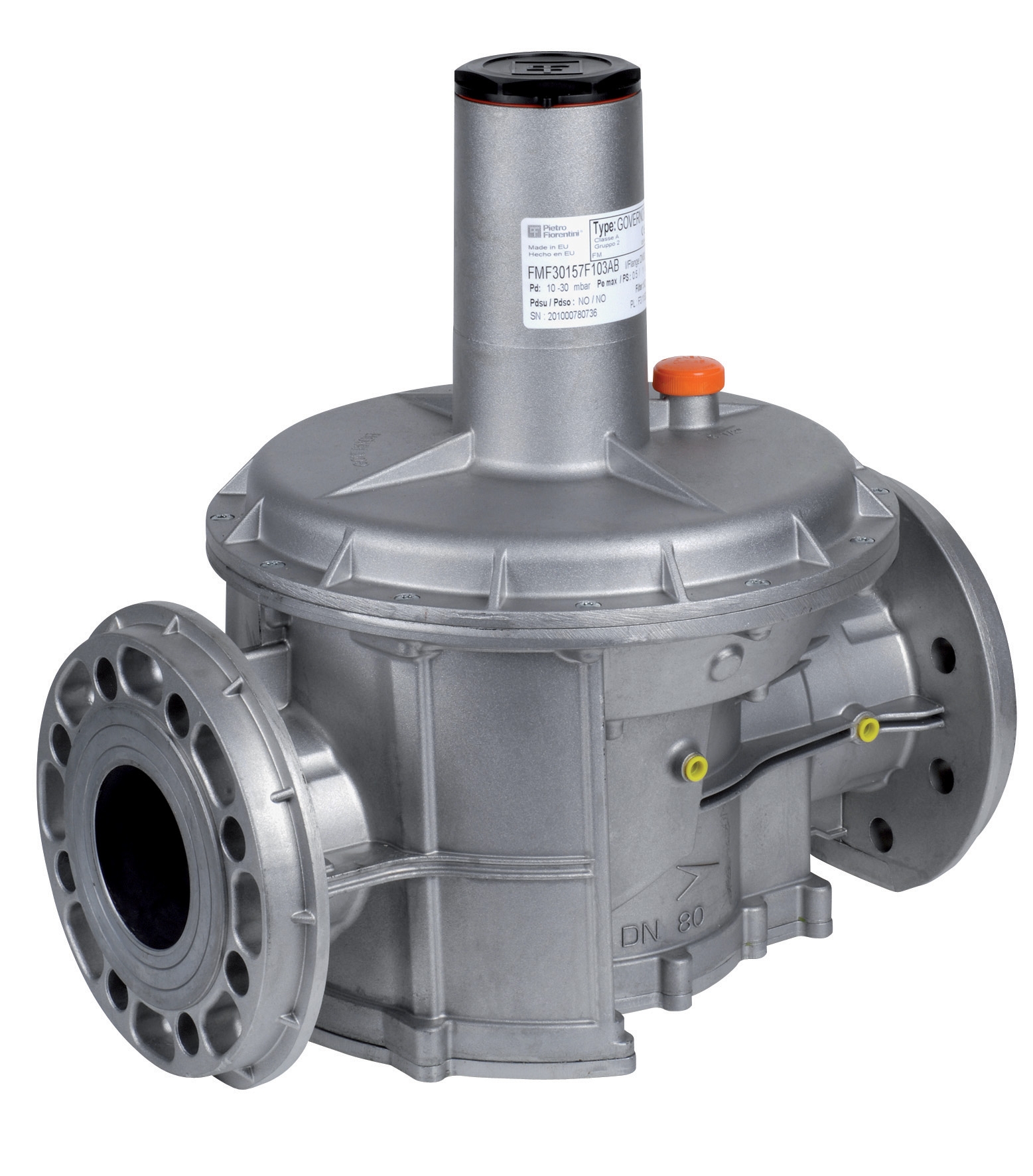
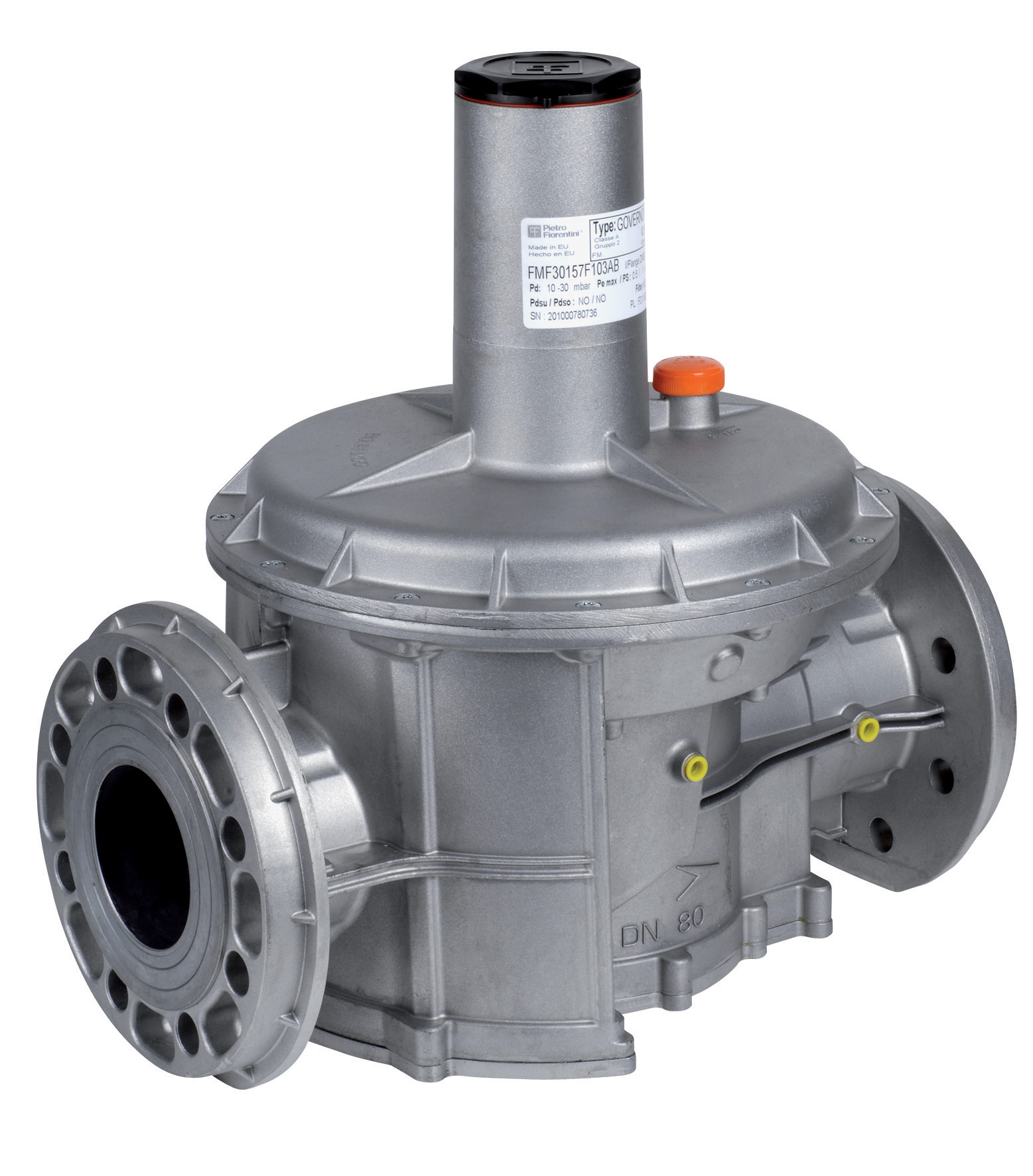
The CBM pressure regulator with DN40 flanges exemplifies this architecture—rated for 500 mbar inlet with precise 5-300 mbar outlet control, enabling predictable combustion performance across varying gas supply conditions.
Sizing for Flow Capacity
Flow capacity directly correlates to valve port sizing. A threaded regulator like the D1"1/2 model accommodates different flow requirements than flanged alternatives. The connection method (threaded vs. flanged) influences:
- Pressure Drop Curves: Threaded connections typically show higher pressure differential across the throttle element.
- Flow Linearity: Larger port areas (DN65, DN100) maintain pressure stability across wider flow ranges.
- Installation Complexity: Threaded assemblies reduce installation time and cost but sacrifice operational flexibility.
Procurement teams should match regulator sizing to actual system flow demands. Oversizing wastes capital investment; undersizing creates back-pressure that compromises burner control and fuel efficiency.
Combined Regulation & Filtration: Integrated System Specification
Modern procurement strategies increasingly favor combined regulator-filter assemblies, eliminating intermediate connections and reducing contamination pathways. This represents a significant shift from legacy approaches where these components remained separate.
Component Integration Benefits
The DN100 regulator + filter assembly demonstrates integrated specification advantages:
- Contamination Prevention: Gas line debris—iron oxide, moisture, pipe scale—cannot bypass filtration between system components.
- Pressure Profile Optimization: Combined units maintain tighter pressure curves because the filter element sits upstream of the pressure throttle, enabling cleaner gas delivery to the regulator seat.
- Space Efficiency: Compact flanged assemblies reduce footprint in confined equipment rooms or modular burner packages.
- Maintenance Protocol Simplification: Single cartridge replacement cycles versus coordinating separate component maintenance schedules.
For threaded applications, the compact filter-regulator offering DN3/4" connection with 500 mbar inlet and 5-150 mbar outlet provides equivalent integrated functionality in smaller facilities or portable systems.
Filtration Specification Metrics
Procurement engineers must verify filtration micron ratings and debris holding capacity:
- Micron Rating: Standard industrial gas filters specify 10-50 micron nominal ratings, adequate for combustion burner protection. Specification should match fuel quality and supply line condition.
- Pressure Drop Characteristics: Filter element condition directly affects regulator performance. Procurement should establish replacement intervals based on pressure differential monitoring (typically 0.2-0.3 bar differential triggers element change).
- Cartridge Availability: Component interchangeability ensures procurement continuity. Specify systems with commonly available cartridge formats across your supplier network.
Certification, Compliance, & Global Specification Standards
Regulatory Framework Navigation
Global procurement requires understanding regional pressure equipment directives:
- PED Compliance (2014/68/EU): European Union Pressure Equipment Directive mandates CE certification for equipment rated above specific pressure-volume thresholds. CBM regulators operating at 500 mbar inlet pressure require PED compliance documentation.
- ASME Certification: North American procurement often requires ASME Section VIII compliance, establishing different material requirements and testing protocols than European standards.
- Regional Adaptations: GCC countries, Southeast Asia, and MENA regions increasingly adopt harmonized standards, though procurement teams must verify local authority approval pathways.
Documentation Requirements for Procurement
Comprehensive equipment specification demands:
- Design & Manufacturing Records: Pressure ratings, material certifications (stainless vs. carbon steel), manufacturing inspection certificates.
- Performance Test Documentation: Flow testing across the operating pressure envelope, proving outlet pressure stability within ±5% of set point across full flow range.
- Maintenance & Service Records: Recommended replacement intervals for internal components (main poppet, diaphragm, filter cartridge), expected service life projections.
- Supply Chain Documentation: Lead times, supply security, alternative supplier options for critical components.
Application-Specific Specification Strategies
Industrial Burner Integration
Burner systems demand precise pressure control because combustion efficiency directly correlates to fuel-air mixture ratios. The DN65 flanged regulator provides the pressure consistency essential for modulating burner controls:
- Dynamic Response: Regulation lag—the time delay between inlet pressure changes and outlet correction—should not exceed 100-150 milliseconds for modulating burner systems.
- Hysteresis Minimization: Pressure overshoot (regulation hunting) must remain within ±3% of set point to maintain stable flame.
- Temperature Compensation: Gas density varies with temperature; specification should include ambient range compatibility (typically -10°C to +60°C for industrial applications).
Standby Vs. Continuous Operation
Procurement specifications often overlook operational duty cycles:
- Continuous Duty: Equipment remains under pressure and in regulation mode continuously. Sealing components require higher-grade elastomers (EPDM, Viton) and more frequent maintenance cycles.
- Standby Mode: Equipment cycles between pressurized and relieved states. Procurement should specify lower-cost alternatives with extended cartridge replacement intervals.
- Intermittent Operations: Seasonal or shift-based applications allow specification of lighter-duty equipment, reducing procurement costs by 15-25% versus continuous-duty alternatives.
Scalability & Future Expansion
Procurement teams should establish specification standards enabling system growth:
- Modular Regulator Grouping: Specify identical regulator models across multiple burner zones, enabling cartridge inventory standardization and simplified technician training.
- Pressure Set Point Verification: All regulators should accommodate the same outlet pressure range (the 5-300 mbar standard across CBM FAG models enables this).
- Connector Standardization: Threaded vs. flanged specifications should align with facility infrastructure to reduce adapter inventory and connection complexity.
Performance Verification & Acceptance Criteria
Procurement must establish measurable acceptance criteria before equipment installation:
Initial Commissioning Verification
- No-Flow Pressure Test: Close downstream isolation valve; confirm outlet pressure remains stable for 60 seconds without drift exceeding ±2%.
- Flow Stability Assessment: Open downstream load gradually; verify outlet pressure maintains set point within ±5% across 25%, 50%, 75%, and 100% flow capacity.
- Pressure Relief Verification: Confirm maximum outlet pressure relief occurs at specified cracking pressure (typically 110-120% of set point).
Ongoing Performance Monitoring
Establish procurement specifications requiring:
- Quarterly Pressure Point Documentation: Log inlet and outlet pressures at consistent load conditions; trend data reveals seal degradation or internal component wear.
- Differential Pressure Tracking: Monitor filter element pressure drop; replacement triggered when differential exceeds 0.3 bar.
- Supply Continuity Verification: Document pressure stability across time (60-minute measurement intervals minimum) to identify intermittent inlet supply issues before they cause operational problems.
Why 3G Electric's 35+ Years Experience Matters
Procurement engineering requires more than product specification sheets. Industry experience provides critical context: understanding which regulator models perform reliably in your specific application environment, anticipating supply chain disruptions through diverse manufacturer relationships, and ensuring maintenance protocols align with your technical staff capabilities.
3G Electric's three decades distributing industrial regulation equipment across global markets has revealed patterns invisible in single-application evaluations. We've documented how DN40 flanged regulators outperform threaded equivalents in vibration-prone environments, how integrated filter-regulators reduce contamination incidents by 60% compared to separate components, and how pressure set point verification during commissioning prevents 80% of post-installation complaints.
This practical knowledge translates to procurement specifications that balance capital efficiency with operational reliability—enabling engineering teams to specify equipment with confidence, knowing the specification will perform as documented across the entire equipment lifecycle.