Understanding Controls & Safety Shutdown Architecture
Controlling combustion processes safely requires more than monitoring individual components—it demands an integrated system that can detect abnormal conditions and execute safe shutdown sequences in milliseconds. For plant managers overseeing burner operations, understanding shutdown architecture is fundamental to preventing catastrophic failures.
A Controls & Safety shutdown system must accomplish three critical functions: continuous flame supervision, rapid fault detection, and failsafe valve closure. The sequence begins with flame detection sensors that verify combustion is occurring. If flame is lost, the system must cut fuel supply within two seconds—a requirement mandated by EN 746-2 and Singapore's industrial safety standards. This speed is achievable only through direct electrical actuation, not mechanical pilots.
The Kromschroder Relay BCU 570WC1F1U0K1-E exemplifies this principle. This burner control relay monitors flame presence continuously and executes shutdown by de-energizing the solenoid valve, allowing spring force to seal the gas supply. The relay's support for both direct ignition and intermittent/continuous pilot modes means you can standardize on one component across multiple burner configurations—reducing spare parts inventory and training complexity.
What differentiates effective shutdown systems from basic controls is the concept of "proven safe state." When power fails, when sensors fail, or when the operator initiates emergency shutdown, all fuel supply lines must close. This is not achieved through software logic alone; it requires hardware-level failsafe design. Every component from the flame detector through the solenoid valve must fail to a safe condition.
Pressure and Flow Monitoring for Interlock Protection
Interlock systems protect your equipment by preventing operation when preconditions are not met. Before ignition can be attempted, pressures must be correct, flow rates must be adequate, and combustion air must be available. Weak interlock design is responsible for many industrial accidents—burners attempting ignition without adequate air supply, or continuing to fire when fuel pressure drops below design limits.
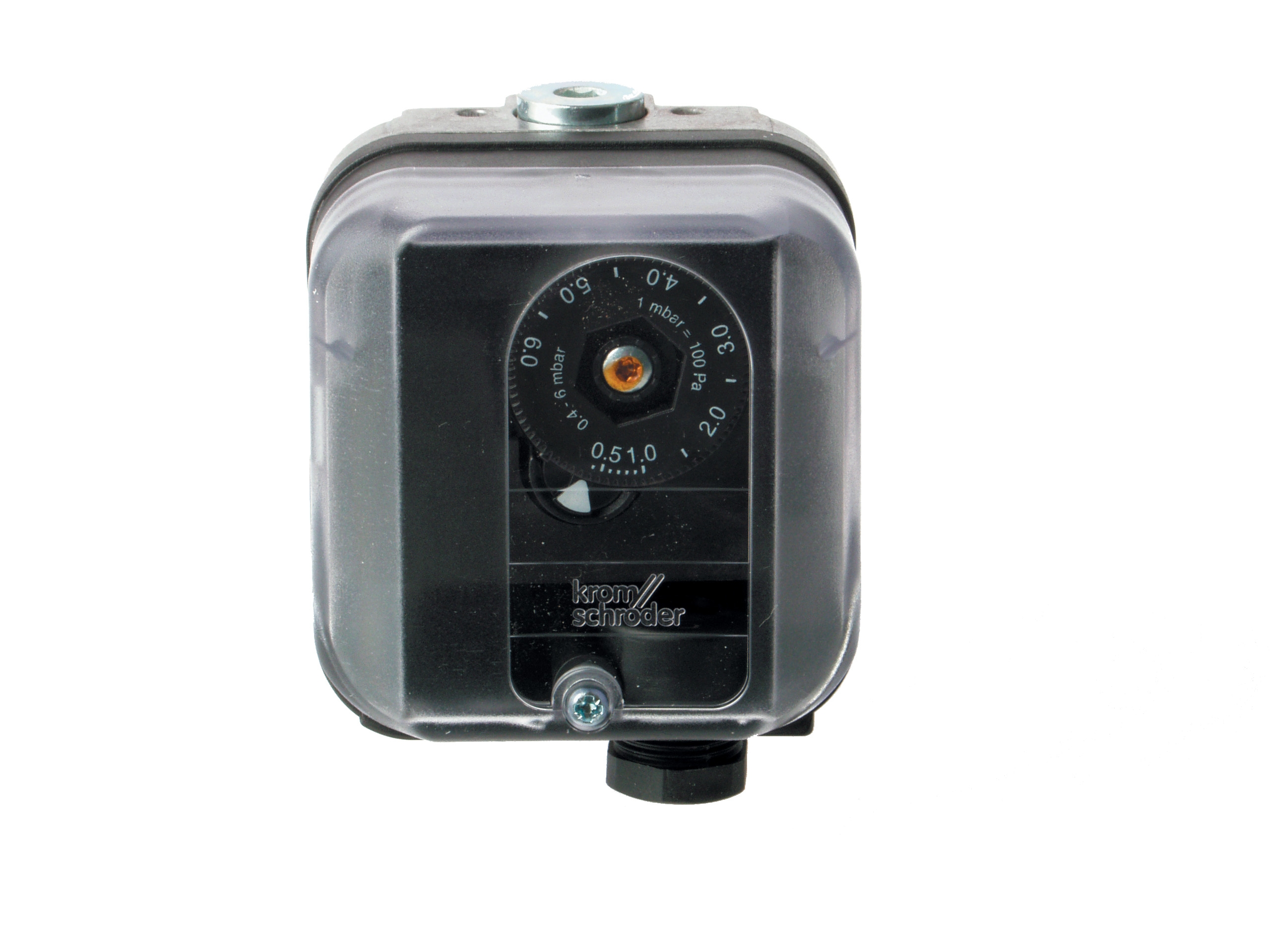
The foundation of effective interlocking is accurate pressure measurement and switching. The Kromschroder Pressure switch DG 50U/6 provides SIL 3 rated protection for these critical functions. SIL 3 (Safety Integrity Level 3) means the device maintains its protective function even when exposed to harsh industrial conditions—pressure pulsations, vibration, temperature extremes, and electrical noise that would disable lesser switches.
A practical interlock circuit operates as follows: Before burner startup is permitted, the pressure switch must confirm that fuel pressure exceeds the minimum threshold. If pressure drops below this point during operation, the burner is immediately shut down. This prevents incomplete combustion, equipment damage, and safety hazards.
For plant managers, the key specification is response time. The DG 50U/6 operates with hysteresis—it closes at one pressure and opens at a lower pressure. This prevents chattering (rapid on-off cycles) that would stress your solenoid valves and create unsafe operating conditions. Specify switches with adjustable setpoints if your facility operates multiple burner types; this flexibility reduces design complexity when commissioning new equipment.
Multiple pressure interlocks may be required: fuel supply pressure, pilot pressure, combustion air pressure, and steam/water return pressure for water tube boilers. Each requires appropriate monitoring. The interlock logic is typically "AND"—all conditions must be satisfied before burner operation is allowed. This chain-of-safety approach ensures that a single-point failure cannot lead to unsafe operation.
Safety Control Units: Integrating Flame Detection with Operational Control
For medium and high-power burners serving large steam generation or process heating applications, safety control units consolidate flame monitoring, ignition control, and modulation functions into a single device. This integration reduces wiring complexity, minimizes diagnostic time, and ensures component compatibility.
The Siemens Relay LFL 1.622 represents this integrated approach. This safety control unit supports both ultraviolet (UV) and ionization flame detection, accommodates multiple ignition sequences, and includes controlled air damper capability for modulating burners. For plant managers, the critical advantage is functional redundancy: the device can detect flame through two independent methods simultaneously. If one detection principle fails, the other maintains burner supervision.
When specifying a safety control unit, verify that it meets relevant standards for your application. The LFL 1.622 is designed for compliance with European standards (EN 746-2, EN 676); however, Singapore industrial installations must also satisfy local regulatory requirements. Confirm with your automation contractor that your chosen unit meets all applicable standards and has been properly type-tested.
The operational sequence in a safety control unit typically includes: (1) purge phase—confirm combustion air supply by running the fan without fuel; (2) ignition phase—energize ignition source and pilot fuel, then confirm flame appearance within 4 seconds; (3) main fuel ramp-up—gradually open main fuel valve while monitoring flame stability; (4) normal operation—continuous flame supervision with full-load burner operation. If flame is lost during any phase, the unit executes shutdown, requires manual reset, and logs a fault code for diagnostics.
For plant managers, understanding this sequence is valuable during troubleshooting. If burners repeatedly fail to light, the problem may be an ignition source failing during the 4-second confirmation window, inadequate pilot flame, or sensor contamination. Rather than replacing the entire safety control unit, diagnostic checks can identify the specific failure point, reducing downtime and repair costs.
Fuel Supply System Integration and Component Selection
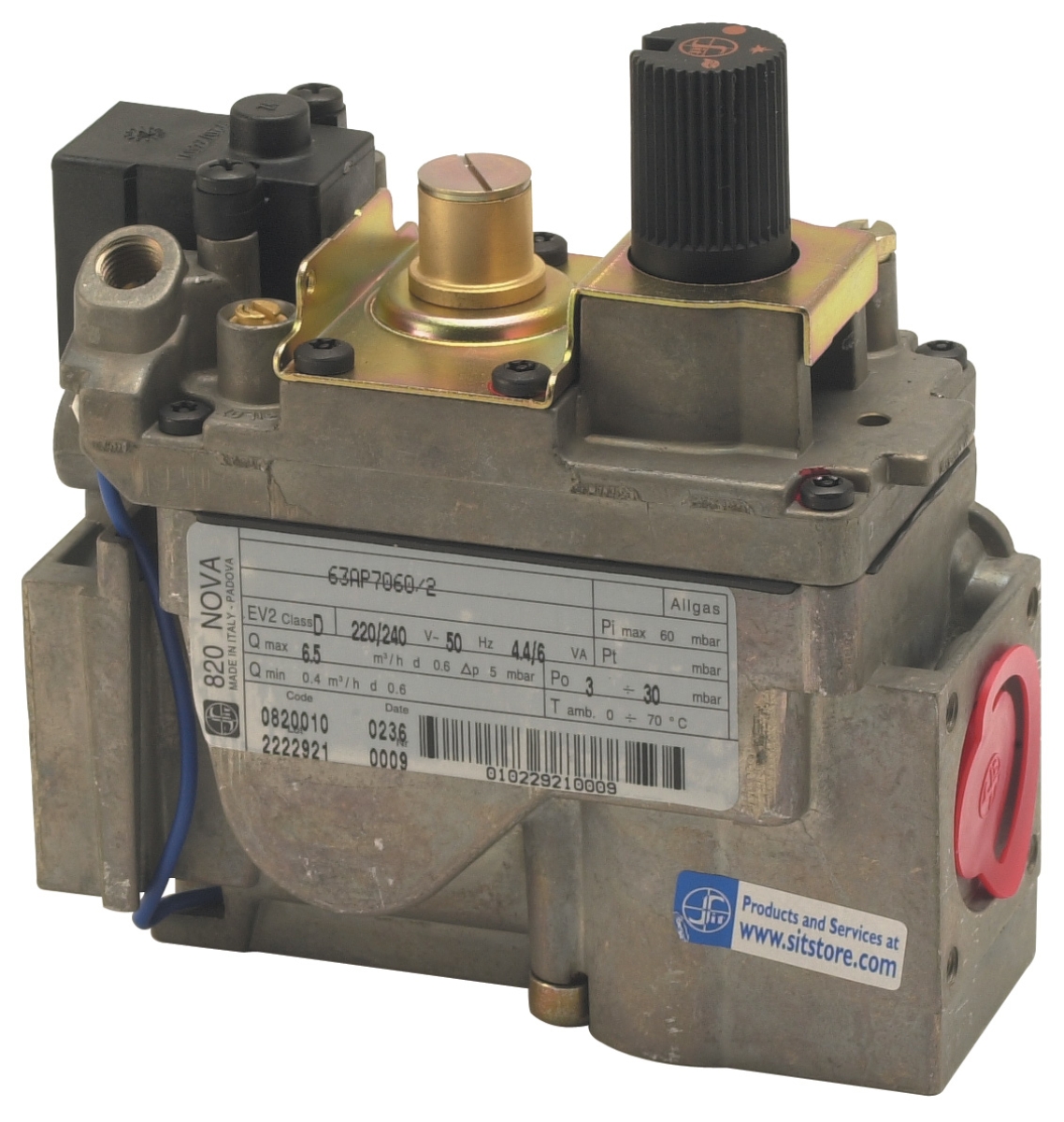
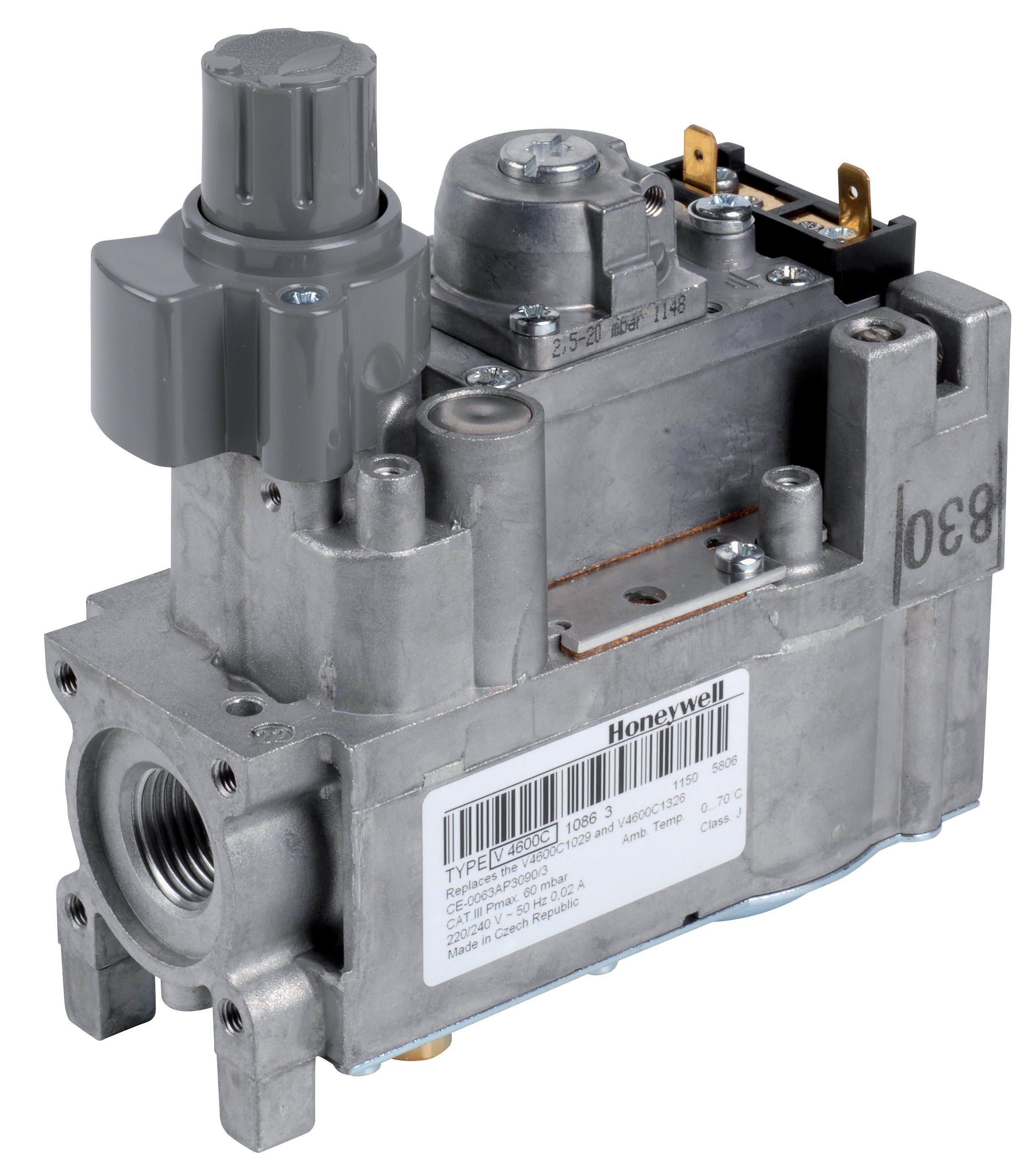
A Controls & Safety system is only as reliable as its fuel supply path. Gas blocks (sometimes called gas valves or fuel control blocks) are the bridge between electronic controls and the physical fuel supply. These devices must respond instantly to electrical commands, seal completely when de-energized, and operate reliably across wide temperature and pressure ranges.
The Honeywell Gas block VK 4105 C 1041 U provides electric modulating control—as the control unit varies voltage to the block, fuel pressure and flow adjust smoothly without mechanical linkages. This enables proportional burner control, matching heat output to load demand rather than fixed on-off operation. For facility operations, proportional control reduces energy consumption and improves combustion stability.
When integrating a gas block into your Controls & Safety system, attention to pilot pressure connection and feedback loop configuration is essential. The VK 4105 includes pilot connection (M8 x 1) for sensing reference pressure and feedback connection (M5) for verifying actual gas pressure. These connections must be sized correctly and routed away from vibration sources to prevent measurement errors that would destabilize the control loop.
For plant managers responsible for equipment specifications, remember that gas blocks are application-specific. A block sized for 100 kW natural gas burners will not function correctly on a 500 kW unit. Verify that block orifice sizing, pressure rating, and flow capacity match your actual burner requirements. Oversized blocks respond sluggishly; undersized blocks cannot deliver adequate flow. 3G Electric's 35+ years of experience in industrial equipment distribution can help ensure you select correctly—our technical team can review your burner specifications and recommend appropriate blocks.
The ignition source—whether spark electrodes or hot surface igniters—must also be integrated into the Controls & Safety system with proper timing and monitoring. The Pactrol Housing P 16 DI CE handles ignition sequencing and flame confirmation with 12 kV output voltage for spark electrodes and 10 MJ output energy, supporting both direct ignition and intermittent pilot designs. This component controls the critical transition from standby to combustion, executing shutdown if ignition fails.
Practical Maintenance and Commissioning Considerations
Once a Controls & Safety system is specified and installed, its long-term reliability depends on proper commissioning and periodic maintenance. For plant managers, establishing commissioning protocols and maintenance routines prevents the slow degradation that leads to unsafe operation.
During commissioning, every safety function must be tested: (1) Verify that flame sensors respond correctly to combustion presence and absence; (2) Confirm that pressure interlocks prevent burner startup when preconditions are not met; (3) Test manual shutdown to ensure fuel supply closes immediately; (4) Verify that power loss results in safe shutdown; (5) Confirm that fault conditions are logged and do not permit automatic restart without manual intervention.
Routine maintenance includes quarterly visual inspection of flame sensor windows (soot accumulation blocks UV detection), annual calibration of pressure switches, and verification that all electrical connections remain tight. Document all maintenance in a log; this history is invaluable when diagnosing recurring problems.
For Singapore's tropical environment, humidity and corrosion are ongoing concerns. Ensure that control panels are sealed and include desiccant cartridges to prevent moisture accumulation inside electrical enclosures. High humidity can cause relay contacts to corrode, reducing their ability to switch safely.
When purchasing replacement components, verify that they are equivalent in function and rating to the original parts. 3G Electric supplies genuine components from major manufacturers—Kromschroder, Siemens, Honeywell—ensuring compatibility and performance. Using equivalent but untested substitutes creates risks; the cost of a replacement component is trivial compared to the cost of a combustion system failure or safety incident.