Understanding Flame Detection in Controls & Safety Architecture
Flame detection represents the sensory foundation of modern Controls & Safety systems in HVAC installations. Unlike basic pressure switches or temperature sensors, flame detectors provide real-time confirmation that combustion is actually occurring—preventing the catastrophic gas release that can result from failed ignition or flame extinction.
For Singapore HVAC contractors, flame detection technology has evolved significantly over the past three decades. When 3G Electric began supporting industrial equipment distributors in 1990, most burner systems relied solely on pilot light supervision and mechanical pressure switches. Today's sophisticated flame detection systems offer redundancy, faster response times, and integration with digital control boards that demand millisecond-level accuracy.
Flame detection works on a simple principle: detect the presence of flame, and if flame disappears during the combustion cycle, immediately shut down fuel supply. The challenge lies in distinguishing between genuine flames and false signals (reflections, ambient light, or electrical noise). This is why understanding the underlying detection technologies—ionization versus UV—becomes essential for contractors specifying and troubleshooting systems.
Ionization Flame Detection: Practical Application for Gas Burners
Ionization detection remains the most widely installed flame detection method in Southeast Asian HVAC systems because it operates on a principle that functions reliably across diverse fuel types and installation geometries.
How Ionization Detection Works:
When gas burns, the flame creates an ionized gas environment where free electrons and ions exist. An ionization electrode (typically made from stainless steel) is positioned in the flame path with a high voltage applied across it (typically 120-300V AC). If flame is present, current flows through the ionized gas to the electrode. The control module detects this current flow (usually 1-5 microamps) and interprets it as "flame present."
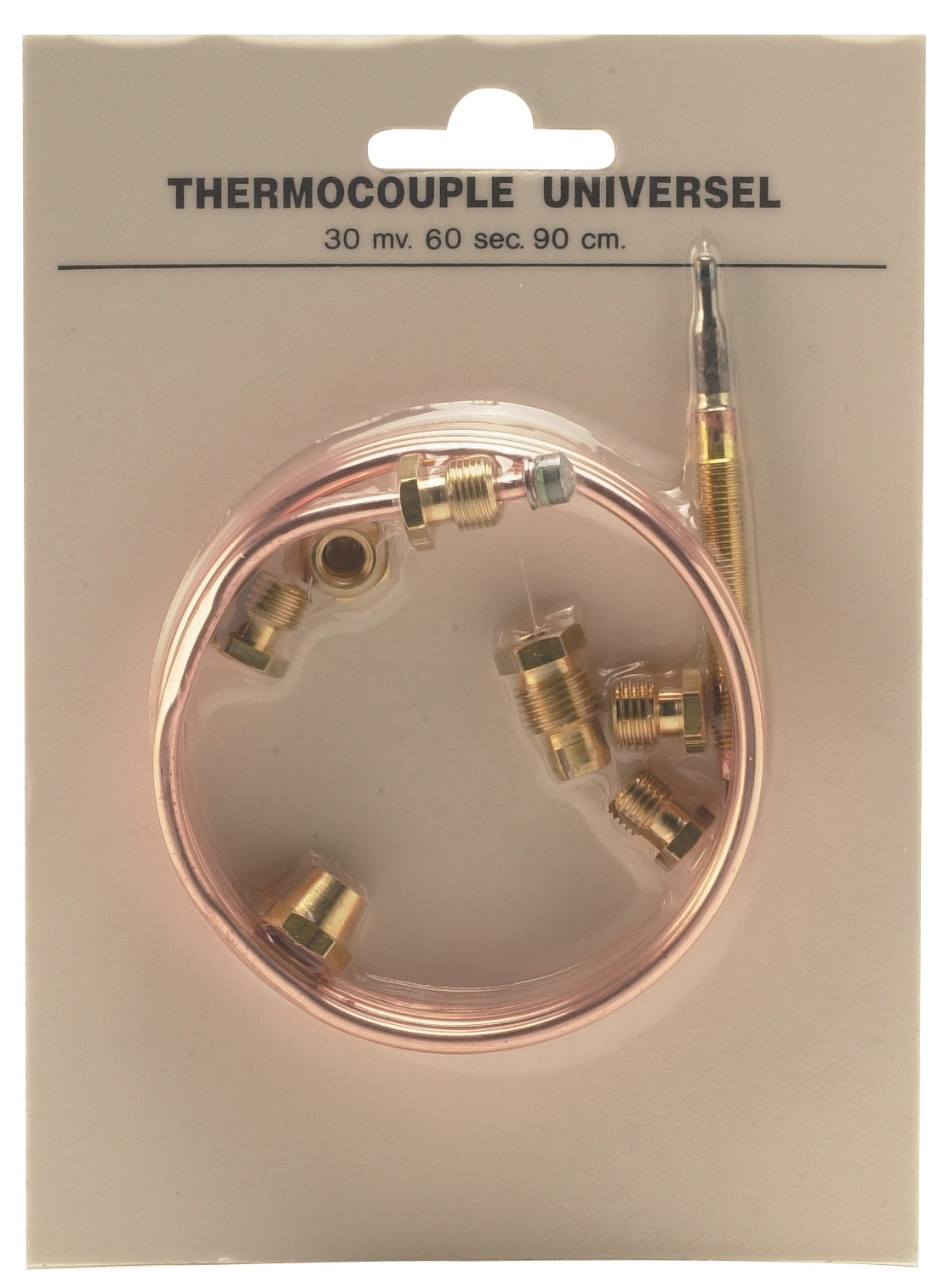
The CBM stainless steel electrode (900mm, 600°C rated) exemplifies the quality standard for ionization probes. Its 3 MΩ internal resistance and corrosion-resistant construction make it suitable for high-temperature burner environments common in Singapore's commercial HVAC installations. For contractors working in humid coastal areas or systems with aggressive combustion by-products, stainless steel construction prevents electrode degradation that would otherwise force premature replacement.
Installation Considerations for Singapore Contractors:
Ionization electrodes must be positioned in the flame zone—typically 10-25mm into the combustion chamber. Incorrect positioning is the leading cause of flame detection failure in field installations. The electrode should:
- Contact flame directly, not just radiant heat
- Remain clear of electrodes or heating surfaces that might create false ground paths
- Be inspected quarterly for carbon buildup or corrosion (particularly important in Singapore's marine environment)
- Have shielded wiring run separately from power circuits to prevent electromagnetic interference
The Brahma Relay CE 191.4 TW30/TS10 demonstrates how modern gas burner controls integrate ionization detection with safety logic. Operating at 230V 50/60Hz with 1.2 µA minimum ionization current sensitivity, this electronic relay represents the bridge between detection hardware (like the CBM electrode) and system-level safety logic. For HVAC contractors in Singapore, this relay's ability to detect minimal ionization current means electrodes can be smaller and positioning requirements slightly more forgiving than older mechanical systems.
Troubleshooting Ionization Failures:
When a system stops detecting flame despite visible combustion, contractors should:
1. Measure electrode voltage at the control module (typically 120-180V DC on the electrode circuit)
2. Inspect the electrode for carbon deposits—use a soft wire brush; never sand or scratch stainless steel surfaces
3. Verify electrode ground connection through the burner frame
4. Check control module behavior with electrode disconnected (should lock out on "no flame") then reconnected
5. Test with a microammeter if available—expect 1-3 µA with flame present
UV Flame Detection and Multi-Sensor Safety Strategies
While ionization dominates in gas burner applications, UV (ultraviolet) flame detection offers compelling advantages for certain Singapore HVAC scenarios, particularly in:
- Oil burner installations (where ionization can be less reliable)
- Systems with complex burner geometry where ionization positioning is difficult
- Applications where electrode maintenance access is challenging
- Installations requiring faster flame response (50-100ms versus 200-300ms for ionization)
The Siemens Cell QRB4A-B036B40B represents commercial-grade UV flame detection technology. This two-wire thermoplastic cable construction sensor incorporates UV sensitivity with built-in signal conditioning, eliminating the need for separate amplifier modules in many applications. The 36mm mounting hole spacing standardizes installation into burner tunnel assemblies across multiple manufacturers—valuable for contractors managing multi-brand service portfolios.
UV Detector Selection for HVAC Applications:
UV detectors sense the 185-260nm ultraviolet radiation emitted by any flame. They cannot distinguish between different fuels (unlike ionization), making them ideal for versatile burner systems. However, UV detectors are more sensitive to environmental factors:
- Direct sunlight can cause false signals
- Detector windows require regular cleaning (especially in dusty Singapore commercial environments)
- UV-blocking glass or tube materials must be avoided in burner construction
- Response time is faster but can be TOO fast if not integrated with proper flame-proving logic
For contractors specifying UV systems, integration with the burner control's flame-proving algorithm is essential. A competent control module should require flame presence for 2-3 seconds before accepting it as valid combustion, preventing false lockouts from welding sparks or other UV transients.
Pressure Switches and Integrated Safety Logic
Flame detection never operates in isolation—it functions as part of a comprehensive Controls & Safety ecosystem that includes pressure monitoring, fuel isolation, and ignition sequencing.
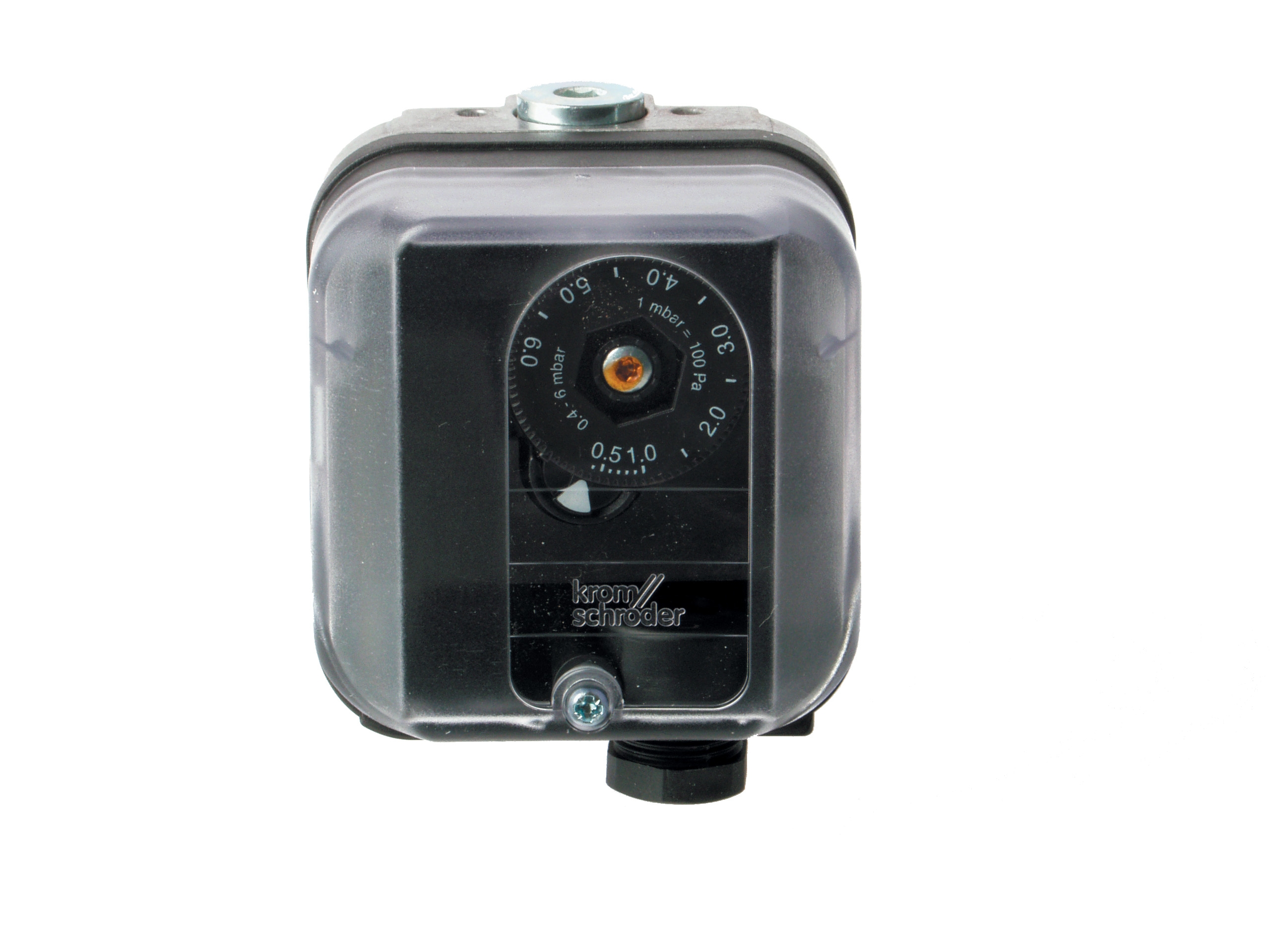
The Kromschroder Pressure Switch DG 50U/6 illustrates the safety-critical nature of pressure supervision. Rated SIL 3 (Safety Integrity Level 3) and Performance Level e, this pressure switch monitors burner fuel supply pressure and prevents flame detection from being evaluated if fuel pressure is inadequate. In practical terms: even if the ionization electrode reads current, if fuel pressure is below setpoint, the control module recognizes this as a fault condition rather than valid flame.
For Singapore contractors, understanding pressure switch integration is crucial because:
1. Pressure switches confirm fuel delivery capability - Flame can only exist with adequate fuel supply
2. Safety redundancy emerges from multiple sensors - No single sensor failure (flame detector failure, electrode contamination) can cause undetected fuel release
3. SIL 3 certification means documented reliability - The Kromschroder switch carries certifications including EN 1854, FM, UL, AGA, and GOST-TR, enabling compliance documentation for complex commercial installations
Typical integrated Controls & Safety logic sequences:
- Power-up: Verification cycle (energize ignition, test flame detection sensitivity)
- Ignition phase: Flame must be detected within 4-6 seconds of ignitor activation
- Running phase: Continuous flame supervision—loss of flame immediately de-energizes fuel valve
- Shutdown: Timed fuel purge cycle (typically 3-5 seconds) to clear unburned gas
Pilot Light Systems and Flame Stability Considerations
Many HVAC systems in Singapore still rely on standing pilot lights rather than intermittent ignition—particularly in older commercial installations and applications where frequent burner cycling is undesirable.
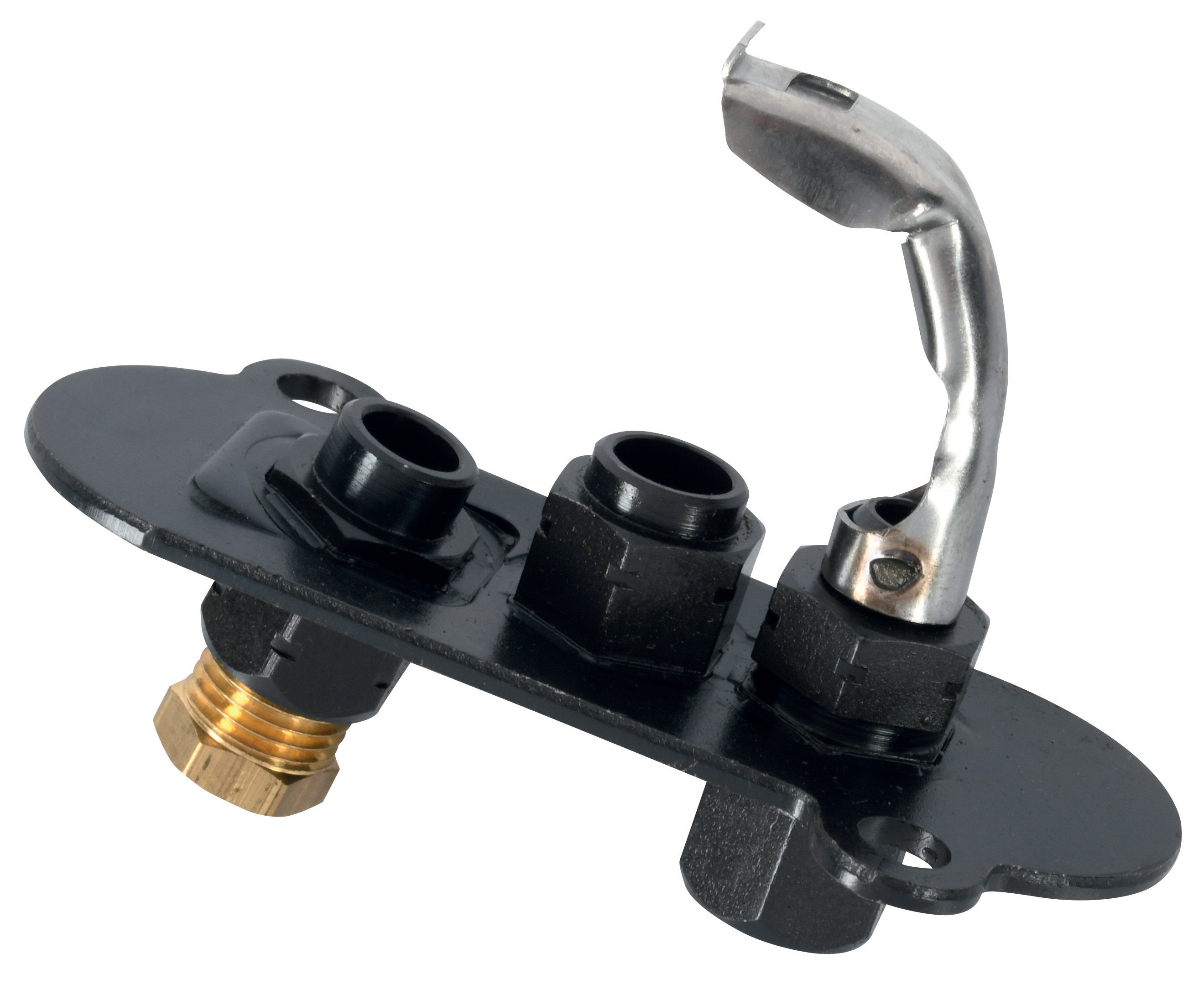
The Sit Universal Pilot Light (2 flames, 3 positions) represents reliable pilot supervision hardware. With corrosion-resistant aluminum oxide igniter and silent operation characteristics, this component integrates with ionization-based flame detection to supervise a small standing pilot flame. The pilot remains lit continuously, and main burner ignition is achieved by opening the main fuel valve—allowing the heat from the pilot to ignite main burner gas.
For Singapore contractors working on pilot-based systems:
Advantages:
- Immediate main burner response (no ignitor warm-up delay)
- Less electrical complexity (no spark ignition)
- Proven reliability over decades of operation
- Lower operating cost if system runs continuously
- Continuous pilot flame consumption (energy waste if burner cycles frequently)
- Pilot flame stability affected by combustion air temperature and humidity
- More critical electrode positioning since pilot flame is small
- Slower flame establishment (relying on pilot heat rather than direct ignition)
Pilot flame supervision requires the ionization electrode positioned directly in the pilot flame—typically only 5-10mm penetration, making positioning more critical than main burner detection. Contractors should verify:
1. Pilot adjustment screw position (typically 1-2 full turns from fully seated)
2. Pilot air shutter opening (adequate air for complete combustion without excessive flame lift)
3. Ionization electrode grounding integrity (pilot circuits sometimes have high-impedance ground paths)
4. Pilot orifice size (typical 0.8-1.2mm for natural gas at standard pressure)
Integration with Modern Building Management Systems
Contemporary Singapore HVAC installations increasingly integrate burner controls with building management systems (BMS) for centralized monitoring and analytics. This creates new requirements for Controls & Safety systems:
Digital Signal Communication:
Modern controls like the Brahma relay provide outputs that can interface with BMS via modbus, BACnet, or proprietary protocols. These signals transmit:
- Flame detection status (present/absent)
- Fuel valve command state
- Fault history and lockout codes
- Ionization current values (on advanced systems)
Contractors can now troubleshoot flame detection issues remotely by reviewing BMS trend logs showing:
- Ionization current trending downward (electrode contamination)
- Intermittent flame loss only during specific weather conditions (combustion air temperature effect)
- Delayed flame establishment (fuel valve response slow)
When integrating legacy Controls & Safety systems with new BMS, contractors must:
1. Verify signal voltage compatibility (24VDC common, but some systems use 12VDC or 120VAC)
2. Confirm response time requirements (BMS polling intervals versus burner control response timing)
3. Test system behavior during loss of BMS communication (should not disable flame detection)
4. Document setpoint relationships (pilot adjustment, fuel pressure setpoint, flame proving time)
Maintenance and Predictive Diagnostics
With 35+ years of experience supporting HVAC contractors globally, 3G Electric has witnessed the evolution from reactive failure-response maintenance to predictive monitoring strategies.
Quarterly Inspection Protocol:
- Visual inspection of electrode for carbon deposits, pitting, or discoloration
- Fuel line pressure verification (compare to control module setpoint)
- Pilot flame observation (if applicable)—should be stable blue, not yellow/orange
- Listening test during ignition sequence (should hear fuel valve click, immediate whoosh of ignition, not delayed popping)
- Electrode resistance measurement (stainless steel should typically show 0.5-2 MΩ)
- Flame detection circuit voltage confirmation
- Full combustion analysis (O₂, CO₂, CO levels)
- Control sequence test with deliberate flame disruption (verify fuel valve closes within 1-2 seconds)
Contractors managing large service portfolios in Singapore benefit from tracking:
1. Ionization current trending - A gradual decline over months indicates electrode contamination; a sudden drop suggests electrode failure
2. Flame proving time elongation - If burners now require 5-6 seconds to establish flame (instead of 3-4 seconds), combustion air quality or fuel pressure is degrading
3. Pilot adjustment frequency - Need to increase fuel flow screw turns every 2-3 months signals pressure regulator drift
4. Seasonal patterns - Systems that lose flame detection capability during monsoon season indicate humidity infiltration in control module or electrode shielding issues
Specification and Procurement for Singapore Operations
When specifying Controls & Safety components for Singapore HVAC projects, contractors should establish procurement criteria that address regional environmental conditions:
Corrosion Resistance:
Coastal areas (Marina Bay, eastern waterfront) or installations with high humidity require:
- Stainless steel electrodes (avoid nickel-plated copper)
- Sealed connector blocks with silicon gaskets
- Control modules with conformal coating on circuit boards
- Pressure switches with stainless steel bodies (like the Kromschroder DG 50U/6)
Singapore's standard 230V 50Hz electrical supply means:
- Verify control module voltage rating (most burner controls worldwide are dual 120V/230V, but confirm)
- Confirm transformer capacity if burner control steps down to 24VDC for ancillary devices
- Test behavior if site power supply fluctuates ±10% (industrial areas can experience voltage sag during peak demand)
Singapore uses natural gas piped from Malaysia, with consistent supply characteristics. However:
- Fuel pressure regulators should be sized for the actual flow rate of installed burners
- Pressure switch setpoints should be 10-15% above normal operating pressure to prevent nuisance shutdowns
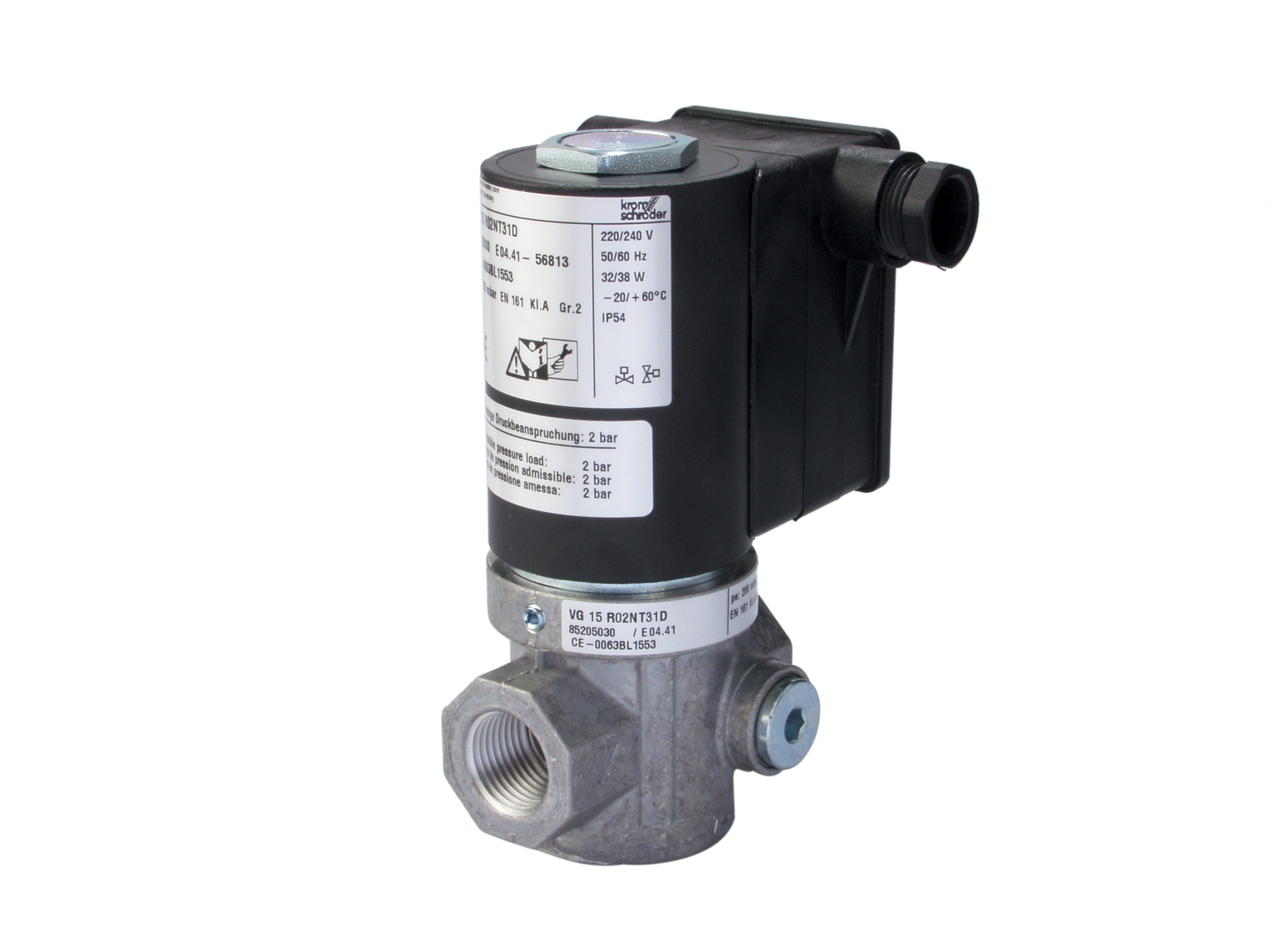
- Gas shutoff valve (solenoid) should be sized for the main burner BTU rating plus 20% for future capacity expansion
Conclusion: Building Competency in Flame Detection and Safety
Controls & Safety systems protect both equipment and occupants—making them among the most critical components in HVAC installations. For Singapore contractors, mastering flame detection technology, from basic ionization electrode positioning through integration with modern building management systems, directly impacts service quality and safety outcomes.
The components referenced throughout this guide—from the Brahma relay's precise ionization sensing to the Kromschroder pressure switch's SIL 3 reliability—represent benchmarks for competent system specification and installation. As HVAC systems become more integrated with building automation and environmental monitoring grows more rigorous, contractors who develop deep expertise in Controls & Safety systems position themselves for premium project assignments and long-term client relationships.
3G Electric's three-and-a-half decades supporting HVAC contractors has demonstrated that failure in flame detection often stems not from component defects, but from installation decisions made in the first project hours: electrode positioning, wiring routing, grounding integrity, and pressure switch integration. Investing time in comprehensive commissioning and establishing preventive maintenance protocols prevents the emergency service calls that disrupt customer operations and damage contractor reputation.
The future of Controls & Safety in Singapore's HVAC sector will increasingly involve digital diagnostics, remote monitoring, and predictive maintenance algorithms. Contractors who understand the underlying principles—how ionization electrodes detect flame, how pressure switches confirm fuel delivery, how safety logic prevents dangerous fuel release—will adapt successfully to emerging technologies and remain valuable partners for building owners managing complex HVAC installations.