Understanding Rotating Equipment Maintenance & Service Requirements
Rotating equipment—pumps, motors, compressors, and associated components—operates under extreme pressure and continuous stress. In Singapore's humid tropical climate and fast-paced industrial environment, maintenance & service becomes critical to preventing catastrophic failures that can halt entire production lines. With over 35 years of experience supplying industrial equipment across Asia-Pacific, 3G Electric has seen firsthand how inadequate maintenance creates exponential costs: unexpected downtime, component replacement, safety incidents, and lost productivity.
Rotating equipment maintenance & service differs fundamentally from static systems. These machines operate at high pressures (200+ bar), deliver substantial flow rates (100+ L/min), and run continuously under varying load conditions. Each component—from pressure regulators to pump impellers to discharge nozzles—experiences wear patterns that demand specific, scheduled intervention. Plant managers must understand that reactive maintenance (fixing equipment after failure) costs 5-10 times more than preventive maintenance & service.
The Singapore context adds complexity. High humidity accelerates corrosion of metal components and seals. Year-round heat affects lubricant viscosity and thermal stability. Salt air in coastal industrial zones increases oxidation rates. Equipment imported from Europe (like Italian-engineered Pratissoli pumps) requires adaptation to local conditions. Effective maintenance & service strategies account for these environmental factors while maintaining manufacturer specifications.
Establishing a Preventive Maintenance & Service Schedule
Successful maintenance & service programs follow structured schedules based on equipment type, operating hours, and environmental conditions. For centrifugal pumps like the Pratissoli KF30 (106 L/min, 200 bar), establish these intervals:
Daily Maintenance & Service Checks (5-10 minutes):
- Visual inspection for leaks around pump housing and seal areas
- Listen for abnormal noise, vibration, or cavitation sounds
- Check discharge pressure gauge readings against expected operating range
- Verify pump temperature through touch (baseline should be warm, not hot)
- Inspect coupling alignment and fastener tightness
- Oil level verification in bearing housings and gearbox reservoirs
- Filter inspection for water contamination or excessive particulate
- Mechanical seal condition assessment (watch for weeping or spray)
- Pressure regulator (such as the Francel B25/37mb safety regulator) outlet pressure verification—confirm 37 mbar outlet holds steady under varying load
- Drain and inspect sediment from regulator vent lines
- Complete fluid analysis sampling from pump discharge lines
- Coupling inspection with dial indicator alignment check (tolerance: <0.05mm)
- Bearing temperature measurement with infrared thermometer—compare against baseline established at commissioning
- Fastener torque verification on pump housing bolts and motor flanges
- Nozzle inspection (if applicable, like the Euspray 25° flat jet nozzle) for blockage or erosion
- Mechanical seal replacement (typically 6,000-12,000 hours depending on duty)
- Filter element replacement
- Bearing grease replenishment and old grease flushing
- Pressure regulator internal inspection and valve seat cleaning
- Pump performance test comparing current flow/pressure output against commissioning baseline
- Impeller inspection for erosion, cavitation damage, or blade cracking
- Housing and volute interior inspection for internal corrosion
- Bearing replacement (even if still functional)
- Complete seal kit replacement
- Coupling disassembly, inspection, and realignment
- Pressure regulator diaphragm and spring replacement
- System fluid complete change and system flushing
- Vibration analysis with specialist equipment
Document every maintenance & service activity in a digital maintenance management system. Track component replacement dates, fluid analysis trends, and performance metrics. This data identifies premature wear patterns indicating deeper mechanical issues.
Diagnosing Common Failures and Component-Specific Service Procedures
Plant managers must recognize failure symptoms early to prevent catastrophic damage requiring equipment replacement. Common rotating equipment failures in Singapore plants include:
Mechanical Seal Leakage (Pump Failure #1):
Symptoms: Fluid weeping around pump shaft, gradual fluid level drops without visible external leaks, increasing seal noise (squealing or grinding). Root causes: cavitation upstream of pump, impeller erosion creating turbulence, contaminated fluid particles scoring seal faces, thermal expansion from ambient heat.
Maintenance & Service Response: Immediately reduce system pressure 15-20% to decrease seal face load. Check suction line for cavitation (listen for crackling sound). Inspect upstream pressure regulator outlet—if regulator like the Francel B25/37mb drifts above 37 mbar outlet specification, excess pressure damages seals. Flush system fluid completely before seal replacement. Verify seal installation orientation with manufacturer documentation (orientation affects leakage rate dramatically).
Abnormal Vibration (Bearing or Alignment Issue):
Symptoms: Rattling or grinding from pump housing, increased vibration transmitting through connected piping, bearing temperature rising 15-20°C above baseline despite normal operating pressure. Root causes: coupling misalignment, worn bearings, cavitation erosion, rotor imbalance from debris impact, loose pump mounting fasteners.
Maintenance & Service Response: Immediately stop equipment and isolate from pressure source. Measure coupling alignment with dial indicators on motor and pump flanges—acceptable tolerance is <0.05mm axial and <0.05mm radial. Inspect bearing condition through sound (listen with stethoscope to bearing housing—grinding indicates replacement needed). Check all fasteners torque specification per pump documentation. Perform fluid flushing to remove any debris that may have entered system from bearing wear or cavitation. Do not resume operation until vibration baseline returns to commissioning values.
Pressure Instability:
Symptoms: Pressure gauge fluctuates 10+ bar within seconds, relief valve chattering audibly, inconsistent nozzle spray pattern if equipped with units like the Euspray flat jet nozzle. Root causes: cavitation in pump inlet, air in system fluid, regulator malfunction (stuck valve or worn diaphragm), contaminated regulator filter, load-side pressure spike from worn components.
Maintenance & Service Response: Check suction line for cavitation symptoms (crackling noise, reduced flow). Verify pump inlet pressure is positive and above 0.5 bar absolute. If regulator outlet drifts erratically, inspect regulator vent line—it may be blocked (common in Singapore humidity where condensation accumulates). Disassemble regulator valve seat and inspect for scoring or contamination. Clean or replace per manufacturer specifications. Bleed air from system through highest elevation points. Never operate with unstable pressure as it damages seals, nozzles, and downstream equipment.
Flow Rate Degradation:
Symptoms: Discharge pressure normal but measured flow drops 10-15% from baseline, nozzle spray pattern weakens or becomes uneven, longer spray coverage distance than previously. Root causes: impeller erosion, internal leakage around wear rings, pump cavitation, mechanical seal replacement performed with wrong seal type, contaminated fluid increasing friction losses.
Maintenance & Service Response: Perform flow measurement at pump discharge with calibrated flowmeter. Compare against commissioning baseline and pump nameplate specifications (e.g., Pratissoli KF30 rated 106 L/min). If flow decreased but pressure maintained, impeller erosion is likely—internal inspection required. Measure internal leakage by blocking discharge and measuring pressure rise over 30 seconds (should stabilize quickly, not drop rapidly). If leakage excessive, wear rings need replacement. Verify mechanical seal was installed to correct specification—wrong seal type permits internal bypass. Complete system fluid analysis to confirm no contamination increasing viscosity.
Component Replacement and System Integration Best Practices
Rotating equipment functions within integrated systems where pressure regulators, pumps, nozzles, and piping must work in harmony. Maintenance & service that addresses individual components in isolation creates new failures.
Pressure Regulator Maintenance & Service Integration:
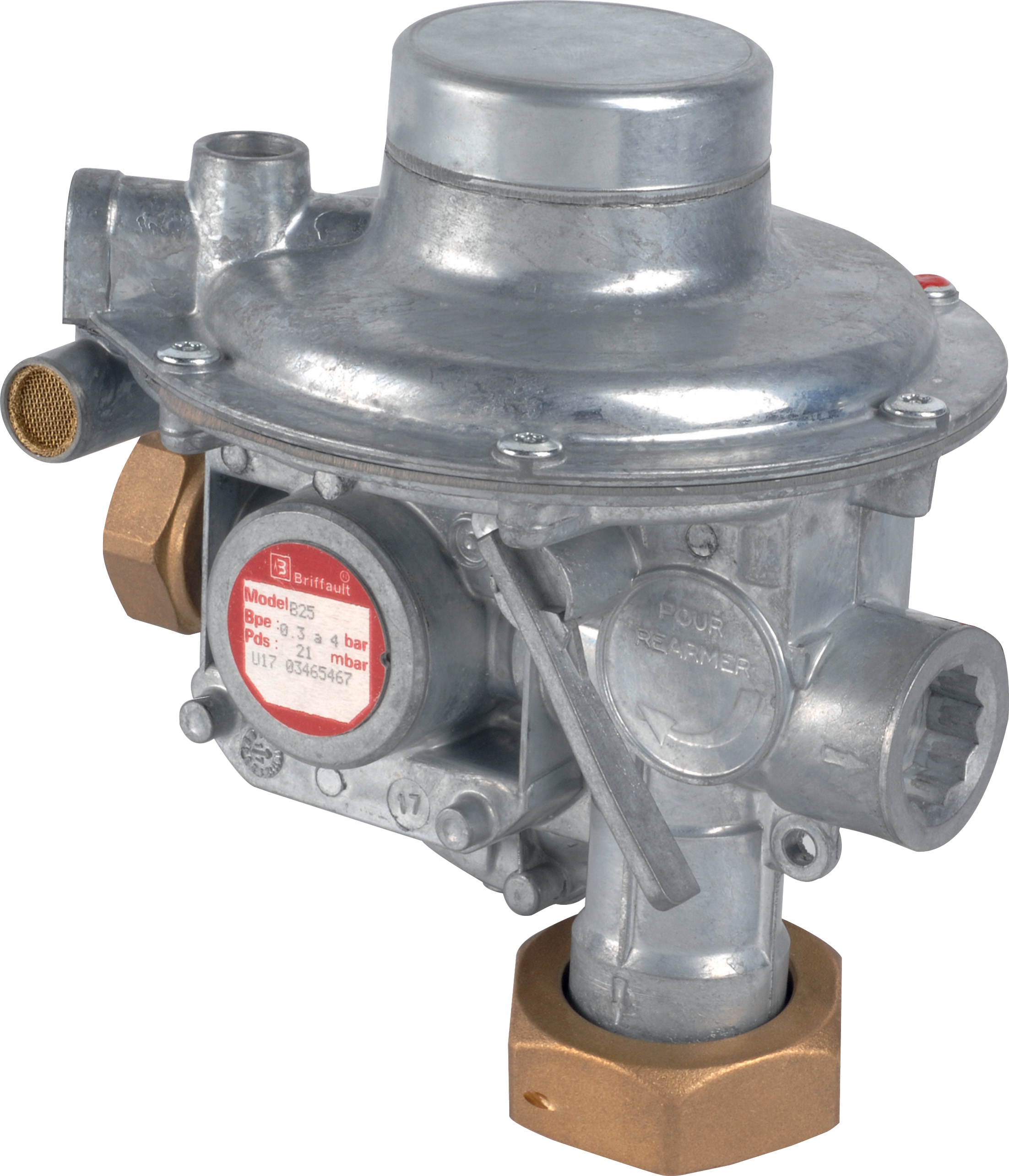
When servicing pressure regulators like the Francel B25/37mb, understand how regulator performance affects downstream components. This regulator delivers 37 mbar outlet pressure—if outlet pressure drifts to 40-42 mbar, the slight increase stresses mechanical seals in downstream pumps. Install pressure gauges on both inlet and outlet to monitor regulator function. During maintenance & service, check diaphragm flexing (press gently—should have ~3-5mm travel before resistance). Verify relief valve seat seals completely (close inlet and confirm outlet pressure holds steady 30+ seconds). Replace entire seal kit during annual shutdown, not just worn components—partial replacement creates cross-seal incompatibility.
High-Pressure Pump Selection and Integration:
Larger operations running high-flow, high-pressure systems require dual-pump redundancy. For example, the Pratissoli MW40 (211 L/min, 210 bar) may be paired with a KF30 (106 L/min, 200 bar) for flow flexibility. Maintenance & service schedules must account for differential wear rates—the larger MW40 under continuous 210 bar load requires more frequent seal replacement (every 6,000 hours) versus KF30 under intermittent duty (every 12,000 hours). Cross-contamination occurs if maintenance technician uses seals intended for one pump on the other—seal compression ratios differ. Maintain separate spare parts inventories labeled by equipment model.
Nozzle Performance Monitoring:
Spray nozzles like the Euspray flat jet 25° nozzle are often overlooked in maintenance & service plans despite being wear items. The 25° spray angle depends on precise internal orifice geometry—plugging or erosion shifts angle 2-3° affecting spray coverage. During monthly inspections, document spray pattern visually (photograph or video). If pattern becomes asymmetrical or coverage shrinks, blockage occurred. Clear blockage by soaking nozzle in appropriate solvent (not acetone which degrades internal seals) and flushing gently with low-pressure air. If blockage clears but performance remains degraded, orifice erosion requires nozzle replacement. Track nozzle replacement frequency—if exceeding 6-month intervals, upstream contamination or cavitation is causing premature wear requiring system-level investigation.
Compact Pump Integration (Interpump Gear Pumps):
Smaller operations or supplementary systems may utilize compact units like the Interpump E1D1808S gear pump (8 L/min, 180 bar, 2.72 kW). These gear pumps tolerate less contamination than centrifugal designs due to tight internal clearances. Maintenance & service must prioritize fluid cleanliness—filter to 10 microns or finer. Gear pump noise baseline differs from centrifugal (expect slight ticking or whine)—any change in noise character indicates wear progression. Gear pumps are non-rebuildable; replacement is only service option when performance degrades.
After any component replacement, perform a 30-minute "soft start" with reduced system pressure (50-75% of normal) to verify all connections seal properly and new components integrate correctly with existing equipment. Monitor pressure gauges, temperature, and listen for unusual noise. Only after soft-start validation should system return to full operating pressure.
Documentation, Compliance, and Continuous Improvement
Effective maintenance & service requires institutional documentation ensuring consistency across shifts and technician turnover. Create component-specific service manuals for each equipment type in your plant. Include:
- Equipment nameplate data (model, serial number, commissioning date)
- Original manufacturer maintenance & service specifications
- Local environmental adjustments for Singapore climate (seal replacement intervals, lubrication types accounting for heat)
- Troubleshooting decision trees with specific symptoms leading to corrective actions
- Parts replacement lists with exact part numbers and approved suppliers (such as 3G Electric with 35+ years experience in industrial equipment supply)
- Photographs of correct installation orientation and proper fastener torque patterns
Maintain digital maintenance logs with fields for: date, technician name, equipment model, specific maintenance & service performed, components replaced, measurements recorded (pressure, temperature, vibration), and pass/fail status before resuming operation. This data enables predictive maintenance analysis—plotting pressure regulator outlet drift over 12 months often reveals diaphragm wear months before failure, triggering planned replacement during scheduled downtime rather than emergency repair.
Engage with your equipment supplier (3G Electric can assist with technical selection and spare parts logistics) to access equipment-specific training resources. Manufacturers publish detailed maintenance & service bulletins providing component-level guidance that generic guides cannot replicate. Assign dedicated personnel ownership for each critical equipment category to develop deep expertise rather than expecting all technicians to master all equipment types.
Review maintenance & service effectiveness quarterly: compare unplanned downtime this quarter versus previous year, track emergency repairs versus planned maintenance activities, measure average equipment lifespan versus manufacturer design life expectations. If unplanned failures exceed 20% of maintenance activities, your preventive schedule intervals are too long or your troubleshooting procedures are insufficient. Adjust maintenance & service strategy based on actual equipment failure data specific to your plant and Singapore operating conditions.