Understanding Common Pump and Compressor Failure Modes
Pumps & Compressors represent significant capital investments in any industrial facility, yet they often operate without preventive diagnostic protocols. After 35+ years serving global industrial operations, 3G Electric has observed that most premature equipment failures stem from three preventable causes: inadequate pressure regulation, cavitation-induced damage, and seal degradation from contaminated fluid systems.
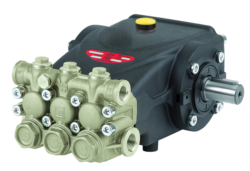
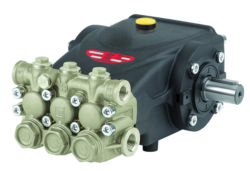
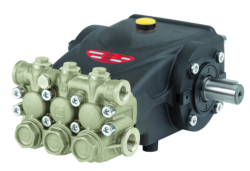
Pressure-related failures occur when discharge pressures exceed equipment design specifications, typically due to downstream blockages, incorrect bypass valve settings, or load changes. In centrifugal pump applications, this manifests as increased vibration, elevated bearing temperatures, and accelerated impeller wear. Positive displacement pumps like the Interpump E3B2515I R are particularly vulnerable because they cannot self-regulate—excessive back-pressure will damage internal components unless properly managed through correctly calibrated relief valves.
Cavitation represents the second critical failure mode. This phenomenon occurs when inlet pressure drops below fluid vapor pressure, causing dissolved gases and vapor bubbles to form within the pump body. As these bubbles collapse, they create localized pressure spikes that erode pump internals, reducing efficiency and creating noise levels that alert operators to serious problems. Early detection of cavitation noise (a distinctive crackling sound) allows immediate remediation before catastrophic damage occurs.
Seal and bearing failures account for approximately 40% of unplanned pump downtime in global operations. Contamination particles, water ingress, and thermal cycling degrade mechanical seals progressively. Implementing fluid monitoring protocols—specifically ISO 4406 cleanliness codes and moisture analysis—enables predictive maintenance scheduling that prevents these failures entirely.
Systematic Diagnostic Framework for Plant Managers
Implementing a structured troubleshooting approach transforms reactive maintenance into strategic asset management. Plant managers should establish baseline performance metrics immediately upon pump installation: discharge pressure, inlet pressure, flow rate, bearing temperature, and vibration amplitude across vertical and horizontal planes.
Pressure System Diagnostics:
When discharge pressure drops below expected values, systematically isolate the cause through sequential testing. Begin by measuring inlet pressure and comparing against pump suction lift specifications. A low inlet pressure coupled with cavitation noise indicates either strainer blockage, improper suction line configuration, or inadequate fluid level in the source tank. The Interpump E3B2515 L and similar gear pump designs require clean fluid at adequate inlet pressure—typically 0.1 to 0.3 bar above atmospheric pressure.
If inlet pressure is normal but discharge pressure remains low, the problem exists within the pump itself. Measure pressure at multiple points along the discharge line to identify where pressure is lost. This distinguishes between internal pump wear (pressure drops immediately at pump outlet) and external line restrictions (pressure loss concentrated in piping). Internal wear requires pump reconditioning or replacement, while piping issues can often be resolved through line cleaning or diameter modification.
Excessive discharge pressure (above rated operating range) typically indicates blocked discharge lines, partially closed discharge valves, or improperly adjusted pressure relief valves. High-pressure conditions stress all system components and accelerate seal degradation. Immediate investigation is essential. For systems using variable displacement pumps with integral load-sensing controls, excessive pressure may indicate control system malfunction requiring specialized technician intervention.
Vibration and Noise Analysis:
Vibration monitoring provides early warning of mechanical problems. Elevated vibration in the radial direction (perpendicular to shaft) often indicates bearing wear or misalignment, while axial vibration (along shaft direction) suggests cavitation or insufficient suction conditions. Modern vibration monitors measure in standardized units (mm/s or inches/s), enabling objective trend analysis rather than subjective "does it feel rougher?" assessments.
Abnormal noise patterns communicate specific mechanical problems. Gear pump whining indicates normal operation under load. Grinding or knocking sounds suggest bearing damage, while crackling noise confirms cavitation. Screaming high-pitched noise may indicate cavitation in centrifugal pumps or air entrainment in gear pumps. Recording audio of abnormal operation and sharing it with equipment suppliers accelerates diagnosis.
For technical specifications of equipment like the Interpump E3B1515 DX with valve and gearbox RS500H, always reference manufacturer vibration envelopes and noise curves to establish what constitutes abnormal operation for your specific equipment configuration.
Maintenance Optimization Strategies for Continuous Operations
Plant managers operating 24/7 facilities cannot afford traditional preventive maintenance windows. Instead, implement condition-based maintenance protocols that extend equipment intervals while simultaneously reducing failure risk.
Fluid Analysis as Predictive Intelligence:
Take fluid samples from your pumps and compressors quarterly (monthly in high-stress applications). ISO 4406 particle counting quantifies contamination—most pumps operate reliably at ISO 18/16/13 or better, while gear pumps like those in 3G Electric's inventory require ISO 16/14/11 cleanliness for rated lifespan. Water content analysis identifies seal degradation patterns three to six months before catastrophic failure occurs. When water contamination increases from 200 ppm to 800 ppm over three months, schedule seal replacement during your next planned maintenance window rather than waiting for failure.
Viscosity trending detects early fluid degradation. When kinematic viscosity at 40°C increases more than 10% from baseline, fluid oxidation is occurring—change fluid before oxidation byproducts damage pump components. Acid number (TAN) measurement indicates how aggressively the fluid will attack ferrous metals; TAN increases above 2.0 mg KOH/g warrant fluid replacement.
Thermal Management and System Balance:
Almost all pump failures occur in systems operating outside optimal temperature ranges. Maintain fluid temperatures between 35-55°C for mineral oil systems and 40-65°C for synthetics. Systems running hotter than specified experience exponential seal degradation—every 8°C increase above optimal temperature halves mechanical seal lifespan. Cooler-than-optimal operation causes fluid viscosity to exceed specifications, reducing pump efficiency and increasing energy consumption without extending component life.
Implement system temperature monitoring at pump discharge, return line, and tank. If any reading exceeds maximum limits, investigate before failure occurs. Common causes include inadequate cooler capacity, cooler fouling, or excessive load demand. For applications using the Interpump E3C1021 DX V.DX NO.C/J or similar variable displacement pumps, excessive pressure can drive unplanned heat generation—ensure load-sensing systems are properly calibrated.
Seal and Bearing Protection Through Environment Control:
Mechanical seals fail when pumped fluid contains particles larger than seal gap dimensions (typically 1-5 micrometers). Install offline filtration systems that continuously clean reservoir fluid during operation. Cartridge filters rated ISO 16/14/11 remove particles that bypass pump inlet filters during normal operation.
Implement desiccant breathers on all fluid reservoirs to prevent moisture ingress. Atmospheric humidity creates water condensation in tanks during thermal cycling—a seemingly minor detail that accelerates bearing corrosion and seal degradation. Monthly breather cartridge replacement is inexpensive insurance against major failures.
For gear pump applications like the Interpump E3C1515 L, ensure suction line diameter and configuration meet manufacturer requirements—undersized suction lines create cavitation conditions that damage gears and bearings within weeks.
Optimization for Global Operations and Equipment Standardization
Multi-site operations benefit tremendously from standardizing Pumps & Compressors across facilities. 3G Electric's 35+ years of global distribution experience demonstrates that equipment standardization reduces spare parts inventory by 60-70% while enabling technicians to troubleshoot confidently across facilities.
When standardizing equipment specifications, select pumps with proven global reliability records and established supply chains. Interpump gear pump products like those referenced in this guide maintain consistent quality across geographic regions and have established service networks worldwide. Avoid equipment with limited regional support—when failure occurs at remote facilities, limited service availability extends downtime dramatically.
Implement standardized digital logs for all Pumps & Compressors across your operation. Capture pressure readings, flow rates, vibration measurements, and fluid analysis results in centralized systems. Trending this data across identical equipment installations reveals which operational parameters correlate with premature failures at other facilities, enabling predictive interventions before problems develop.
For capital equipment decisions, evaluate total cost of ownership rather than initial purchase price. A pump specified 20% below rated duty requirements may cost 15% less initially but fail in three years. A pump sized with 30% design margin costs 25% more but operates reliably for 10+ years—the cost per operating hour is dramatically lower. 3G Electric's procurement specialists routinely help plant managers quantify these relationships to justify higher-quality equipment selection to corporate finance teams.
Practical Implementation: Creating Your Plant's Pump Management System
Begin with equipment inventory: document every pump and compressor's model, serial number, installation date, rated pressure, rated flow, and fluid specification. Establish baseline measurements of discharge pressure, inlet pressure, bearing temperatures, and vibration within the first operating month. These baselines become your comparison standard—when pressure drops 5% or vibration increases 20%, you'll recognize the change objectively rather than waiting for catastrophic failure.
Schedule monthly reviews of fluid analysis data, temperature logs, and vibration trends. This single monthly meeting, attended by plant maintenance leadership and equipment suppliers, transforms maintenance from reactive crisis management into strategic planning. When fluid analysis predicts seal replacement in six weeks, you can source components and schedule installation during planned maintenance windows rather than emergency repairs costing 3-5× more.
Establish relationships with experienced equipment suppliers like 3G Electric who understand global operations and can support your facilities across multiple countries. experienced distributors maintain technical expertise, manage warranty documentation, and source genuine parts—critical advantages when equipment requires service at 2 AM on a Sunday in a time zone eight hours from your corporate office.