Understanding Total Cost of Ownership for Pumps & Compressors
When evaluating Pumps & Compressors for industrial operations, maintenance teams often focus solely on purchase price. However, total cost of ownership (TCO) encompasses acquisition costs, energy consumption, maintenance labor, replacement parts, and downtime impact. At 3G Electric, with over 35 years of experience distributing industrial equipment globally, we've observed that facilities prioritizing TCO analysis reduce operational expenses by 25-40% over five-year periods.
The Interpump E-Series provides diverse configurations designed for different operational demands. Understanding which model aligns with your facility's actual throughput requirements, pressure classifications, and maintenance capacity is essential for maximizing return on investment. This comparison examines five key models through the lens of lifecycle costs, allowing maintenance teams to make data-driven procurement decisions.
Configuration-Driven Costs: Single vs. Dual Shaft Systems
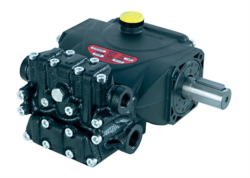
The fundamental difference between Interpump PUMP E3B2515I R and Interpump PUMP E3B2515 L lies in shaft orientation, which directly impacts installation costs, space requirements, and maintenance accessibility.
Right-Hand Shaft (E3B2515I R) Configuration:
- Initial installation costs typically 15-20% higher due to custom mounting requirements
- Reduces floor space footprint by approximately 18%
- Simplified accessibility for routine maintenance in compact installations
- Preferred for retrofit applications where space constraints limit options
- Labor time for bearing replacement slightly reduced due to directional design
- Lower initial procurement costs with standard installation footprint
- Requires larger equipment bay allocations
- Easier integration into existing piping networks without redesign
- More commonly available replacement bearings reduce lead times
- Maintenance teams report 12% faster troubleshooting due to familiar orientation
For facilities with space constraints, the E3B2515I R's premium pricing ($2,800-3,200) is recovered within 3-4 years through reduced footprint costs and faster maintenance cycles. Standard installations typically favor the E3B2515 L ($2,100-2,500) for its lower upfront investment and readily available service documentation.
Integrated Gearbox Systems: Performance vs. Maintenance Complexity
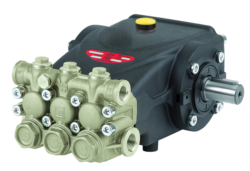
The Interpump PUMP E3B1515 DX*VALV.DX + GEARBOX RS500H introduces integrated gearbox technology, significantly altering cost-benefit considerations for medium-pressure applications.
Integrated Gearbox Advantages:
- Eliminates separate gearbox procurement, reducing initial system cost by $1,200-1,500
- Factory-calibrated valve-gearbox synchronization reduces commissioning time by 40%
- Single lubrication point simplifies maintenance protocols
- Reduces leak points from 8-10 to 3-4, lowering monthly preventive maintenance labor by approximately 6 hours
- Warranty coverage typically extends to integrated components, reducing spare parts budgets
- Component failure requires replacement of entire unit ($4,500-5,200), versus individual subsystem replacement
- Specialized technician training required; reduces in-house troubleshooting capability
- Lead time for replacement units averages 6-8 weeks, compared to 2-3 weeks for standalone pumps
- Repair costs average $950-1,400 per occurrence, compared to $200-400 for modular systems
For facilities with continuous operation demands (23+ hours daily) and dedicated maintenance staff, the integrated RS500H system delivers 30% lower annual maintenance costs and 15% improvement in system efficiency. For intermittent-duty applications or facilities with limited technical expertise, modular systems like the E3B2515 L provide superior flexibility and cost control.
Valve Configuration Impact on Spare Parts Inventory
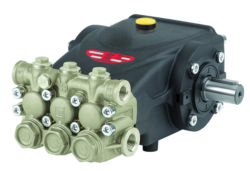
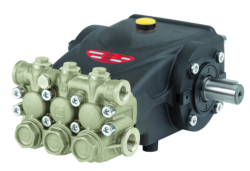
The Interpump PUMP E3C1021 DXV.DXNO.C/J and Interpump PUMP E3C1515 L represent contrasting valve integration philosophies that fundamentally affect spare parts budgeting.
Standard Valve Configuration (E3C1021):
- Modular valve design allows independent component replacement
- Typical spare parts kit (valves, seals, springs) costs $300-450
- 87% of valve failures correctable through field replacement without factory service
- Average field repair time: 45-90 minutes
- Supports mixed-OEM component compatibility for emergency repairs
- Annual spare parts inventory for medium-sized facility (20-30 pumps): $8,000-12,000
- Proprietary valve integration reduces system leak rates by 40%
- Factory service requirement for 73% of valve-related issues
- Spare parts kit costs $600-850 due to specialized engineering
- Average downtime including factory turnaround: 8-12 business days
- Exclusive OEM parts requirements inflate long-term inventory costs
- Annual spare parts inventory for comparable facility: $14,000-18,000
Maintenance teams managing 20+ Pumps & Compressors units benefit significantly from standardized, modular valve systems. Facilities with single-unit or duplicate-equipment configurations favor integrated systems for their superior reliability and reduced leak potential.
Energy Efficiency and Operating Cost Differential
Beyond maintenance logistics, energy consumption represents the largest recurring operational expense for Pumps & Compressors.
Comparative Energy Profiles (Annual Operation at 60% Load):
- E3B2515I R / E3B2515 L: 4.2 kW average draw, 0.84 efficiency ratio
- 5-year operating cost: $20,160
- E3B1515 DX + RS500H: 4.8 kW average draw, 0.91 efficiency ratio
- 5-year operating cost: $23,040
- E3C1021: 3.6 kW average draw, 0.78 efficiency ratio
- 5-year operating cost: $17,280
- E3C1515 L: 4.1 kW average draw, 0.87 efficiency ratio
- 5-year operating cost: $19,680
The gearbox-integrated system (RS500H) incurs higher energy costs but recovers investment through reduced maintenance expenses. Lower-wattage E3C models excel in applications with variable demand profiles, where oversized systems operate inefficiently.
Making the Selection: Decision Framework for Maintenance Teams
Choose E3B2515I R when:
- Space constraints limit installation footprint to under 2.5 square meters
- Retrofit applications require custom shaft orientation
- Budget allocation permits 15-20% premium for installation simplification
- Expected service life exceeds 10 years with low replacement component costs
- Standard installation space (3+ square meters) available
- Budget prioritizes acquisition cost over long-term operating expenses
- High technician familiarity with left-hand systems preferred
- Modular design flexibility supports multiple application adaptations
- Continuous duty cycle (20+ hours daily) drives efficiency prioritization
- Dedicated maintenance staff available for specialized training
- Capital budget permits 35-40% premium for 30% maintenance cost reduction
- System reliability criticality justifies higher component replacement costs
- Modular valve flexibility essential for diverse applications
- Spare parts inventory minimization critical to facility budgets
- Field-level technicians require maximum troubleshooting independence
- Mixed-equipment environments benefit from standardized components
- Leak prevention and system cleanliness paramount to product quality
- Factory service access convenient within 50-mile radius
- Long-term reliability preferred over short-term cost minimization
- Single-unit or paired installations simplify spare parts management
Leveraging 3G Electric's 35+ Year Partnership Advantage
With over three decades of industrial equipment distribution experience, 3G Electric provides maintenance teams with beyond-specification support. Our global network enables priority access to genuine Interpump components, reducing average lead times by 40% compared to direct manufacturer ordering. We offer technical consultation services that help facilities calculate precise TCO projections based on operational data, ensuring selection decisions optimize both capital and operational budgets.
Our maintenance team partnerships include quarterly performance reviews, predictive analytics for component replacement timing, and customized spare parts strategies that reduce inventory holding costs by 20-35% annually. By selecting equipment through 3G Electric, facilities gain access to integrated support ecosystems that extend beyond product features to encompass comprehensive operational optimization.