Understanding Measurement & Detection Requirements Across Industrial Systems
Maintenance teams face a critical decision when building their Measurement & Detection toolkit: which instruments deliver the most reliable data for the least operational complexity? This question becomes more urgent as industrial facilities grow more interdependent—a missed pressure spike in one system can cascade through connected equipment, while undetected gas leaks in refrigeration lines compromise both safety and energy efficiency.
With over 35 years of experience distributing industrial equipment globally, 3G Electric has worked with maintenance teams across multiple sectors. We've observed that successful predictive maintenance programs don't rely on a single tool. Instead, they integrate complementary instruments that address different failure modes: gas accumulation, temperature deviation, pressure anomalies, and electrical faults. The key is understanding which tools solve your specific problems without creating measurement redundancy or unnecessary technician training burden.
This article compares five essential Measurement & Detection instruments, focusing on practical maintenance scenarios rather than technical specifications alone. We'll examine how each tool fits into a comprehensive condition monitoring strategy.
Gas Detection: Centralized Monitoring vs. Point-of-Use Sensing
Refrigeration systems, compressed air networks, and enclosed mechanical spaces all require gas monitoring—but the scale and complexity vary dramatically.
Centralized Gas Detection Centers
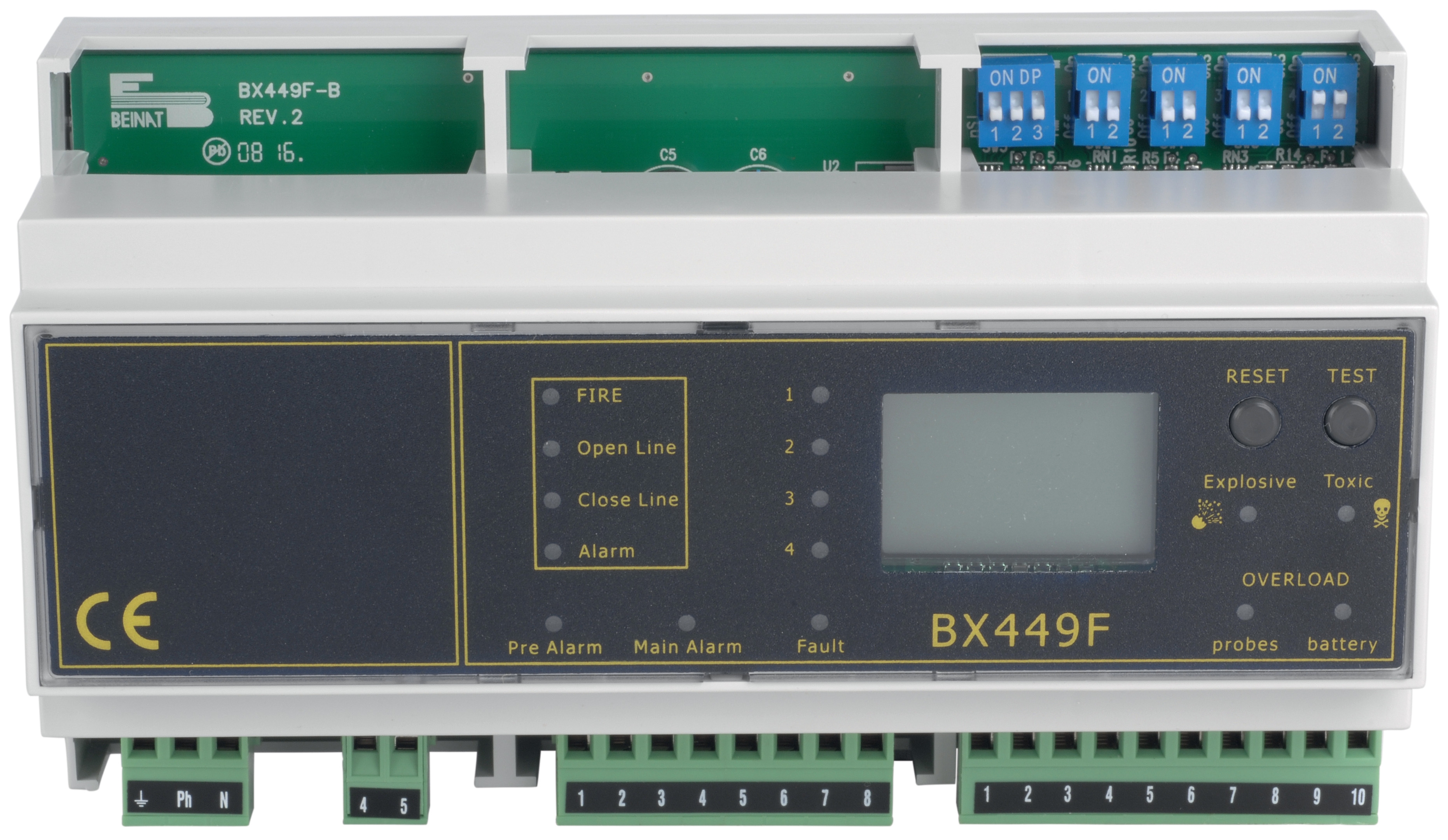
The CBM Gas Detection Center (Din Rail 8 Probes - 12V) represents the centralized approach. This system manages multiple detection points from a single control unit, making it ideal for large facilities with distributed refrigeration circuits or complex air handling systems.
When centralized detection makes sense:
- Your facility has 3+ separate zones requiring independent gas monitoring (refrigeration rooms, mechanical spaces, equipment enclosures)
- You need real-time alerting capability across multiple locations
- Your maintenance team requires consolidated data for compliance documentation
- System failures have high consequences (food storage facilities, laboratory environments, server rooms)
Centralized systems reduce false alarms through integrated logic and provide a single troubleshooting point—technicians don't chase alerts across multiple standalone sensors. The din rail mounting integrates cleanly into electrical control cabinets, keeping gas detection integral to your facility's power management infrastructure.
Trade-offs of centralized systems:
Initial investment is higher than standalone sensors. Installation requires coordinated electrical work and probe placement planning. However, for facilities managing more than 50+ detection points or covering areas larger than 5,000 square meters, centralized systems typically deliver lower cost-per-monitored-location.
Point-of-Use Considerations
Standalone gas detectors work well for portable applications, temporary installations, or smaller facilities with 1-2 critical monitoring zones. They require no integration with central control systems but demand more frequent technician checks to confirm functioning sensors.
Temperature Measurement: Detecting Thermal Anomalies Before Equipment Fails
Temperature monitoring serves two distinct preventive maintenance functions: identifying energy inefficiency and detecting imminent mechanical failure.
Surface Temperature Sensing Strategy
The CBM Surface Temperature Sensor (TE-SNW-E) provides non-contact infrared measurement, enabling maintenance teams to detect temperature anomalies on motors, pump casings, bearing housings, and transformer cores without interrupting equipment operation.
Practical maintenance applications:
- Motor condition assessment: Bearing degradation produces heat signatures 15-20°C above baseline before mechanical failure. Surface temperature sensors catch this window for scheduled replacement rather than emergency repair.
- Pump seal monitoring: Leaking pump seals generate localized heat. Early detection prevents cavitation and secondary damage to impellers.
- Refrigeration efficiency: Condenser and evaporator surface temperatures directly correlate with system efficiency. Temperature drift indicates fouling or refrigerant charge problems.
- Electrical connection integrity: Loose connections generate heat at contact points. Infrared measurement identifies problem areas without requiring shutdown.
Effective temperature monitoring requires repeatable measurement technique. Mark permanent reference locations on equipment (bearing housings at consistent axial positions, pump casing midpoints, motor frame standardized spots). This ensures month-to-month trending accuracy—the real value comes from temperature changes rather than absolute readings.
Integration with Digital Records
Temperature sensors work best when measurements integrate into equipment history. Most modern sensors output data to mobile applications or cloud platforms. This integration enables maintenance teams to correlate temperature trends with maintenance actions—documenting that bearing temperature decreased 8°C following lubrication confirms proper procedure execution.
Pressure Monitoring: Detecting System Degradation and Capacity Loss
Pressure gauges are often overlooked as "passive" instruments, but they provide immediate insight into system health when properly selected and positioned.
Low-Pressure Vacuum and Slight Positive Pressure Systems
The CBM Green ABS Pressure Gauge (D63 0/+1bar G1/4) serves systems operating near atmospheric pressure: HVAC return air plenums, low-pressure refrigeration evaporator sections, vacuum recovery systems, and pneumatic control networks running 0.2-0.8 bar.
Why this range matters:
Many maintenance teams overlook low-pressure zones. Yet a 0.1 bar loss in a vacuum system or HVAC plenum indicates duct leakage, filter restriction, or damper failure—problems that reduce equipment efficiency by 5-15% before technicians notice performance changes. Monthly pressure trending catches these failures during the maintenance window rather than during production crises.
The D63 dial size provides readable analog indication from 2+ meters away, eliminating technician errors from misreading smaller gauges. Green housing differentiates this gauge from high-pressure versions, reducing installation mistakes.
High-Pressure System Monitoring
The CBM ABS Green Gauge (D50 0/+250bar G1/4) addresses compressed air, hydraulic systems, and high-pressure refrigeration circuits. The 250 bar range (roughly 3,600 psi) covers most industrial pneumatic and hydraulic applications.
Practical pressure monitoring approach:
- Baseline establishment: Record system pressure under standard operating conditions. Pressure drops of 10+ bar during normal operation indicate valve leakage, line cracks, or actuator failures.
- Temporal trending: Pressure creep over weeks suggests compressor output loss due to wear or intake filter fouling. Sudden pressure jumps indicate cooling system fouling or control valve malfunction.
- Multi-point monitoring: Install gauges at system inlet (compressor output), major use points, and return lines. Pressure differentials reveal blockages and restriction patterns.
ABS plastic construction resists corrosive environments better than traditional brass housings—important for coastal facilities or chemical processing environments where humidity and salt air accelerate brass oxidation.
Electrical Diagnostics: Completing the Measurement & Detection Picture
Electrical problems frequently masquerade as mechanical failures. A motor bearing may overheat due to electrical imbalance, not lubrication failure. A pump may cavitate because electrical surge damaged its variable frequency drive, not because of cooling inadequacy.
Multimeter Selection for Preventive Programs
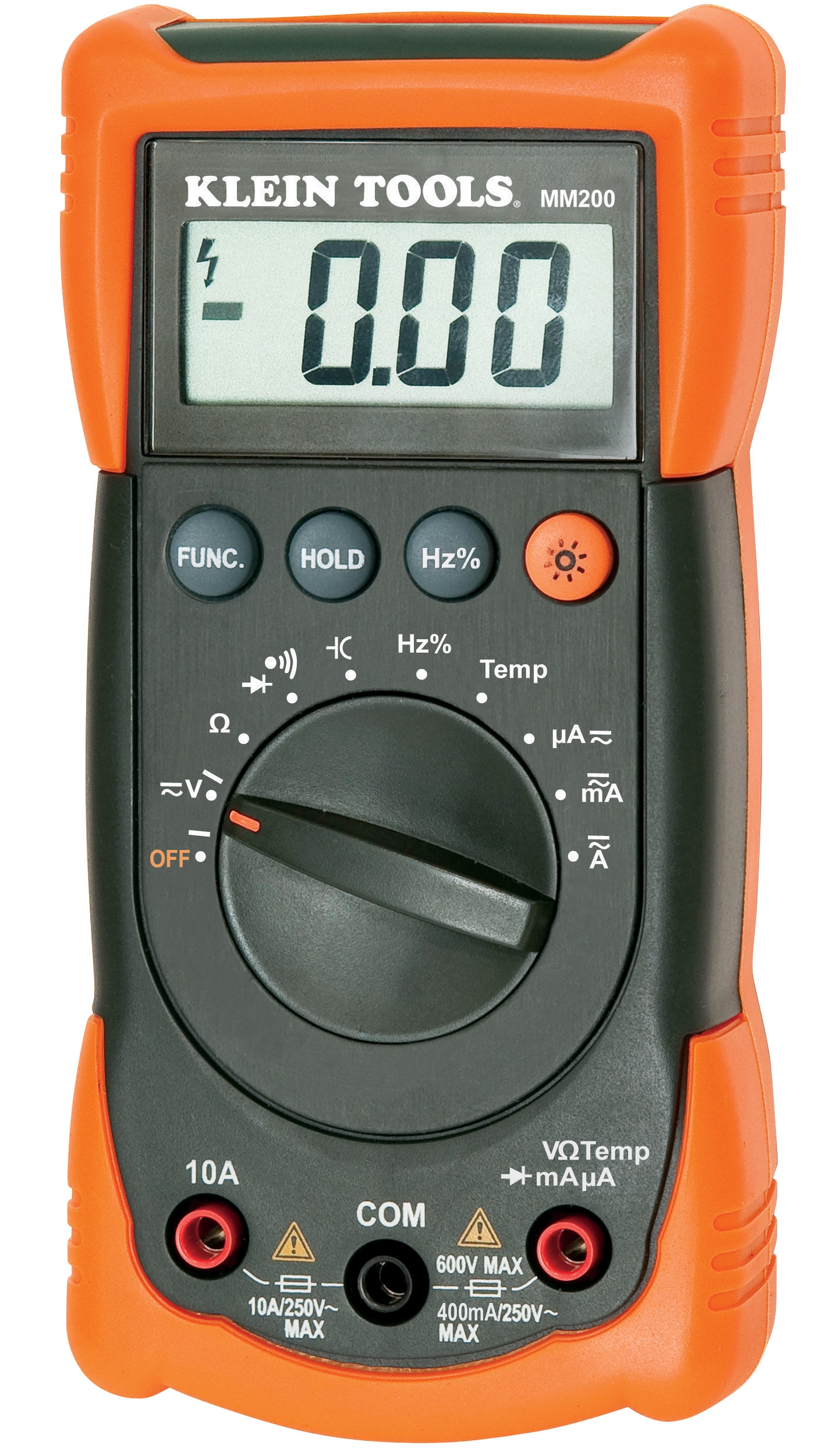
The CBM Automatic Multimeter (MM420) provides automated measurement of voltage, current, and resistance—three parameters that form the foundation of electrical condition assessment.
Preventive maintenance electrical testing:
- Phase voltage balance: Three-phase motors operating with more than 2% voltage imbalance degrade rapidly. Five-minute measurements across all three phases identify distribution problems before motors fail.
- Ground continuity verification: Verify motor frame and equipment chassis grounding twice yearly. Grounding degradation creates shock hazards and equipment damage risks.
- Capacitor condition checking: HVAC and motor run capacitors deteriorate predictably. Capacitance measurement trends identify units approaching end-of-life before they fail catastrophically.
- Control circuit verification: Low-voltage control circuits powering solenoids, contactors, and relays often suffer voltage drop from corroded connections. Voltage testing at solenoid coils verifies adequate operating levels.
Automatic multimeters eliminate human error in range selection and unit conversion. Technicians simply connect leads; the meter displays results. This reduces training requirements and ensures consistent measurement technique across your maintenance team.
Integrating Measurement & Detection into Preventive Maintenance Workflows
The most sophisticated instruments fail to prevent failures if measurements don't drive action. Consider these implementation strategies:
Measurement Scheduling
Create monthly maintenance checklists that specify measurement locations, baseline values, and acceptable variance ranges. Equipment-specific templates ensure consistent technique and enable meaningful trending.
Documentation and Analysis
Implement simple spreadsheets or maintenance software that records measurements against equipment serial numbers and maintenance dates. After 3-4 months of data, patterns emerge: pressure gauges showing consistent 5 bar monthly drops, temperature sensors trending upward 1-2°C monthly, electrical imbalance increasing 0.5% quarter-over-quarter. These trends drive predictive decisions—scheduling bearing replacement before failure, planning condenser cleaning before refrigeration loss becomes critical.
Technician Training Integration
New measurement tools require brief orientation, but the investment pays dividends. Train technicians on:
- Proper sensor placement and contact technique (especially important for infrared temperature measurement)
- Baseline establishment procedures
- Variance interpretation (pressure down 3 bar—normal for temperature change or symptomatic of problems?)
- Documentation consistency
Measurement & Detection Tool Selection Framework
Use this decision matrix to evaluate which tools fit your facility:
Start with risk assessment:
- What equipment failures create safety hazards? (Install gas detection and temperature monitoring)
- What failures cause production loss? (Add pressure monitoring and electrical diagnostics)
- What failures demand environmental compliance? (Gas detection becomes mandatory)
- Smaller facilities (< 3,000 sq meters): Portable instruments (temperature sensor, pressure gauges, multimeter) provide adequate coverage
- Mid-size facilities (3,000-10,000 sq meters): Add centralized gas detection for high-risk zones
- Large facilities (> 10,000 sq meters): Integrate all four tool categories with centralized monitoring and data management
Which equipment failures create the greatest operational, safety, or financial impact? Measurement & Detection investments should concentrate on these highest-consequence systems first.
Conclusion: Building Your Measurement & Detection Capability
Effective Measurement & Detection programs combine instruments rather than relying on single tools. A comprehensive approach—gas monitoring for safety-critical zones, temperature sensing for thermal anomalies, pressure gauging for efficiency monitoring, and electrical diagnostics for control system integrity—provides maintenance teams with complete visibility into equipment condition.
3G Electric has supplied industrial facilities globally for over 35 years with exactly these instruments. We understand that maintenance teams need reliable tools that integrate smoothly into existing workflows without excessive complexity. The products referenced here—from the CBM gas detection center managing multiple zones to simple analog pressure gauges providing real-time visual feedback—represent proven approaches to condition monitoring.
Your next step: Audit your current measurement capabilities. Which failure modes do you detect reliably? Which equipment operates without adequate condition monitoring? These gaps represent opportunities where new Measurement & Detection tools will prevent problems and extend equipment service life. Contact 3G Electric to discuss which instruments best fit your facility's specific monitoring requirements.