Understanding Measurement & Detection in Compliance Frameworks
Measurement & Detection systems serve as the foundation of industrial safety compliance globally. Unlike preventive maintenance tools, these systems create documented evidence of hazardous conditions—whether toxic gases, excessive pressure, or temperature anomalies—that regulators, insurers, and safety auditors require.
Procurement engineers face a critical challenge: selecting detection equipment that meets local regulations while maintaining cost efficiency across multi-site operations. The complexity increases when managing facilities across different regions with varying compliance standards. A gas detection system compliant in Singapore may require retrofitting for EU directives, while pressure gauges acceptable in North America might not meet ATEX certification requirements in Europe.
3G Electric's 35+ years of experience sourcing industrial equipment across 120+ countries has revealed that compliance failures rarely stem from equipment failures—they stem from specification misalignment. Engineers who understand the interplay between detection capability, regulatory requirement, and operational integration make purchasing decisions that protect budgets and personnel simultaneously.
Gas Detection Systems: Selecting for Your Regulatory Environment
Gas detection represents the highest-stakes detection category. Unlike pressure or temperature sensing where gradual degradation allows intervention, gas exposure incidents occur rapidly and can be fatal. This reality drives strict regulatory frameworks that vary significantly by region.
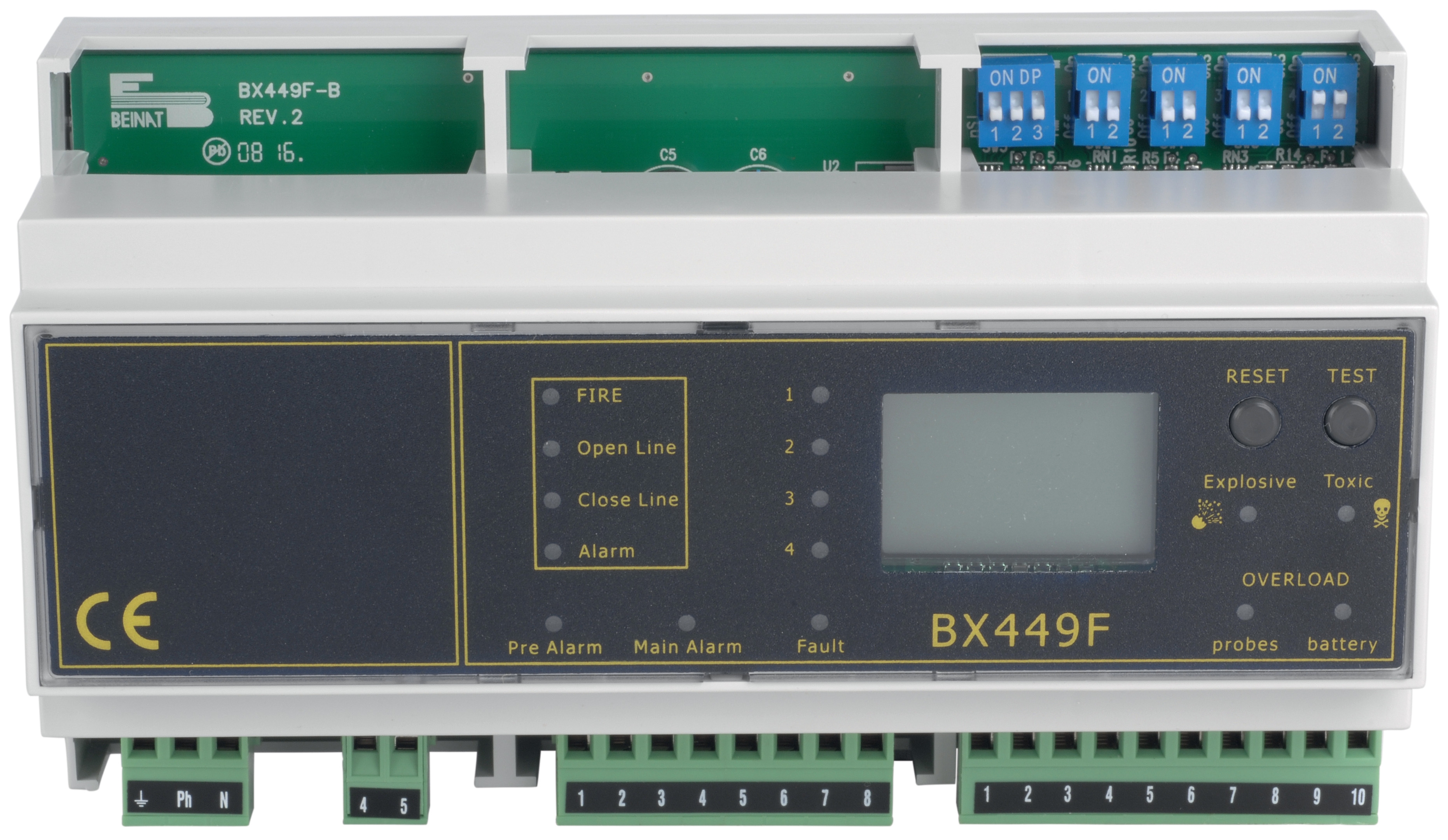
The CBM Gas Detection Center DTK08016 exemplifies industrial-grade gas detection designed for multi-point monitoring. The eight-probe capacity with 12V DIN rail integration addresses a practical procurement challenge: how to monitor distributed hazard points—compressor discharge areas, pump stations, storage zones—through a single centralized control unit.
When specifying gas detection, procurement engineers must determine:
Regulatory Trigger Points: EU Directive 2014/34/EU (ATEX) requires certified equipment in explosive atmospheres. UK HSE regulations mandate gas detection in confined space work. Singapore's WSH (Workplace Safety and Health) Act specifies detection thresholds for common industrial gases. Each jurisdiction defines which gases require detection, at what concentration levels, and with what response time. A system compliant at 10% LEL (Lower Explosive Limit) may be non-compliant if regulations require 20% LEL responsiveness.
Probe Placement Logic: The eight-probe architecture of the DTK08016 isn't arbitrary—it reflects practical risk topology. Optimal placement follows ISO 13849-1 risk assessment methodology: position probes at gas source areas (highest concentration, fastest detection), worker zones (breathing level, 1.5m height), and exhaust paths (confirmation detection). Under-probing (5 sensors for 8 logical zones) creates compliance gaps. Over-probing (20 sensors across 8 zones) wastes capital and creates maintenance complexity.
Response Time Documentation: Regulatory audits increasingly focus on response time verification—the lag between hazardous gas presence and alarm activation. For example, OSHA PSM (Process Safety Management) audits examine calibration records showing response times for specific gas mixtures at specified pressures. Procurement specifications must include calibration certificates showing response times for your actual gas mixtures, not generic nitrogen test data.
Pressure Measurement: From Selection Through Auditable Documentation
Pressure measurement devices occupy a unique niche in compliance: they're simple instruments with profound consequences when misspecified. An engineer selecting a 0-1 bar gauge (like the CBM ROS28004 Green ABS Pressure Gauge) for general plant monitoring creates a compliance liability if that gauge ever needs to confirm pressure control on a critical process.
Pressure gauge selection requires three parallel decision processes:
Application-Specific Range Selection: The ROS28004 (0/+1 bar, G1/4 connection) suits low-pressure pneumatic systems, compressor discharge trim, and pilot pressure monitoring. The CBM ROS27030 ABS Green Gauge 0/+250 bar, G1/4 addresses high-pressure hydraulic lines and gas cylinder charging verification. Selecting the 1-bar gauge for a 250-bar system violates manufacturer specifications and creates liability in incident investigations. Conversely, specifying the 250-bar gauge for low-pressure work introduces reading inaccuracy (0.5-1 bar pressures become difficult to read on a 250-bar scale) that operators compensate for by ignoring readings.
Gauge Accuracy Class Alignment: Industrial gauges operate in accuracy classes: Class 1.6 (±1.6% of full scale), Class 2.5 (±2.5%), Class 4 (±4%). Procurement engineers often minimize cost by selecting Class 4 gauges. However, regulatory frameworks increasingly require documented accuracy margins. If your process operates at 95 bar with a 100-bar pressure relief set point, and you're using a Class 4 100-bar gauge, your worst-case reading uncertainty is ±4 bar—meaning actual pressure could be anywhere from 91-99 bar when the gauge reads 95. Insurance adjusters flag this as inadequate control. Class 2.5 or 1.6 accuracy becomes non-negotiable for safety-critical applications.
Connection Integrity Verification: The G1/4 thread specification appears trivial but represents a compliance failure point. Pressure gauges with mismatched threads generate leaks, vibration loosening, and eventual disconnection. Beyond safety, disconnected gauges create a documentation problem: was pressure actually monitored at that point? Procurement specifications should mandate:
- Thread material compatibility (stainless steel threads for corrosive environments, brass for general industrial)
- Snubber integration (pulsation dampers for compressor discharge lines where vibration-induced gauge failure is common)
- Isolation valve provision (allows gauge removal for calibration without system shutdown)
Temperature & Electrical Measurement: Creating Compliant Monitoring Chains
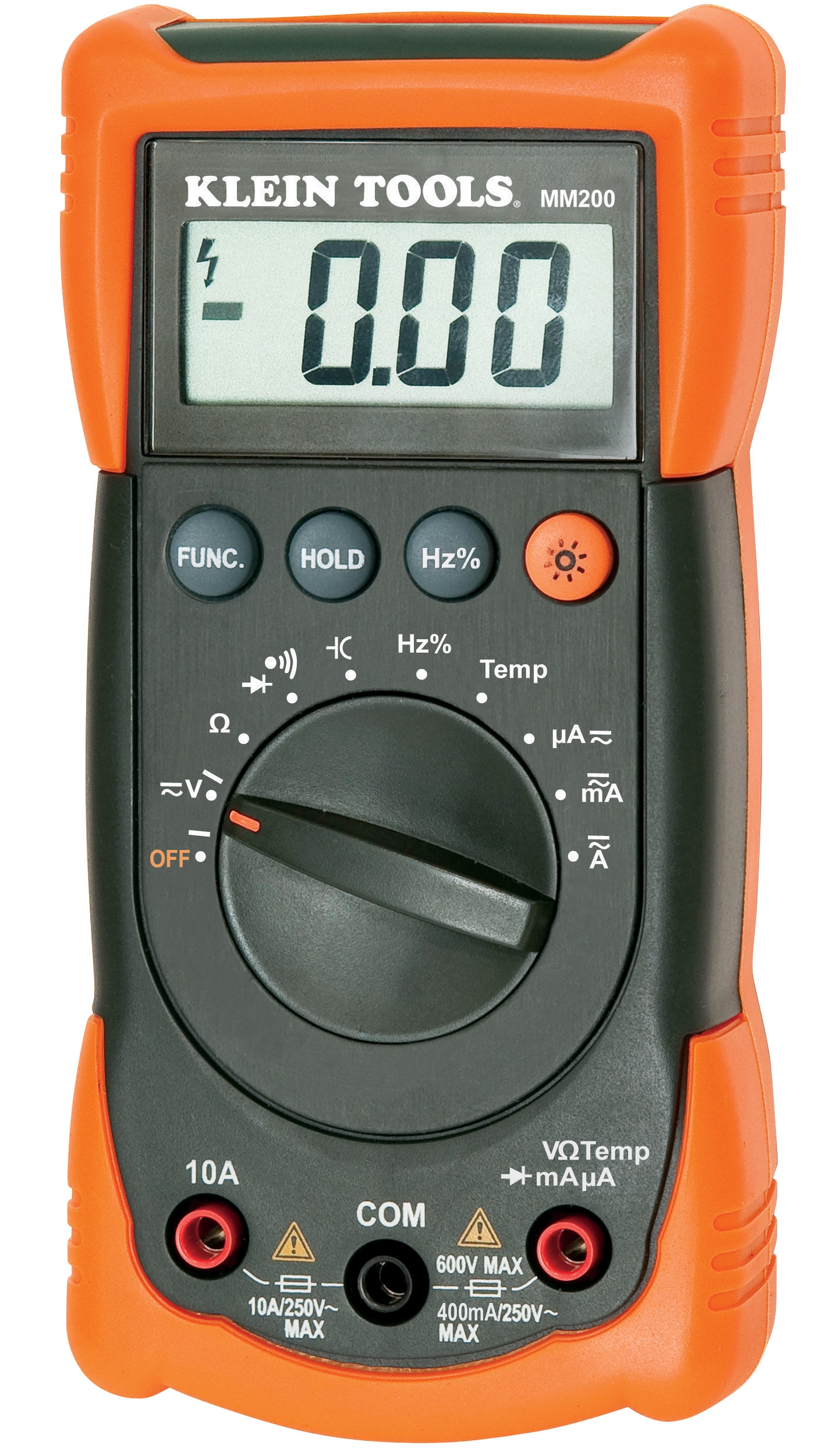
Temperature measurement through sensors like the CBM Surface Temperature Sensor TE-SNW-E and electrical measurement via the CBM Automatic Multimeter MM420 form monitoring chains that detect emerging faults before they cascade into safety events or unplanned shutdowns.
The regulatory importance of these measurements often goes unrecognized. Process Safety Management (PSM) frameworks require temperature monitoring on reactive processes. Electrical safety standards (IEC 61010 for test equipment, IEC 61557 for electrical installation testing) specify required measurement tools and their accuracy classes. Procurement engineers who understand this connection make smarter equipment choices.
Surface Temperature Sensing Strategy: The DWY50010 sensor measures bearing temperatures, motor windings, and pipeline surface conditions. Temperature monitoring alone isn't sufficient—the measurement must fit a documented monitoring protocol. For example, bearing temperature trending requires:
- Baseline establishment (measuring target equipment across three operating cycles to establish normal ranges)
- Measurement point standardization (always measure the same bearing location, same time in the cycle)
- Trending documentation (weekly readings recorded in a consistent format, enabling trend analysis)
- Alarm threshold definition (what temperature increase triggers investigation vs. shutdown)
Without this structure, temperature measurements become data noise. With proper protocol, trending catches bearing wear 2-3 weeks before catastrophic failure, enabling planned maintenance rather than emergency downtime.
Electrical Safety Measurement Requirements: The MM420 automatic multimeter addresses a procurement gap. Manual multimeters require operator interpretation—reading analog needles, converting scales, recording values. Automatic multimeters eliminate operator error and create digital records. For compliance audits, this distinction matters significantly. When asked "prove this equipment was tested for electrical integrity on 2024-01-15," an automatic multimeter's digital log provides uncontestable evidence. Manual measurements become liability—auditors question whether readings were accurate, who recorded them, whether conditions were truly safe.
Procurement specifications for electrical testing equipment should require:
- CAT IV (Overvoltage Category IV) rating for industrial applications
- Data logging capability with timestamp records
- Automatic range selection (eliminates user scale-selection error)
- Compliance with IEC 61010-1 safety standards for test equipment
Integration Strategy: Building Auditable Measurement Systems
Individual measurement tools become powerful only when integrated into coherent systems. A procurement engineer selecting gas detection, pressure gauges, temperature sensors, and electrical testers in isolation creates isolated data streams. Integrated specifications create compliance value.
Centralized Monitoring Architecture: The DTK08016 gas detection center exemplifies integration—eight probes reporting to a single DIN rail controller. This topology creates documented accountability: each probe location has a permanent record of alarm events, enabling post-incident investigation. Distributed standalone detectors (one at each location) create accountability gaps: which detector alarmed? When? Was it properly calibrated?
Procurement specifications should mandate:
- Centralized data logging with timestamped records
- Multi-parameter monitoring (gas + temperature + pressure from integrated systems where feasible)
- Alarm documentation (automatic event recording, not operator-dependent notation)
- Remote accessibility (allowing compliance officers, insurers, and safety auditors to review monitoring without site visits)
Establish calibration specifications including:
- Calibration frequency (typically annual for pressure gauges, 12-24 months for temperature sensors, per-shift verification for gas detectors)
- Accredited laboratory requirements (ISO/IEC 17025 accreditation ensures regulatory acceptance)
- Certificate content standards (measurement uncertainty must be documented, not assumed)
- Record retention (typically 5-7 years depending on jurisdiction)
- Battery backup for wireless sensors (preventing data loss during power events)
- Standardized connector types (allowing interchangeable probe modules, reducing spare parts inventory)
- Intuitive interfaces (equipment operators actually use performs better than technically superior equipment ignored)
- Local display options (critical alarms visible without remote system access)
Conclusion: Strategic Measurement & Detection Procurement
Measurement & Detection system selection represents a crossroads between cost optimization and compliance assurance. Procurement engineers who view these systems as insurance—investing in equipment and integration that prevent costly incidents and audit failures—outperform those who minimize capital expense without considering operational and regulatory context.
3G Electric's three decades distributing measurement equipment across regulated industries reveals a pattern: organizations with mature measurement & detection strategies experience fewer incidents, pass audits more smoothly, and maintain equipment reliability that justifies higher initial investment through reduced downtime.
Your specification decisions today—whether to integrate gas detection with pressure monitoring, whether to mandate automatic versus manual electrical testing, how to structure calibration protocols—determine tomorrow's compliance status and safety record. Invest in clarity, integration, and documentation. The measurement systems that create auditable evidence of safe operations protect personnel, facilities, and organizational credibility.