Understanding Measurement & Detection in Modern Manufacturing Process Control
Measurement & Detection systems form the nervous system of modern manufacturing plants. For plant managers operating facilities across Southeast Asia, these systems provide the real-time visibility required to maintain consistent product quality, optimize energy consumption, and prevent costly equipment failures. Unlike basic monitoring, true process control through advanced measurement integrates temperature, pressure, and flow data into automated feedback loops that continuously adjust operations.
With 35+ years of industrial equipment distribution experience, 3G Electric has supported thousands of manufacturing facilities across the region. The most successful operations share a common characteristic: they treat Measurement & Detection infrastructure as a strategic investment, not a regulatory compliance checkbox. In tropical Southeast Asian environments—where humidity, temperature fluctuations, and challenging installation conditions are constant—the right measurement infrastructure becomes even more critical to consistent performance.
The core challenge plant managers face is selecting measurement solutions that deliver three essential outcomes: accuracy within process tolerances, reliability in harsh operating conditions, and integration with existing control systems. This guide addresses each dimension with practical implementation strategies specific to Southeast Asian manufacturing contexts.
Section 1: Temperature Measurement Systems for Process Stability
Why Temperature Measurement Drives Quality Consistency
Temperature control directly impacts product quality, equipment longevity, and energy efficiency. Whether you operate chemical processing lines, food manufacturing, HVAC systems, or thermal treatment processes, temperature accuracy determines whether products meet specifications or face costly rework.
Southeast Asian facilities face unique temperature challenges: ambient temperatures frequently exceed 35°C, humidity often exceeds 80%, and seasonal variations can shift process baselines significantly. Your measurement system must compensate for these environmental factors while maintaining process tolerances that might be measured in tenths of a degree.
The Dwyer Probe AVG PT100 OHM RTD delivers ±0.6% accuracy with a flexible copper capillary design specifically engineered for industrial process measurement. The ±0.6% accuracy specification means that in a 100°C process, your measurement uncertainty is ±0.6°C—tight enough for most manufacturing applications. The flexible capillary construction accommodates the spatial constraints common in compact Southeast Asian manufacturing layouts, while the wide operating range (-35.5 to +115.5°C) handles both ambient temperature extremes and process requirements.
Implementation Strategy for Temperature Monitoring
Plant managers should adopt a three-tier temperature measurement strategy:
Primary Process Points: Install high-accuracy RTD probes at critical process stages where temperature directly impacts quality. These represent 20-30% of measurement points but drive 80% of quality outcomes. Position probes to capture representative process conditions—not just convenient installation points.
Secondary Monitoring Points: Deploy additional temperature sensors at process transitions, heat exchanger inlet/outlet pairs, and equipment that generates significant waste heat. These points enable energy optimization and early warning for efficiency degradation.
Environmental Reference Points: Install ambient temperature sensors in equipment enclosures and control areas. These reference measurements allow your control systems to automatically adjust process setpoints based on environmental drift—a critical feature in tropical climates where ambient temperature variation reaches 15-20°C between day and night.
The flexible design of the Dwyer AVG probe allows installation in confined spaces where rigid probes cannot fit, and the flange clip mounting system enables rapid replacement without breaking process connections—reducing downtime during sensor maintenance.
Section 2: Pressure Measurement for System Integrity and Efficiency
Pressure as a Key Process Parameter
Pressure measurements serve dual functions in manufacturing: they indicate system health (excessive pressure suggests blockages or equipment degradation) and they directly impact process outcomes. In HVAC systems, pneumatic operations, hydraulic processes, and gas handling systems, pressure measurement is non-negotiable.
Southeast Asian facilities must account for pressure fluctuations caused by high humidity (which affects air density), thermal expansion in long outdoor piping runs, and pressure surges from equipment cycling in high-temperature environments. Standard pressure gauges with ±2% accuracy often prove insufficient because they cannot distinguish between normal operational variation and emerging equipment problems.
The Preciman Stainless Steel Vertical Pressure Gauge D63 0/+40Mbar provides ±1.6% accuracy—a 20% improvement in measurement precision over standard gauges—with stainless steel construction that resists corrosion from humid coastal environments. The 63mm dial provides clear visibility even from operational distances, and the G1/4 connection with copper alloy wetted parts ensures compatibility with most industrial systems.
Pressure Monitoring Implementation
Establish pressure measurement at these critical points:
System Inlet Points: Measure incoming pressure to detect upstream problems before they cascade through your process. Declining inlet pressure often signals filter blockages or equipment degradation at the source.
Process Section Differentials: Install pressure gauge pairs across major process sections (before and after heat exchangers, across filtration systems, across coalescing separators). The differential pressure indicates system restriction and signals maintenance needs before performance degrades. Most equipment manufacturers specify acceptable pressure drops—track actual versus specification to predict maintenance requirements.
Equipment Protection Points: Monitor outlet pressure on compressors, pumps, and pressure-regulated systems. Over-pressure conditions lead to equipment damage and safety hazards.
The Preciman gauge's vertical orientation and stainless construction make it ideal for Southeast Asian installations where equipment is often exposed to direct humidity and salt-laden air, particularly in coastal facilities. The ±1.6% accuracy enables you to detect 1-2 mbar changes in 40 mbar systems—sufficient sensitivity for predictive maintenance algorithms.
Section 3: Flow Measurement for Process Optimization and Energy Management
Flow Rate Data as an Operational Window
Flow measurement reveals operational efficiency that temperature and pressure alone cannot show. In HVAC systems, pneumatic networks, hydraulic circuits, and thermal distribution systems, actual flow rates determine whether systems deliver designed performance or operate at reduced capacity due to blockages, leaks, or equipment degradation.
For plant managers, flow measurement data answers critical questions: Are HVAC systems distributing conditioned air uniformly across zones? Is compressed air leaking, or is consumption actually within design limits? Are cooling systems maintaining designed circulation rates, or is scaling reducing effectiveness?
The Dwyer Metal Average Flow Probe MAFS-16 and Dwyer Average Flow Rate Metal Probe MAFS-40 represent two solutions for different facility scales. The MAFS-16 probe provides 16 cm of measurement sensitivity for smaller HVAC systems or confined spaces, while the MAFS-40 offers 101.6 cm measurement length for larger ductwork applications. Both designs use uniformly distributed pressure measurement points to capture representative flow conditions across the entire duct cross-section.
Traditional single-point flow measurements can miss significant non-uniformities. A duct with uneven airflow distribution might show acceptable average flow while leaving certain zones under-conditioned. Average flow probes capture the complete picture by taking multiple pressure measurements across the measurement length, then computing true average flow rate.
Flow Measurement Strategy for Southeast Asian Facilities
HVAC System Commissioning: Use flow probes during initial system startup to verify that HVAC equipment delivers designed airflow. This baseline becomes your reference for detecting future performance degradation. In tropical Southeast Asia, properly designed HVAC systems struggle with humidity control if airflow is insufficient—flow measurement during commissioning prevents hidden capacity problems.
Preventive Flow Monitoring: Establish periodic flow measurements (quarterly or semi-annually) on critical HVAC zones and pneumatic systems. Declining flow rates without pressure changes suggest blockages or equipment degradation. This data feeds predictive maintenance schedules—replacing filters or cleaning coils before system performance visibly deteriorates.
Energy Optimization: Flow measurement combined with pressure data reveals system efficiency. High flow rates at high pressure indicate excessive restriction and wasted energy. Flow measurement on compressed air systems, for example, enables you to identify and eliminate leaks that represent pure energy waste without any productive benefit.
The metal construction of Dwyer probes provides durability in demanding environments. Unlike fragile glass or plastic measurement systems, metal probes withstand mechanical vibration, thermal cycling, and the occasional accidental contact that occurs in active manufacturing areas.
Section 4: Integrated Systems Approach and Southeast Asian Considerations
Building a Cohesive Measurement Infrastructure
Individual instruments provide data, but integrated Measurement & Detection systems provide intelligence. Successful plant managers connect temperature, pressure, and flow measurements into coordinated monitoring networks that feed process control systems, maintenance scheduling software, and energy management dashboards.
In Southeast Asia's diverse regulatory environment—with varying standards between countries and varying facility maturity levels—integration flexibility is critical. Your measurement system should accommodate both new digital data acquisition systems in modern facilities and analog outputs compatible with legacy control systems in upgraded older plants.
For many Southeast Asian facilities, the Measurement & Detection infrastructure must handle:
High Ambient Temperature: Equipment rated for 50°C+ ambient operation becomes essential. Instrument enclosures require ventilation or cooling in spaces that reach extreme temperatures.
Corrosive Environments: Coastal facilities and facilities near industrial complexes experience corrosion that destroys standard mild steel gauge bodies. Stainless steel instruments (like the Preciman gauge) and sealed electronic sensors prevent corrosion-related failures.
Installation Constraints: Land scarcity in Southeast Asian urban and industrial zones means facilities are often compact with challenging spatial constraints. Flexible probe designs and vertical gauge mounting solutions (like Preciman's vertical orientation) accommodate these restrictions.
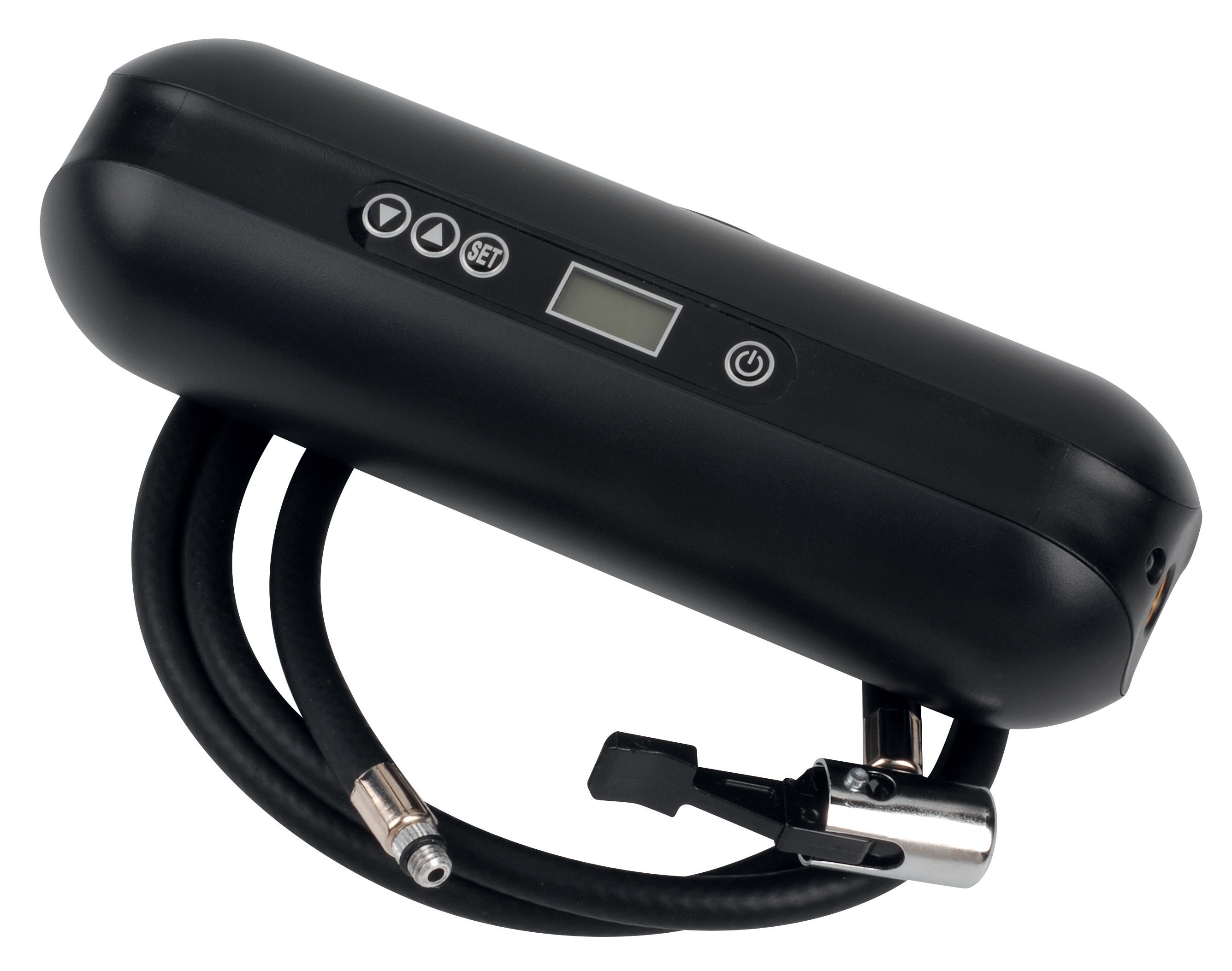
Power and Communication Complexity: Older facilities may lack reliable electrical infrastructure, making battery-powered measurement systems (like the CBM Expansion Tank Inflator with 2000 mAH Battery) attractive for distributed measurement points where installing permanent wiring is impractical.
Calibration and Maintenance in Tropical Climates
Measurement accuracy degrades over time. Temperature and humidity extremes accelerate degradation. Establish a calibration schedule:
- High-criticality temperature sensors: Annual calibration (±0.6% devices should return to within ±0.3% specification)
- Pressure gauges: Every 18-24 months or immediately if readings seem inconsistent
- Flow probes: Bi-annual verification, more frequently in high-dust or high-moisture environments
Document all calibrations. This record becomes essential proof during quality audits and enables you to detect systematic drift patterns that suggest environmental factors are affecting measurement reliability.
In tropical Southeast Asian facilities, store calibration documentation in climate-controlled areas. Humidity and heat damage calibration certificates and affect electronic calibration records stored on standard media. Digital archiving with cloud backup ensures records survive facility incidents.
Practical Implementation Roadmap
Plant managers should structure Measurement & Detection implementation in phases:
Phase 1 (Months 1-2): Audit existing measurement infrastructure. Identify measurement gaps that currently drive quality issues or prevent process optimization. Prioritize critical points where measurement uncertainty directly impacts product quality or safety.
Phase 2 (Months 2-4): Install primary measurement systems at highest-value points. Focus on temperature and pressure first—flow measurement typically follows as supporting data. Ensure all systems can connect to existing data acquisition infrastructure.
Phase 3 (Months 4-6): Integrate measurement systems with process control logic. Set alarm thresholds based on process requirements and equipment capabilities. Train operations staff on interpreting measurement data and responding to alerts.
Phase 4 (Months 6+): Expand to secondary monitoring points and implement predictive maintenance algorithms. This phase delivers ongoing operational improvements as data history accumulates.
With 35+ years of experience supporting Southeast Asian manufacturers, 3G Electric provides not just instruments but implementation guidance tailored to regional challenges. Our relationships with manufacturers like Dwyer and Preciman ensure you access equipment specifically designed for industrial application rather than generic instruments unsuitable for demanding environments.