
Understanding Measurement & Detection Accuracy in Industrial Procurement
Measurement & Detection forms the foundation of reliable industrial operations. For procurement engineers responsible for equipment specification, selecting the right sensors isn't just about finding the lowest price—it's about understanding accuracy specifications, operating ranges, and real-world performance criteria.
With over 35 years of experience distributing industrial equipment, 3G Electric understands that measurement accuracy directly impacts operational efficiency, safety compliance, and cost control. When you specify a pressure gauge, flow probe, or temperature sensor, you're committing to data quality that will inform maintenance decisions, regulatory reporting, and system optimization for years to come.
This guide walks you through the practical process of validating Measurement & Detection equipment before procurement, ensuring your sensors deliver the accuracy your Singapore industrial facility requires.
Section 1: Establishing Your Measurement & Detection Accuracy Requirements
Before you can validate sensor performance, you must first define what "accurate enough" means for your specific applications.
Document Your Operating Conditions
Start by mapping the actual operating environments where your sensors will work. Singapore's tropical climate, with high humidity and temperature fluctuations, places specific demands on measurement equipment. Industrial facilities operating 24/7 in humid conditions require instruments with proper protection ratings.
For each measurement point in your system, document:
- Normal operating range: The typical pressure, temperature, or flow values during standard operation
- Peak operating range: Maximum and minimum values during startup, shutdown, or upset conditions
- Environmental conditions: Temperature, humidity, vibration, corrosive atmospheres, or washdown environments
- Required response time: How quickly the sensor must detect changes (critical for safety systems vs. trending data)
- Regulatory or process requirements: Specific accuracy mandates from standards like ISO 9001, PED, or customer specifications
For example, if you're measuring hydraulic pressure in a manufacturing line that operates in a temperature range of 15–45°C with 80% humidity, your sensor selection must account for temperature compensation and corrosion resistance—not just pressure range.
Define Your Acceptable Accuracy Band
Sensor accuracy is expressed as a percentage of full-scale reading (±% FSR) or percentage of actual reading (±% of reading). A ±2.5% accuracy specification on a 0–16 bar gauge like the Preciman Manometer ABS vert D80 means potential variation of ±0.4 bar across the full range.
Determine your tolerance by working backward from your process requirement:
- If your process requires ±0.5 bar control, a ±2.5% accurate gauge is acceptable for the full 16 bar range
- If your process requires ±0.2 bar control, you need tighter accuracy (±1.5% or better) or a smaller-range gauge
- If measuring near the gauge's lower end, expect larger percentage errors—a reading of 2 bar on a 0–16 bar gauge with ±2.5% accuracy could be off by ±0.4 bar (±20% of actual reading)
This is why many procurement engineers specify different sensor ranges for different applications rather than using one universal sensor.
Section 2: Sensor Selection Criteria for Singapore Industrial Environments
Once you've defined your accuracy requirements, evaluate candidate sensors against environmental and operational criteria specific to Singapore operations.
Evaluate Protection Ratings and Environmental Resistance
Singapore's high humidity and frequent equipment washdowns demand sensors with appropriate protection ratings:
- IP65 rating (as found on Dwyer Pressure Switch DXW-11-153-4 and Dwyer Transmitter 629-05-CH-P2-E5-S1) provides protection against water jets and dust ingress—suitable for washdown areas
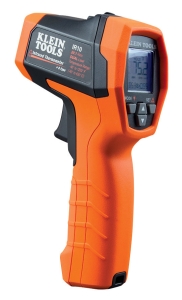
- IP54 rating (as on CBM Infrared Thermometer) handles splash protection and limited dust exposure—adequate for most control rooms and indoor installations
- Glycerin-filled gauges like the Preciman Manometer offer dampening for pulsating pressure and vibration resistance—valuable in manufacturing environments with machinery vibration
When specifying sensors for outdoor installations, equipment rooms adjacent to cooling towers, or areas with chemical mists, escalate protection requirements accordingly.
Match Connection Types to Your System
Incorrect connection specifications cause installation delays and safety issues. Verify:
- Thread types: G1/2 (ISO 228-1 metric thread), NPT 1/4", SAE connections—verify compatibility with your existing manifolds and gauges
- Probe length: The Dwyer MAFS-20 Medium Flow Metal Probe features a 71 cm length designed for immersion measurement—critical for accurate temperature or flow sensing in pipes and tanks
- Electrical connections: 4-20 mA transmitters like the Dwyer 629-05-CH-P2-E5-S1 integrate directly with PLC and SCADA systems—verify voltage compatibility and signal isolation requirements
Verify Output Types Match Your Control Architecture
Different systems require different sensor outputs:
- Analog (4-20 mA): Transmitters like the Dwyer 629-05-CH-P2-E5-S1 work with legacy PLCs and analog input modules—verify your receiving equipment has proper 250-ohm resistors for accurate conversion
- Switching (on/off): Pressure switches like the DXW-11-153-4 control equipment directly—confirm setpoint ranges match your application requirements
- Dial/gauge indication: Mechanical gauges provide visual verification independent of electronics—valuable as backup verification instruments
Section 3: Pre-Procurement Validation and Specification Documentation
Before finalizing your procurement, conduct technical validation to ensure selected sensors will perform reliably in your facility.
Create a Specification Datasheet for Each Sensor Type
For equipment as critical as measurement sensors, formal specification prevents procurement mistakes and establishes clear expectations with suppliers. Your datasheet should include:
Functional Requirements:
- Measured parameter (pressure, temperature, flow)
- Operating range (minimum to maximum expected values)
- Required accuracy (±% FSR or ±% of reading)
- Response time (milliseconds or seconds)
- Output type and signal range
- Ambient temperature range during operation and storage
- Humidity levels and washdown/splash exposure
- Vibration and mechanical shock expectations
- Corrosive atmospheres or chemical exposure (identify specific chemicals)
- Thread/connection type and size
- Probe length (if applicable)
- Mounting orientation (vertical, horizontal)
- Cable length and routing requirements
- Visual display needs (dial, digital, remote indication)
- Relevant international standards (ISO 4413 for hydraulic systems, PED for pressure equipment in EU supply chains)
- Electrical safety standards (IEC 61010 for measurement equipment)
- Third-party certifications (CE marking, UL, Thai Industrial Standards)
Request Calibration Certificates and Traceability
Accuracy claims mean nothing without supporting documentation. When procuring measurement & detection equipment, require:
- Factory calibration certificates traceable to NIST or equivalent national standards
- Calibration date and next recommended calibration interval (typically 12–24 months for industrial sensors)
- Uncertainty statement showing the measurement accuracy achieved during factory calibration
- Environmental conditions under which calibration was performed
This documentation protects you during quality audits and provides evidence that sensor accuracy was verified before deployment.
Conduct Bench Testing Before Full Deployment
With over 35 years of industrial equipment distribution experience, 3G Electric has seen how lab performance differs from field reality. Before specifying 100 units across your facility:
1. Procure 2–3 sample units of the selected sensor model
2. Install them in representative operating conditions (temperature, pressure, vibration profiles matching your actual environment)
3. Operate for 72 hours under normal conditions and log readings
4. Compare against a reference instrument (a recently calibrated meter of known accuracy)
5. Document any drift, instability, or environmental sensitivity you observe
6. Verify electrical connections and signal quality in your actual control system architecture
This pilot validation catches specification errors before you've committed budget to fleet-wide deployment.
Section 4: Field Verification and Ongoing Accuracy Assurance
Once sensors are installed, ongoing verification ensures they continue delivering accurate Measurement & Detection throughout their service life.
Establish a Calibration Schedule and Tracking System
Sensors drift over time. Environmental factors, vibration, thermal cycling, and normal wear all degrade accuracy gradually. Create a calibration management system that includes:
- Database of all installed measurement & detection instruments with serial numbers, installation dates, and last calibration dates
- Scheduled calibration intervals based on manufacturer recommendations and your process criticality (safety systems may require annual calibration; trend monitoring sensors may be calibrated every 24–36 months)
- Third-party calibration service agreements with local Singapore providers to minimize downtime
- Acceptance criteria defining maximum allowable drift before sensors are returned to factory or retired
Implement Cross-Checking Protocols
When measurement accuracy is critical, don't rely on a single sensor:
- Dual gauge installation: At critical pressure points, install both a permanent transmitter (like the Dwyer 629-05-CH-P2-E5-S1) and a mechanical dial gauge (like the Preciman Manometer) so operators can cross-verify readings
- Portable reference instruments: Maintain calibrated portable thermometers and pressure gauges for field spot-checking permanent installations
- Trend analysis: Track sensor readings over weeks and months—sudden jumps or drifts indicate sensor degradation before accuracy becomes critically poor
Train Your Team on Measurement & Detection Best Practices
Sensor accuracy depends partly on proper use:
- Gauge orientation: Vertical mounting (as specified for the Preciman vertical manometer) affects accuracy—confirm installation orientation matches manufacturer specifications
- Pressure pulsation management: Damping agents and snubbers reduce measurement noise from pulsating systems—specify these when selecting sensors for reciprocating pumps or compressors
- Probe immersion depth: Flow and temperature probes like the Dwyer MAFS-20 must be inserted to the specified depth in the medium being measured for accurate results
- Reading techniques: For digital transmitters, understand the averaging and response time—a 4-20 mA signal that responds in 500 milliseconds will miss transient events
Your operators and maintenance teams should understand that "reading the gauge" isn't enough—they must understand how the reading was taken and when the sensor was last verified as accurate.
Practical Implementation: A Procurement Checklist
Apply these steps to your next measurement & detection sensor procurement:
1. Define accuracy requirements based on your process needs and operating environment
2. Select candidate sensors against environmental, connection, and output criteria
3. Request technical documentation including calibration certificates and environmental specifications
4. Conduct bench testing with 2–3 sample units in representative conditions
5. Document formal specifications with accuracy, environmental, physical, and compliance requirements
6. Procure pilot quantities before fleet deployment
7. Establish calibration and verification schedules before installation
8. Implement cross-checking protocols for critical measurement points
9. Train operators and maintenance teams on proper sensor use and reading techniques
10. Review performance after 6–12 months and adjust specifications if needed
This disciplined approach to Measurement & Detection procurement ensures your sensors deliver reliable data throughout their service life—and gives you confidence that operational decisions based on that data are sound.
Why Partner With 3G Electric for Measurement & Detection Equipment
Since 1990, 3G Electric has supplied industrial measurement and detection equipment to manufacturing facilities, processing plants, and engineering contractors across Southeast Asia. Our 35+ years of experience means we understand:
- How measurement systems perform in Singapore's specific climate and industrial environments
- Which sensor types solve real-world problems versus which are over-specified for your application
- How to match equipment from different manufacturers into integrated measurement architectures
- Local calibration services and replacement logistics to minimize your downtime
When you work with 3G Electric for your measurement & detection procurement, you're not just buying equipment—you're accessing decades of field experience that helps you specify accurately, validate thoroughly, and manage your sensors for long-term reliability.
Ready to upgrade your measurement & detection systems? Contact our procurement specialists to discuss your specific requirements and receive a customized equipment recommendation.