Understanding Maintenance & Service: Preventive vs. Reactive Framework
Maintenance & Service strategies form the backbone of equipment reliability in industrial operations. Procurement engineers across Singapore face a critical decision: invest in preventive maintenance programs or manage equipment reactively as failures occur. With over 35 years of experience distributing industrial equipment, 3G Electric has observed that this choice significantly affects operational budgets, production schedules, and equipment longevity.
Preventive maintenance involves scheduled inspections, component replacements, and system monitoring before failures develop. Reactive maintenance addresses problems after they cause downtime. For procurement professionals evaluating equipment suppliers and service partners, understanding these two approaches enables better cost forecasting and risk management. This article compares both strategies across typical industrial scenarios, using real equipment like Pratissoli KF30 high-performance pumps, Francel pressure regulators with safety relief, and Euspray flat jet nozzles, helping you make data-driven decisions aligned with your operational requirements.
Preventive Maintenance & Service: Planning and Cost Structure
Scheduled Inspection Intervals
Preventive Maintenance & Service relies on systematic inspection schedules based on equipment manufacturer specifications and operating conditions. For high-pressure pump systems like the KF30 (106 L/min, 200 bar) and MW40 (211 L/min, 210 bar), preventive protocols typically include:
- Monthly visual inspections: checking for leaks, unusual noise, temperature variations, and vibration patterns
- Quarterly performance testing: measuring flow rates, pressure stability, and thermal characteristics against baseline data
- Semi-annual component servicing: replacing wear rings, seals, and filter elements before they degrade
- Annual system diagnostics: comprehensive testing using pressure gauges, flow meters, and vibration analysis equipment
The benefit of scheduled intervals is predictability. Your maintenance team plans work during available production windows, spare parts inventory remains controlled, and equipment downtime is minimized. For procurement engineers, this translates to stable annual budgets and reduced emergency spending.
Parts Inventory and Lead Times
Preventive approaches require maintaining strategic spare parts inventory. For critical equipment like Interpump E1D1808 compact gear pumps (8 L/min, 180 bar) used in auxiliary systems, procurement teams typically stock:
- Replacement seal kits (2-3 sets per equipment unit)
- Filter cartridges (quarterly consumption amounts)
- Pressure regulator diaphragms and springs
- Nozzle assemblies and jet components
This inventory approach increases initial capital outlay but eliminates the rush procurement surcharge (typically 20-40% premium) and expedited shipping costs that reactive strategies incur. With 3G Electric's established supply chain in Singapore, managing this inventory becomes simpler through vendor-managed inventory (VMI) programs or quarterly consumption-based replenishment.
Labor and Downtime Costs
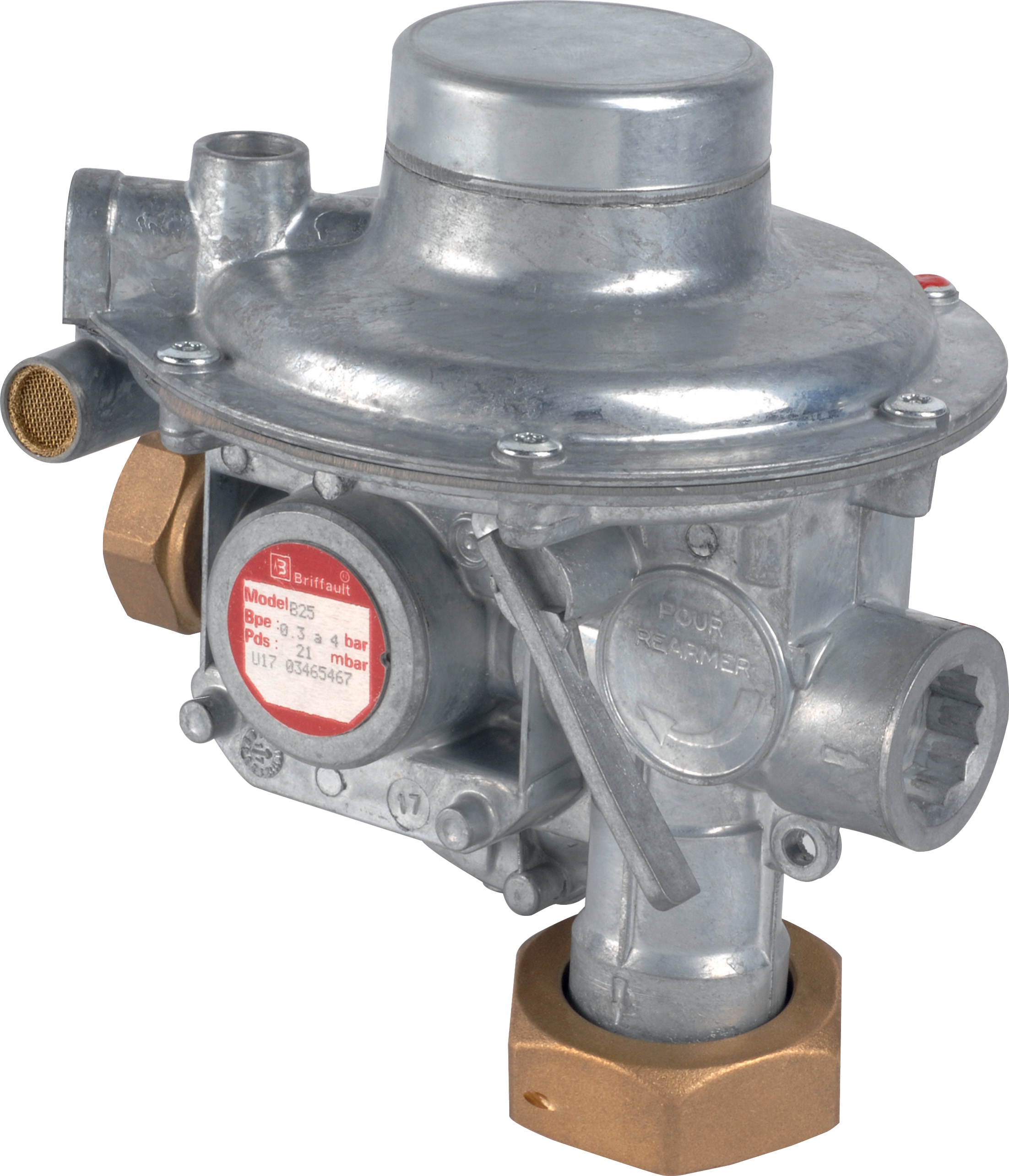
Preventive maintenance spreads labor costs across regular intervals. A Francel B25/37mb pressure regulator replacement might require 2-3 hours of scheduled technician time during a planned maintenance window, costing SGD 300-450 in labor. The same failure occurring during peak production creates emergency overtime (50-100% premium) and forces production shutdown, potentially costing SGD 5,000-15,000 in lost output.
Procurement engineers should calculate the breakeven point: preventive maintenance typically becomes cost-effective when equipment criticality is high (systems supporting continuous operations) or when failure costs exceed five times the preventive service cost.
Reactive Maintenance & Service: Emergency Response and Hidden Costs
Failure-Driven Replacement Cycles
Reactive Maintenance & Service waits for equipment failure before intervention. This approach works for non-critical equipment or systems with built-in redundancy but creates significant challenges for primary production equipment. When a KF30 pump fails unexpectedly:
- Immediate service call initiated (often after-hours surcharge of 30-50%)
- Emergency parts procurement with expedited shipping (20-40% cost premium)
- Technician overtime or weekend service fees
- Extended downtime while replacement equipment is sourced from 3G Electric or competitors
- Lost production output and potential client penalties
For industrial operations in Singapore with tight delivery schedules to regional customers, reactive maintenance frequently costs 3-5 times more than preventive approaches for the same component replacement.
Impact on Supply Chain Relationships
Reactive maintenance strains relationships with equipment distributors. Emergency requests for specialized components like Euspray HP 1/4" M BSPT flat jet nozzles (25° angle, index 30) or Pratissoli MW40 pumps (211 L/min, 210 bar) may face longer fulfillment times during supply constraints. Procurement engineers who plan maintenance proactively receive priority support, faster quote turnarounds, and better pricing through volume commitments.
3G Electric's 35+ years in industrial distribution demonstrates that suppliers invest more support in predictable customers. Reactive maintenance erodes this relationship capital, making it harder to secure emergency support when truly critical situations arise.
Data Collection and Process Improvement
Reactive strategies provide minimal diagnostic information. Equipment fails, gets replaced, and operations resume without understanding root causes. This prevents process improvements. Did the Interpump E1D1808 pump fail due to contaminated hydraulic fluid, bearing wear, or seal degradation? Reactive maintenance doesn't answer these questions, so the same failure typically recurs within 6-18 months.
Preventive diagnostics collect performance data (pressure curves, temperature trends, vibration signatures) that identify failure precursors months in advance. Procurement engineers leveraging this data can specify equipment upgrades—replacing a standard regulator with a Francel B25/37mb with integrated safety relief—that prevent entire classes of failures.
Comparative Cost Analysis: Real Equipment Scenarios
Scenario A: Primary Production Pump System (KF30, 106 L/min)
Preventive Maintenance & Service Program:
- Quarterly inspections and filter changes: SGD 1,200/year
- Annual seal kit replacement: SGD 800
- Vibration monitoring subscription: SGD 1,500/year
- Total annual cost: SGD 3,500
- Expected equipment life: 7-8 years
- Replacement cost: SGD 18,000-22,000
- No planned expenses: SGD 0/year (years 1-3)
- Year 4 bearing failure: Emergency repair SGD 8,500 + lost production SGD 12,000 = SGD 20,500
- Year 5 seal failure: Emergency repair SGD 6,200 + lost production SGD 8,000 = SGD 14,200
- Year 6 complete pump replacement: SGD 24,000 (degraded condition) + lost production SGD 15,000 = SGD 39,000
- Total 6-year cost: SGD 73,700
- Equipment life reduced to 5-6 years
Scenario B: Pressure Regulation System (Francel B25/37mb)
Preventive Maintenance & Service Program:
- Semi-annual diaphragm inspections: SGD 400/year
- Annual relief valve calibration testing: SGD 600
- Preventive replacement (year 5): SGD 2,800
- Total 6-year cost: SGD 4,800
- No expenses years 1-4: SGD 0
- Year 5 unexpected pressure drift causing product defects: SGD 3,200 (emergency technician + parts) + SGD 8,500 (customer complaint resolution and rework)
- Year 5 full regulator replacement: SGD 2,800
- Total 6-year cost: SGD 14,500
Hybrid Maintenance & Service Strategy: Practical Recommendations for Singapore
Equipment Classification Matrix
Optimal procurement strategy combines both approaches. Classify equipment by criticality:
Critical Systems (Preventive Priority):
- Primary production pumps (KF30, MW40)
- Safety-critical regulators (Francel B25/37mb)
- Main supply nozzles (Euspray flat jet nozzles)
- Approach: Full preventive maintenance programs with quarterly inspections
- Auxiliary gear pumps (Interpump E1D1808)
- Backup nozzle assemblies
- Approach: Condition-based monitoring (vibration, temperature sensors) with planned replacement every 4-5 years
- Redundant components with fast changeover
- Non-critical utility systems
- Approach: Reactive replacement, maintain emergency parts inventory
Implementation with 3G Electric Partnership
3G Electric's 35+ years of Singapore market presence enables several partnership models:
- Maintenance planning consultations: Work with our technical team to classify your equipment and develop maintenance schedules
- Spare parts supply agreements: Establish VMI programs for critical items like Francel regulator components, ensuring 48-hour delivery for emergency requests
- Equipment performance benchmarking: Compare your system diagnostics against industry standards to identify optimization opportunities
- Training programs: Develop technician competency for on-site inspections and preventive procedures
Conclusion: Strategic Procurement Decision-Making
Maintenance & Service strategy selection fundamentally affects procurement budgets, operational reliability, and competitive positioning. Procurement engineers evaluating these approaches should:
1. Calculate total cost of ownership including prevention costs, failure costs, and downtime impacts over 5-7 year equipment lifecycles
2. Classify equipment by criticality rather than applying uniform maintenance strategies across all assets
3. Establish supplier partnerships that support preventive approaches through reliable spare parts availability and technical expertise
4. Invest in diagnostics and monitoring for critical systems—the cost of monitoring equipment typically represents 10-15% of the savings from prevented failures
With industrial equipment like Pratissoli KF30 pumps, MW40 high-performance systems, Francel pressure regulators, and Euspray nozzles representing significant capital investments, preventive maintenance typically delivers 3-5x return on investment. 3G Electric stands ready to support your maintenance & service strategy through equipment supply, spare parts inventory, and technical partnership.