Maintenance & Service: Preventive Versus Predictive—Which Strategy Wins for Your Singapore Operation?
Maintenance & Service decisions represent one of the highest-impact operational choices for industrial maintenance teams. With 35+ years of equipment distribution experience across Southeast Asia, 3G Electric has observed a significant shift in how maintenance teams approach equipment care. The traditional "fix-it-when-it-breaks" model has evolved into two distinct strategic approaches: preventive maintenance (scheduled interventions) and predictive maintenance (data-driven interventions). This comprehensive comparison helps maintenance teams in Singapore evaluate which strategy delivers the best value for their specific operational context.
Section 1: Understanding Preventive Maintenance & Service
Core Characteristics
Preventive Maintenance & Service operates on a fixed schedule, regardless of equipment condition. Your maintenance team performs routine inspections, fluid changes, filter replacements, and component servicing at predetermined intervals—typically based on operating hours, calendar dates, or production cycles.
Advantages for maintenance teams:
- Predictable budgeting: Fixed maintenance windows allow accurate cost forecasting and staff scheduling
- Standardized procedures: Your team follows established protocols with minimal technical decision-making required
- Proven reliability: Decades of industrial experience have established optimal intervals for common equipment classes
- Reduced catastrophic failures: Regular component replacement prevents unexpected breakdowns during critical production periods
- Easier compliance documentation: Fixed schedules simplify regulatory reporting and audit trails
- Over-servicing penalty: Equipment replaced before end-of-life results in wasted component value
- Unnecessary downtime: Scheduled maintenance interrupts production even when equipment operates normally
- High labor allocation: Routine maintenance consumes significant staff hours regardless of actual equipment needs
- Limited flexibility: Seasonal production variations or unexpected demand spikes conflict with rigid schedules
- Inventory burden: Maintaining stock of replacement parts for all equipment creates carrying costs
Real-World Application for High-Pressure Systems
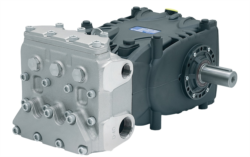
Consider the Pratissoli KF30 pump delivering 106 L/min at 200 bar with 40 kW power. A preventive maintenance strategy might mandate:
- Hydraulic fluid sampling every 500 operating hours
- Seal inspection every 1,000 operating hours
- Complete bearing assembly replacement every 2,000 operating hours
- Gearbox servicing every quarterly interval
For a facility running equipment 24/7, this equals approximately 21 preventive inspections annually. If each inspection requires 4 hours of technician time plus parts inventory, annual preventive maintenance costs could reach SGD 15,000–25,000 before consumable components.
Section 2: Understanding Predictive Maintenance & Service
Core Characteristics
Predictive Maintenance & Service uses real-time monitoring and diagnostic data to determine when equipment actually needs intervention. Your maintenance team installs sensors, analyzes vibration signatures, monitors fluid contamination levels, tracks temperature trends, and uses this intelligence to schedule maintenance only when equipment condition deteriorates toward failure thresholds.
Advantages for maintenance teams:
- Optimized component lifespan: Equipment operates through its full useful life before servicing
- Reduced unplanned downtime: Interventions occur during planned windows, not emergency situations
- Lower labor costs: Maintenance performed only when genuinely necessary reduces staff hours
- Inventory efficiency: Parts procurement aligns with actual equipment condition rather than calendar schedules
- Production optimization: Maintenance scheduling accommodates production priorities
- Early warning capability: Trending data identifies developing problems before catastrophic failure
- Regulatory advantage: Documented condition-based servicing demonstrates proactive equipment stewardship
- High capital investment: Sensor networks, monitoring software, and analytics platforms require significant upfront spending (SGD 50,000–150,000 for mid-scale operations)
- Technical expertise required: Your team needs training in data interpretation and diagnostic decision-making
- Vendor dependency: Monitoring systems create reliance on specific technology platforms and support vendors
- Data complexity: Interpreting sensor signals requires standardized baselines and threshold definitions
- Implementation timeline: Rolling out predictive systems across equipment fleet takes 6–18 months
- False positive risk: Incorrect threshold settings trigger unnecessary maintenance investigations
Real-World Application for Complex Systems
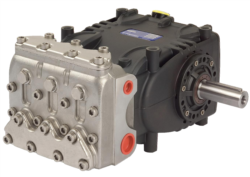
For the Interpump W2035 L ATEX pump operating in hazardous ATEX-compliant environments, predictive maintenance might involve:
- Continuous vibration monitoring detecting bearing wear signatures weeks before failure
- Fluid contamination sensors tracking particle counts and moisture levels
- Temperature sensors monitoring seal health and thermal stress patterns
- Pressure trend analysis identifying flow degradation
- Automated alerts when any parameter approaches critical thresholds
This approach enables a single annual major overhaul instead of quarterly preventive interventions, potentially reducing maintenance costs by 40–60% while improving equipment reliability.
Section 3: Cost-Benefit Comparison Framework for Singapore Operations
Financial Analysis by Equipment Scale
Small facilities (SGD 200K–500K annual equipment investment):
Preventive maintenance typically delivers better ROI. Implementation barriers for predictive systems are too high relative to the equipment base value. A small textile finishing operation or regional food processing plant benefits from standardized service schedules, lower technical overhead, and simpler compliance documentation.
Estimated annual maintenance cost: Preventive = SGD 18,000–28,000 | Predictive = SGD 22,000–35,000 (due to monitoring infrastructure amortization)
Mid-size facilities (SGD 1M–3M annual equipment investment):
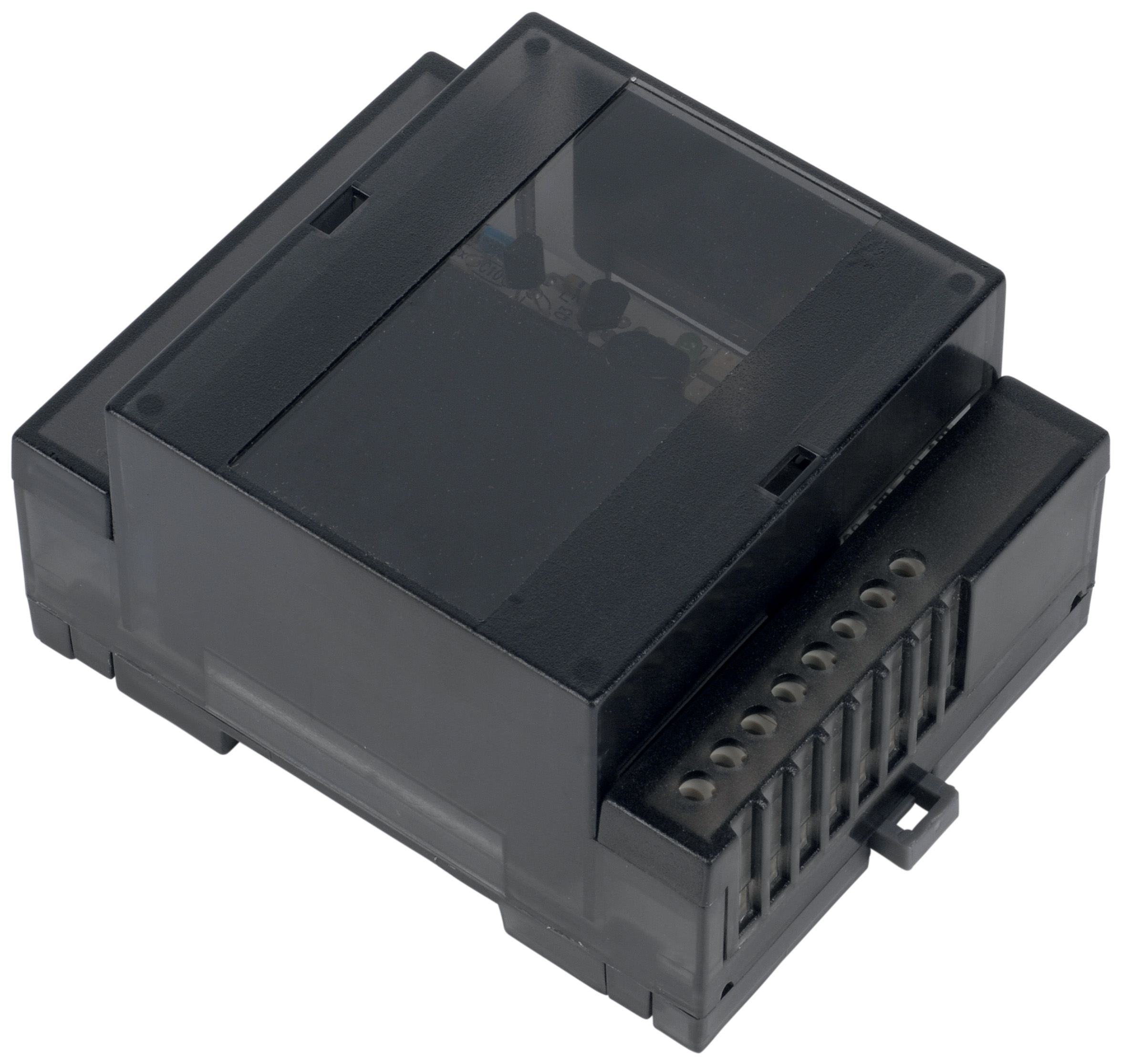
Hybrid approaches become viable. Critical systems (high-energy pumps like the Pratissoli SN7045 L pump at 18.4 kW, safety-critical components like the Combutech Flame relay CF1) use predictive monitoring, while auxiliary equipment follows preventive schedules.
Estimated annual maintenance cost: Preventive-only = SGD 45,000–75,000 | Hybrid = SGD 50,000–70,000 (predictive ROI emerges at this scale)
Large facilities (SGD 5M+ annual equipment investment):
Predictive maintenance typically delivers superior economics. Monitoring infrastructure costs distribute across numerous equipment assets, yielding lower per-unit expenses. Early failure detection prevents cascading equipment damage and unplanned production shutdowns (which can cost SGD 10,000–100,000+ per hour in lost output).
Estimated annual maintenance cost: Preventive-only = SGD 120,000–180,000 | Predictive = SGD 110,000–160,000 (plus reduced downtime value: SGD 150,000–500,000 annually)
Total Cost of Ownership (TCO) Comparison
For a mid-range industrial facility with equipment portfolio similar to those distributed by 3G Electric:
5-Year Preventive Maintenance TCO:
- Annual routine maintenance: SGD 60,000 × 5 years = SGD 300,000
- Unplanned downtime events (industry average 3–4 annually): SGD 25,000 × 3.5 × 5 = SGD 437,500
- Emergency parts procurement (typically 30% price premium): SGD 15,000 × 5 = SGD 75,000
- Extended equipment replacement due to stress: SGD 80,000
- Total 5-Year TCO: SGD 892,500
- Monitoring system installation and software: SGD 85,000 (year 1)
- Annual system maintenance and platform fees: SGD 12,000 × 5 = SGD 60,000
- Condition-based interventions (fewer, more targeted): SGD 50,000 × 5 = SGD 250,000
- Unplanned downtime (reduced to 0–1 annually): SGD 25,000 × 0.5 × 5 = SGD 62,500
- Staff training and certification: SGD 8,000
- Total 5-Year TCO: SGD 465,500
Section 4: Implementation Pathways and Decision Framework
Choosing Preventive Maintenance & Service
Select preventive strategies if your operation exhibits these characteristics:
- Equipment operates in predictable, steady-state conditions
- Downtime costs are modest (SGD 5,000–10,000 per incident)
- Your maintenance team has limited advanced diagnostic capabilities
- Equipment portfolio includes mostly standardized, commodity components
- Regulatory requirements specify time-based maintenance intervals
- Capital budget constraints limit technology investment
- Equipment is leased or short-term contracted (not owned long-term)
1. Audit your equipment fleet and document manufacturer-recommended service intervals
2. Establish baseline operating hours and environmental conditions
3. Create standardized work instructions for each maintenance procedure
4. Schedule maintenance windows around production cycles
5. Develop spare parts inventory aligned with replacement intervals
6. Train your team on standardized procedures and documentation
7. Review and adjust intervals annually based on failure occurrence
Choosing Predictive Maintenance & Service
Select predictive strategies if your operation exhibits these characteristics:
- Equipment includes high-value, mission-critical systems (above SGD 50,000 per unit)
- Downtime costs are substantial (SGD 25,000+ per incident)
- Your team includes technicians with diagnostic and data analysis skills
- Equipment operates continuously or in variable demand environments
- You have capital budget for technology infrastructure (SGD 50,000–150,000)
- Equipment is company-owned and operated long-term (5+ years)
- Regulatory compliance benefits from documented condition-based stewardship
1. Conduct baseline assessment of equipment condition across your fleet
2. Identify critical systems and establish monitoring priorities
3. Select monitoring technology platform aligned with your IT infrastructure
4. Install sensors and baseline measurement systems
5. Establish failure threshold parameters with manufacturer and engineering support
6. Deploy condition monitoring software and analytics dashboards
7. Train maintenance staff on data interpretation and diagnostic decision-making
8. Run parallel preventive and predictive cycles during 6-month transition period
9. Gradually shift to condition-based interventions as confidence increases
Hybrid Approach: The Practical Middle Ground
Most Singapore industrial operations benefit from hybrid Maintenance & Service strategies:
- Tier 1 (Predictive): High-value pumps like the KF30 and SN7045 L receive continuous monitoring
- Tier 2 (Condition-Based): Medium-value equipment like the Interpump GEARBOX RS500 uses periodic condition checks (quarterly)
- Tier 3 (Preventive): Commodity components and auxiliary equipment follow fixed schedules
- Tier 4 (Safety-Critical): Equipment like the Combutech Flame relay CF1 in hazardous environments uses preventive schedules plus documented compliance verification
This tiered approach balances risk management, cost efficiency, and operational flexibility across your equipment portfolio.
Conclusion: Aligning Strategy with Operational Reality
With 35+ years of industrial equipment distribution experience across Singapore and Southeast Asia, 3G Electric has observed that successful maintenance teams rarely adopt purely preventive or purely predictive strategies. Instead, they develop context-specific approaches that reflect their equipment value, operational constraints, regulatory environment, and technical capabilities.
The question is not "which is better?" but rather "which combination of strategies optimizes our specific operation?"
Maintenance teams should:
1. Map your equipment portfolio by value, criticality, and operating conditions
2. Calculate true downtime costs including direct production loss and indirect supply chain disruptions
3. Assess your team's diagnostic capabilities and training requirements
4. Evaluate technology options specific to your equipment and IT infrastructure
5. Plan phased implementation rather than attempting comprehensive transformation
6. Monitor and adjust your strategy quarterly as operational patterns emerge
3G Electric's equipment supplier network can support both preventive and predictive strategies through component availability, technical documentation, and maintenance supplies. Whether you standardize on Interpump high-pressure systems, Pratissoli pumps, or Combutech control components, predictable maintenance planning ensures parts availability and technical support when you need them.