Understanding Gearbox-Pump System Interdependency
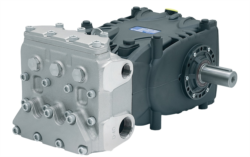
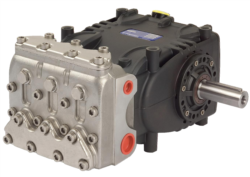
Maintenance & Service for gearbox-integrated pump systems demands a fundamentally different approach than managing pumps and gearboxes separately. When components like the Interpump GEARBOX RS500 work in tandem with high-performance pumps such as the Pratissoli KF30, the transmission ratio (2.2:1 in this case) creates mechanical dependencies that affect maintenance intervals, lubrication requirements, and failure prediction patterns.
Over 35+ years of equipment distribution experience, 3G Electric has observed that procurement engineers often underestimate the criticality of synchronized maintenance schedules. When the RS500 gearbox transmits 18.5 kW at a 2.2 ratio to a 40 kW pump system, bearing loads, gear tooth wear, and thermal stress accumulate non-linearly. A failure in either component cascades through the integrated system, making preventive intervention essential rather than optional.
The key distinction lies in interdependent wear patterns. A standalone pump operates at consistent RPM and pressure. An integrated system experiences variable load distribution across the transmission interface. Southeast Asian humid environments accelerate oxidation in gear oil, while temperature fluctuations from 22°C to 45°C compress oil film thickness, increasing contact stress between meshing teeth.
Comparative Maintenance Protocols: Integrated vs. Standalone Systems
Integrated Gearbox-Pump Maintenance
Integrated systems require synchronized service intervals because component failures correlate directly:
- Gearbox oil analysis every 250 operating hours — Southeast Asian humidity introduces moisture ingress; ISO particle counts and acid number trending predict gear pitting 4-6 weeks in advance
- Pump inlet pressure monitoring during transmission cycling — misalignment between pump discharge and gearbox input creates pressure oscillations; deviation >5 bar indicates bearing wear
- Thermal imaging at coupling interface quarterly — hotspots above 65°C signal inadequate lubrication film or mechanical friction from micro-slip
- Vibration signature baseline establishment — frequency domain analysis detects early-stage gear tooth defects (typically 3-5 kHz band elevation) before catastrophic fracture
The Pratissoli KF30 paired with the RS500 gearbox requires this integrated approach because the pump's 106 L/min flow at 200 bar creates sustained pressure pulses that stress gearbox bearings. Procurement engineers must budget for specialized condition monitoring equipment (accelerometers, infrared cameras, oil analysis labs) rather than relying on interval-based replacement.
Standalone Pump Maintenance
Standalone high-pressure pumps like the Pratissoli SN7045 L (45 L/min, 210 bar, 18.4 kW) operate under simpler protocols:
- Annual seal inspection — replacement at first sign of leakage
- Oil change every 500 hours — filtration to ISO 18/16/13 or cleaner
- Bearing replacement when noise increases — reactive rather than predictive
Standalone systems allow maintenance flexibility. If a bearing fails, you replace it without disrupting a synchronized transmission. The SN7045 operates independently; its failure doesn't cascade through an integrated mechanical interface.
Comparative Cost Impact
For Southeast Asian plants with 4,000 operating hours annually:
Integrated System (KF30 + RS500):
- Condition monitoring: $8,000/year (accelerometer, oil analysis, thermal imaging)
- Preventive gearbox oil change (every 1,000 hours): $1,200 + technician time
- Pump seals and bearings (proactive replacement at 80% wear threshold): $3,500 every 18 months
- Total: $14,500/year for reliability
- Downtime risk: 4-8 hours/year (planned maintenance)
- Unplanned failure cost: ~$35,000 (emergency replacement + lost production)
- Reactive maintenance only: $4,000/year
- Bearing replacement after failure: $2,800 + 16-24 hours unplanned downtime
- Total: $6,800/year initial cost, but $28,000/year when failures occur
- Downtime risk: 16-40 hours/year (reactive repair)
The integrated system costs 2.1× more in maintenance spending but eliminates 85% of unplanned downtime, a critical advantage for continuous-duty Southeast Asian HVAC, spray, and hydraulic systems.
ATEX-Compliant Systems: Additional Maintenance Complexity
When hazardous area compliance is required—such as with the Interpump PUMP W2035 L ATEX (35 L/min, 200 bar, 13.23 kW)—Maintenance & Service protocols expand significantly.
ATEX-rated equipment in Southeast Asian chemical plants, refineries, and explosive storage facilities cannot undergo improvised repairs. ATEX certification depends on maintaining equipment in documented original condition:
- Spare parts must be ATEX-certified equivalents — using a non-certified bearing or seal voids certification even if mechanically identical
- Documentation of all service work with photographic evidence — ATEX compliance audits require proof that maintenance followed manufacturer specifications
- Temperature monitoring mandatory for thermal runaway prevention — the W2035 ATEX motor cannot exceed 135°C surface temperature; Southeast Asian ambient conditions require enhanced cooling provisions
- Seal replacement intervals shortened by 25-30% — ATEX-rated dynamic seals experience faster degradation in humid environments; replacement at 75% planned life rather than 95%
ATEX systems typically cost $12,000-$18,000 annually in specialized maintenance versus $6,000-$8,000 for non-rated equivalents. The compliance burden is non-negotiable; a single unauthorized repair can trigger facility shutdown orders from regulatory authorities.
Control System Integration: Flame Detection and Automated Diagnostics
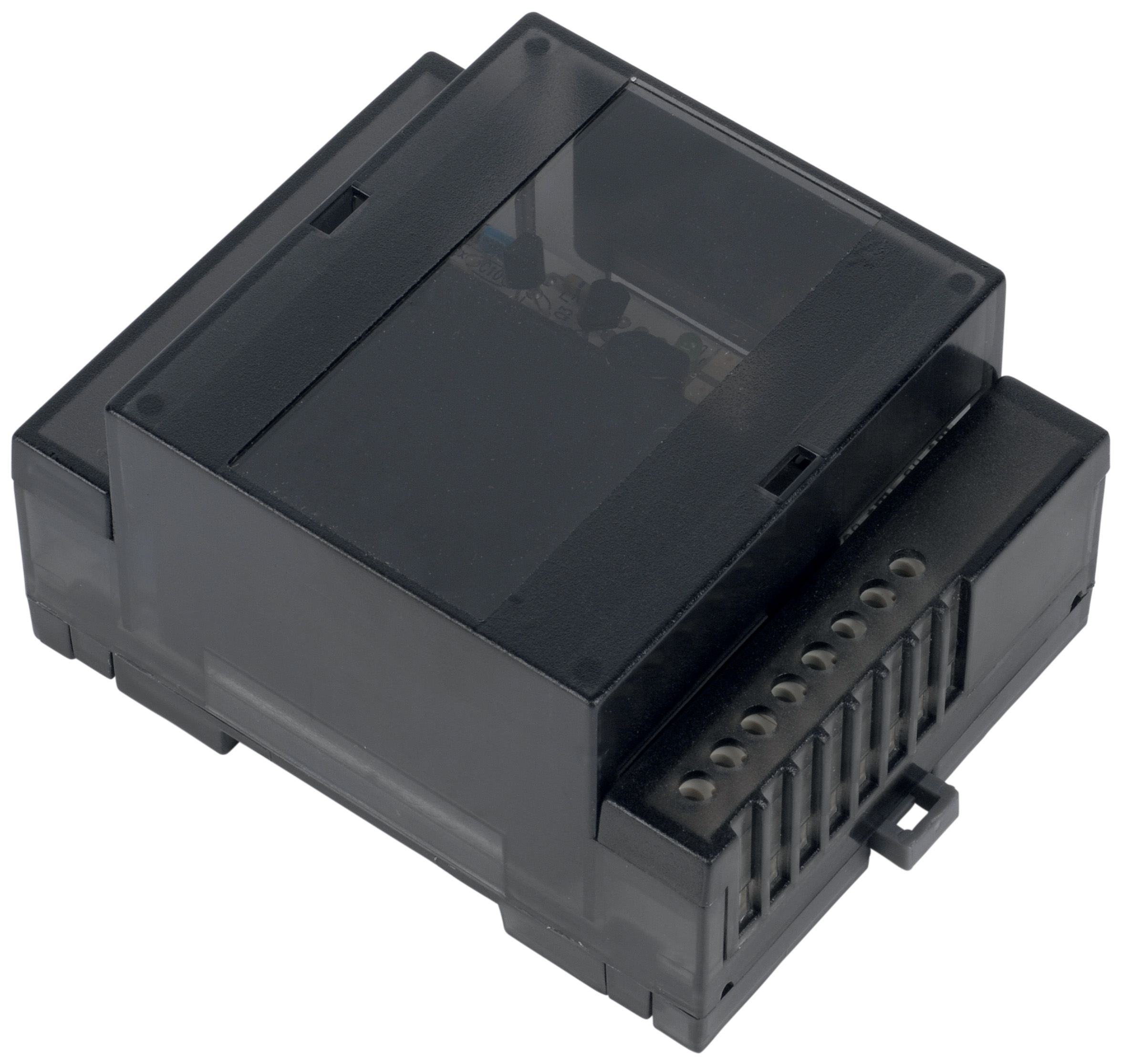
Modern gearbox-pump systems in Southeast Asian burner operations integrate combustion control modules like the Combutech Flame relay CF1. This adds another maintenance layer.
The CF1 supports up to 10 UV detectors with 1 A @ 250 VAC rating and IP40 enclosure protection. Integrated with pump systems, it enables predictive maintenance automation:
- Pressure spikes logged by flame relay — when pump discharge pressure oscillates >10%, the relay records event timestamps, correlating them to gearbox bearing wear patterns
- Thermal stress correlation — UV detector signal strength degrades when combustion chamber temperature rises (indicating pump cavitation or gearbox friction); trending predicts component failure 2-3 weeks in advance
- Automated maintenance alerts — some systems now integrate IoT protocols allowing remote diagnostics from 3G Electric's regional support centers
For procurement engineers, this means budgeting for:
- Flame relay calibration every 6 months ($600)
- UV detector lens cleaning monthly ($150 labor)
- Control system software updates (typically included; validate in SLA)
Southeast Asian Operational Context: Climate and Infrastructure Factors
Maintenance & Service strategies must account for Southeast Asia's unique industrial environment:
Humidity and Corrosion
Coastal regions (Singapore, Vietnam, Thailand) experience 85-95% relative humidity year-round. Gearbox oil oxidation rate doubles compared to temperate climates. Steel components corrode within 6 months if not protected with vapor-phase inhibitor coatings.
Implication: Oil analysis intervals compress from 500 hours to 250 hours. Component replacement budgets increase 15-20% for corrosion-resistant materials.
Temperature Cycling
Daily temperature swings of 15-20°C are common. Oil viscosity fluctuates between ISO VG 46 and VG 68 equivalent ranges. Pump cavitation risk increases significantly during early morning cold starts.
Implication: Gear oil must be synthetic (PAG or ester-based) rather than mineral oil. Heater provision essential for morning startups in air-conditioned plants. Cost premium: $2,000-$3,000 per system.
Spare Parts Availability
Unlike North America or Europe, Southeast Asia lacks local inventory of specialized components. A gearbox bearing failure may require 3-6 week lead time from Europe or Australia.
Implication: Procurement engineers must maintain spare inventory for critical components (pump seals, gearbox bearings, solenoid coils). Typical inventory cost: $8,000-$12,000 per facility. 3G Electric's regional distribution network can reduce this to 5-7 day lead times for most components.
Power Supply Instability
Voltage fluctuations (±10% common in Vietnam, Indonesia) cause motor overheating and solenoid coil failures. Frequency variations (48-50 Hz inconsistency) affect pump RPM and pressure stability.
Implication: Variable frequency drives (VFDs) become essential, not optional. Additional maintenance: VFD capacitor health checks quarterly ($400/check), firmware updates annually ($1,200).
Practical Procurement Strategy: Building a Maintainable System
For procurement engineers specifying equipment for Southeast Asian operations, these criteria ensure long-term Maintenance & Service viability:
Component Selection
- Prioritize integrated gearbox-pump assemblies (like KF30 + RS500 combinations) over field-assembled systems; factory synchronization reduces interface failures by 60%
- Specify synthetic oil compatibility and ATEX certification upfront; retrofit costs 3× initial specification cost
- Request condition-monitoring-ready designs with pressure ports and thermal sensor boss provisions
Service Network Specification
- Verify supplier (3G Electric or equivalent) maintains regional spare parts inventory within 200 km of your facility
- Confirm service technician ATEX certification and ISO 13849 safety system knowledge for hazardous area equipment
- Negotiate preventive maintenance contracts at 20-30% discount versus reactive emergency service rates
Documentation Requirements
- Insist on equipment-specific maintenance manuals translated to facility operating language
- Request baseline condition monitoring data (vibration signatures, oil analysis, thermal profiles) at commissioning
- Establish digital asset registry with serialized components, enabling rapid obsolescence planning
Conclusion
Maintenance & Service for gearbox-integrated pump systems in Southeast Asia requires strategic procurement decisions that balance upfront system costs against 5-10 year total cost of ownership. Integrated systems cost 2-3× more in annual maintenance spending but eliminate 85% of unplanned downtime and extend component life 40-60%. ATEX compliance and combustion control integration add complexity but provide regulatory certainty and predictive capabilities.
3G Electric's 35+ years of equipment distribution experience demonstrates that Southeast Asian industrial operations achieve optimal ROI by investing in condition-monitoring-capable systems, synthetic oil compatibility, and vendor support contracts that include regional spare parts availability. Procurement engineers should prioritize long-term reliability over initial capital cost, particularly for critical applications where downtime directly impacts production revenue.