Understanding Gearbox & Transmission Maintenance & Service in Industrial Operations
Gearbox and transmission systems are critical components in high-pressure pump installations, converting motor speed and torque for optimal performance. When these systems fail, production halts—often without warning. Drawing on 35+ years of experience distributing industrial equipment across Asia-Pacific, 3G Electric has seen thousands of transmission failures that could have been prevented with structured Maintenance & Service protocols.
Unlike pump repairs that require complete component replacement, gearbox issues often present diagnostic opportunities. Early detection through systematic troubleshooting can extend equipment life by 50% or more. This guide provides plant managers with actionable procedures to identify transmission problems before they cascade into catastrophic failures.
Section 1: Identifying Common Gearbox Failure Modes
Abnormal Noise Signatures
Gearbox noise is the first warning signal most plant managers notice. However, not all noise indicates failure. Understanding the distinction between normal operational sound and dangerous conditions is essential.
Whining or high-pitched sounds typically indicate gear mesh problems—worn teeth, improper backlash adjustment, or bearing wear. This sound increases proportionally with speed and load. Using an industrial stethoscope or vibration sensor, measure sound frequency at multiple operating points (25%, 50%, 75%, and full load). Normal transmission noise rarely exceeds 85 dB at full load; readings above 90 dB warrant immediate investigation.
Clunking or grinding noises suggest metal-to-metal contact—a catastrophic failure signal. When operators report sudden grinding, stop the system immediately and perform a cold inspection. Look for metallic particles in the oil (a telltale sign of internal wear) and measure transmission case temperature. Healthy gearboxes operate 15–25°C above ambient; grinding conditions often produce temperatures exceeding 80°C.
For systems like the Interpump GEARBOX RS500 rated at 18.5 kW maximum power transmission with 2.2 ratio, baseline noise signatures should be established during initial commissioning. Document sound levels and vibration readings at standard operating parameters—these become your diagnostic baseline for future comparisons.
Power Transmission Loss
When motor amperage remains constant but pump output pressure or flow decreases, transmission slippage is occurring. This differs from pump cavitation (which affects suction) and manifests as reduced system pressure at full throttle.
Test procedure: Operate the system at 75% load and record three measurements—motor input power (via ammeter), transmission case temperature (infrared thermometer), and system output pressure. If motor power is normal but output pressure drops 15% or more compared to baseline, the transmission ratio has degraded.
Internal slippage typically results from:
- Oil viscosity breakdown (measure oil kinematic viscosity; it should remain within ±10% of specification)
- Disc clutch wear (in mechanical variable-displacement transmissions)
- Bearing preload loss due to age or improper installation
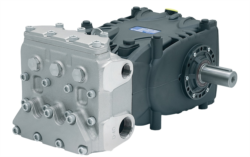
For the Pratissoli KF30 operating at 200 bar and 40 kW, power transmission loss becomes apparent when the pump cannot maintain design pressure (200 bar) at rated flow (106 L/min) with full motor load applied.
Thermal Runaway Conditions
Uncontrolled temperature rise in transmission systems indicates either excessive internal friction or inadequate cooling. Gearbox case temperatures should stabilize within 20–30 minutes of full-load operation. Rising temperatures that don't plateau indicate circulation problems or internal bearing degradation.
Implement daily temperature monitoring at the same time each day under identical load conditions. A sudden 10°C increase from baseline (without load changes) suggests internal wear progression. Temperature rise beyond 60°C above ambient requires immediate shutdown and inspection.
Check cooling system function: verify oil circulation pump operation, inspect cooler fins for blockage (common in Singapore's humid industrial zones with salt air contamination), and confirm coolant flow rate matches system specifications.
Section 2: Systematic Diagnostic Procedures
Oil Analysis Protocol
Transmission oil analysis is your early-warning system. Unlike visual inspection (which only catches advanced failures), particle counting and spectroscopy reveal wear progression 50–100 hours before catastrophic failure occurs.
Establish a baseline oil analysis during commissioning—this becomes your reference standard. Quarterly oil sampling thereafter tracks wear trends. When systems operate in harsh Singapore environments (high humidity, temperature cycling, salt spray near coastal installations), increase sampling frequency to monthly intervals.
Key diagnostic parameters:
- Particle count (ISO 4406 scale): Healthy transmissions maintain 15/13/10 or better. Readings degrading toward 17/15/12 indicate early bearing wear. Reaching 19/17/14 means wear is accelerating—plan replacement within 200 operating hours.
- Iron content (ppm): Normal is <100 ppm. Values between 100–300 ppm show component wear; above 300 ppm indicates imminent failure.
- Water content: Should be <500 ppm. Values above 1000 ppm suggest seal failure or condensation ingress (critical in humid climates).
- Viscosity index: Any change exceeding ±5% from baseline indicates oil degradation or contamination requiring immediate oil change.
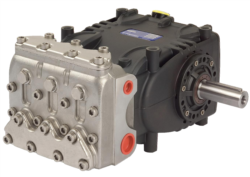
For high-pressure applications using Pratissoli SN7045 L at 210 bar and 1450 rpm, oil quality directly impacts bearing life and transmission efficiency. Establish oil sampling contracts with Singapore-based fluid analysis laboratories certified to ISO 4406 standards.
Vibration Analysis for Bearing Diagnosis
Bearings are transmission failure points plant managers often overlook. Vibration signatures reveal bearing degradation weeks before audible noise emerges.
Using a portable vibration analyzer (accelerometer), measure transmission case vibration at three perpendicular axes: radial-horizontal, radial-vertical, and axial. Baseline healthy equipment typically reads 2–5 mm/s velocity.
Bearing wear progression shows characteristic frequency signatures:
- Early spalling (micropitting): Slight elevation at bearing fundamental frequency and harmonics; overall velocity may still appear acceptable (5–8 mm/s) but frequency content reveals distress.
- Advanced spalling: Rapid broadband energy increase with velocity exceeding 12 mm/s; noise floor rises across all frequencies.
- Catastrophic failure imminent: Velocity above 18 mm/s with impulse events (sudden spikes) occurring irregularly.
Conduct measurements at minimum weekly intervals. When trend shows consistent 0.5 mm/s increase per week, plan bearing replacement within 3–4 weeks. This predictive approach prevents unplanned shutdowns.
Backlash and Alignment Assessment
Improper backlash (the gap between meshing gear teeth) accelerates tooth wear and generates excessive noise. Measure backlash using a dial indicator mounted perpendicular to the gear face.
Procedure: Manually rotate input and output shafts (system depressurized, motor off) while measuring axial movement. Record maximum values at four quadrants around the gear diameter. Variation exceeding 0.2 mm indicates alignment problems.
For Interpump PUMP W2035 L ATEX paired with transmission equipment, proper backlash ensures the 35 L/min flow rate doesn't generate pressure spikes that stress transmission components.
Section 3: Preventive Maintenance Strategy & Component Management
Scheduled Oil Change Protocol
Transmission oil doesn't simply lubricate—it cools, suspends wear particles, and maintains viscosity film between components. Oil degradation is cumulative and irreversible.
Establish oil change intervals based on operating hours (not calendar time). For systems operating continuously in Singapore industrial settings, change oil every 2000–2500 operating hours for mineral oil, or 4000–5000 hours for synthetic fluids rated to ISO VG 46 or VG 68 (standard for industrial transmissions).
Critical timing triggers for emergency oil changes:
- Oil analysis shows particle count degrading two full ISO codes (from 15/13/10 to 17/15/12)
- Viscosity change exceeds ±5% from baseline
- Water content exceeds 800 ppm
- Any metal particle exceeding 4 microns in size appears in analysis
When changing oil, flush the system completely—don't top-up old fluid with new. Residual degraded oil contaminates fresh lubricant and negates the change benefit.
Filter Maintenance and Bypass Protection
Transmission filters prevent contamination but can become liability if neglected. A blocked filter triggers bypass valve activation, allowing unfiltered oil circulation—exactly opposite of intended protection.
Monitor filter differential pressure (ΔP) across the element. When ΔP exceeds manufacturer specification (typically 2–3 bar), change the filter element immediately. In Singapore's dusty industrial environments (particularly in manufacturing zones), filter changes may be required more frequently than standard intervals suggest—often every 500–1000 operating hours instead of 2000.
Implement dual-element filters with bypass indicators that show physically when bypass is occurring. These visual signals prevent operators from missing filter change schedules.
Cooling System Maintenance
Transmission cooling directly impacts operating temperature and therefore bearing life. Oil coolers clogged with salt spray residue (common near Singapore's coast) reduce cooling capacity 30–50%.
Monthly maintenance:
- Inspect cooler fins with a magnifying glass for salt deposits or corrosion. Clean with low-pressure fresh water (not saltwater) and soft brush.
- Verify coolant pump operation by checking discharge pressure and flow rate.
- Thermally image the cooler output line—it should be noticeably cooler than inlet by 8–15°C under full load.
For systems in coastal Singapore facilities, consider installing water-softening filters upstream of coolers to prevent mineral deposits and extend cooler life from 5 years to 8–10 years.
Section 4: Troubleshooting Decision Tree for Plant Managers
Rapid Diagnostic Workflow
When transmission problems emerge, plant managers need systematic troubleshooting to avoid unnecessary replacement of expensive components. Use this decision framework:
Symptom: Elevated Temperature (Case >60°C above ambient)
1. Check cooler function: Verify pump operation, measure inlet/outlet ΔT (should be 8–15°C). If ΔT <5°C, cooler is blocked—clean immediately.
2. Check oil level: Low oil prevents circulation. Top-up to sight glass mark (system must be cool). Retest after 30 minutes full load.
3. Check for load anomalies: Has pump pressure increased? Verify pressure relief valve setting; pressure exceeding design spec causes temperature rise. For Pratissoli SN7045 L rated 210 bar, confirm system pressure doesn't exceed 220 bar (110% nominal).
4. If temperature persists above 65°C with normal load: Perform oil analysis. Elevated temperature + degraded oil = imminent bearing failure. Schedule replacement within 72 hours.
Symptom: Noise Increase without Pressure Loss
1. Measure noise frequency with stethoscope. If high-pitched whine (>4 kHz): Backlash problem. Check alignment and adjust if needed.
2. If grinding/clunking noise: Stop immediately. Inspect oil for metallic particles. If particles present: Gearbox failure in progress—replace transmission immediately.
3. If dull rumbling at motor frequency: Motor bearing issue, not transmission. Test motor independently; may need coupling or motor replacement.
Symptom: Power Loss (Low Pressure/Flow)
1. Test at 25%, 50%, 75%, and 100% load. Plot pressure vs. load curve. If curve shows early plateau (pressure levels off before full load), transmission slippage.
2. Compare motor amperage at equivalent loads to baseline records. If amperage normal but pressure low: Transmission problem. If amperage also high: Pump problem (cavitation, wear, or misalignment).
3. Check transmission case temperature. If cool despite low pressure: Internal clutch or disc slippage. If hot: Bearing friction from internal wear.
For Pratissoli KF30 systems at 40 kW, a 10% power loss typically indicates transmission efficiency degraded from 95% to 85%—requiring servicing or component replacement within 1–2 weeks depending on application criticality.
Symptom: Sudden Failure (Complete Loss of Drive)
1. Check input and output shafts manually (motor off, system depressurized). If input rotates freely but output locked: Gearbox shaft failure or internal jamming. Requires transmission replacement—no field repair option.
2. If both shafts locked together: Check for external coupling failure. If coupling intact, transmission is seized internally—failure of hydrostatic bearing or major gear fracture.
3. If input locked: Motor or motor coupling failure, not transmission.
When sudden failure occurs with no warning signs (previous diagnostics showed normal parameters), document everything: operating conditions at failure time, oil analysis results from last sampling, vibration readings, and thermal data. This documentation helps 3G Electric's technical team provide root cause analysis and prevent recurrence in similar systems.
Maintenance & Service Record Keeping for Compliance
Singapore's Factories Act and Health and Safety at Work regulations require documented maintenance records. Maintain for each transmission system:
- Daily logs: Operating hours, temperature, any operator observations
- Weekly inspections: Vibration readings, oil level, visual condition
- Monthly checks: Oil analysis sampling, cooler inspection, filter ΔP measurement
- Quarterly analysis results: Particle count, viscosity, water content, metal content
- Annual calibrations: Pressure gauges, thermometers, vibration analyzers
These records demonstrate due diligence if equipment failure causes safety incidents. They also provide 3G Electric with historical data to support warranty claims and guide future equipment selections.
With over 35 years distributing industrial equipment across Singapore and the region, 3G Electric understands that Maintenance & Service isn't an expense—it's risk management. Structured transmission diagnostics prevent catastrophic failures and extend equipment life significantly.